



Antique Tantalus Decanters
Antique tantalus decanters combine secure locking mechanisms with cut crystal bottles to protect spirits from unauthorised household access.
Antique Tantalus Decanters
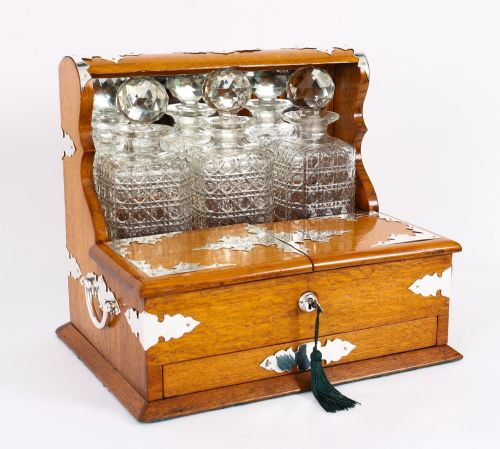
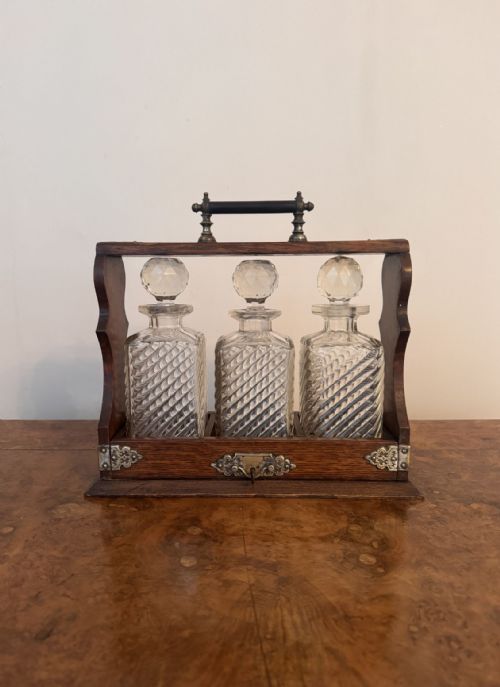
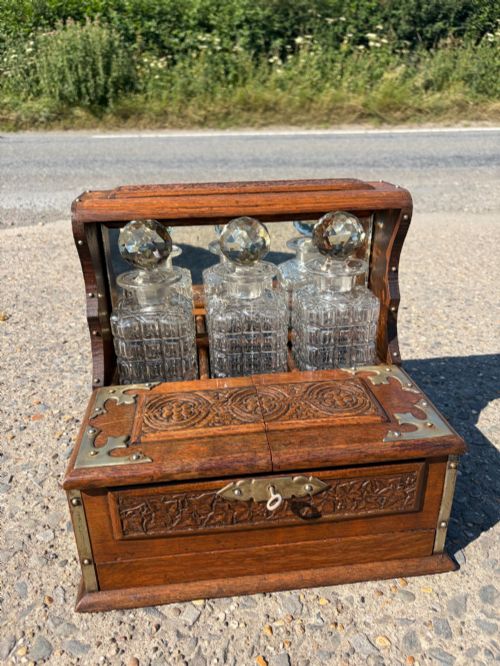
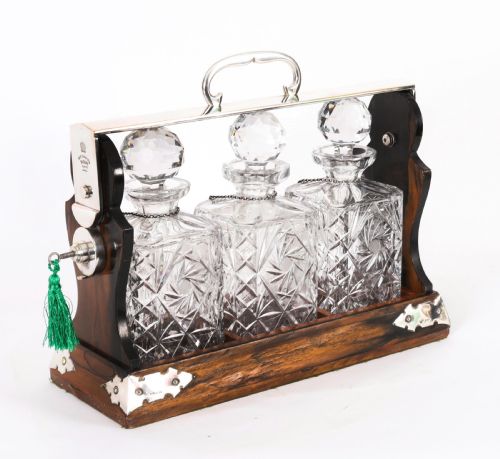
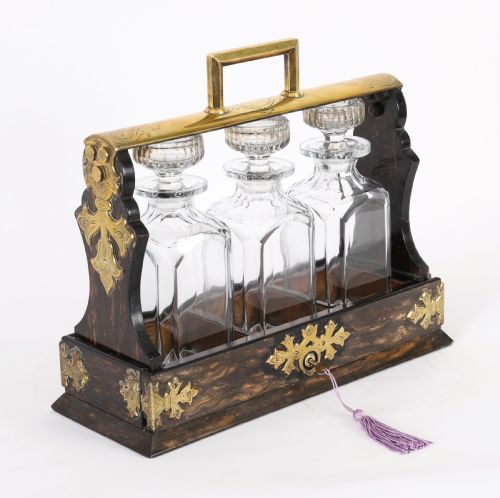
Antique tantalus decanters are locking drinks cabinets and stands designed during the nineteenth and early twentieth centuries to secure potable spirits from household staff and guests. The most common examples met on this page are Victorian and Edwardian oak frames fitted with two or three cut crystal decanters and robust silver plated or brass locking bars.
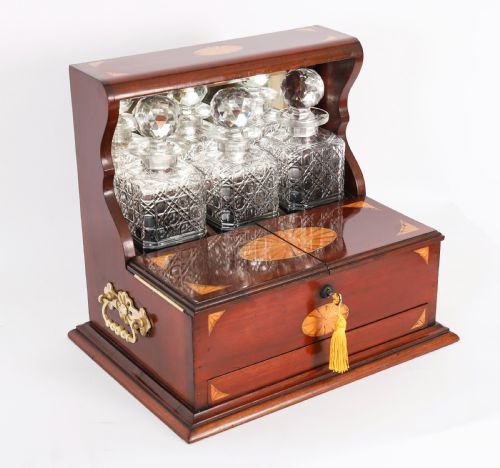
Beyond standard bottle carriers, buyers encounter elaborate table pieces that integrate games compendiums, humidor compartments, or folding dry bars within the wooden chassis. These dual-purpose containers bridge the gap between functional barware and formal entertaining furniture.
Origins stretch across English domestic workshops and continental European production centres, yielding both sturdy campaign-style oak boxes and ornate French ebonised or boullework liqueur caves. The core concept remains consistent: a drop-front or lifting case holding distinct glassware under lock and key.
How they were made
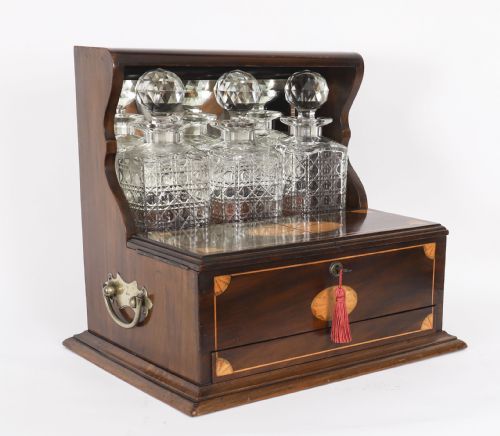
Cabinetmakers constructed the primary housings from durable hardwoods including oak, pollard oak, walnut, mahogany, and exotic coromandel, often embellished with satinwood inlay, marquetry strings, or brass mounts. These timber frames required precise joinery to house internal velvet or satin-lined bottle wells alongside mechanical locking rods.
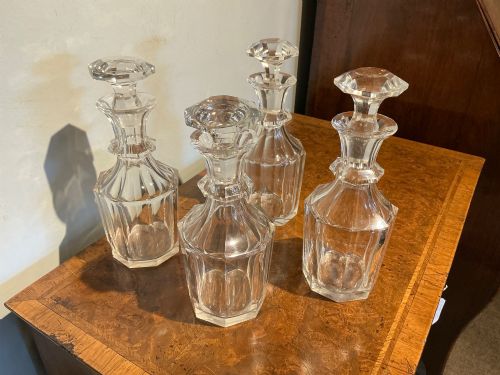
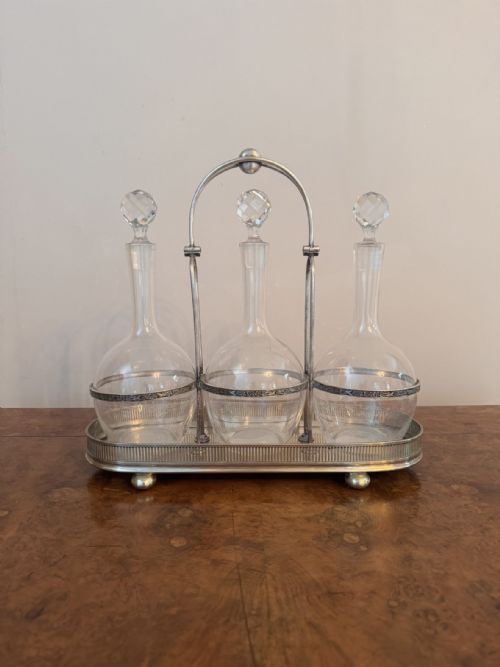
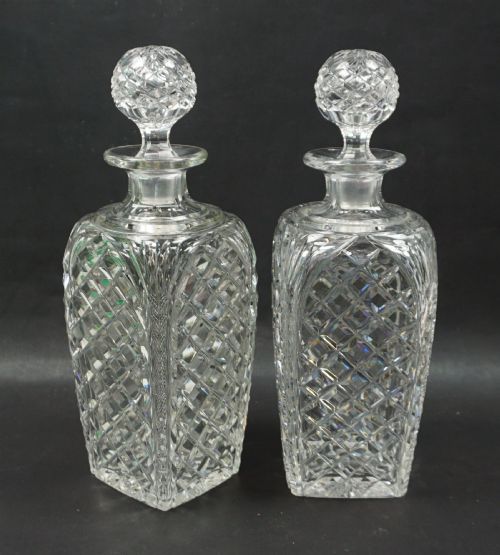
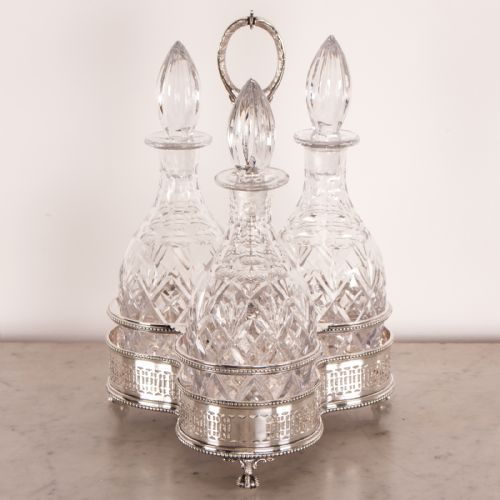
The glassware consists of heavy cut crystal, frosted glass, or pressed glass bottles, frequently shaped into square-section tapered profiles or matching sets of three and four. Metal components rely on silver plating, old Sheffield plate, or cast brass to form the secure handles, hinges, and lock plates that immobilise the stoppers.
Listings feature oak, mahogany, walnut, and coromandel timbers paired with cut crystal, silver plate, and brass hardware across the Victorian and Edwardian periods.
What varies in quality
Quality rests significantly upon the sophistication of the locking mechanism and the original maker's mark, with patented designs by firms like Betjemann holding superior status over unbranded commercial variants. The presence of fully operational keys, working spring-loaded handle drops, and integrated brass locking bars elevates a piece considerably.
The integrity and matching nature of the glassware dictate overall value, particularly where cut crystal decanters retain their original stoppers and show minimal rim wear. Finer examples combine the locking bottle stand with comprehensive games trays, cribbage boards, and original glassware sets without replacements.
Betjemann·Walker And Hall·Elkington
The Antique Tantalus Decanters Glossary
- Tantalus
- A locking drink container that holds decanters firmly by their necks so the stoppers cannot be removed until the frame is unlocked. The name derives from the mythological figure punished by eternal thirst.
- Cave a Liqueur
- A continental European lockable liqueur box or stand, typically housing a series of matching glass cordials and decanters within a fitted interior.
- Cut Crystal
- Glassware shaped through wheel-cutting to produce geometric patterns that refract light. This heavy material was standard for high-end nineteenth-century decanters.
- Silver Plate
- A base metal, often copper or white metal, coated with a thin layer of silver. Many Victorian barware stands utilise this technique for decorative handles and locking bars.
- Games Compendium
- A multi-use box containing equipment for various parlour games such as cards, chess, and backgammon, frequently built into the base of larger tantalus cabinets.
Antique Tantalus Decanters: Frequently Asked Questions
What is a tantalus used for?
These pieces served as secure spirits cabinets in Victorian and Edwardian dining rooms or studies. Householders used them to prevent domestic servants from helping themselves to expensive imported whiskey or brandy.
The locking mechanism clamps across the stoppers, meaning the bottles cannot be tipped or opened until a key releases the retaining metal bar.
How do you open a tantalus without a key?
Most antique locks on these pieces are standard lever or push-button mechanisms built into the wooden frame. Forcing the brass bar risks damaging the surrounding timber housing and shattering the fitted crystal decanters.
A specialist locksmith can usually pick or impression a replacement key without harming the original hardware.
How do you date an antique tantalus?
Dating relies on stylistic clues, wood selection, and any visible metal hallmarks stamped on the silver-plated mounts. Oak and coromandel cases with heavy gothic brasswork typically point to the late Victorian era.
Simpler, cleaner lines in oak often indicate Edwardian production, while Georgian examples favour solid mahogany box construction.
Are the decanters always original to the stand?
Finding a set with its matching original glassware is common but not guaranteed, due to accidental breakages over generations of use. Decanters that fit precisely into the velvet-lined base apertures and match the cut pattern of the period are preferred.
Replacement bottles occasionally appear in older stands, though mismatched crystal diminishes the collective integrity of the piece.