


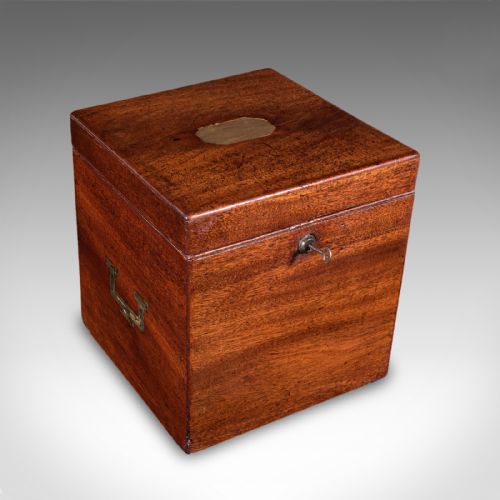
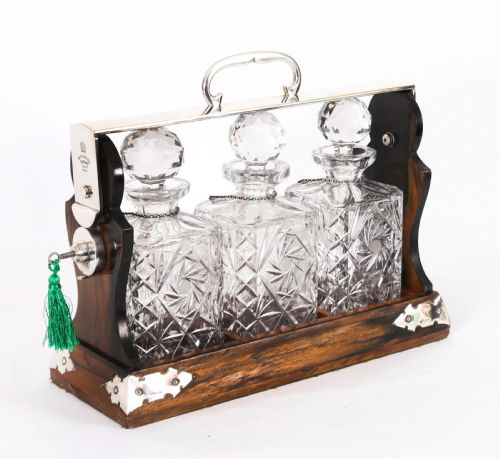


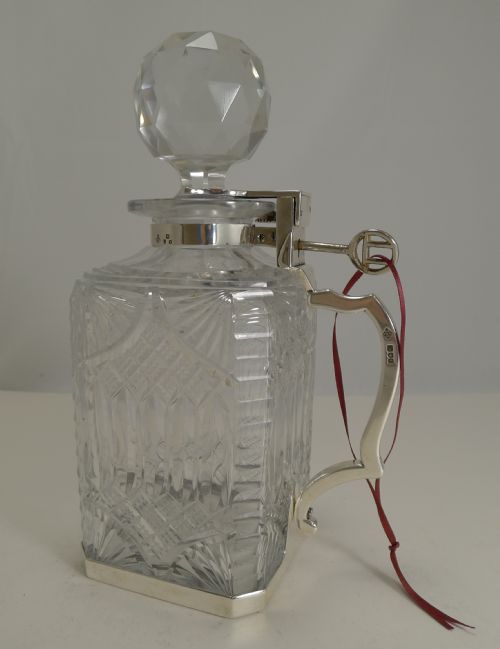
Antique Locking Spirit Bottles
These antique locking spirit bottles and tantalus sets keep fine drinks secure behind polished brass locks.
Antique Locking Spirit Bottles
When you search for antique locking spirit bottles, you find tantalus sets, spirit cases, and single locking decanters designed to restrict access to the contents. These pieces protect expensive spirits from household staff or uninvited guests while displaying cut crystal on the sideboard.
The versions most likely to meet you on this page date from the Victorian, Edwardian, and Art Deco periods, spanning the late nineteenth century into the 1930s. They typically house two or three crystal decanters inside robust frames.
Makers housed these cut glass vessels within frameworks of oak or exotic woods like coromandel, often reinforcing the edges with brass mounts. Some single decanters use sterling silver necks and integrated locks directly on the glass housing rather than a wooden cradle.
How they were made
Makers constructed the outer frames from dense hardwoods such as oak and coromandel, joining them with solid brass mountings and functional locking mechanisms. The wood is finished to highlight natural grain while providing a rigid structure capable of holding heavy glass.
The associated decanters utilise cut glass and crystal, shaped to refract light through amber or clear spirits. Artisans fitted these with sterling silver or silver plate collars, mounts, and lockable stoppers.
Locking systems integrate complex metal lifting bars or hinged top handlers that drop into place over the crystal stoppers. Operating the key allows the brass bar to slide clear, freeing the decanters from their wooden enclosures.
Antique Locking Spirit Bottles Retail Price Guide 2026
Typical asking prices for locking spirit bottles among the pieces listed under this phrase on Sellingantiques today, from the lower quarter to the upper quarter. They describe what is for sale here now, not the wider market.
Materials recorded across current items include oak, coromandel wood, cut glass, sterling silver, silver plate, and brass.
What varies in quality
Quality rests heavily on the sophistication of the locking mechanism and whether the working key is present. Patent locks bearing maker signatures command greater interest than plain, utilitarian latches.
The choice of cabinet timber and the depth of the glass cutting create distinct tiers in these pieces. Solid coromandel frameworks and heavy, hand-cut crystal decanters represent the upper end of production compared to simpler oak designs.
Betjemann·Hukin and Heath
The Antique Locking Spirit Bottles Glossary
- Tantalus
- A locking drink cabinet holding decanters visible yet out of reach until unlocked. It takes its name from the mythological figure of Tantalus.
- Coromandel
- A dense, highly figured tropical hardwood with dark brown and black streaks. It was frequently utilised for luxury Victorian cabinet work.
- Cut Glass
- Glass shaped and patterned by holding it against rotating abrasive wheels. It produces sharp, brilliant facets that catch candlelight.
- Silver Plate
- A thin layer of silver fused to a base metal foundation. It provided the gleaming appearance of solid silver at a lower production cost.
- Decanter
- A stoppered glass vessel used for holding and serving alcoholic beverages. In locking sets, the neck or stopper design accommodates the restraining metal bar.
Antique Locking Spirit Bottles: Frequently Asked Questions
How do antique locking spirit bottles work?
A metal bar drops across the stoppers of the decanters and secures into a locked housing at the end of the wooden base. Turning the key draws the internal bolt back, allowing the bar to swing upward and release the bottles.
Without the key, the decanters remain trapped inside the frame because the stoppers cannot be lifted out. This clever mechanical barrier protected expensive whiskey and brandy from unauthorized consumption.
What is a tantalus?
A tantalus is a specific type of locking spirit case where the stoppers are locked beneath a metal bar while the bodies of the decanters remain fully visible. Guests could admire the amber whiskey inside, yet the contents stayed physically unattainable.
Most examples hold two or three crystal decanters within an oak or coromandel frame fitted with a brass handle. They sat prominently in dining rooms and smoking parlors during the Victorian and Edwardian eras.
How do I date an oak tantalus?
Look closely at the style of the woodwork, the mounting hardware, and any visible maker marks or patent stamps. Late Victorian pieces often feature heavy brass galleries and deep oak grains, whereas 1930s iterations lean toward cleaner lines.
Patents held by makers like Betjemann help narrow down the manufacturing window. Hallmarks on the silver collars of the decanters also provide precise assay office date letters.
Are replacement keys easy to find?
Finding an original replacement key is difficult because these locking mechanisms used proprietary barrel patterns tied to specific patent holders. Many antique pieces survive with their original working keys, which adds significantly to their completeness.
A skilled antique locksmith can sometimes fabricate a working key if the original lock remains intact. However, collectors prefer pieces that retain their matching period key.