
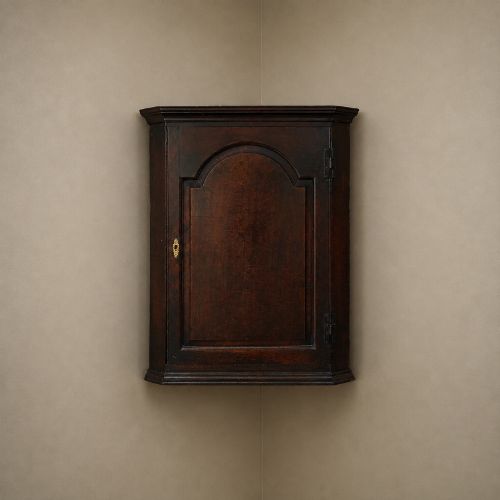
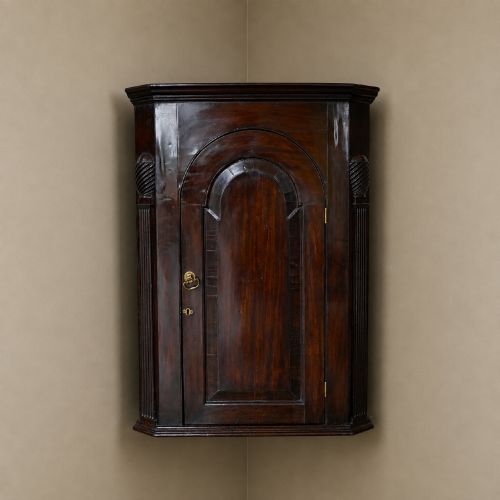
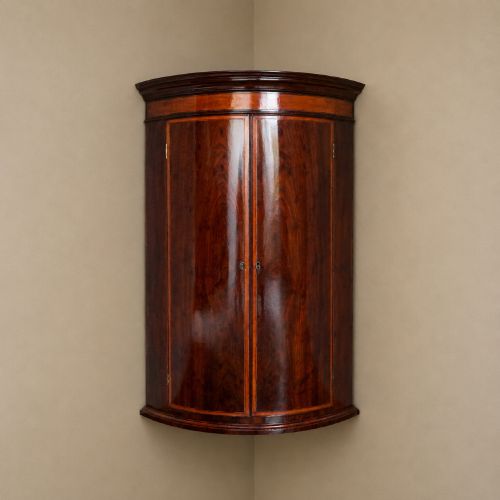
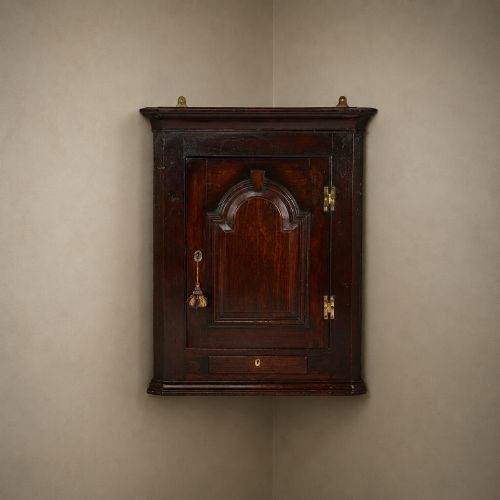
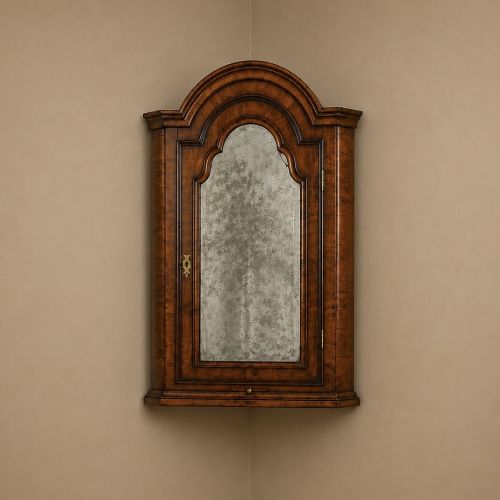
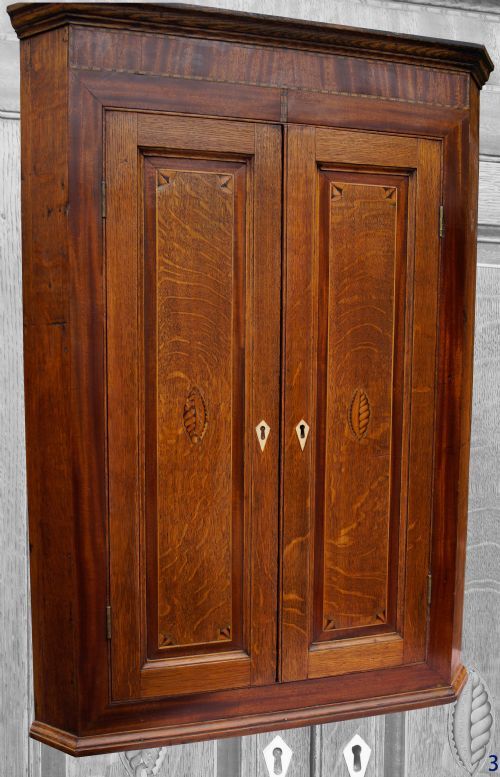
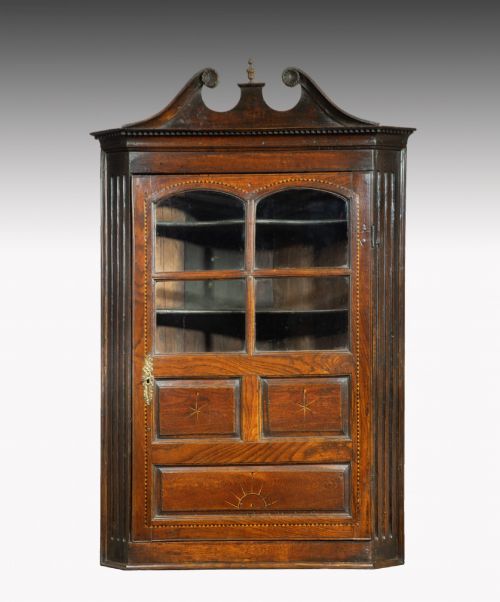
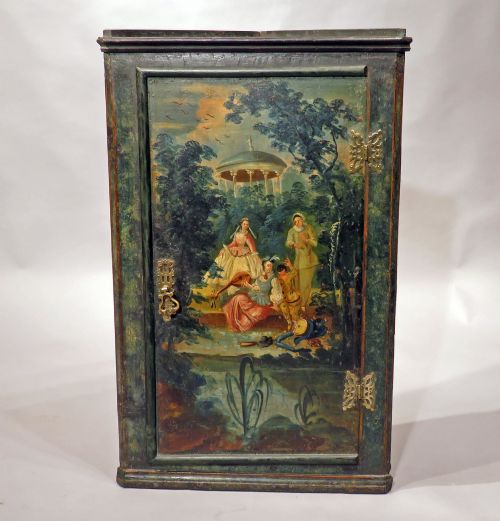
Georgian Corner Wall Cupboard
A georgian corner wall cupboard makes use of overlooked domestic angles while offering robust hanging storage for glassware, spirits or provisions.
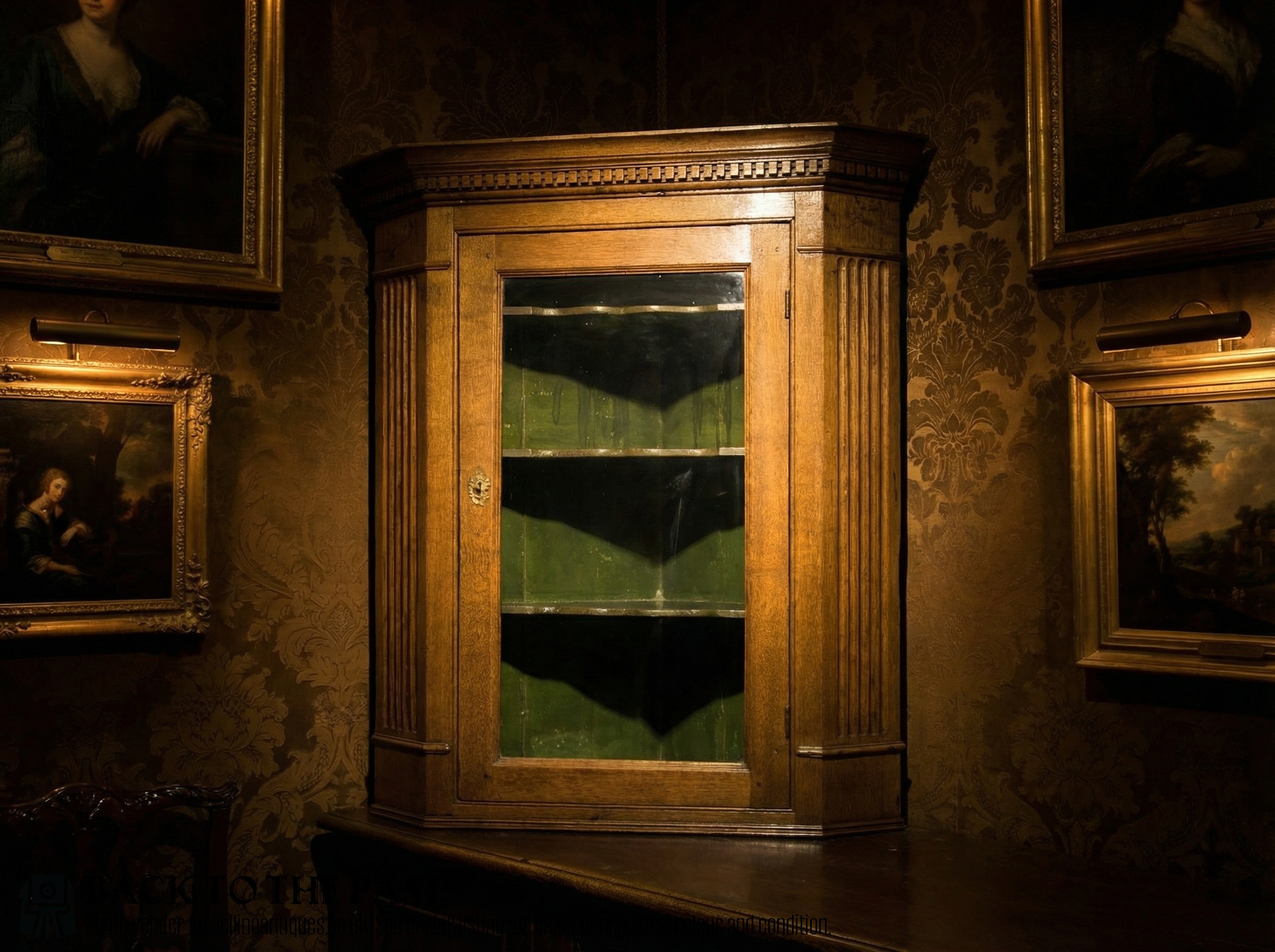
Georgian Corner Wall Cupboard
When you search for a georgian corner wall cupboard, you encounter hanging wall cabinets and floor-standing pieces built to fit domestic angles cleanly. The predominant style is Georgian, spanning the eighteenth and early nineteenth centuries, alongside later nineteenth-century interpretations and occasional mid-century revivals.
Originating primarily from English workshops, these cabinets served practical roles in domestic interiors, holding china, dried goods or bottled spirits. Surviving examples demonstrate how period joiners solved the spatial challenge of triangular room junctions.
Materials and Construction
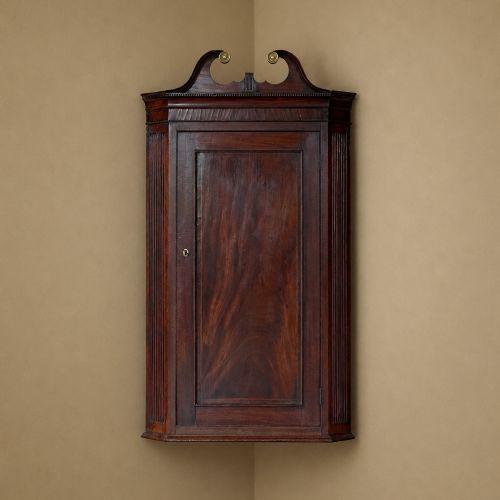
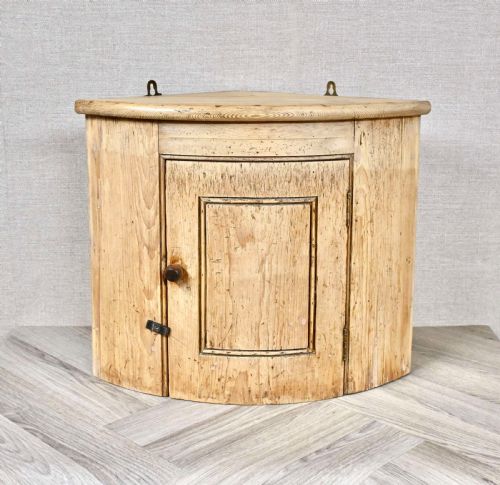
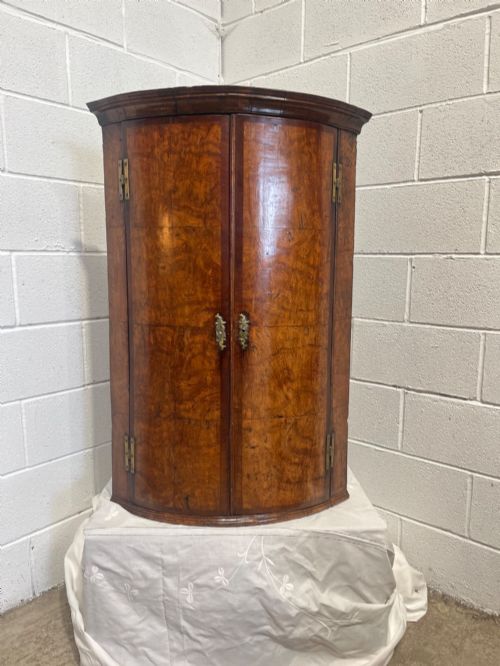
Makers utilised native timbers like oak and pine for robust carcases, while applying figured mahogany, walnut and plum pudding mahogany to primary exterior surfaces. Timber selection balanced structural integrity against decorative impact, reserving richly grained veneers for the prominent front elevation.
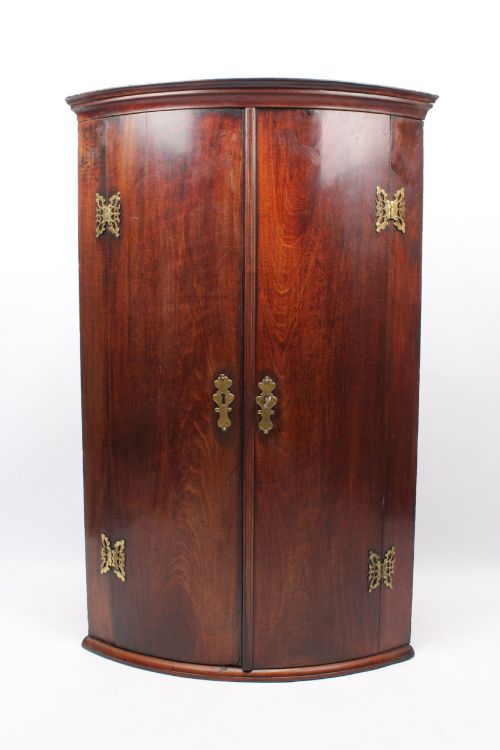
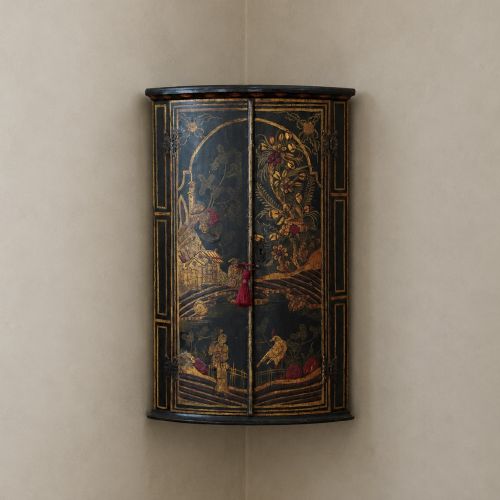
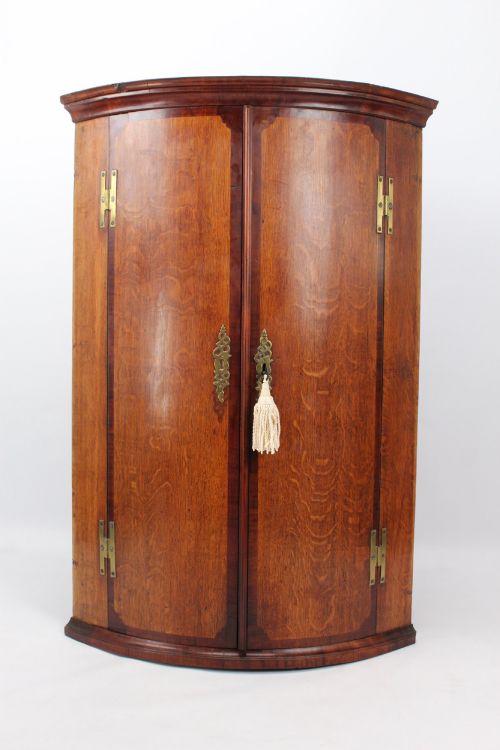
Construction methods relied on traditional joinery, including dovetail joints for drawers and mortise and tenon frames for doors. Surface decoration incorporated brass H-hinges, key escutcheons, inlay stringing and japanned or painted finishes in the Chinoiserie taste.
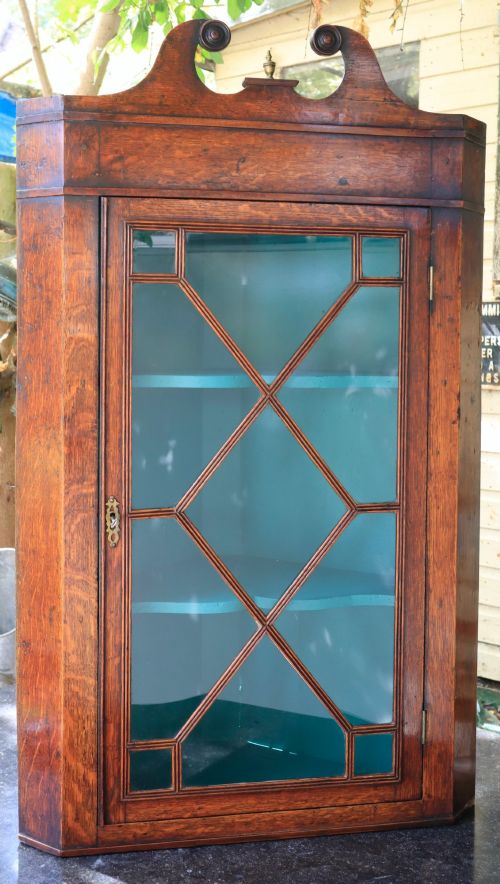
Glazing bars divided glass panes in display variants, and internal surfaces often retained original painted or white-washed coatings. The backboards typically consisted of vertically laid timber boards secured to wall mounting brackets.
Listings feature woods spanning mahogany, oak, walnut, pine and lacquer alongside periods from George I through to the twentieth century.
Evaluating the Craft
Quality rests upon the selection of timber figures, such as matched flame mahogany or burr oak veneers, paired with crispness in inlay and mouldings. Lesser pieces rely on plain, utilitarian pine or heavy, uninspired oak construction without decorative refinement.
The sophistication of the internal arrangement distinguishes finer examples, noting secret drawers, shaped shelving and original mirrored panels or candle slides. Structural proportion also matters, separating harmonious cabinet dimensions from heavy or awkward profiles.
The Georgian Corner Wall Cupboard Glossary
- Bow front
- A convex curved cabinet face that projects forward into the room. This profile softens the sharp angles of a corner installation.
- Chinoiserie
- European imitation of Chinese artistic motifs and techniques. It typically involves lacquered surfaces and painted gilt decoration.
- H-hinge
- A common surface-mounted brass hinge shaped like the letter H. It allows cabinet doors to swing open flush against adjacent walls.
- Plum pudding mahogany
- Highly figured tropical timber featuring dense, circular grain patterns resembling Christmas pudding. It was prized for luxury furniture fronts.
- Candle slide
- A small pull-out wooden shelf positioned beneath a door. It held lighting while the owner inspected the cabinet contents.
Georgian Corner Wall Cupboard: Frequently Asked Questions
How were corner cupboards mounted?
These cabinets were constructed with sturdy internal bracing and heavy backboards designed to anchor securely into wall studs. Surviving examples frequently retain original hanging brackets or iron strapwork to support the weight of stored ceramics and glass.
Because they occupied dead corner space, they released valuable floor area in smaller eighteenth-century rooms. The triangular footprint distributed weight effectively against two intersecting walls.
What is the difference between flat and bow front variants?
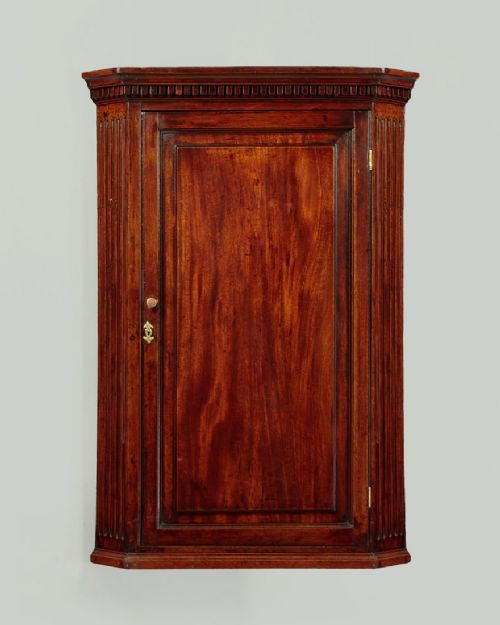
Flat front cabinets present a straight diagonal plane across the corner junction, offering a clean and architectural appearance. Bow front versions curve outward, providing greater internal volume and catching ambient light across polished mahogany veneers.
Both styles served the same domestic storage functions, though curved doors required more advanced woodworking skill from the original cabinetmaker. Selection between the two usually depended on the available clearance within the room.
How do I spot a replacement door or glass?
Astragal glazing bars on display doors should exhibit uniform timber ageing and match the construction of the main carcase frame. Hand-drawn glass panes display subtle surface ripples and small bubbles characteristic of early manufacturing methods.
Inconsistent wood species between the door frame and the body often point to later alterations or marriages of different components. Examining the hinge recesses and interior timber colour helps clarify the piece's original integrity.
Were these used for drinks storage?
Many surviving examples functioned as cellarets or spirit cupboards, housing decanters and glassware securely behind locked doors. Interior layouts occasionally feature small pigeonholes or partitioned spaces suited to holding bottles.
Their elevated position kept valuable spirits out of reach of household staff while remaining convenient for entertaining guests in the parlour or dining room.