

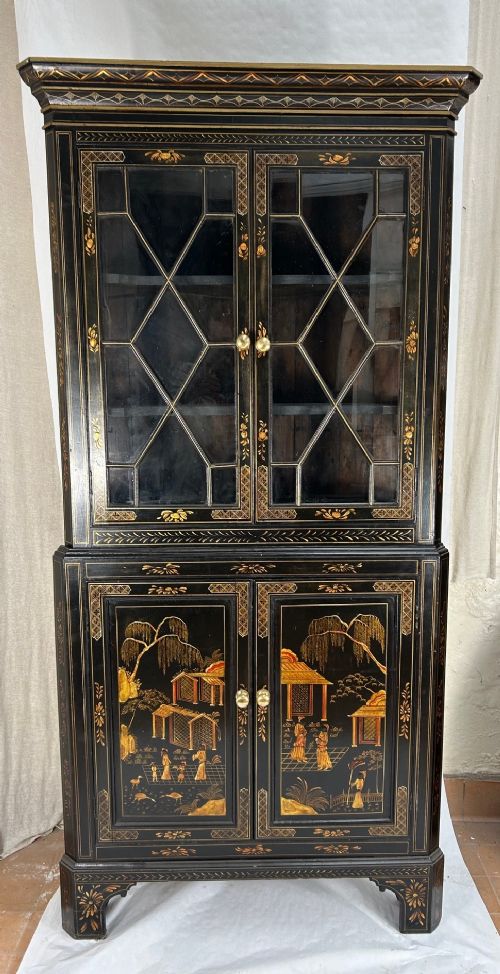
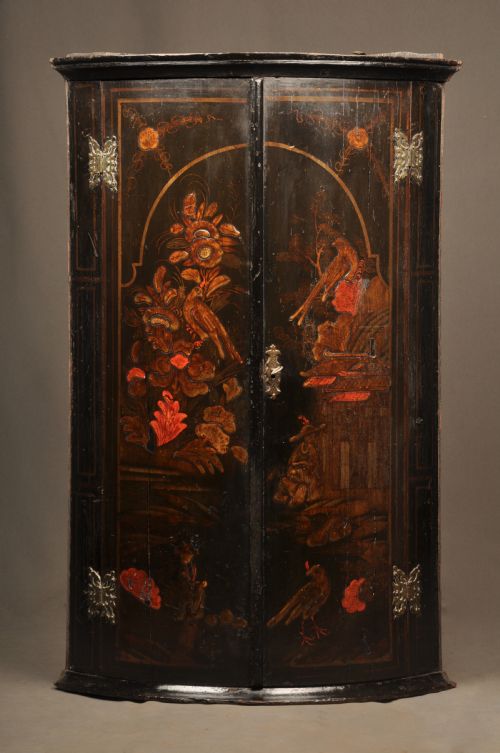
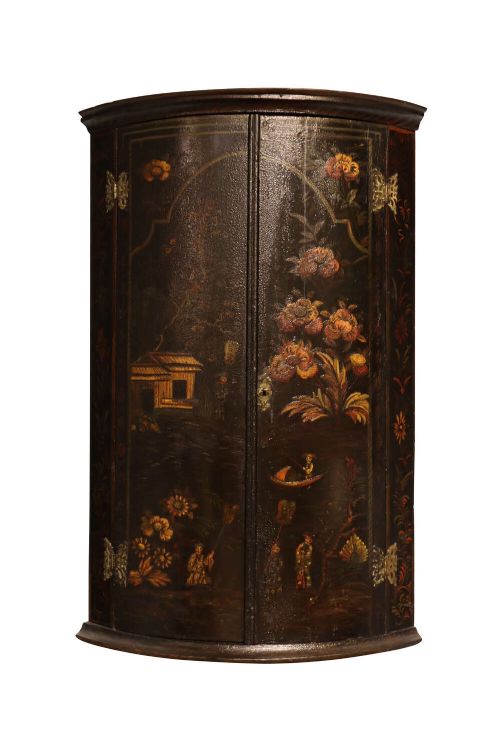


Georgian Chinoiserie Corner Cabinet
A georgian chinoiserie corner cabinet brings striking japanned decoration and corner storage to a room.
Georgian Chinoiserie Corner Cabinet
A georgian chinoiserie corner cabinet is a fitted or freestanding cupboard designed to sit neatly in the corner of a room while displaying painted oriental scenes. These pieces provide compact storage for precious items while introducing decorative surface work to domestic interiors.
The most frequently seen versions combine lacquered surfaces with painted figural motifs, landscapes or floral arrangements. Such cabinets reflect the enduring British fascination with Asian aesthetics adapted through eighteenth century and later craftsmanship.
How they were made
Makers constructed the carcase using timbers such as pine or softwood to provide a stable foundation for decorative finishes. Brass hinges and fittings secured the doors while adding functional contrast to the painted surfaces.
Artisans applied layers of lacquer in black, red or japanned finishes before building up raised or flat painted scenes in gilt and colour. This meticulous layering created the characteristic glossy sheen associated with the style.
Georgian Chinoiserie Corner Cabinet Retail Price Guide 2026
Typical asking prices for georgian chinoiserie corner cabinet among the pieces listed under this phrase on Sellingantiques today, from the lower quarter to the upper quarter. They describe what is for sale here now, not the wider market.
Some red japanned cupboards offer a bright splash of colour that proves eighteenth century decorators loved a bold statement.
What varies in quality
The sophistication of the painted or japanned decoration dictates the visual appeal and standard of the piece. Finer examples display intricate brushwork and detailed gilt figures that remain crisp across the curved surfaces.
Construction details such as the handling of the bow front and the integrity of the timber carcase influence the overall substance of the cabinet. Period authenticity in the lacquer work distinguishes genuine eighteenth century execution from later revival interpretations.
The Georgian Chinoiserie Corner Cabinet Glossary
- Japanning
- European imitation of East Asian lacquerwork using resin varnishes and metallic dust. This technique created the glossy black or red backgrounds typical of oriental style furniture.
- Lacquer
- A durable varnish made from natural resins or shellac applied in multiple coats. It formed the smooth protective base for decorative painting.
- Bow front
- A convex curved front that swells outward from the corners. This shape softened the angles of the room and added elegance to the cupboard.
- Corner cupboard
- A triangular storage unit built to fit precisely into the meeting point of two walls. It maximised floor space in smaller domestic rooms.
Georgian Chinoiserie Corner Cabinet: Frequently Asked Questions
Where should I place a corner cabinet?
These cabinets suit unused corners in reception rooms, dining areas or hallways where they utilise awkward angles efficiently.
Their triangular footprint allows them to anchor a room without obstructing main thoroughfares.
How do I clean lacquered furniture?
Dust surfaces gently with a soft, dry microfibre cloth to prevent scratching the delicate finish.
Avoid using water, chemical polishes or abrasive cleaners that can damage the old lacquer and gilt work.
Can these hold heavy items?
Internal shelving is typically designed for displaying ceramics, glassware or lighter decorative objects rather than heavy books.
Checking the stability of the internal supports helps determine safe storage capacity for everyday use.
How do I date a chinoiserie cabinet?
Examine the underlying timber construction, hinge types and the style of the japanned decoration to establish the likely period.
Eighteenth century examples show distinct structural ageing and hand mixed pigments compared to later Edwardian or Victorian revivals.