

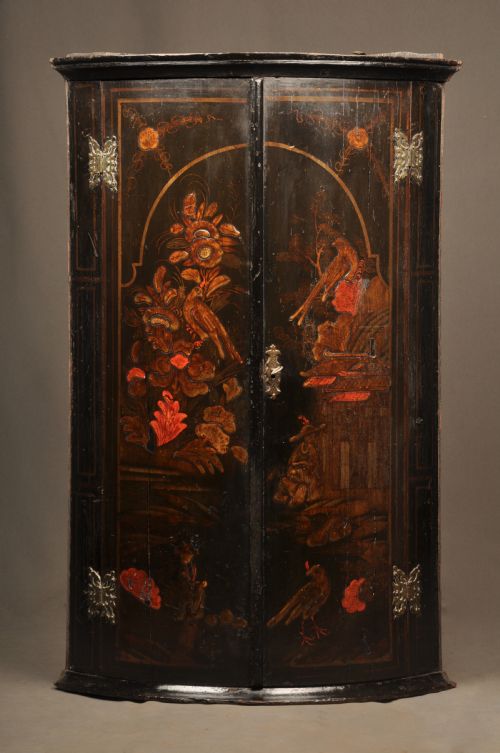

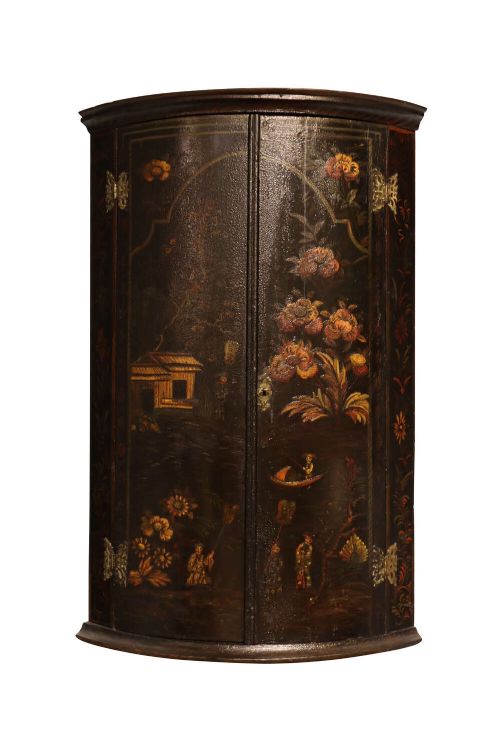


18th Century Japanned Cabinet
An 18th century japanned cabinet brings bold Chinoiserie ornament and rich lacquer into a room, offering both historic presence and practical storage.
18th Century Japanned Cabinet
When you search for an 18th century japanned cabinet, you find case furniture decorated with simulated oriental lacquerwork in the European taste. The selection ranges from corner cupboards and standard corner cabinets to bureaux, bureau bookcases, and elaborate cabinets on stand.
The forms span the 18th Century and Georgian periods, alongside later nineteenth-century revivals such as Queen Anne style pieces dated to eighteen-sixty. Cabinets on stand and corner cupboards appear most frequently among the current stock, reflecting the domestic demands of their original period.
Origins vary from English workshops producing Georgian Chinoiserie to continental centres like Venice, evidenced by items such as the Venetian travelling bureau on table. These pieces served diverse functions, acting as grand display furniture or compact medal cabinets and collectors cabinets.
How they were made
The construction relies on sturdy carcassing woods, primarily pine and softwood, which provide a stable foundation for the layered decorative surface. Cabinetmakers built these pieces using traditional joinery before surface specialists applied the intricate finish.
The distinctive finish combines lacquer and lacquered wood with applied gold leaf and brass hardware. Artisans built up multiple coats of varnish and pigment to create a dark or coloured ground, then embellished the surface with raised figures, landscapes, and floral motifs in gilt.
18th Century Japanned Cabinet Retail Price Guide 2026
Typical asking prices for 18th century japanned cabinet among the pieces listed under this phrase on Sellingantiques today, from the lower quarter to the upper quarter. They describe what is for sale here now, not the wider market.
One recorded piece carried royal association as a collectors cabinet belonging to Clive of India.
What varies in quality
The distinction between average and exceptional pieces lies in the crispness and depth of the japanned decoration. Superior examples display finely rendered figures and landscapes with well-preserved gold leaf, whereas lesser pieces show worn surfaces and flat, formulaic painting.
The structural integration of the stand and cabinet significantly influences overall merit. Cabinets that retain their original synchronized stands and appropriate brass mounts command greater respect than those with mismatched or heavily restored lower sections.
The 18th Century Japanned Cabinet Glossary
- Japannng
- European imitation of East Asian lacquerwork, created by building up layers of varnish and resin decorated with gold and painted motifs. This technique allowed British and continental craftsmen to satisfy the intense Georgian demand for oriental goods.
- Chinoiserie
- The European interpretation and imitation of Chinese and East Asian artistic traditions, prominent in architecture, furniture, and decorative arts during the period. It appears frequently on these cabinets through whimsical figures, pavilions, and pagodas.
- Cabinet on stand
- A raised storage furniture form consisting of an upper enclosed cabinet resting upon a separate or integrated support structure with legs. This configuration elevates the decorative surface to eye level and lightens the visual mass of the room.
- Bureau bookcase
- A dual-purpose writing desk featuring a sloping fall-front writing surface combined with upper shelving enclosed by doors. These taller case pieces combine extensive storage with sophisticated japanned display surfaces.
18th Century Japanned Cabinet: Frequently Asked Questions
What is an 18th century japanned cabinet?
An 18th century japanned cabinet is a piece of storage furniture finished with European lacquerwork mimicking Asian designs. These items utilise techniques of layered varnish and gilt decoration on wood carcasses.
They encompass various forms including corner cupboards, bureaux, and cabinets on stands created during the Georgian era and the eighteenth century.
How were japanned cabinets used originally?
These cabinets served to store valuables, documents, books, or specialist collections while displaying the owner's wealth and sophisticated taste. Their elaborate Chinoiserie decoration made them focal points in formal rooms.
Smaller variants functioned as travelling desks or dedicated medal cabinets, housing precious items securely within elaborately decorated compartments.
How do I care for lacquer furniture?
Keep japanned furniture away from direct sunlight and steady heat sources to prevent the lacquer finish from drying out and cracking. Maintain a stable indoor climate to protect both the softwood carcass and the delicate gold leaf.
Dust gently with a soft, dry cloth and avoid chemical polishes or water, which can permanently damage the historic varnished surface.
How can I tell the period of a cabinet?
Examine the construction timbers, such as pine and softwood, alongside the joinery methods and the style of the brass hardware. Eighteenth-century pieces exhibit characteristic construction traits and authentic ageing in the lacquer layers.
Compare the decorative motifs and form against documented examples from the Georgian period or later nineteenth-century revivals like Queen Anne style pieces.