



Georgian Lacquered Corner Cabinet
A georgian lacquered corner cabinet brings vibrant Chinoiserie storytelling into a neglected room angle, offering both deep shelving and striking painted decoration.
Georgian Lacquered Corner Cabinet
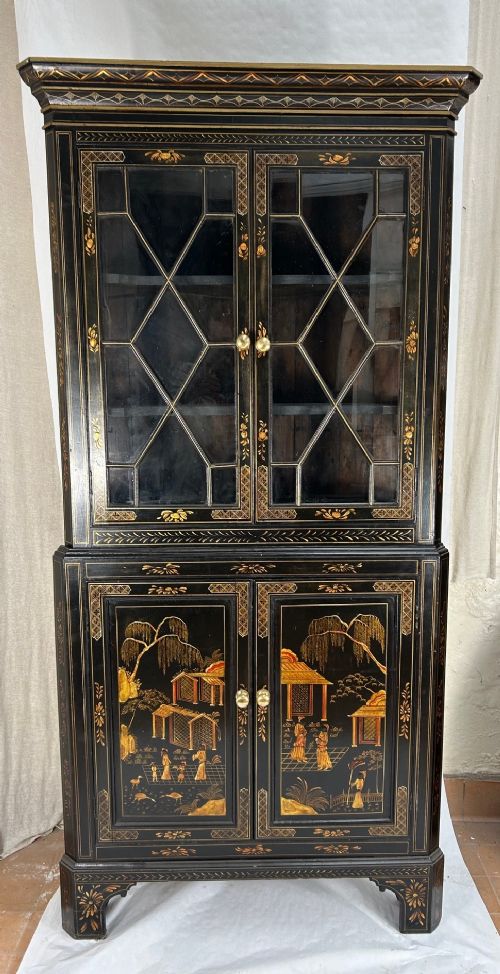
A georgian lacquered corner cabinet is a fitted or freestanding storage piece designed to occupy the meeting point of two walls while displaying decorative painted scenes. These pieces turn awkward architectural dead zones into focal points through angled doors and tiered interior shelving.
The versions encountered on this page span from early eighteenth-century examples to later revivals from the Victorian, Edwardian, and 1920 periods. While genuine Georgian and eighteenth-century pieces provide period authenticity, Edwardian and 1920 adaptations continue the aesthetic using similar corner forms.
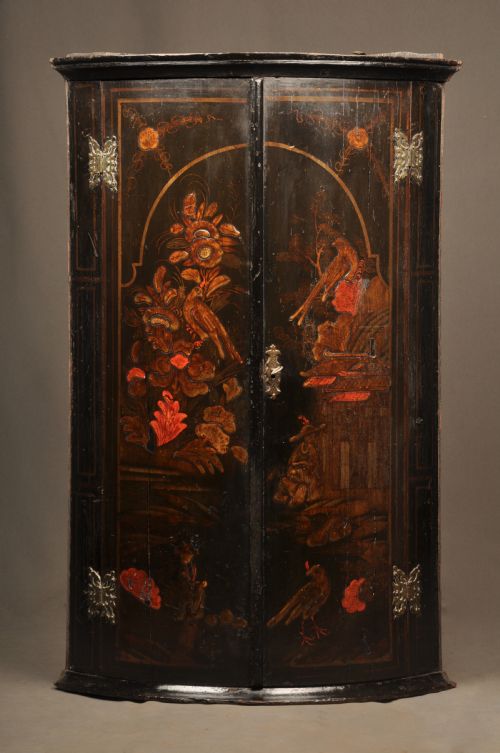
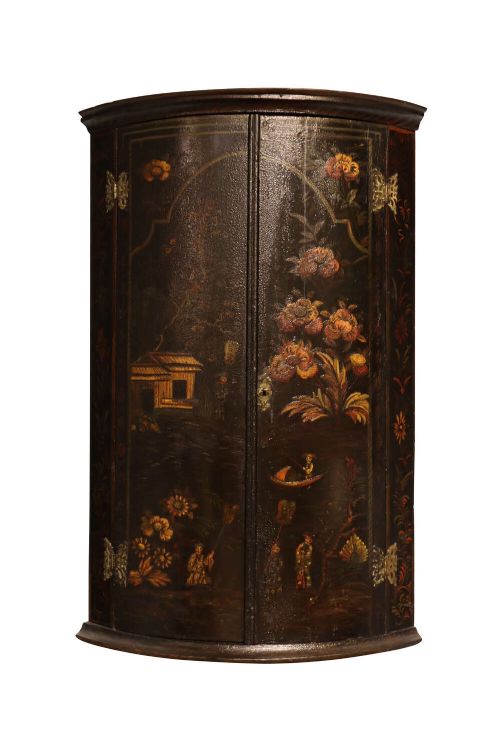
Most entries in this category take the form of corner cupboards with single or double doors, sometimes featuring bow fronts. They rely on softwood or pine carcases finished with elaborate lacquerwork rather than plain timber surfaces.
Materials and construction methods
Makers constructed the structural carcase from pine or softwood to keep the angled unit light enough for wall mounting or stable corner placement. This timber foundation received layers of lacquer and paint to build up the smooth decorative ground.
Surface decoration frequently employs Chinoiserie motifs rendered in gilt and paint over black or red lacquer backgrounds. Brass hardware, including hinges and escutcheons, secures the doors and punctuates the painted panels.
Georgian Lacquered Corner Cabinet Retail Price Guide 2026
Typical asking prices for georgian lacquered corner cabinet among the pieces listed under this phrase on Sellingantiques today, from the lower quarter to the upper quarter. They describe what is for sale here now, not the wider market.
Listings feature periods spanning from the 18th century through the Victorian and Edwardian eras to 1920.
Distinguishing quality across examples
Quality reveals itself in the depth and intricacy of the lacquer and gilt work across the door panels. Finer examples display meticulous hand-painted figures and landscapes that retain crisp detail, whereas simpler pieces show coarser brushwork.
The integrity of the timber carcase and the original brass hinges also mark the difference between standard production and superior craftsmanship. Cabinets retaining their early painted surfaces without extensive later repainting command greater attention from purists.
The Georgian Lacquered Corner Cabinet Glossary
- Chinoiserie
- European decorative style reflecting Chinese artistic influences, featuring whimsical landscapes, pagodas, and figures. This style dominates the surface artwork of lacquer cabinets.
- Japannan
- European imitation of traditional East Asian lacquer finishes, popular in British furniture production. It involves layering varnish and paint to create a hard, glossy surface.
- Bow front
- A convex, outwardly curved front facade on a cabinet or cupboard. This shape softens the angular geometry typical of corner furniture.
- Escutcheon
- A protective plate surrounding a keyhole, often fashioned from brass on these cabinet doors. It serves both a functional and a decorative purpose.
Georgian Lacquered Corner Cabinet: Frequently Asked Questions
How do I hang a corner cabinet?
Most corner cupboards feature internal fixing points or brackets designed to secure the carcase directly to wall studs through the back panels. Because these pieces carry considerable weight from their timber and glass components, professional installation into solid masonry or reinforced studs is essential.
Once secured, ensure the unit sits level so the heavy doors swing true on their brass hinges without sagging or binding against the frame.
What is the difference between lacquer and japanning?
Traditional East Asian lacquer utilises natural sap from the lacquer tree, whereas British cabinet makers used japanning techniques involving shellac, resin, and varnish applied to a wood base. Japanning became the standard European method for achieving the glossy, hard-wearing decorated surfaces seen on eighteenth-century furniture.
Both finishes create a reflective ground for gilt Chinoiserie motifs, though japanned surfaces tend to exhibit distinct craquelure and ageing patterns over centuries.
Where should I place a corner cabinet?
These cabinets suit dining rooms, hallways, or living spaces where standard rectangular furniture wastes floor area. Placing the unit away from direct sunlight and heating vents protects the sensitive lacquer and paint layers from drying out and cracking.
Positioning the cupboard at eye level allows the internal shelves to display glassware or ceramics while making the painted door panels easily visible.
How do I date a lacquer cabinet?
Dating relies on examining the construction timber, hinge types, and the stylistic execution of the Chinoiserie painted scenes. Eighteenth-century examples typically feature hand-cut dovetails, wrought iron or early brass hardware, and organic craquelure in the lacquer.
Later Victorian, Edwardian, and 1920 pieces often display machine-sawn timbers, standardised fixings, and brighter pigment retention that distinguishes them from earlier production.