

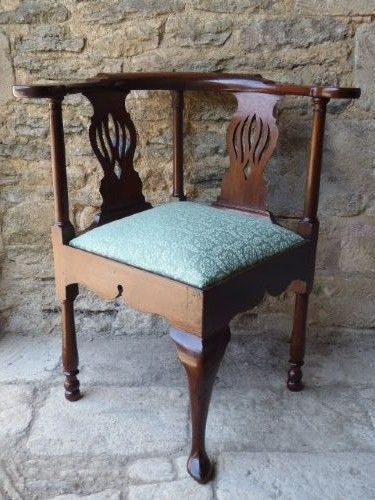
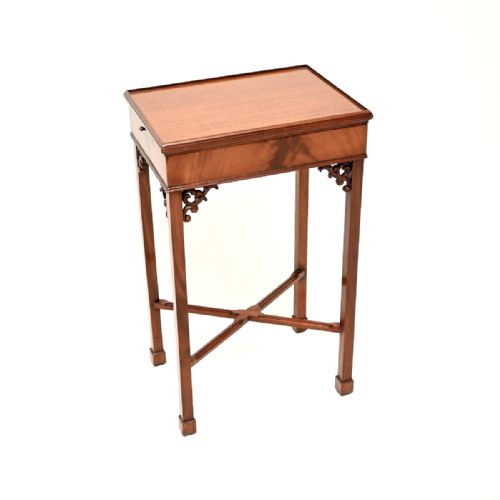
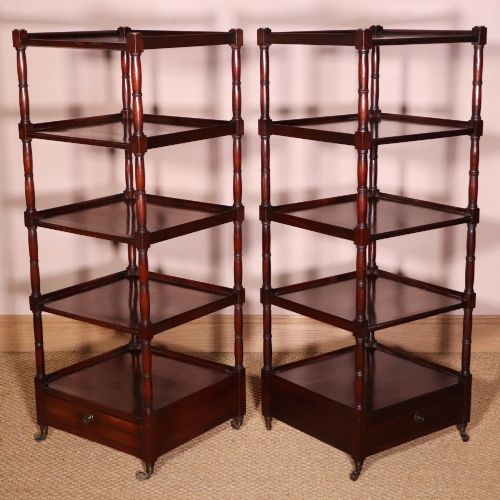
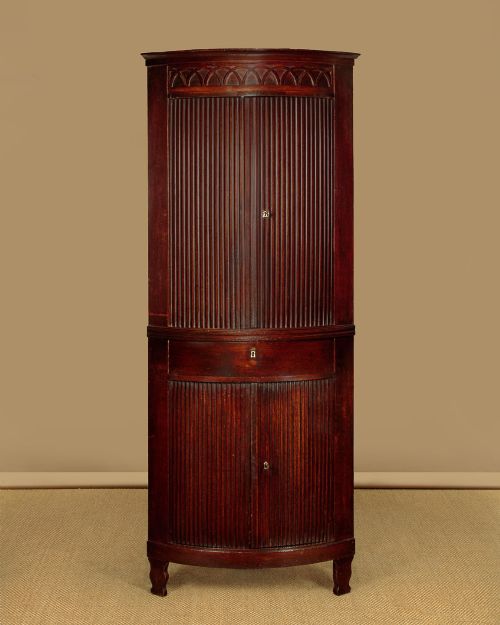
Georgian Corner Furniture
Georgian corner furniture solves spatial problems with intelligent design, offering fitted wall cabinets, washstands and chairs built to inhabit neglected angles.
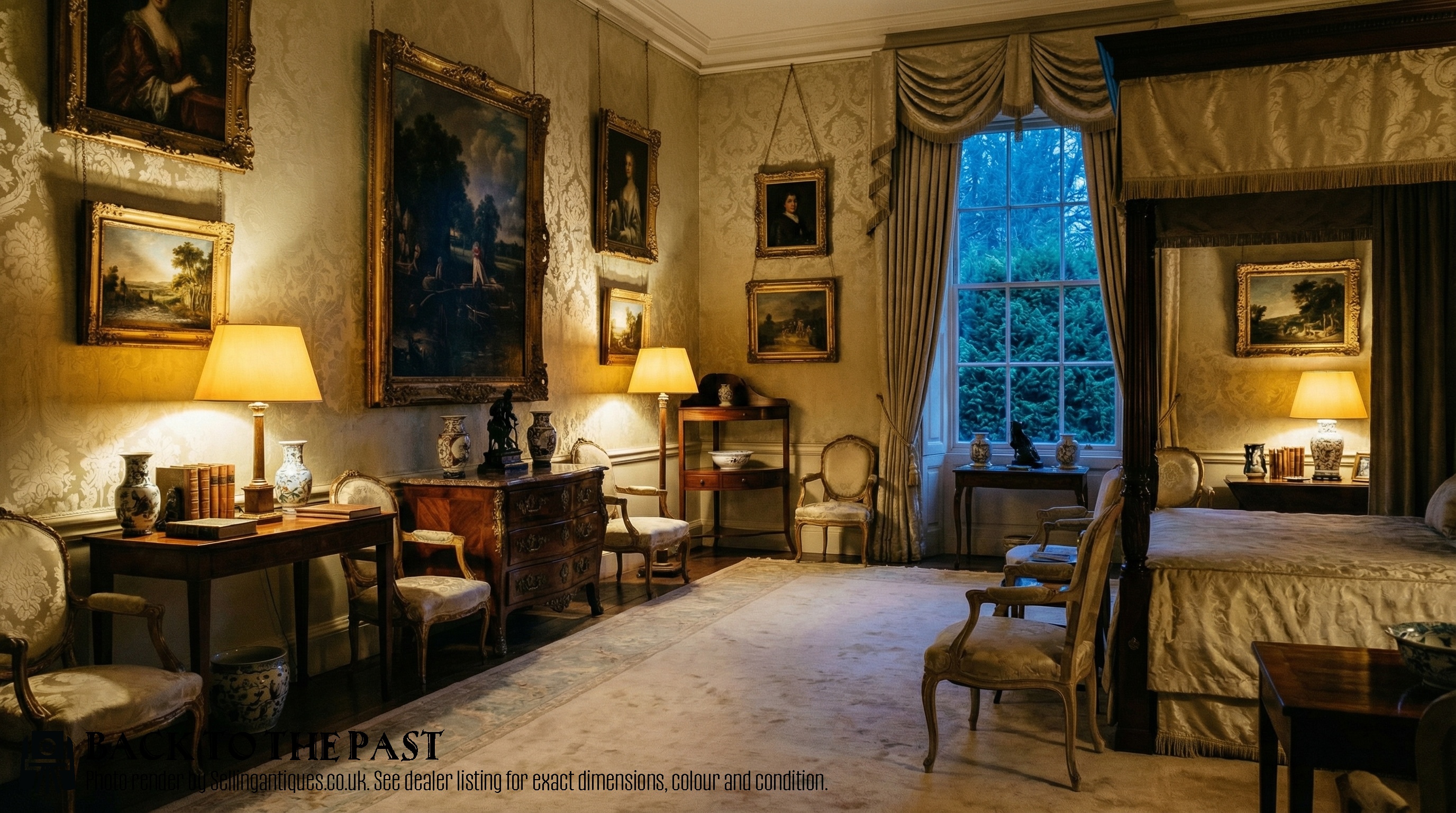
How georgian corner furniture was made
Cabinetmakers constructed these items using dense hardwoods like mahogany, oak, and walnut, frequently employing secondary timbers for internal shelving and backboards. Construction relied on precise dovetail joints and sturdy framing to ensure stability when mounted on walls or standing independently.
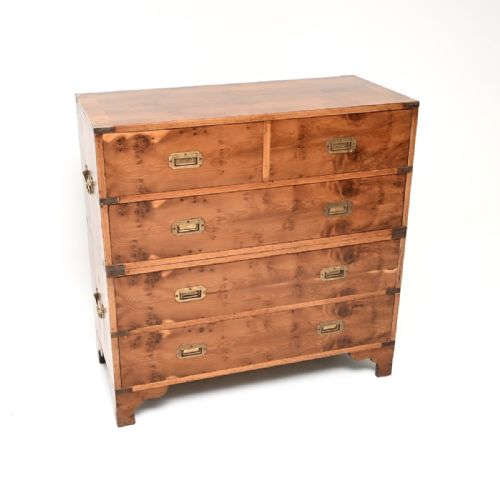
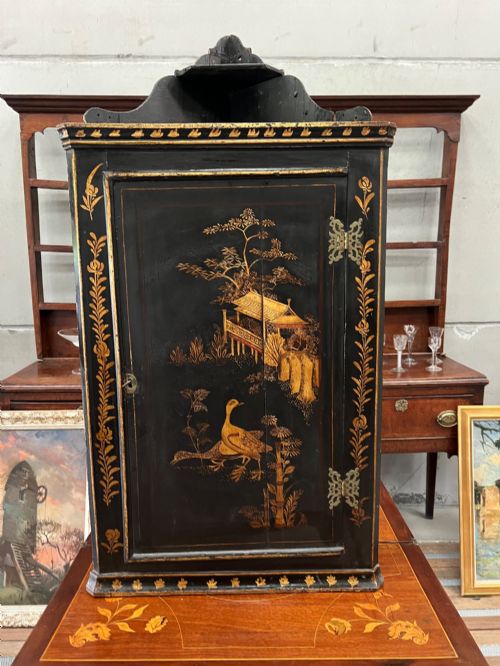
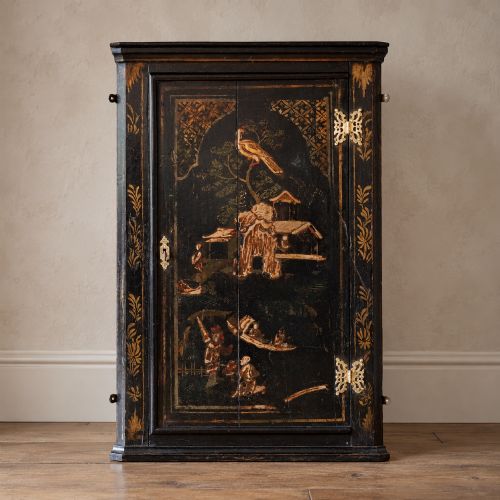
Surface decoration involved clever veneer work, including plum pudding mahogany and burr oak, sometimes enhanced by lacquer, Chinoiserie painting, or inlaid boxwood and brass fittings. Washstands incorporated clever folding mechanisms and compartments for glassware and bowls.
What varies in quality in georgian corner furniture
The calibre of georgian corner furniture depends heavily on the selection of timber and the sophistication of its surface grain. Pieces featuring figured plum pudding mahogany, burr oak, or detailed marquetry sit above plain vernacular pine or simpler oak examples.
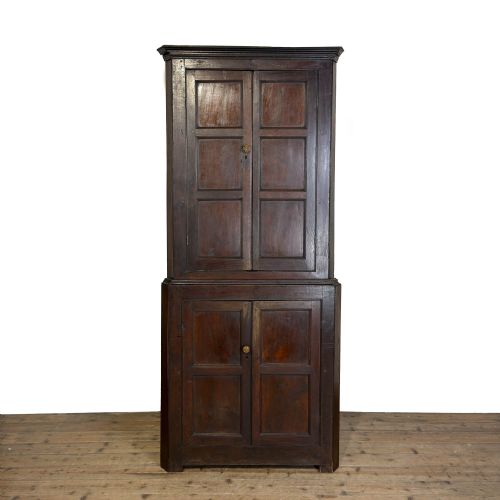
Construction nuance dictates value, visible in the precision of the door panel housing, the retention of original brass hardware, and intact interior paint or keys. The ambition of the form, from a simple hanging box to a grand architectural two-part standing cupboard, marks the upper tier.
Georgian Corner Furniture Retail Price Guide 2026
Typical asking prices for georgian corner furniture among the pieces listed under this phrase on Sellingantiques today, from the lower quarter to the upper quarter. They describe what is for sale here now, not the wider market.
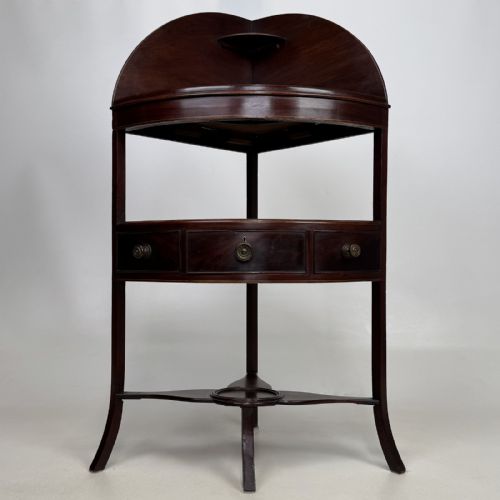
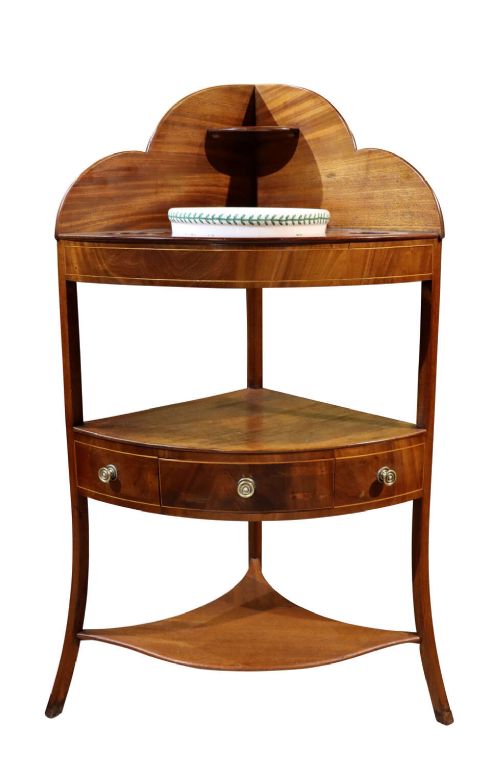
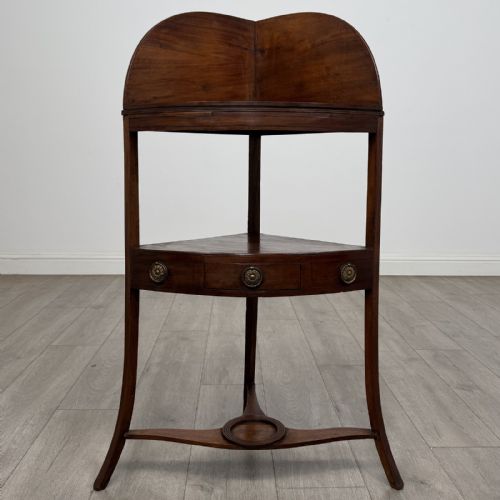
Several washstands feature folding tops designed to hide morning ablution gear away from polite afternoon company.
Gillows
The Georgian Corner Furniture Glossary
- Corner cupboard
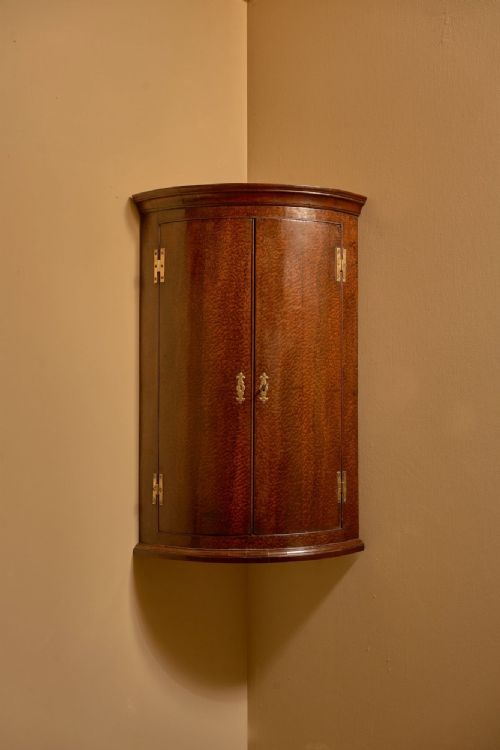
- A cabinet built with a triangular footprint designed to fit snugly into the internal angle of a room. These can be wall-mounted or floor-standing.
- Washstand
- A specialised piece of furniture featuring cutouts for basins and storage for washing equipment. Some folding variants include glass components.
- Chinoiserie
- A European decorative style reflecting Chinese artistic motifs, often executed in lacquer on furniture surfaces. This finish creates raised or flat painted scenes.
- Plum pudding mahogany
- A highly figured tropical hardwood variety exhibiting speckled, mottled markings resembling the interior of a traditional pudding. It was favored for fine cabinet fronts.
Georgian Corner Furniture: Frequently Asked Questions
What is georgian corner furniture?
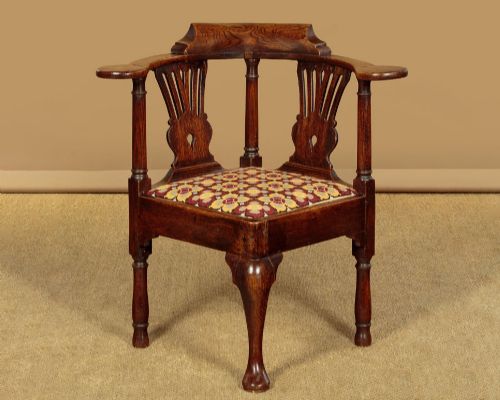
Georgian corner furniture encompasses cabinets, washstands, and seating specifically designed to occupy the ninety-degree junctions of rooms. These items maximise floor or wall space while providing functional storage.
Craftsmen produced these objects in various scales, from compact wall-hanging cupboards to grand double-height floor-standing architectural pieces.
How were corner cupboards used?
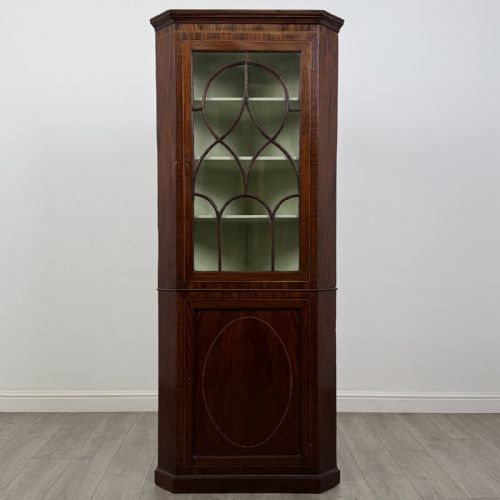
Hanging and standing corner cupboards primarily served to display ceramic tableware, glassware, and valuable household items behind glazed or panelled doors. They kept dining rooms and parlours organised without obstructing central floor space.
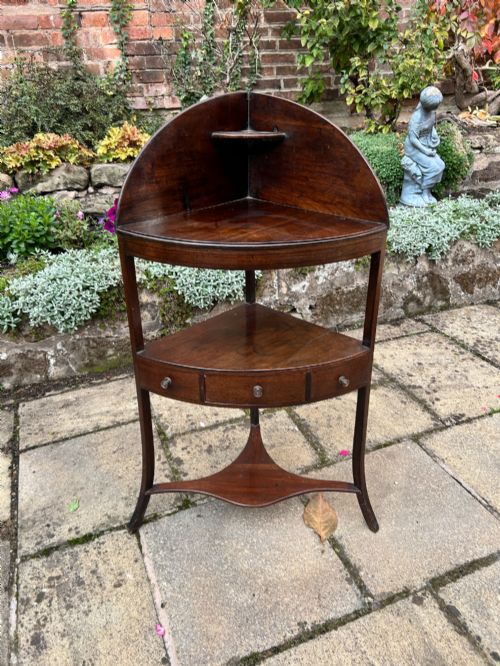
Washstands provided a dedicated station for morning hygiene routines, holding basins, water jugs, and personal grooming accessories within triangular frames.
How do I live with a corner cabinet?
Integrating a corner cabinet into a modern interior involves mounting wall units securely into structural studs or placing floor cabinets where room angles remain underutilised. They anchor awkward corners and draw the eye upward.
Lighting placed nearby enhances the timber grain, whether mahogany, walnut, or oak, while the interior shelving offers practical display space for collections.
How do I tell periods apart?
Distinguishing periods relies on observing timber choices, decorative motifs, and construction techniques. Earlier 18th-century examples often display rich walnut or heavy oak vernacular framing.
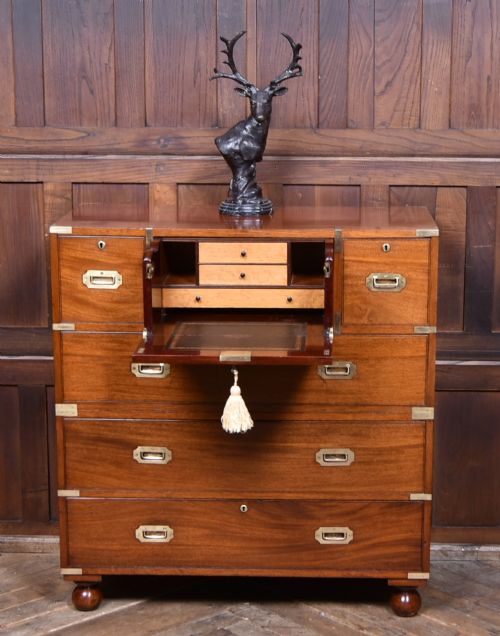
Later Regency and 19th-century pieces incorporate lighter satinwood, brass inlay, campaign styling, or painted surfaces, reflecting shifting interior design tastes.