
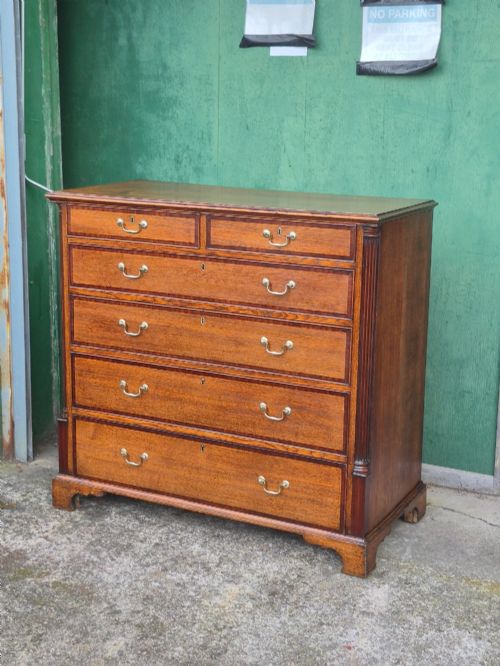
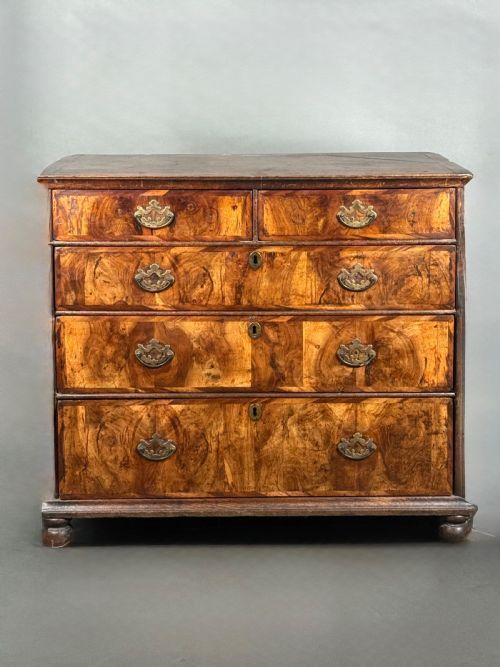
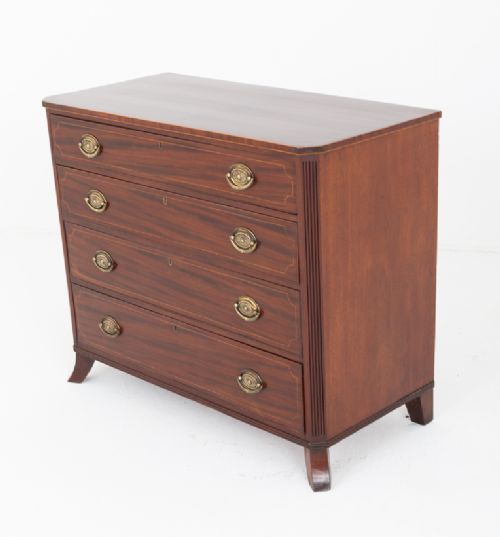
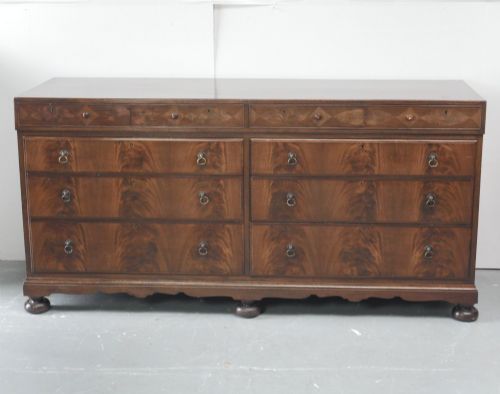
Georgian Chest of Drawers
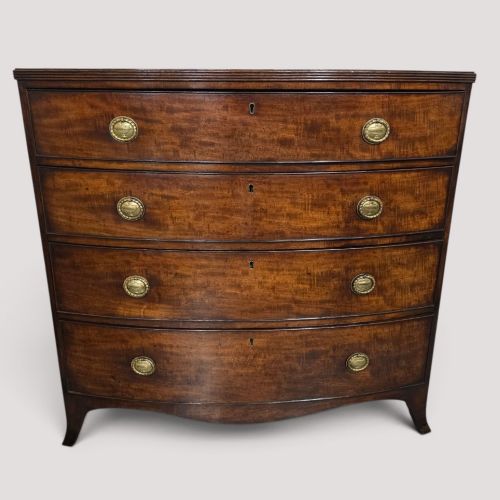
A case of four or so long drawers in a rectangular carcass, made for folded clothes and linen in the bedroom and dressing room.
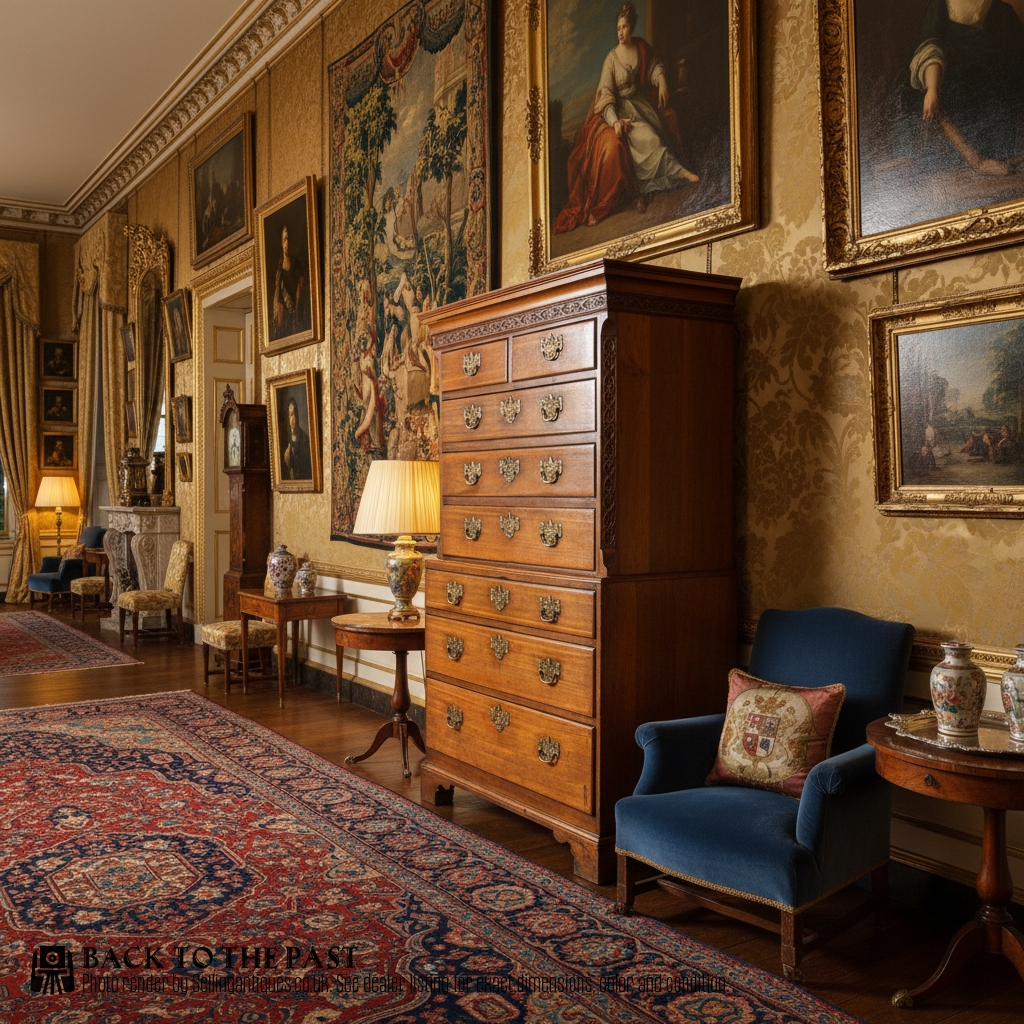
Georgian Chest of Drawers
The form grew out of the seventeenth-century lidded chest, drawers replacing the lift-up top. By the eighteenth century it was standard bedroom furniture, made in solid and veneered timbers, and in two-part versions where more height was wanted.
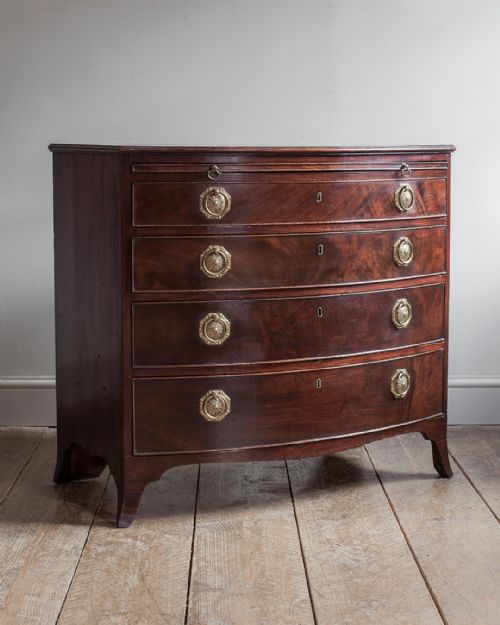
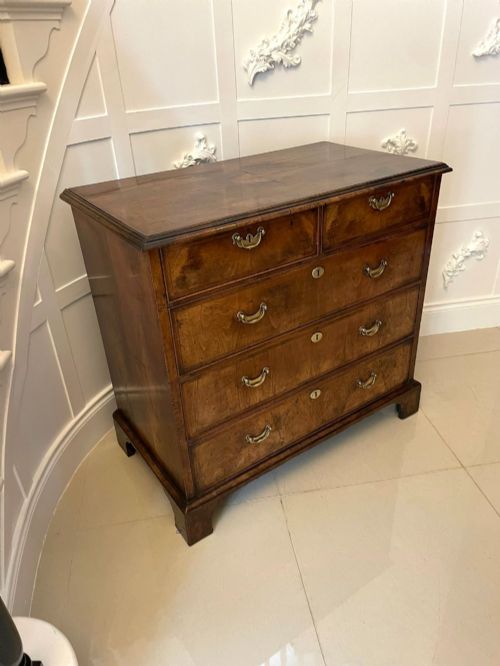
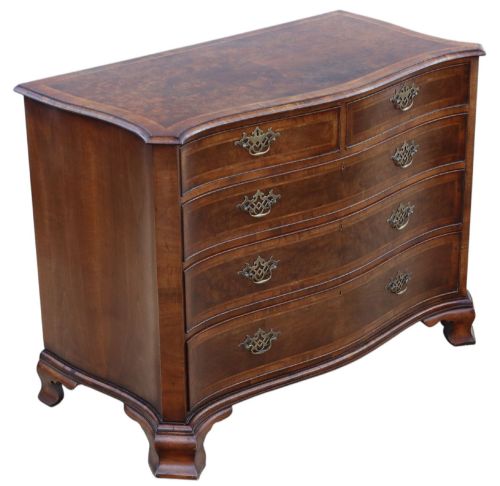
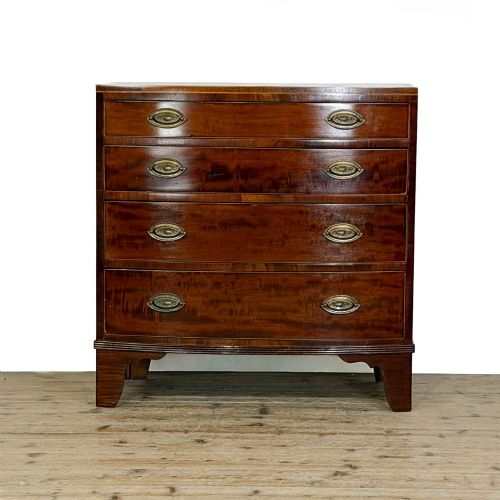
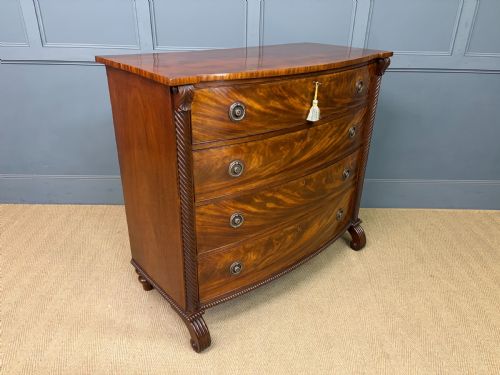
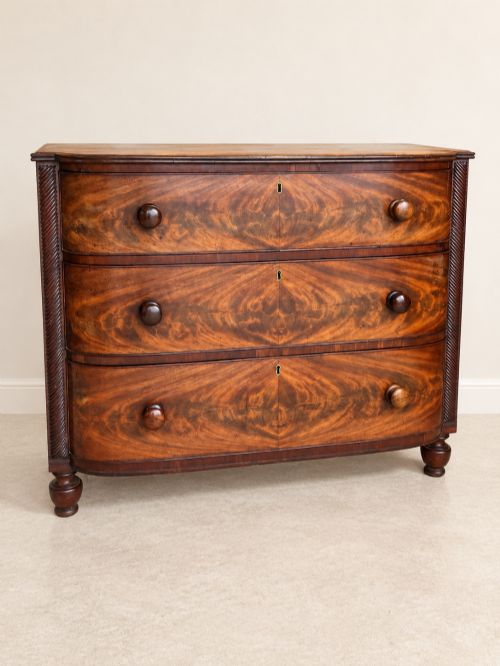
The chest you'll meet again and again under this heading is mahogany, straight or bow fronted, four long drawers or two short over three long, standing on bracket feet. Mahogany runs to 1,700 of 2,929 titles on Sellingantiques. Oak comes next, then walnut. Shaped fronts split into two named families and no more: bow, spelled three ways across some 305 titles, and serpentine at 153. Everything else is straight.
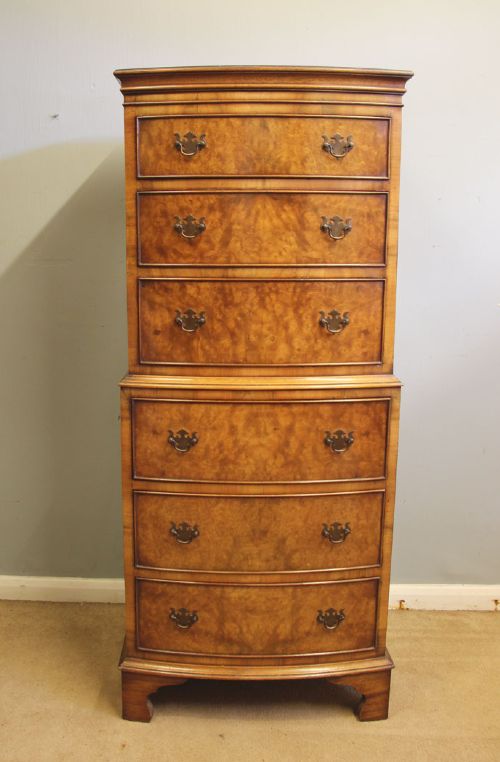
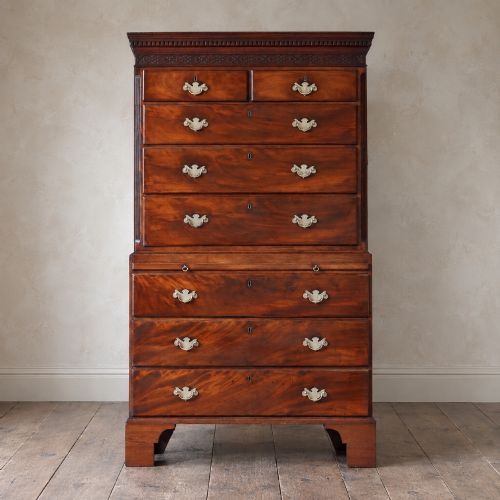
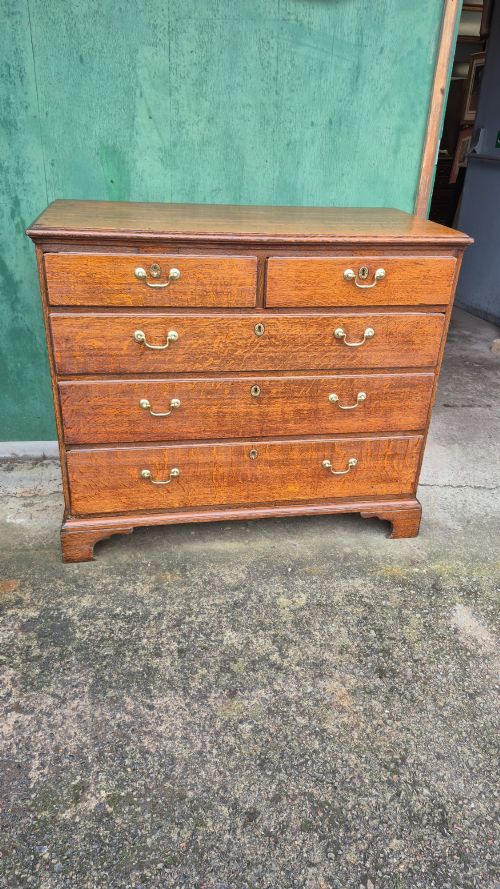
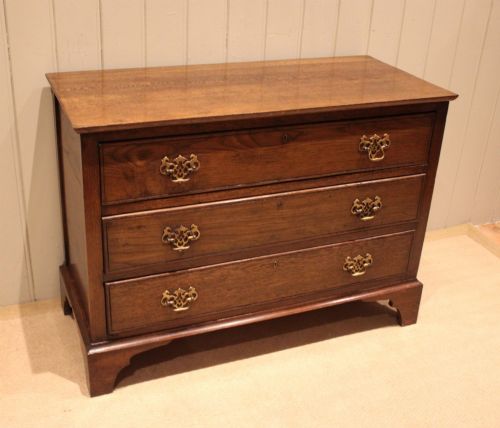
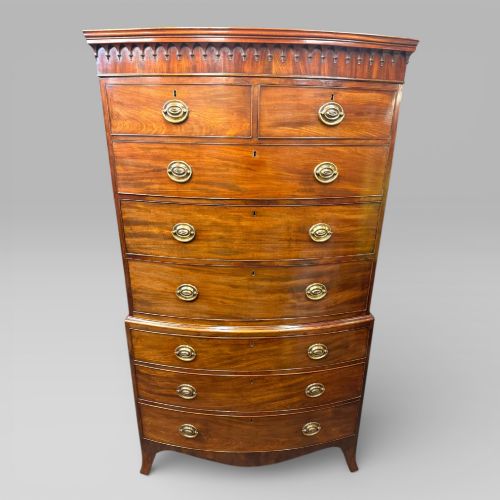
The heading takes in the taller relatives too. Tallboys and chest-on-chests account for 169 titles, chests on stand 79, with linen presses, secretaire chests and commodes alongside them. Country oak and pine chests form their own branch, and walnut, including burr and feather-banded early work, another.
Dealers date by reign rather than by year. "Georgian" alone is the dated field for 1,347 listings, and only 585 carry a clean figure. Those figures run from 1700 to 1930, which means the heading covers Queen Anne-era walnut at one end and twentieth-century Georgian revival cabinetwork at the other. The period word in a title isn't by itself evidence of an eighteenth-century date.

What Separates Them
Timber and figure do most of the work. Burr and figured walnut sit at the top, with flame and figured mahogany close behind; plain oak and pine chests sit at the bottom of the range. Shape adds to it: serpentine fronts push highest, bow fronts next, straight fronts lowest.
Two-part construction lifts a piece. Tallboys, chest-on-chests and chests on stand occupy most of the very top, and matched pairs, when they appear, sit near it. Small proportions are the other thing dealers push hard. "Small" turns up in 459 titles, almost one in six, and bachelor's chests with their hinged folding tops cluster toward the upper end rather than the lower.
Surface and fittings count where they're stated. Original brasswork, original handles, original paint and original patina all appear in the wording of higher-placed pieces, and 59 titles mention paint of some kind, including simulated oak on pine. Date matters last but plainly: eighteenth-century pieces sit above the 1900 to 1930 revival copies, which cluster lower and in the middle.
Georgian Chest of Drawers Retail Price Guide 2026
Typical UK retail prices for georgian chest of drawers, calculated from the Sellingantiques database of over a million retail prices indexed since 2003. This retail price guide relies exclusively on Sellingantiques data; no external sources or auction records are used, so the figures do not describe the wider market.
Shaped fronts on Sellingantiques fall into two named families: bow, in about 305 titles, and serpentine, in 153. The rest are straight.
Gillows
The Georgian Chest of Drawers Glossary
- Bow front
- A convex curved front to the drawers and carcass. Written bow front, bow fronted or bowfront in titles, and the commonest named shape in the category.
- Serpentine
- A front shaped in a double curve, convex at the centre and concave at the sides. Around 153 titles use the word.
- Two over three
- Drawer arrangement: two short drawers above three long ones. Three over three and two over four are recorded in the same way.
- Tallboy
- A tall two-part chest, a smaller upper case standing on a larger lower one. Also catalogued as chest on chest. A chest on stand is the related form, raised on a separate legged stand.
- Brushing slide
- A pull-out board above the top drawer, used for brushing or laying out clothes. Named in 43 titles.
- Bachelor's chest
- A small chest, usually with a hinged folding top. Spelled bachelors, bachelor's or batchelors depending on the dealer.
Georgian Chest of Drawers: Frequently Asked Questions
What does Georgian mean in these listings?
It's the dealer's shorthand for period, and it's used far more than any year. The dated field reads simply "Georgian" for 1,347 listings, ahead of "18th Century" at 481 and "1800s" at 266.
Behind it sit both eighteenth-century originals and later copies. Where a clean year is given, it runs anywhere from 1700 to 1930.
Which timber is most common?
Mahogany, in 1,700 of 2,929 titles. Oak follows at 425, walnut at 306, with pine and scattered elm and fruitwood behind them.
Within those, figure gets named: flame mahogany in 49 titles, burr walnut in 69, figured in 42.
Are tallboys sold under this heading?
Yes. Tallboy or chest on chest appears in 169 titles and chest on stand in 79, alongside linen presses, secretaire chests and commodes.
Those two-part forms take up most of the very top of the range.
How can I tell a revival chest from a period one?
The dated field is the plainest signal the archive gives. A visible twentieth-century tail sits in it: 1920s for 75 listings, 1930s for 41, 1900s for 37, 1910s for 30.
Titles carrying "Georgian style" or "Georgian revival" match that tail, and 35 titles use the word revival outright.
Why do so many titles say small?
Because modest width sells. "Small" appears in 459 titles, almost one in six, making it the single most advertised virtue in the category.
Small chests turn up across the whole range, not only at the cheaper end. Bachelor's chests, which are small by definition, sit toward the top.
Do these chests carry maker's names?
Rarely. Only one name in the whole archive is handled by more than three dealers, and it appears stamped or as an attribution rather than as a label.
Other proper names in titles are style words, describing a manner of design rather than a workshop.