

Georgian Ceramic Platter
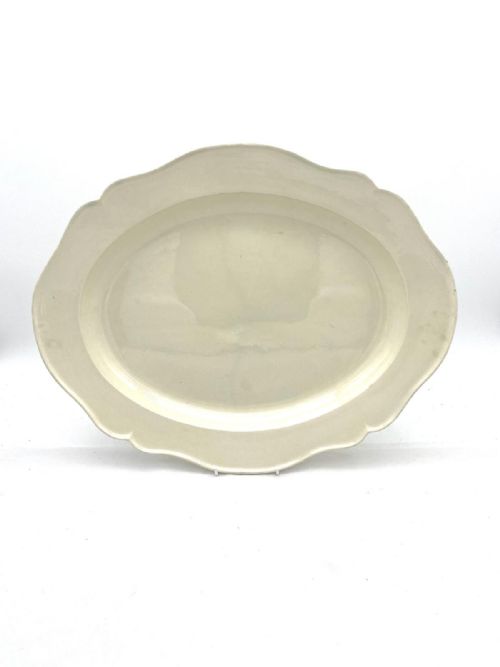
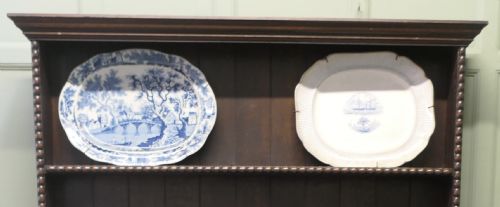
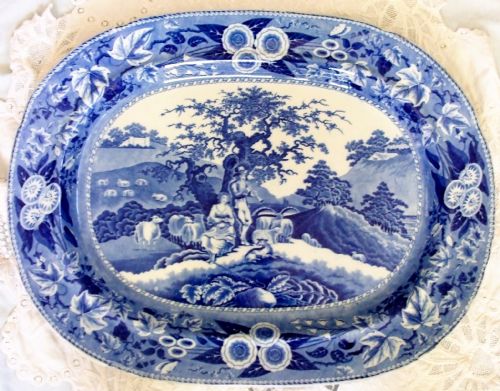
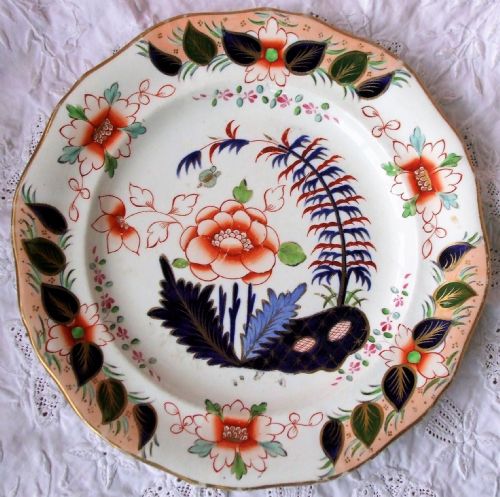
These georgian ceramic platter examples bring transfer-printed scenes and hand-painted colour to the table.
What They Are
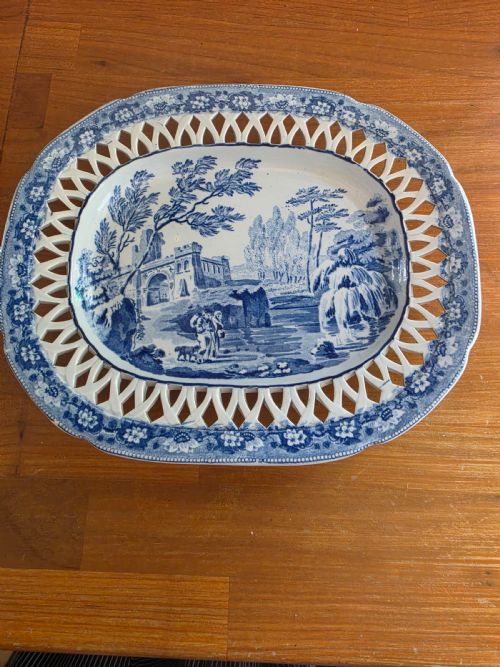
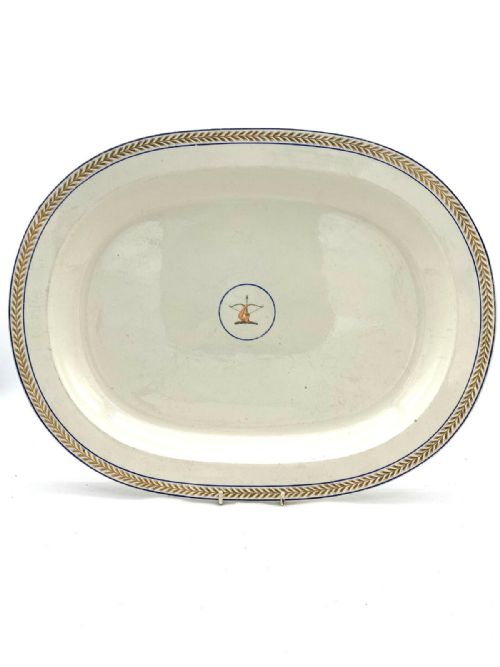
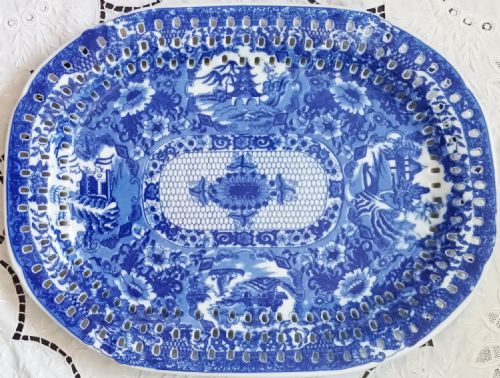
A georgian ceramic platter serves as a large serving dish or footed stand for the table, originating from the nineteenth century and the Regency era. These pieces appear in forms such as pottery platters, pierced serving dishes, and cheese dishes.
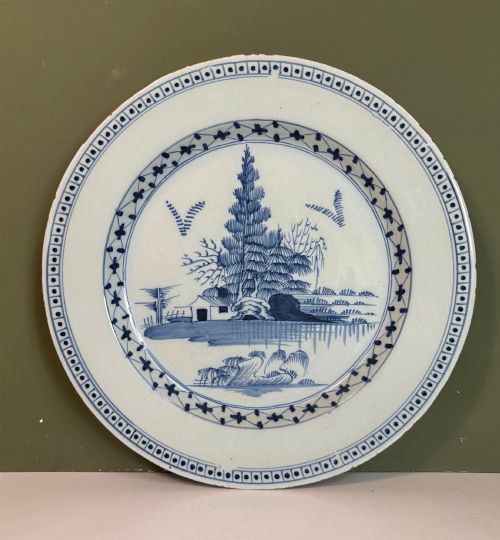
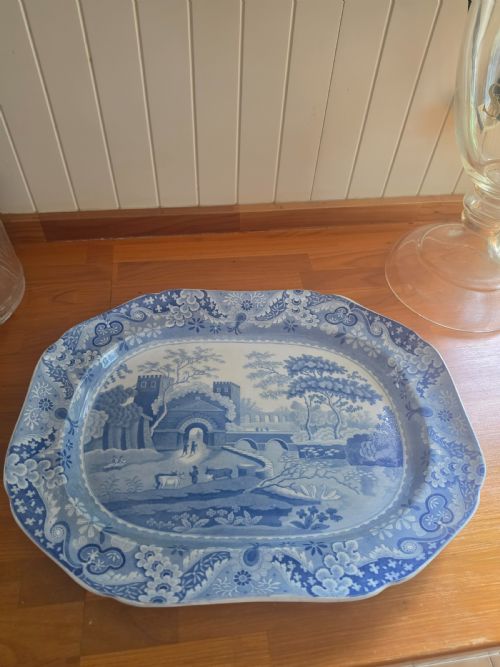
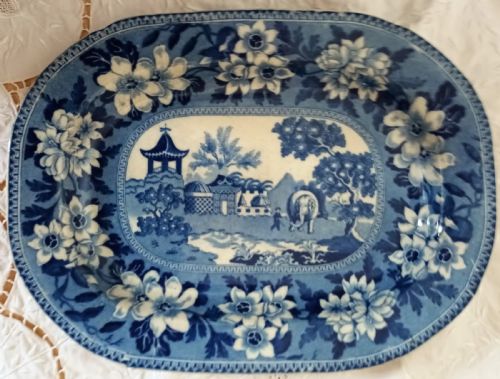
The marketplace listings show English earthenware bodies decorated with blue and white transfer printing, hand colouring, and enamel details. Makers recorded in the evidence include Hicks & Meigh and Brameld & Co., alongside patterned pieces like the Canovian Statues stand.
Buyers meet wares produced across the Georgian period, often bearing printed pattern titles such as Piping Shepherd, Net, and Returning Woodman. The forms range from standard serving platters to specialised stands and cheese dishes.
How They Were Made
Potters shaped earthenware bodies to form heavy serving platters and specialised dishes, finishing the surfaces with an opaque or translucent glaze. Cobalt pigment created the deep blue transfer-printed scenes found on many examples.
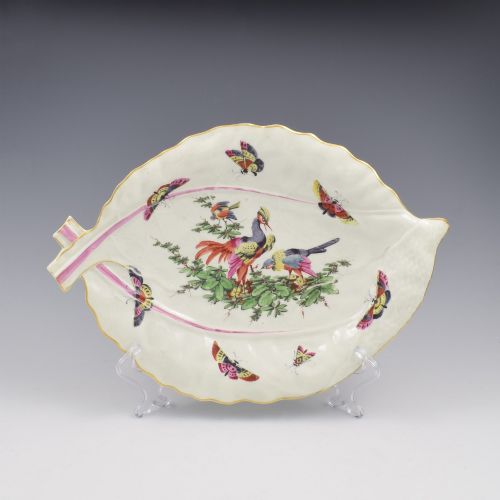
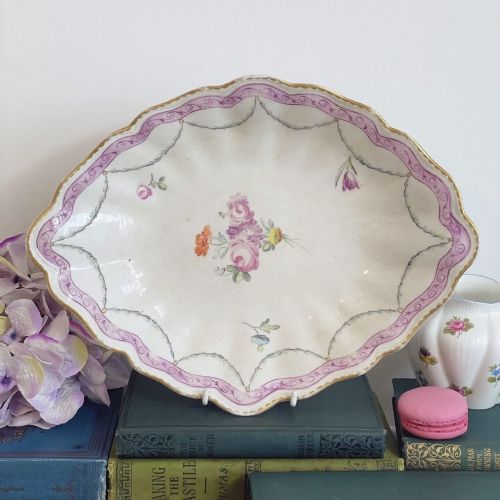
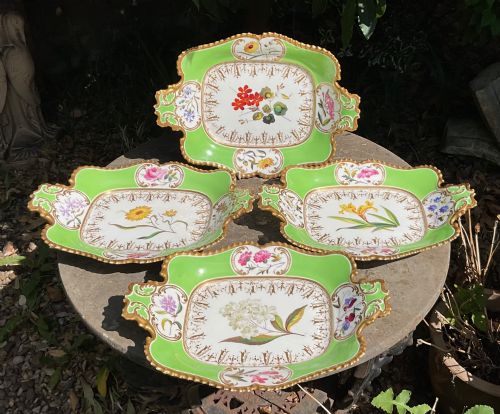
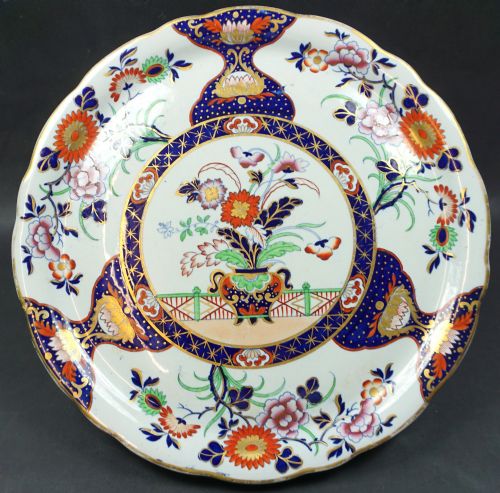
Makers applied hand-coloured enamel washes over transfer-printed outlines on certain pieces to enrich the palette of the design. Gilding also appears on select earthenware items to accent the rims and decorative borders.
Retail Price Guide 2026
Typical UK retail prices for georgian ceramic platter, calculated from the Sellingantiques database of over a million retail prices indexed since 2003. This retail price guide relies exclusively on Sellingantiques data; no external sources or auction records are used, so the figures do not describe the wider market.
Current listings feature earthenware bodies decorated with cobalt pigment, enamel, and gilding from the nineteenth-century Georgian era.
What Varies in Quality
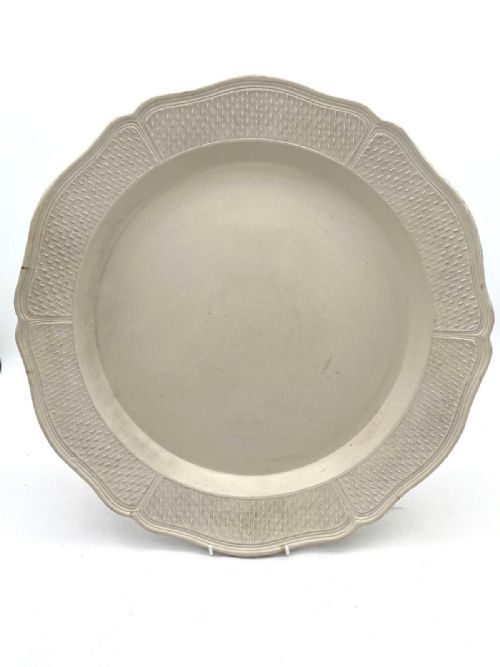
The clarity and depth of the cobalt pigment in the transfer print distinguish finer blue and white platters from simpler productions. Sharpness in the impressed or pierced border work, such as the net patterns, marks the skill of the pottery.
Additional hand colouring and enamel work add layers of detail that elevate a standard earthenware dish. The precision of the glaze application and the crispness of the maker attribution also shape the standing of each piece.
Hicks & Meigh·Brameld & Co.
The Georgian Ceramic Platter Glossary
- Earthenware
- A porous pottery body fired at lower temperatures, commonly used for Georgian tableware and serving dishes. It requires a protective glaze to hold liquids.
- Transfer printing
- A technique where an engraved copper plate transfers a design onto tissue paper, which is then stamped onto the ceramic body. This method allowed for intricate pictorial scenes like the Piping Shepherd.
- Pearlware
- A refined earthenware developed during the Georgian period featuring a slightly bluish glaze that pooled in crevices. It bridged the gap between creamware and later white ironstone.
- Cobalt pigment
- A metallic oxide used under the glaze to produce deep, stable blue tones during high-temperature firing. It forms the basis of classic blue and white transfer ware.
- Pierced work
- Openwork cut into the wet clay of a dish or platter rim before firing to create decorative lattice or net patterns. It demands high skill from the potter to avoid warping.
Frequently Asked Questions
What were these platters used for?
These large ceramic pieces served food at the dining table, holding joints of meat, cheeses, or courses of vegetables during Georgian meals.
Pierced variants and stands also functioned as draining dishes or centrepiece supports for desserts.
How do I date a Georgian platter?
Dating relies on the ceramic body type, such as pearlware versus standard earthenware, alongside the style of the transfer-printed border and scene. Maker marks and named patterns provide direct links to active operating years.
Changes in glaze formulation and blue pigment hues also help narrow the production window within the nineteenth century.
Can I use these for serving food?
While structurally sound as historic earthenware, nineteenth-century glazes and bodies can absorb liquids and sustain staining over time. Many collectors prefer to display them on walls or dressers rather than subject them to modern dining use.
Hand-washing is essential if utilised, avoiding harsh detergents and automatic dishwashers.
How do I identify transferware patterns?
Pattern names often appear printed on the reverse of the platter or integrated within the central design landscape. Reference books and archive records match these titles to specific potteries like Brameld or Hicks & Meigh.
Border motifs surrounding the main picture also help attribute unmarked pieces to particular workshops.