
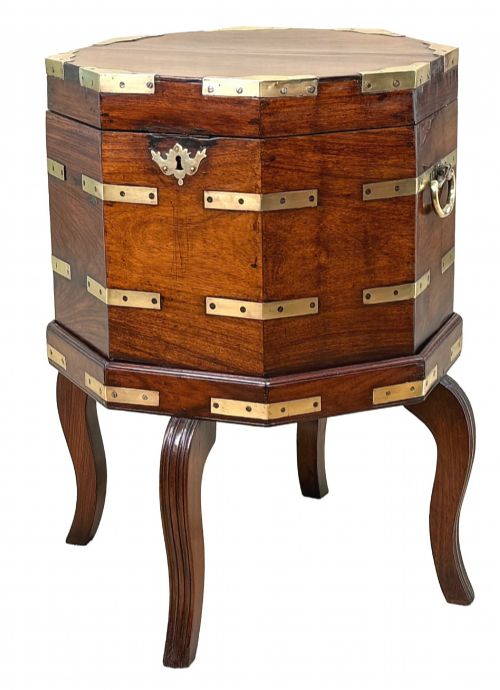
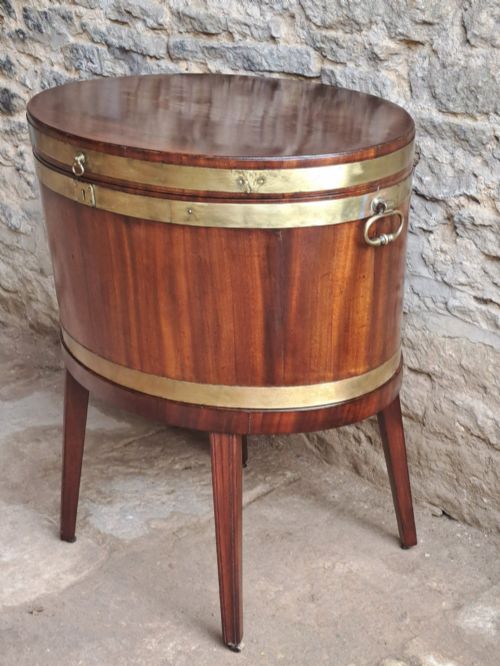
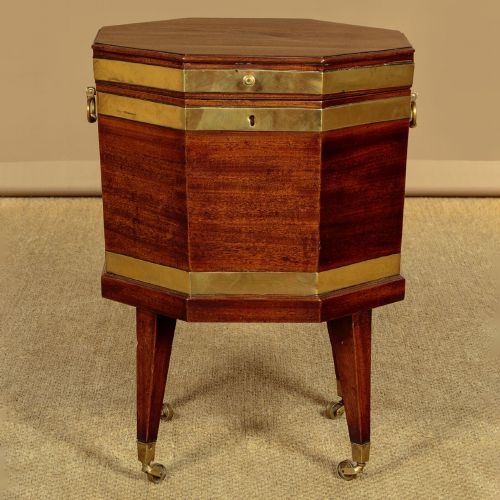
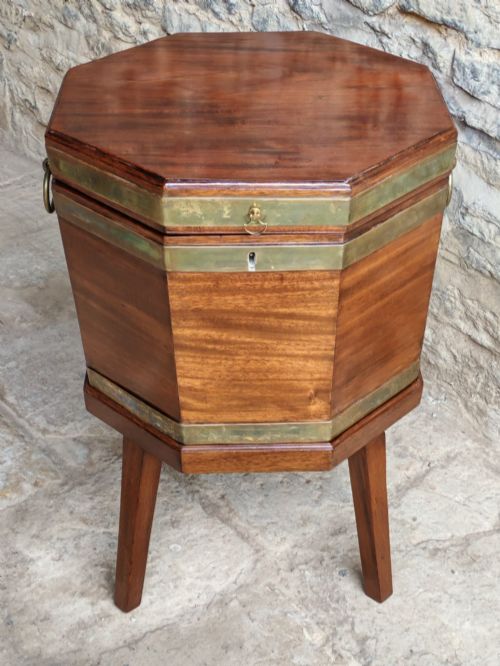


Georgian Cellarette Cabinet
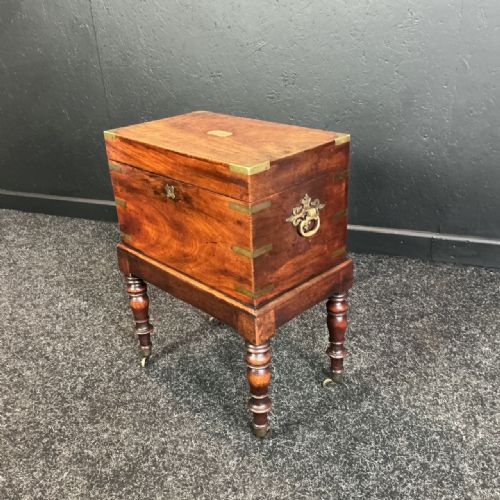
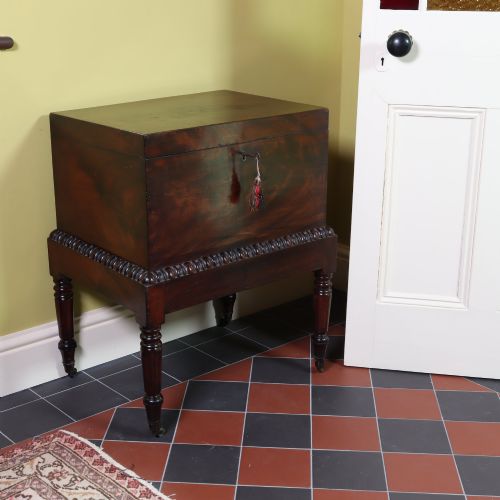
A georgian cellarette cabinet holds bottles securely while adding architectural dignity to a dining room.

Georgian Cellarette Cabinet
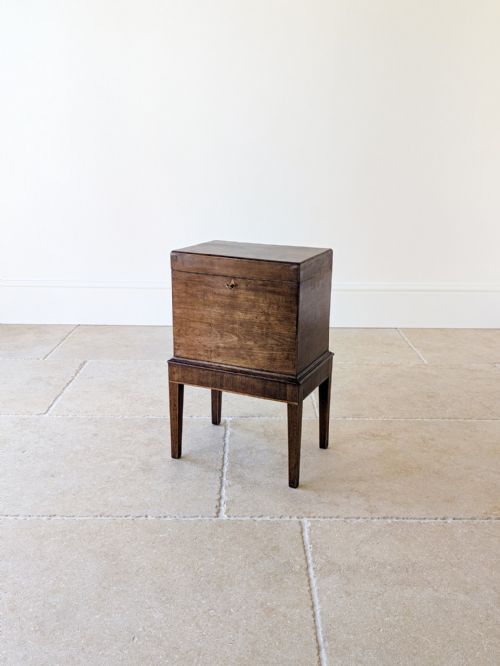
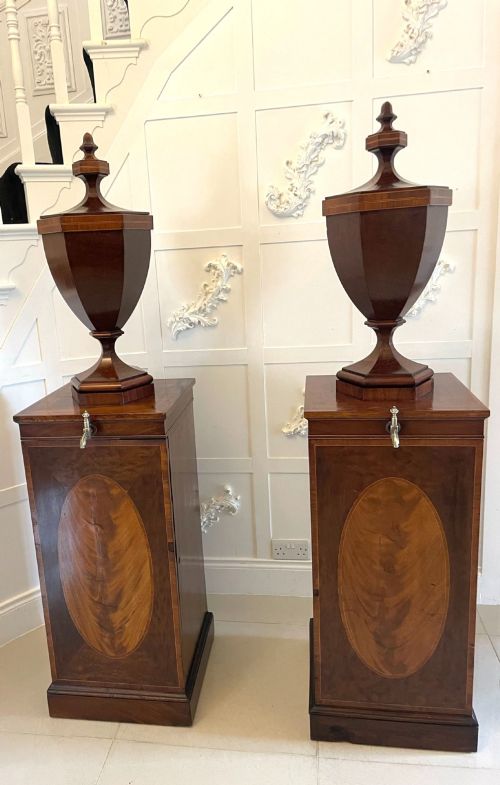
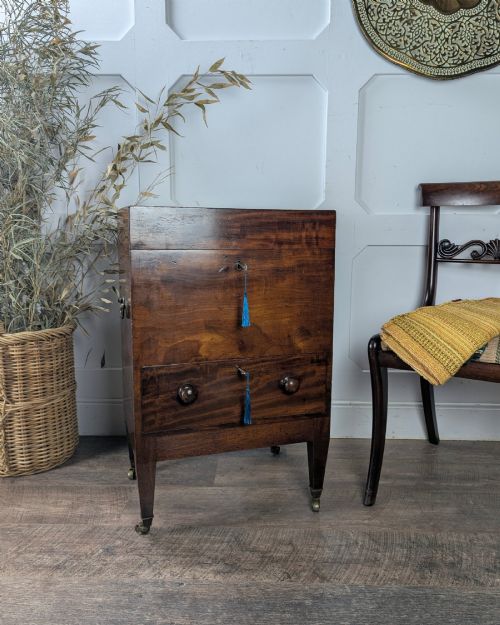
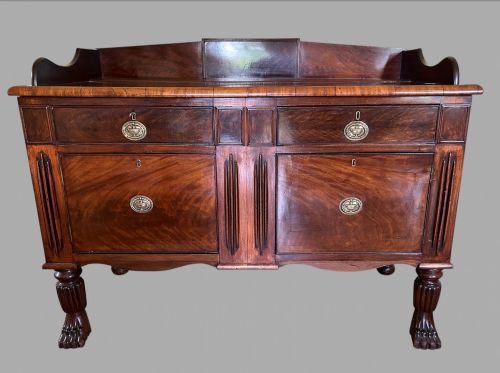
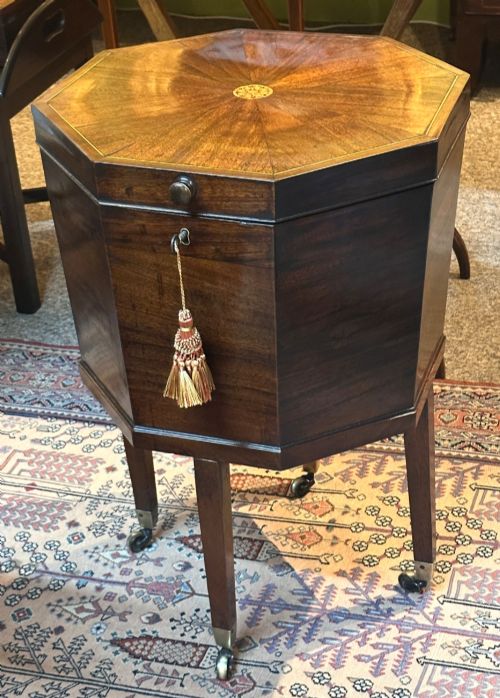
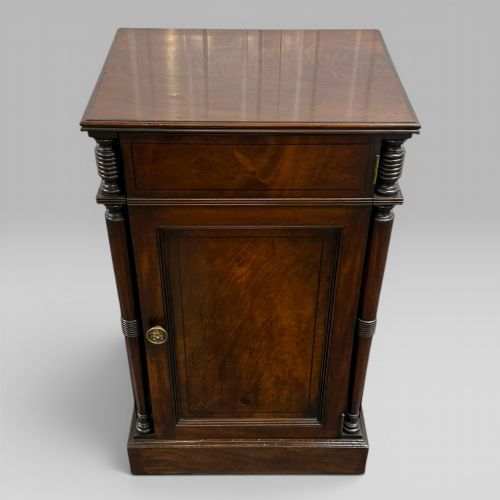
A georgian cellarette cabinet is a specialised storage piece designed to keep wine and spirits cool or secure during the eighteenth and early nineteenth centuries. These items appear as octagonal boxes, sarcophagus forms, wine urns on pedestals, and occasionally sideboards fitted with internal divisions.
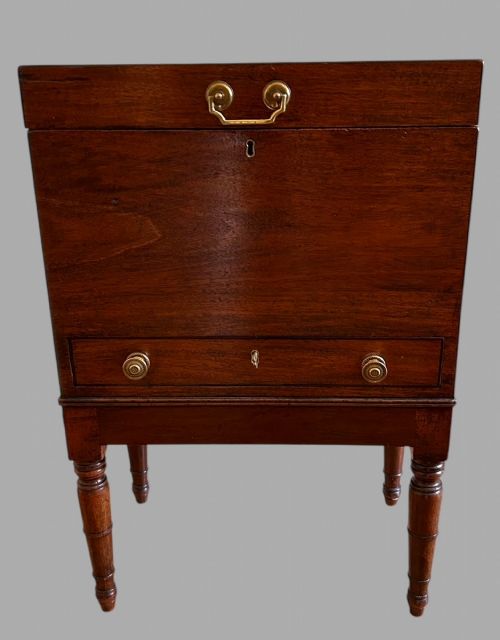
The version most commonly encountered on this page is the freestanding mahogany wine cooler or cellarette dating from the George III and Regency periods. Pieces range from straightforward brass-bound timber boxes to elaborate inlaid examples with satinwood, boxwood, and ormolu mounts.
Materials and Construction
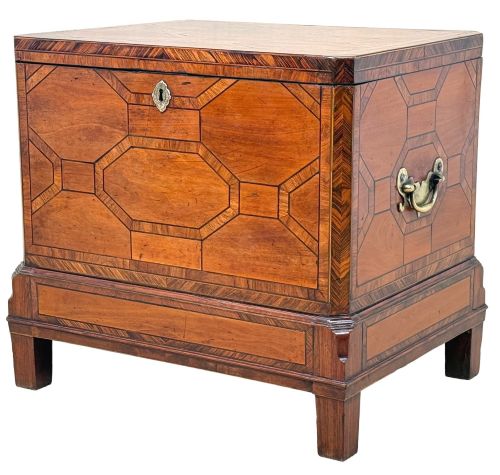
Cabinetmakers relied heavily on solid and veneered mahogany, frequently selecting flame mahogany and pollard oak to create rich grain patterns across the exterior surfaces. Boxwood and satinwood inlay provide sharp linear contrast, while kingwood and padouk appear in specific regional variations.
Structural integrity depended on heavy timber frames, robust dovetail joints, and fitted interior lead linings designed to hold ice and bottles. Brass bands, castors, carrying handles, and ormolu mounts reinforce the lower sections and assist movement across heavy carpets.
Some hunting day cellarettes included specialised compartments designed to keep a gentleman's claret steady during bumpy coach rides.
Judging Quality and Execution
Quality reveals itself in the selection of timber veneers and the precision of the inlay work rather than mere scale. Superior examples display book-matched flame mahogany, crisp boxwood stringing, and well-cast brass hardware that integrates cleanly with the cabinet lines.
The sophistication of the internal layout distinguishes standard storage boxes from exceptional pieces. Retained lead linings, intact bottle dividers, original castors, and working locks elevate the status of a cellarette significantly.
Gillows·Gillingtons·Gillows of Lancaster and London
The Georgian Cellarette Cabinet Glossary
- Cellarette
- A lockable box or cabinet designed for holding wine bottles near the dining table. They frequently incorporate internal lead reservoirs for ice.
- Sarcophagus
- A burial-chest shape popular for Regency wine coolers and cellarettes, typically featuring a domed lid and carved paw feet. This classical silhouette suited formal dining rooms.
- Wine Urn
- A classical urn-shaped vessel raised on a pedestal cupboard, utilised for storing and serving wine. These tall forms often matched sideboard pedestals.
- Ormolu
- Gilded bronze mounts applied to furniture for decorative contrast. Cabinetmakers used these metal accents to highlight Regency designs.
- Flame Mahogany
- Timber cut from the fork of the mahogany tree to produce a distinctive flickering flame pattern. This veneer denoted high-status furniture.
Georgian Cellarette Cabinet: Frequently Asked Questions
What were cellarettes used for?
Cellarettes served as secure storage containers for wine and spirits in the dining room before fitted sideboards became standard. Servants kept bottles chilled inside lead-lined compartments using ice.
They also kept expensive vintages locked away from household staff, preserving valuable stocks for the master of the house.
How do I date a cellarette?
Dating relies on timber choices, leg styles, and decorative motifs matched against known periods. George III pieces often show straight tapered legs or simple octagonal box forms with brass bands.
Regency examples introduce heavier carved paw feet, sarcophagus shapes, and classical ormolu mounts influenced by French taste.
Where should I place a cellarette?
These cabinets suit dining rooms, libraries, or living spaces where they function as lamp tables or low side storage. Their compact footprints allow them to sit beside sideboards or under windows.
Keep them away from direct heat sources and strong sunlight to protect the fragile mahogany veneers and old polish.
Are all cellarettes lined with lead?
Many wine coolers feature interior lead linings designed to hold melting ice and cooling water safely. Over decades of use, some liners were removed or replaced when the timber beneath required restoration.
Not every box cellarette required ice, particularly those intended strictly for dry bottle storage or spirit decanters.