

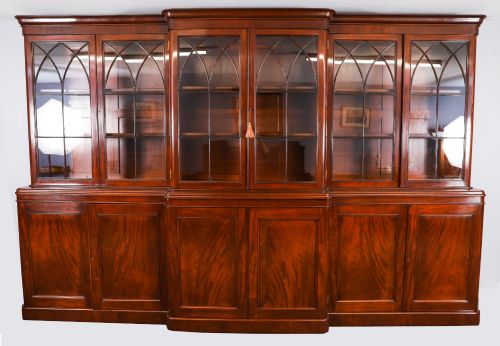
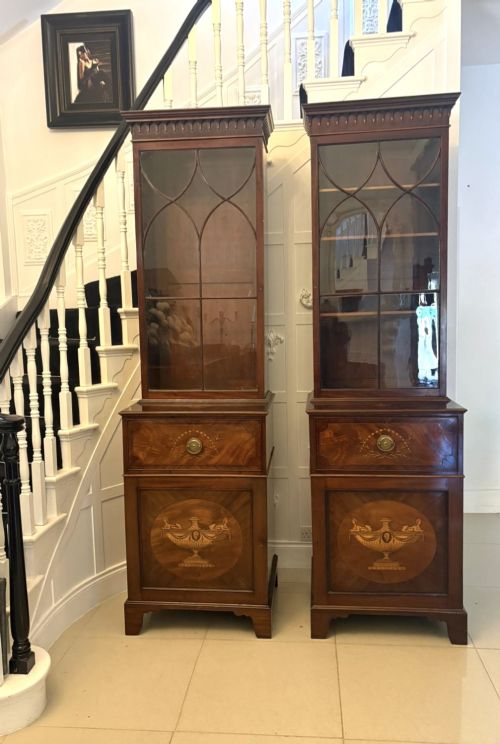
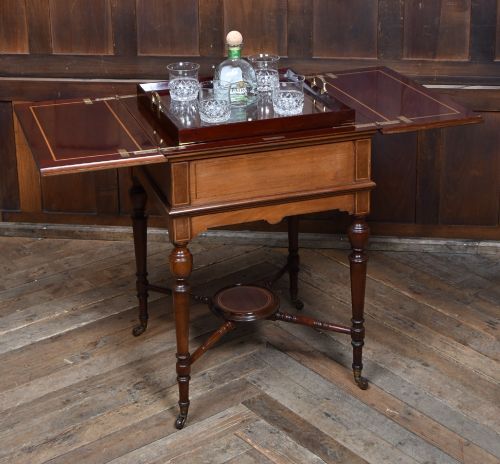
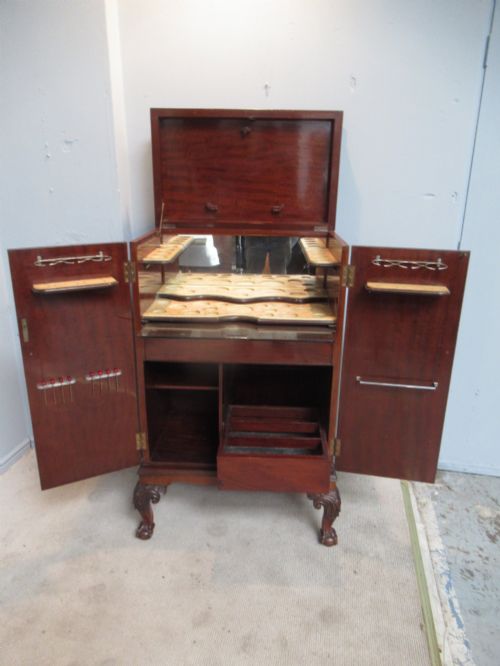
Antique Mahogany Bar Cabinet
An antique mahogany bar cabinet brings period craft to home entertaining through fitted bottle storage and fine timber surfaces.

Antique Mahogany Bar Cabinet
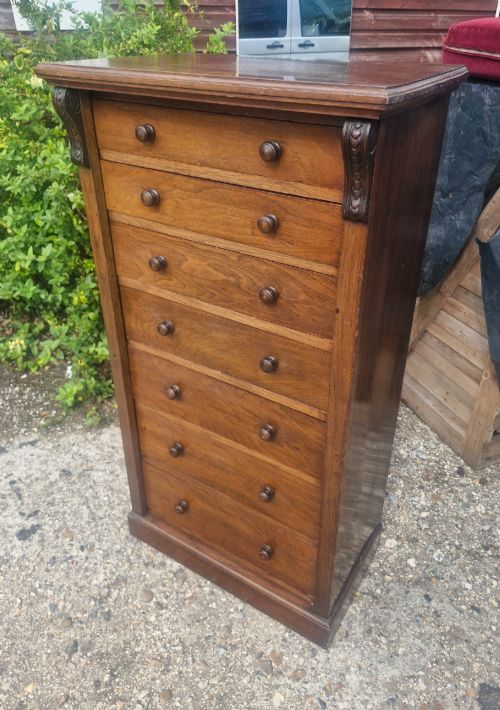
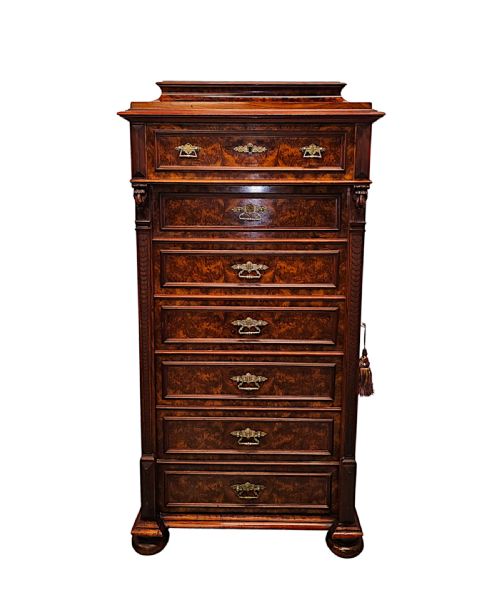
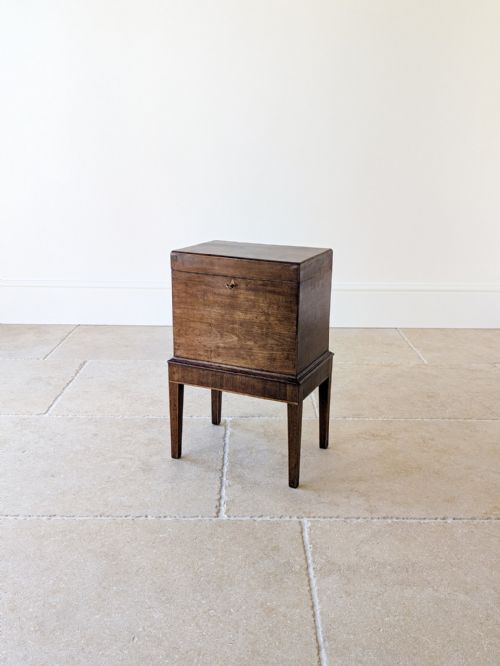
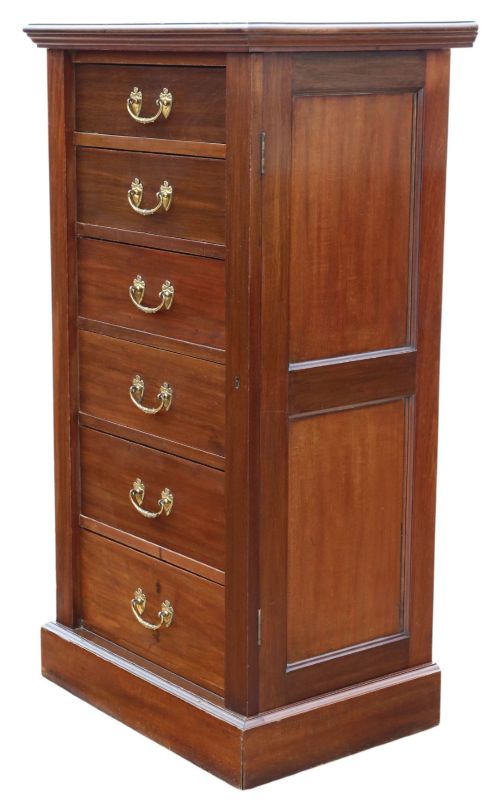
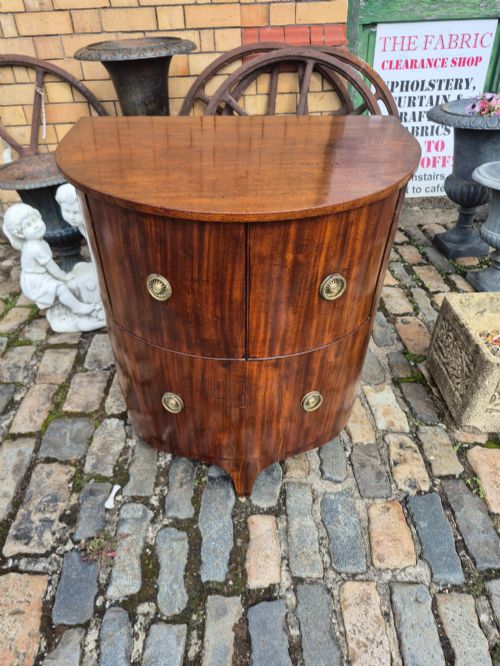
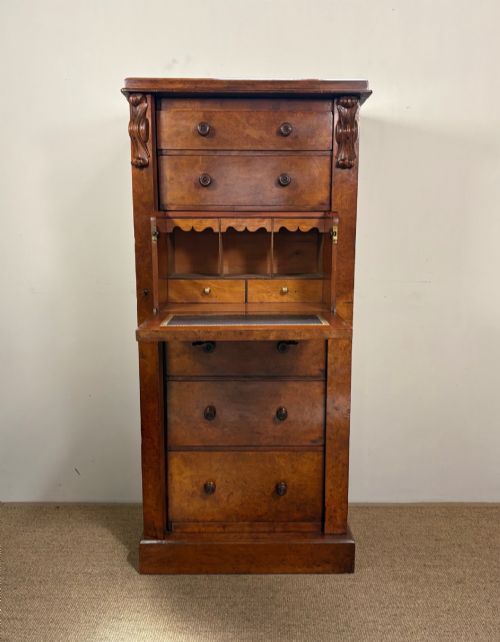
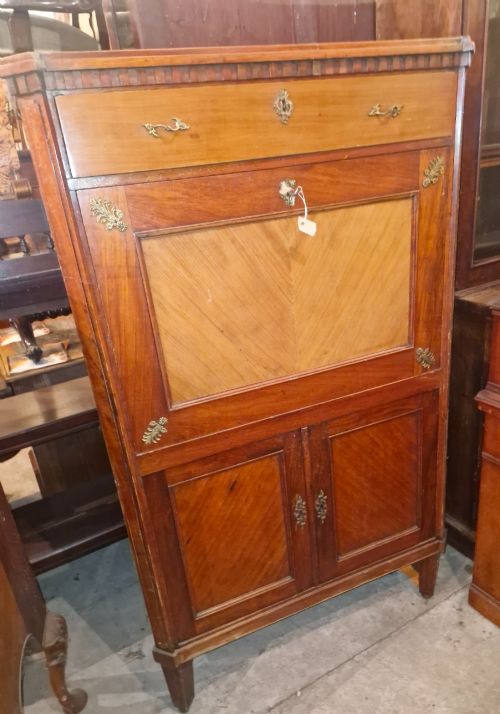
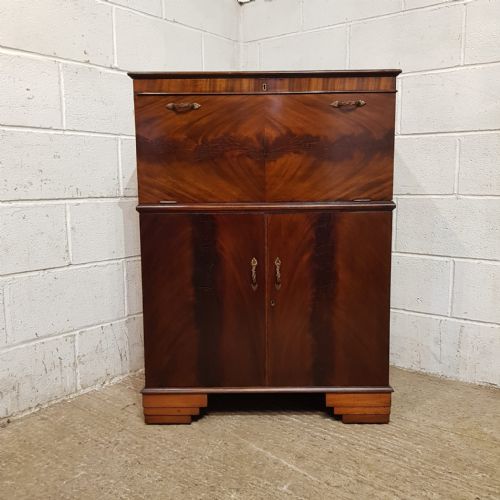
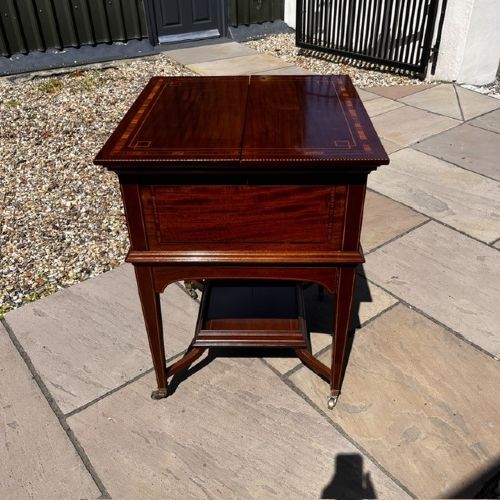
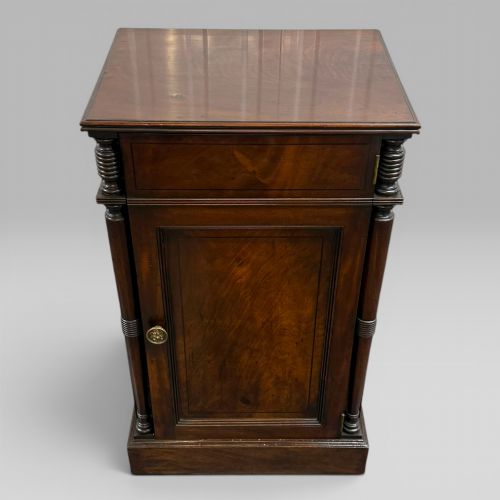
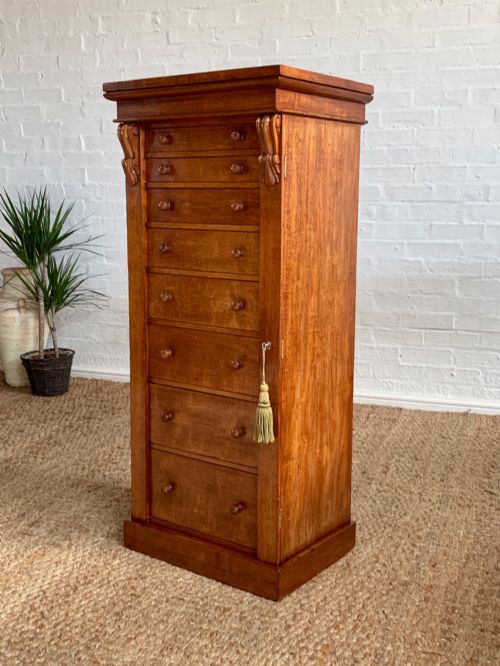
When searching for an antique mahogany bar cabinet, buyers encounter diverse forms ranging from Georgian cellarettes and wine coolers to Edwardian drinks cabinets and Victorian Wellington chests adapted for storage. The selection spans formal 18th-century designs to early 20th-century cocktail cabinets equipped with interior mirrors and removable trays.
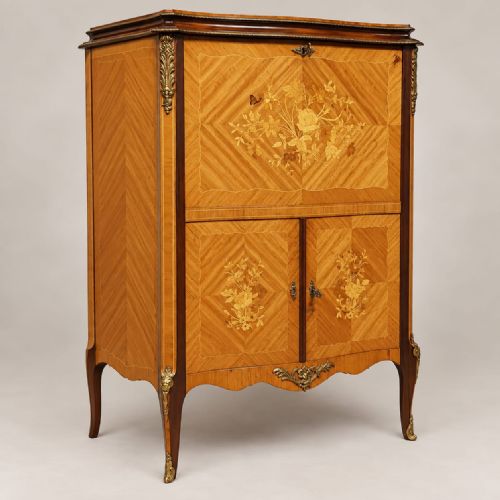
Georgian pieces tend to be heavy brass-bound cellarettes or barrel-front corner cabinets built for holding bottled spirits securely. Later Edwardian and Art Deco examples shift towards specialised drinks furniture featuring satinwood inlay and illuminated display spaces designed to showcase glassware.
Materials and construction
Cabinet makers relied heavily on solid mahogany and figured flame mahogany veneers, often paired with secondary woods like oak and embellished with contrasting satinwood stringing. Metal hardware such as brass carrying handles, locks, or ormolu mounts provide both structural reinforcement and decorative contrast against the dark timber.
Interior fittings frequently incorporate mirrored backs, glass shelving, and specialised partitions intended to organise decanters, plates, or wine bottles safely. Joinery methods range from traditional dovetail drawers in tall chests to coopered staves utilised in circular cellarettes.
Antique Mahogany Bar Cabinet Retail Price Guide 2026
Typical asking prices for mahogany bar cabinet among the pieces listed under this phrase on Sellingantiques today, from the lower quarter to the upper quarter. They describe what is for sale here now, not the wider market.
The selection includes mahogany, brass, glass, satinwood, walnut, flame mahogany, and burr walnut across Georgian, Victorian, Edwardian, and Art Deco periods.
Markers of distinction
Quality rests upon the selection of timber grain, where highly figured flame mahogany or burr walnut veneers demonstrate superior choice by the original maker. The crispness of hand-cut satinwood inlay and the integration of original brass hardware elevate an individual piece above plain utility items.
Interior cleverness defines the finer specimens, such as surprise mechanisms, secret locking bars found on Wellington chests, or fully fitted mirror-backed cocktail compartments. The integrity of the original polish and the preservation of interior fittings dictate the standing of surviving examples.
Gillows·Shapland & Petter
The Antique Mahogany Bar Cabinet Glossary
- Cellarette
- A lockable container designed to hold wine bottles or spirits safely near a dining table. These typically feature lead-lined interiors or fitted wooden dividers.
- Wellington Chest
- A tall, narrow stack of drawers secured by a hinged locking stile on one side. This specialised fastening rod engages with all drawer lips simultaneously.
- Flame Mahogany
- Timber cut from the fork of the mahogany tree where branches meet the trunk, yielding a distinctive branching flame pattern. Cabinet makers reserved this veneer for primary visible surfaces.
- Plate-Warmer
- A specialised pedestal or cabinet incorporating interior heating compartments for warming dinnerware. These often appear in formal 19th-century dining contexts.
Antique Mahogany Bar Cabinet: Frequently Asked Questions
What is a cellarette?
A cellarette is a specialised furniture piece built to store wine bottles and spirits securely within arms reach during formal meals.
Early versions often featured heavy brass banding and lead-lined compartments designed to hold melting ice alongside bottles.
How do I date a cocktail cabinet?
Dating relies on stylistic clues, combining period timber characteristics with hardware details like locks, hinges, and mirror glass.
Georgian iterations focus on simple bottle storage, while 1920s and 1930s examples introduce specialised drop-down cocktail flaps and illuminated interiors.
Are Wellington chests secure?
Wellington chests utilise a hinged side locking bar secured by a single key to lock every drawer at once.
This mechanism allowed owners to protect valuable papers, silver, or spirits safely within the tall stack of shallow drawers.
Where were corner cabinets placed?
Barrel-front corner cabinets were designed to fit neatly into domestic room angles to maximise floor space.
Georgian examples utilised curved mahogany doors to store glassware and bottled beverages out of direct foot traffic.