




Antique Bottle Cabinet
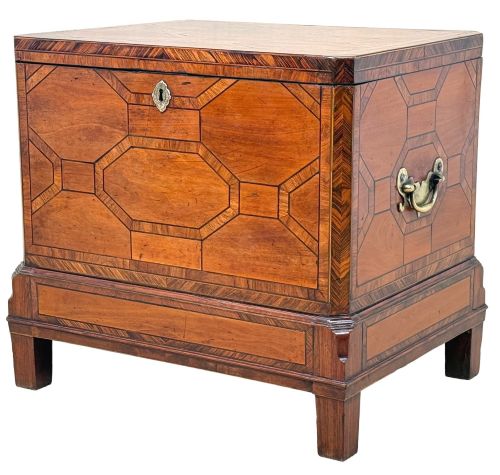
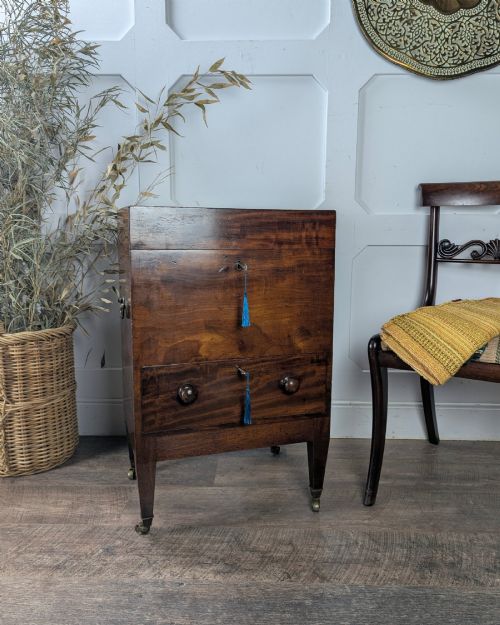
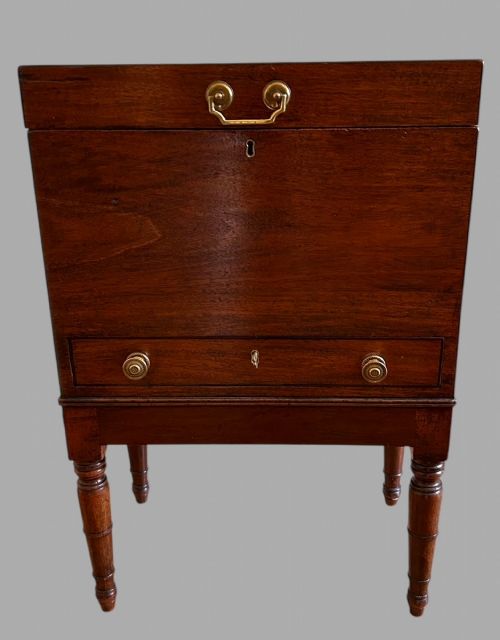
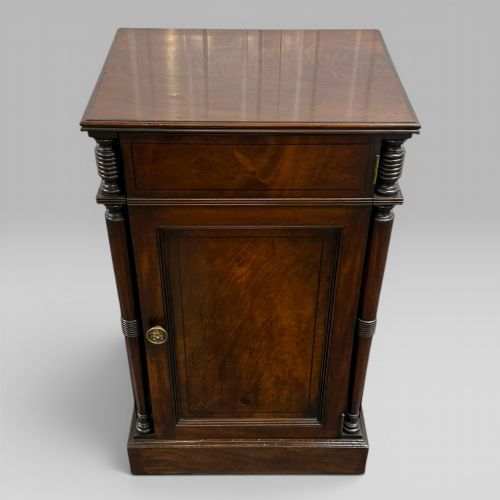
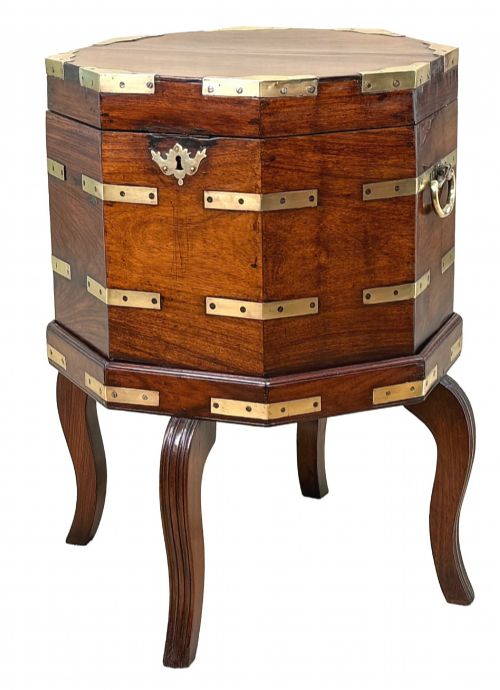
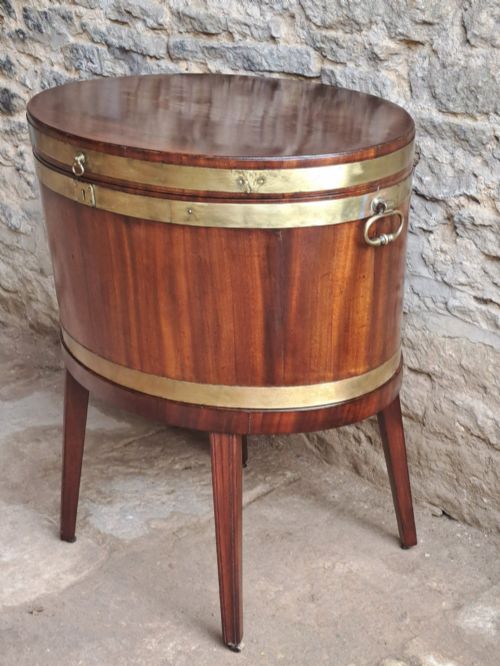
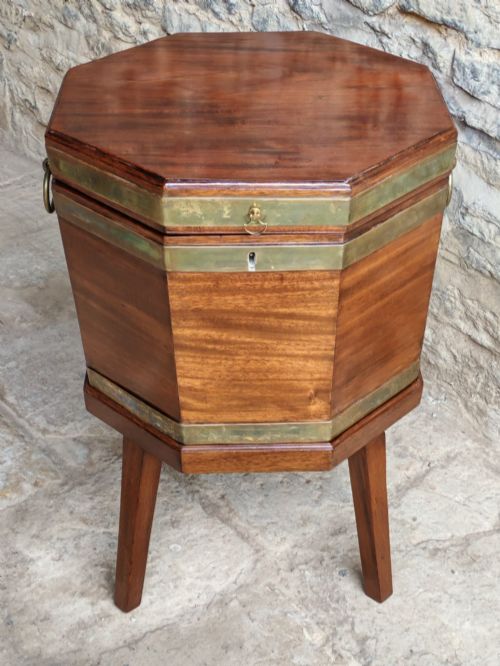
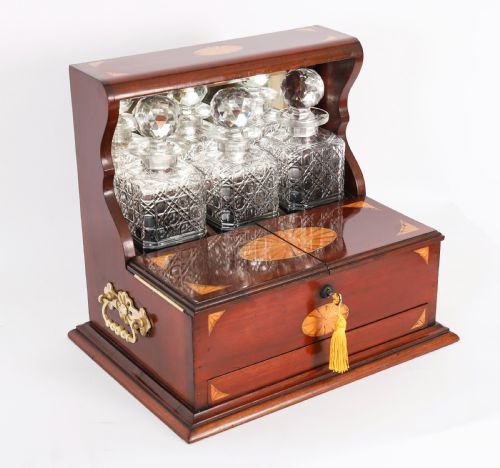
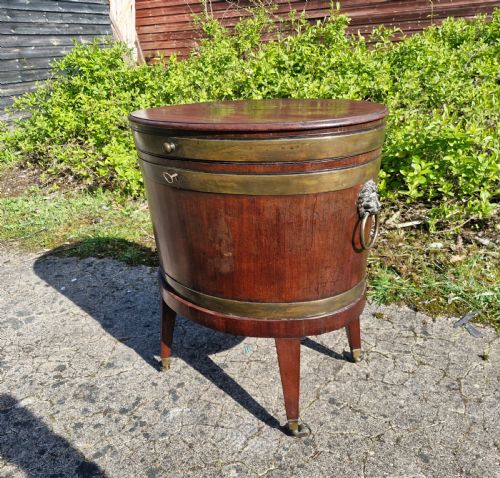
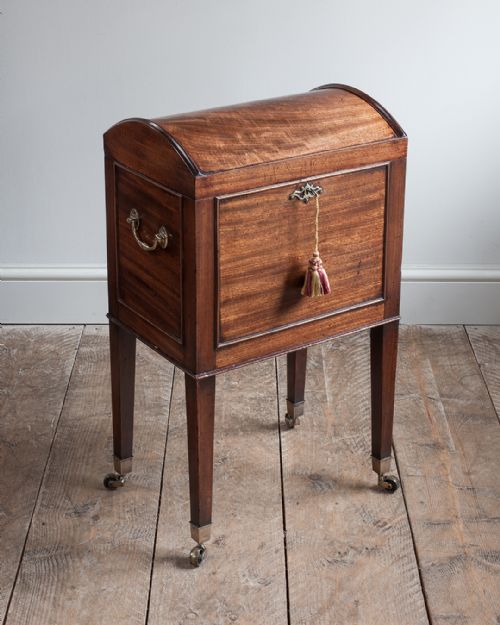
An antique bottle cabinet is a timber container designed to hold decanters and bottles safely, often appearing here as a mahogany cellarette or a brass-mounted tantalus.

Antique Bottle Cabinet
When searching for an antique bottle cabinet, collectors encounter a variety of forms designed for holding drinks and medicines securely. Cellarettes and wine coolers from the Georgian and Regency periods predominate, alongside Victorian and Edwardian oak tantalus sets equipped with locks.
The selection also includes specialist items such as mahogany apothecary boxes fitted with internal bottles and occasional exotic specimens in padouk or satinwood. These vessels served wealthy households by keeping dining room vintages close at hand or by storing precious remedies safely away.
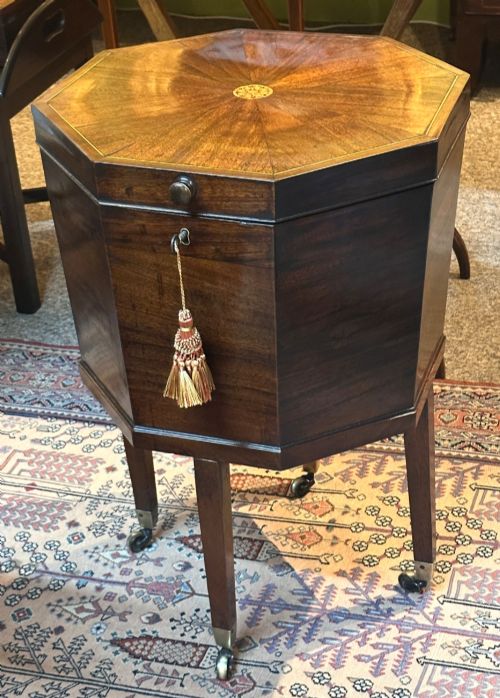
Most examples date from the eighteenth and nineteenth centuries, reflecting a time when portable or locking storage for consumables was an everyday necessity. Buyers meet pieces ranging from octagonal wine coolers to multi-decanter tantalus cabinets built for domestic hospitality.
Materials and construction
Cabinetmakers relied heavily on dense hardwoods like mahogany and oak, often enhancing surfaces with satinwood banding, marquetry, or brass mountings and binding. These sturdy timbers provided the structural integrity required to support heavy glass decanters and liquid-filled bottles without warping.
Internal compartments demanded precise carpentry, utilising lead linings in wine coolers to hold melting ice and custom-carved wooden dividers in apothecary boxes. Lock mechanisms and brass carrying handles required skilled metalwork, integrating functional hardware directly into the timber frame.
Listings feature eighteenth-century Georgian designs alongside nineteenth-century Victorian and Edwardian pieces, constructed mainly in mahogany and oak.
Factors of quality
The standard of a piece depends on the crispness of its timber grain, the precision of any inlay work, and the original integrity of its internal fittings. Superior examples retain their fitted glass decanters, functioning locks, and undisturbed brass work rather than replacement components.
Attribution to documented workshops or cabinetmakers elevates an item, as seen in pieces linked to Gillows or Whytock and Reid. Proportion and timber selection also divide standard utilitarian boxes from sophisticated dining room showpieces.
Gillows·Whytock and Reid·Maples and Co
The Antique Bottle Cabinet Glossary
- Cellarette
- A lockable container used for storing wine and spirits near the dining table. They frequently stand on legs or take octagonal and oval box forms.
- Tantalus
- A locking beverage stand that restrains decanters behind a wooden bar to prevent unauthorized drinking. This Victorian invention displays the crystal bottles while denying access without a key.
- Apothecary box
- A small fitted chest designed to hold medicinal bottles, scales, and powders. These compact cabinets typically feature hinged lids and secure drawer arrangements.
- Padouk
- A heavy tropical hardwood with a reddish hue used in colonial furniture making. Pieces in this material often display distinct regional joinery.
- Marquetry
- The art of applying decorative veneer pieces to a structural surface to create pictorial patterns. Cabinetmakers employed this technique to enrich plain oak and mahogany panels.
Antique Bottle Cabinet: Frequently Asked Questions
What is an antique bottle cabinet?
An antique bottle cabinet is a wooden chest or box created to store wine bottles, decanters, or medicines securely.
These pieces range from Georgian cellarettes and wine coolers to Victorian locking tantalus sets.
How did people use a cellarette?
A cellarette sat in the dining room to hold bottles of wine before they were served at the table.
Servants filled them with ice or water when functioning as wine coolers to chill the contents.
What woods were used for these cabinets?
Cabinetmakers primarily used mahogany and oak for their strength and resistance to heavy daily use.
Satinwood, padouk, and kingwood also appear as decorative veneers or primary timbers.
Are apothecary boxes the same as wine cabinets?
Apothecary boxes served a medical purpose rather than a dining one, storing glass phials of remedies and scales.
They share a similar period and locking portable chest design with small cellarettes.