
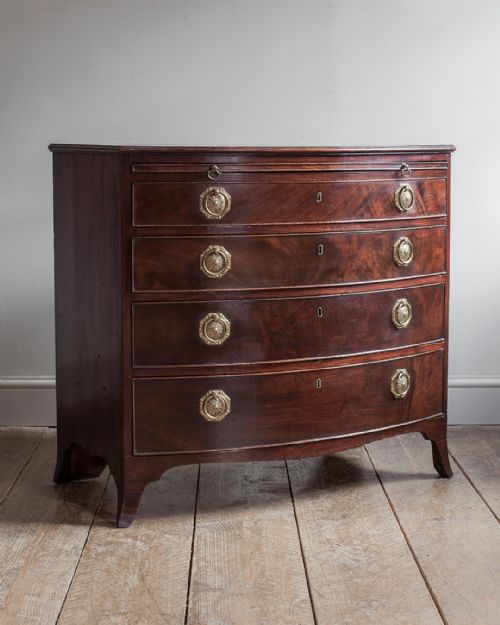
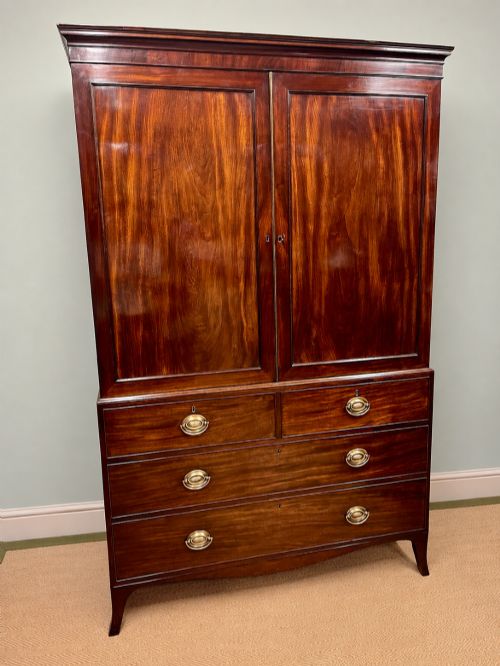
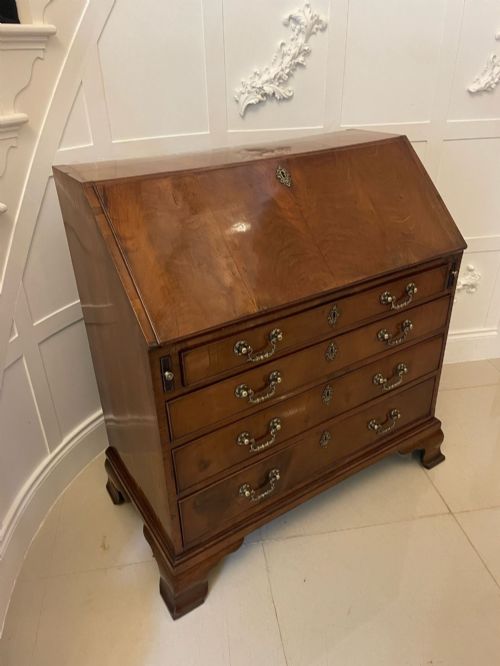
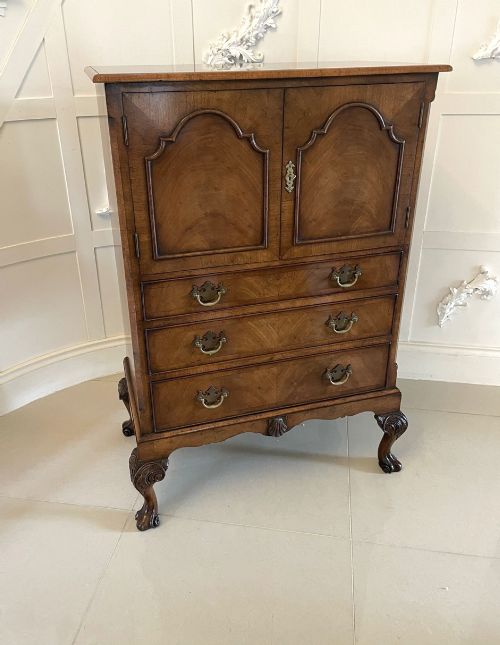
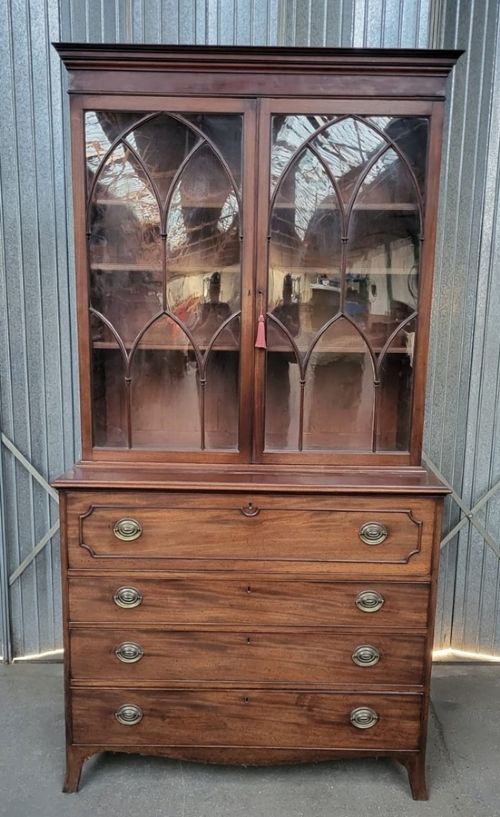
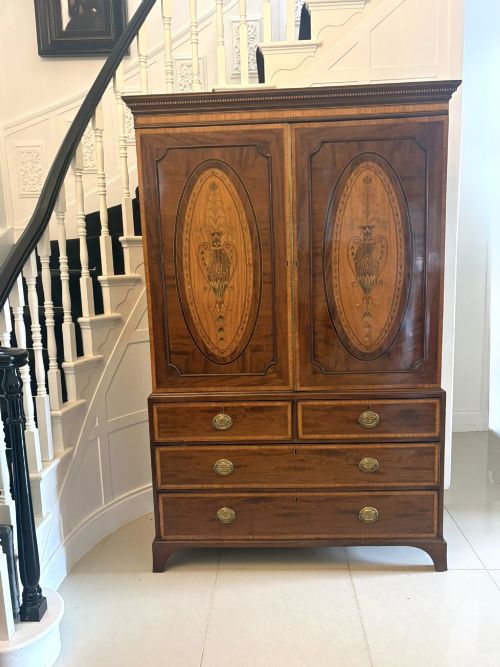
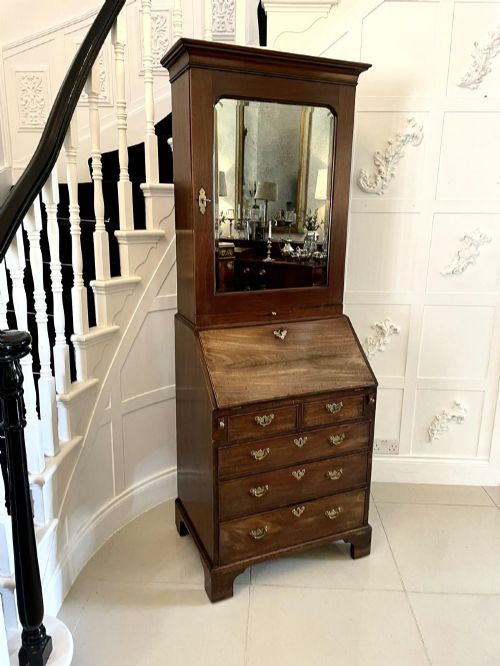
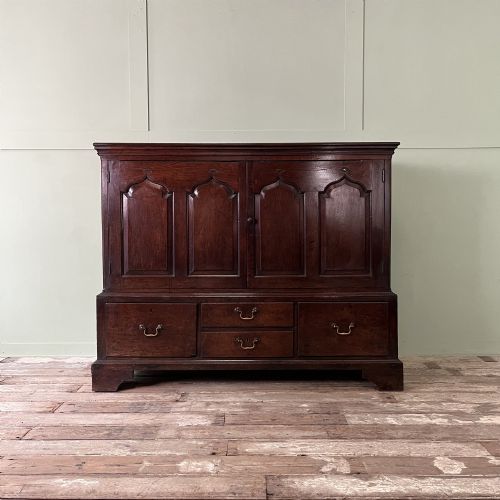
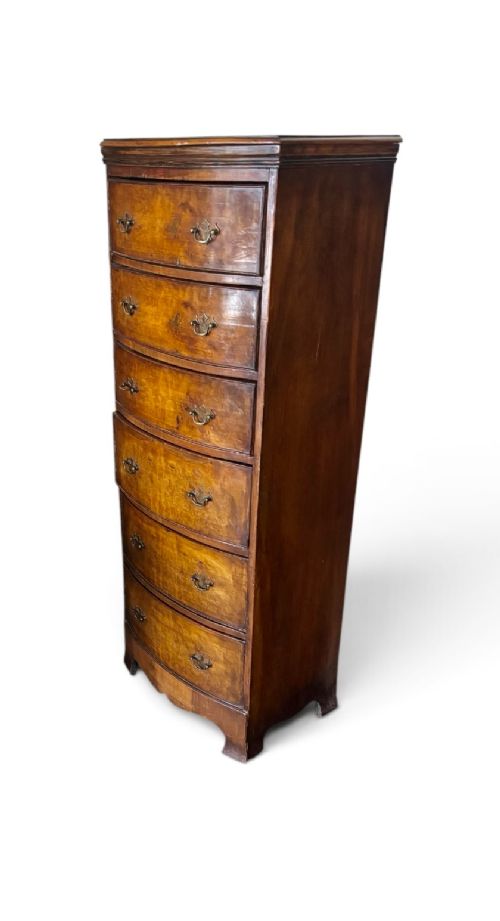


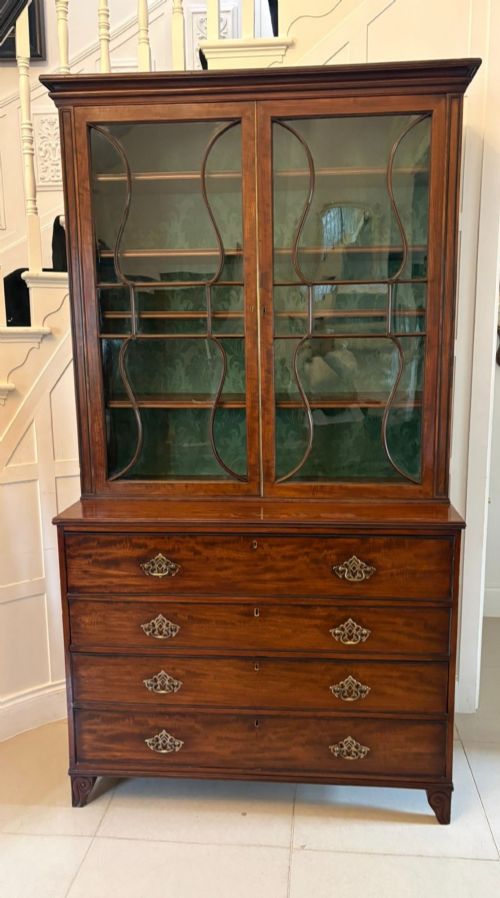
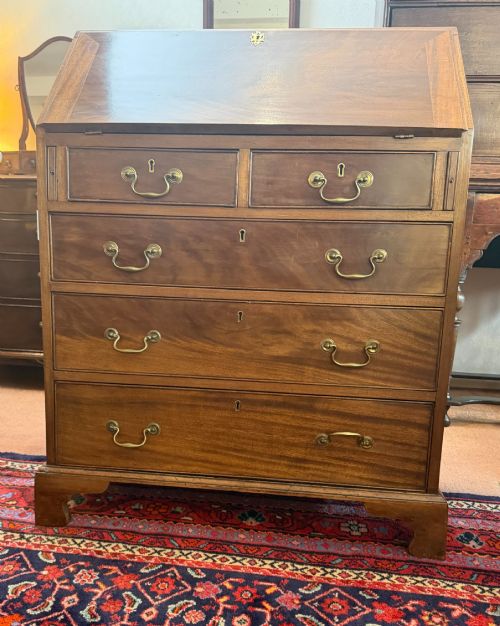
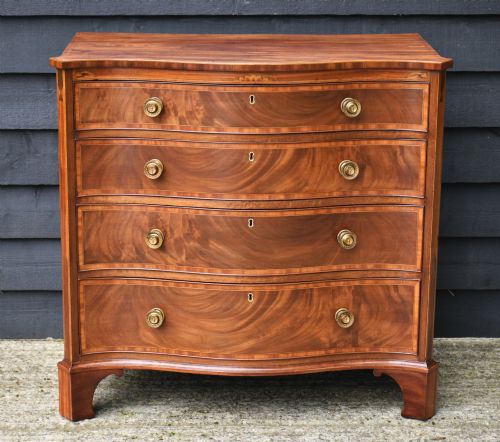
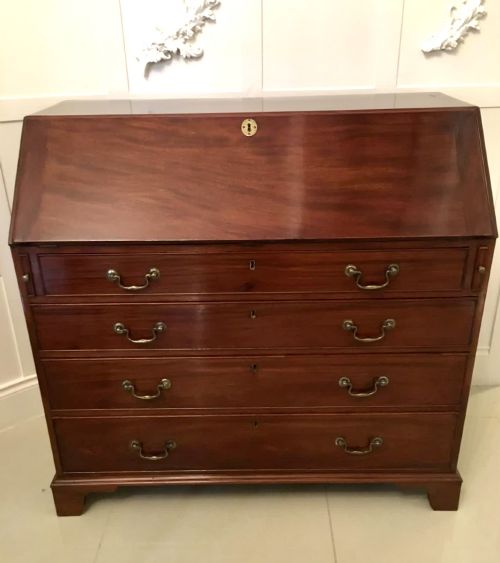
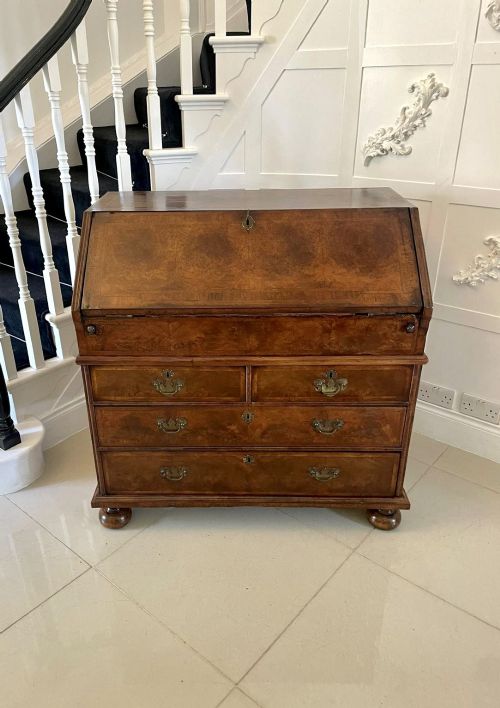
Georgian Cabinet on Chest
A georgian cabinet on chest brings architectural presence and rich timber figures into a room, offering grand storage for books or collections.
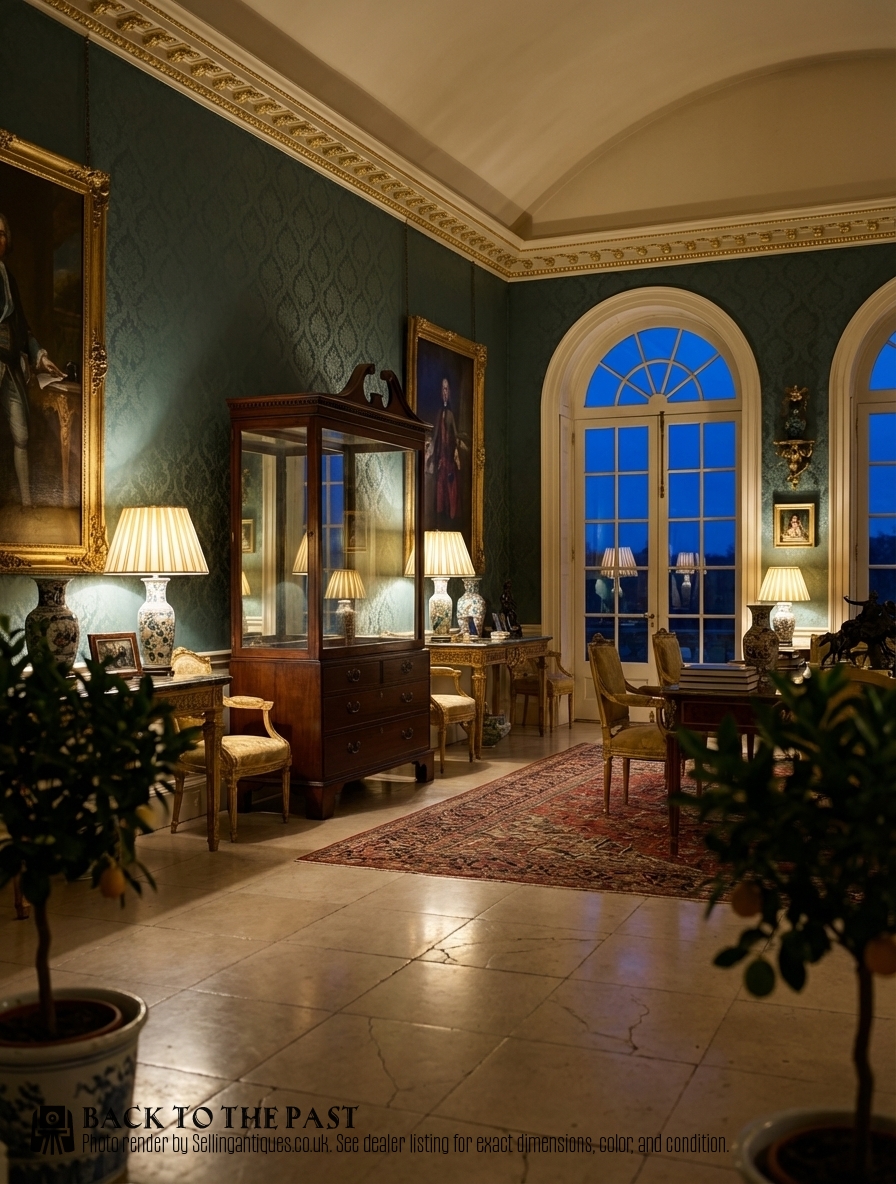
Identifying the georgian cabinet on chest
A georgian cabinet on chest combines an upper glazed or panelled cupboard with a lower chest of drawers, creating a tall vertical statement piece. You will regularly encounter walnut, mahogany, and oak examples spanning the eighteenth and nineteenth centuries.
The form encompasses display cabinets and specialised specimen storage, alongside walnut and oak interpretations. These dual-section items reflect the evolution of domestic storage from the eighteenth century into later revival periods.
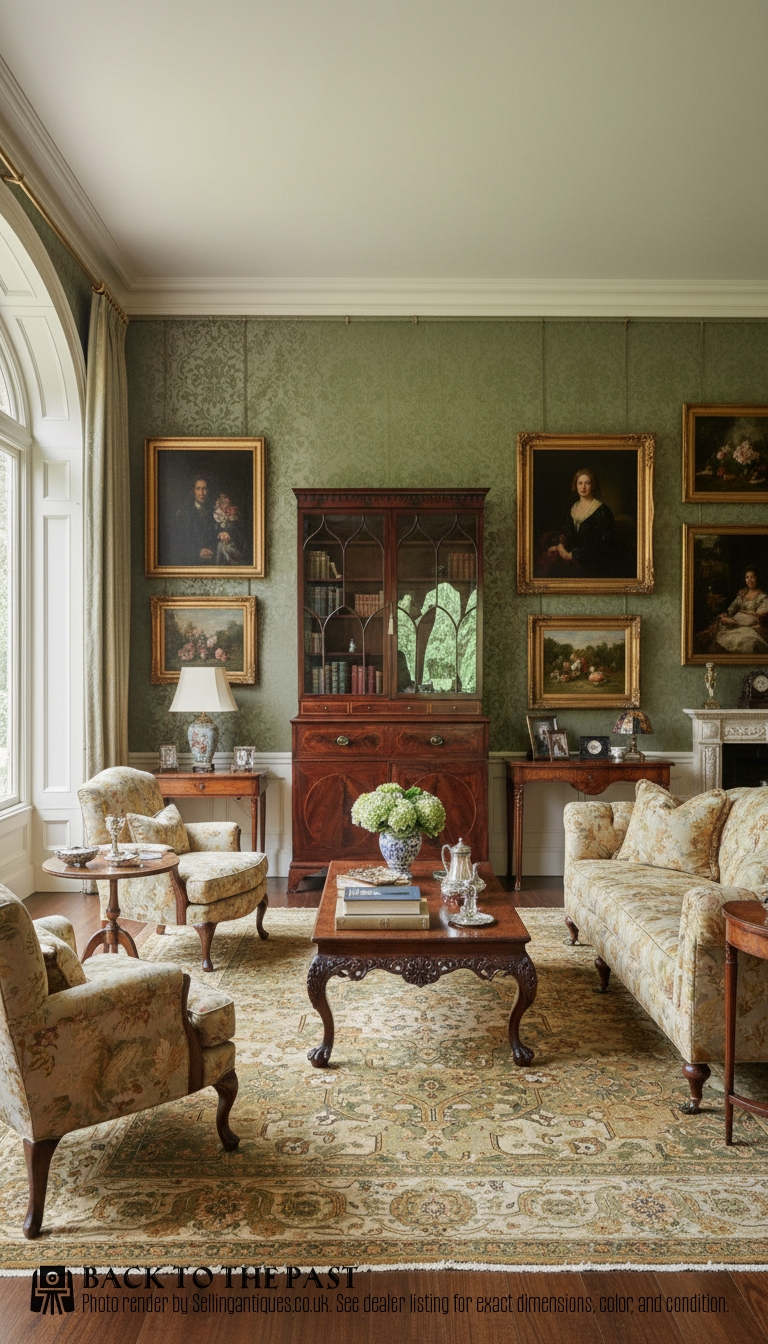
Materials and construction
Cabinet makers utilised dense hardwoods such as walnut, mahogany, and oak to build the robust carcasses and drawer frames. Timber veneers were carefully selected to create patterned surfaces across the main facades.
Brass handles and escutcheons completed the hardware scheme, while glass panels were fitted into the upper doors of display variants. Joinery techniques relied on traditional drawer construction and frame-and-panel methods to house heavy collections.
Retail Price Guide 2026
Typical UK retail prices for georgian cabinet on chest, calculated from the Sellingantiques database of over a million retail prices indexed since 2003. This retail price guide relies exclusively on Sellingantiques data; no external sources or auction records are used, so the figures do not describe the wider market.
Materials documented across the pieces include clear glass panels and cast brass hardware alongside primary hardwoods.
Judging quality in a georgian cabinet on chest
Quality rests on the choice of timber figures and the crispness of the cabinetry details across the facade. Superior pieces display harmonious grain matching on the drawer fronts and well-proportioned upper cornices.
The integrity of the original brass hardware and the clarity of the glass panes elevate certain examples above standard utility pieces. Construction depth, such as secondary timbers used in drawer linings, distinguishes the finest workshops.
The Georgian Cabinet on Chest Glossary
- Cabinet on chest
- A two-part form consisting of an upper storage cupboard sitting directly upon a lower chest of drawers. This architectural elevation maximises storage while utilising minimal floor space.
- Walnut
- A rich dark timber utilised heavily for fine cabinetry during the early eighteenth century. It often displays intricate grain patterns that define high-status furniture.
- Mahogany
- A durable hardwood introduced to British cabinet making that allowed for strong structural frames and deep reddish tones. It became the predominant material for case furniture as the eighteenth century progressed.
- Specimen cabinet
- A specialised storage form featuring numerous small internal drawers intended for botanical, mineral, or coin collections. These interiors reflect the scholarly pursuits of their original owners.
- Escutcheon
- A protective plate surrounding a keyhole, usually cast in brass. It serves both a functional role and a decorative purpose on cabinet doors and drawer fronts.
Frequently Asked Questions
What is a georgian cabinet on chest?
A georgian cabinet on chest is a tall, two-part storage furniture piece featuring an upper display or cupboard section mounted on a lower chest of drawers. This form originated to house prized possessions, books, or collections within formal rooms.
Craftsmen built these impressive units using timbers like walnut, mahogany, and oak, often incorporating glass doors above deep drawers below. They remain prominent focal points for period interiors.
How do I date a cabinet on chest?
Dating involves examining the primary timber species, construction methods, and hardware styles. Eighteenth-century examples frequently feature walnut or early mahogany, while nineteenth-century items adopt different internal framing details.
Reviewing the secondary woods inside drawer boxes and the cut of the brass handles helps distinguish eighteenth-century production from later revival periods.
Where should I place one?
These tall statement pieces require walls with sufficient height to accommodate their vertical scale without crowding the room. They suit studies, drawing rooms, or dining spaces where their upper display sections can be appreciated.
Ensure placement avoids direct sunlight or strong heat sources to protect the polished timber surfaces and antique veneers from drying out.
What is the difference between a display cabinet and a specimen cabinet?
A display cabinet typically utilises glass doors in the upper section to showcase porcelain or decorative objects. A specimen cabinet is designed with numerous small internal drawers intended for organised collections.
Both fall under the broader cabinet on chest typology but serve distinct functional storage requirements for collectors.