
Georgian Burr Walnut Cabinet
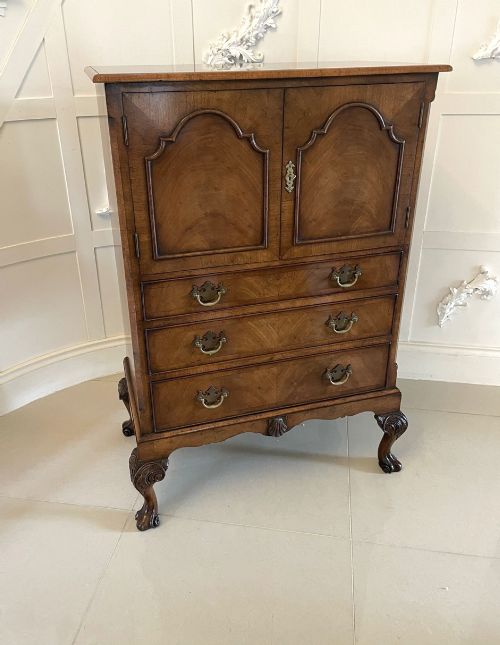
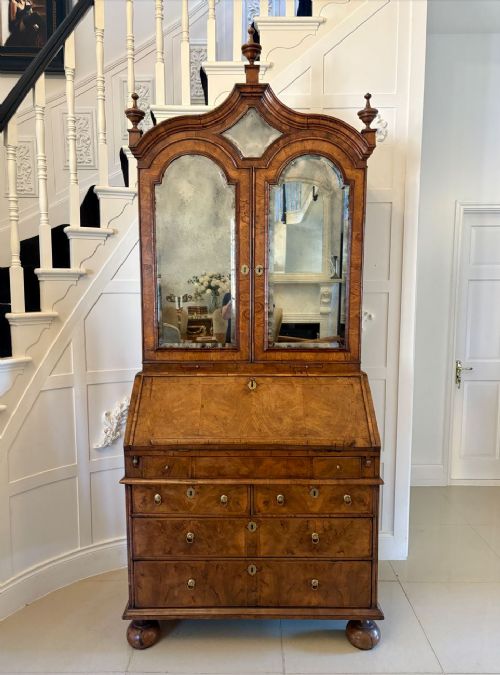
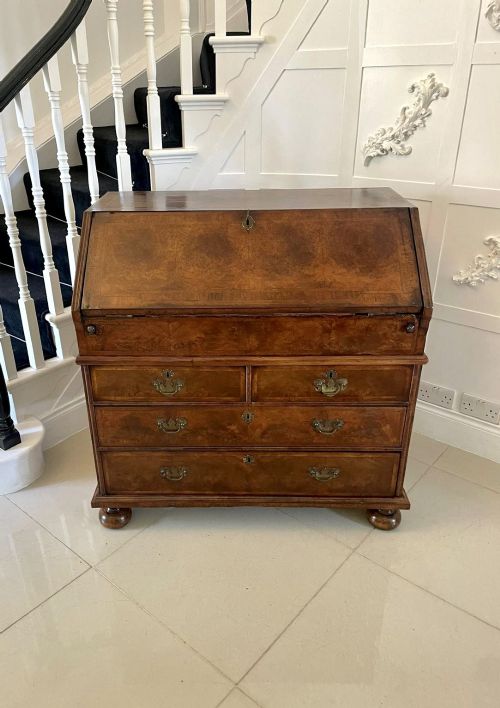
A georgian burr walnut cabinet brings richly figured timber and disciplined proportions into a room, offering both display and secure storage.

Georgian Burr Walnut Cabinet
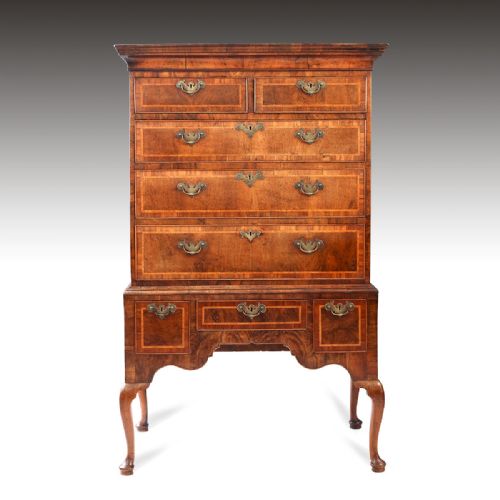
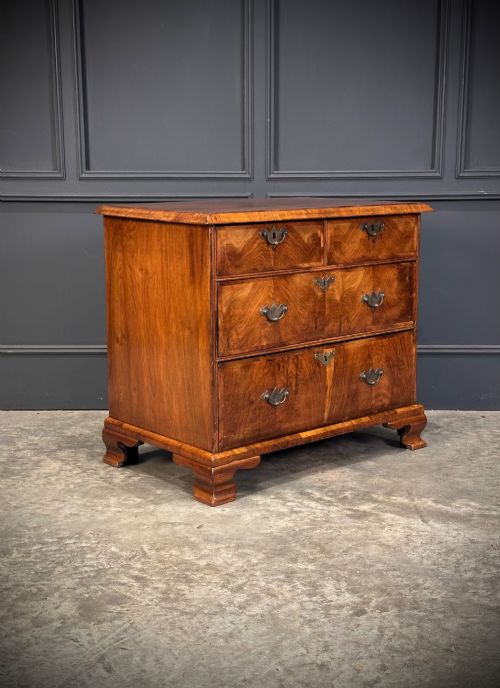
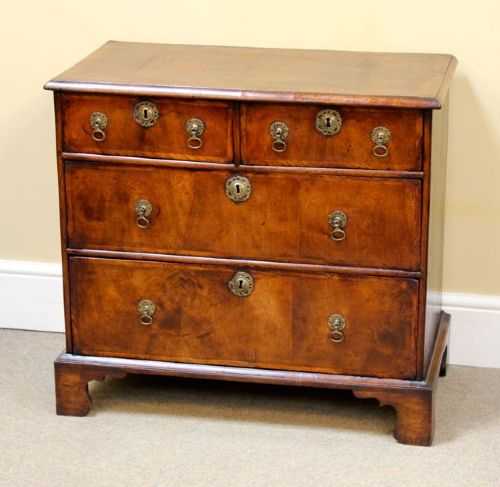
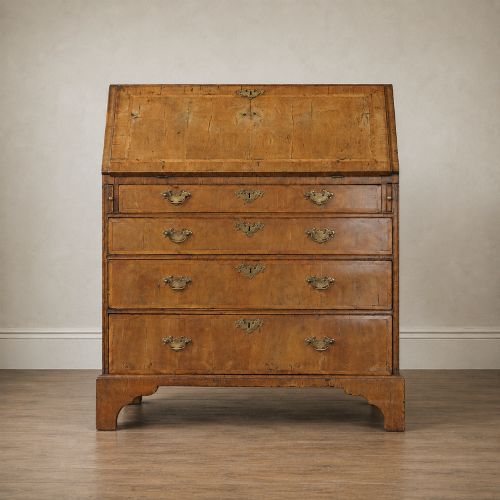
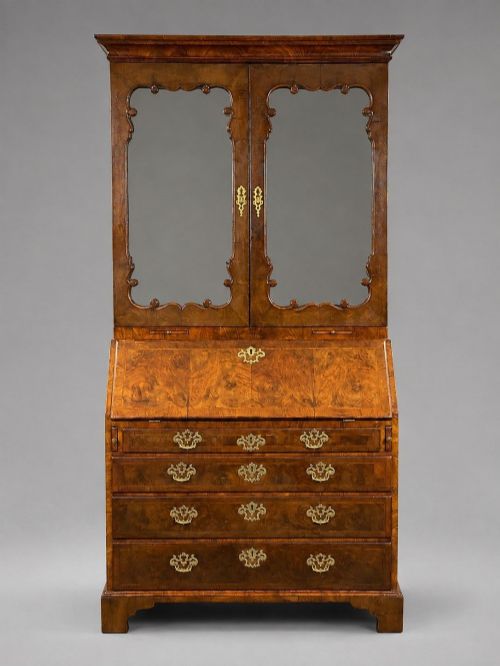
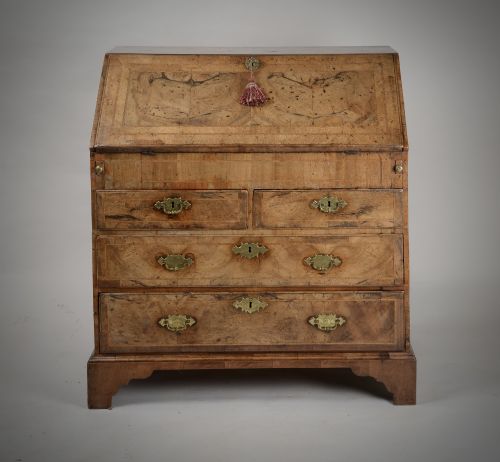
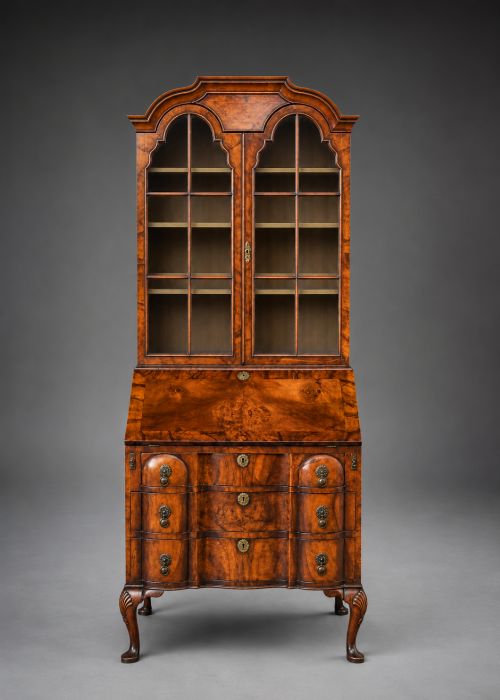
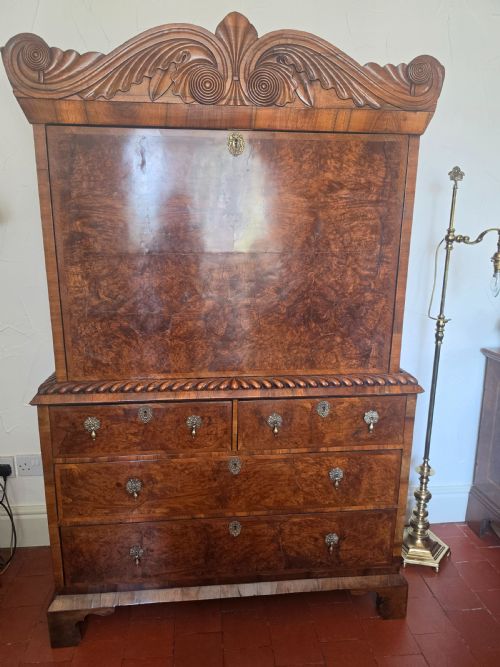
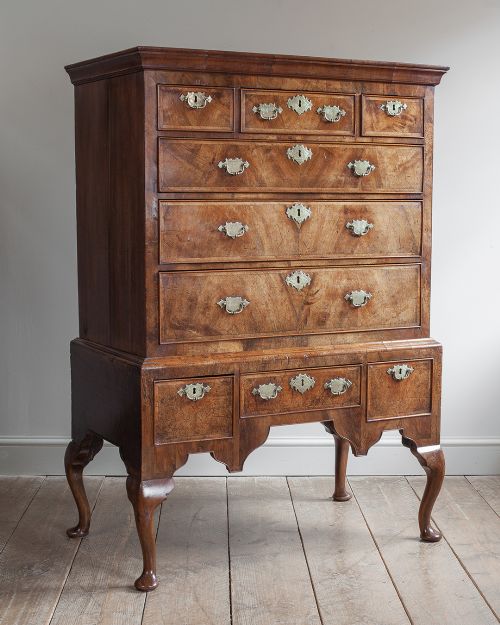
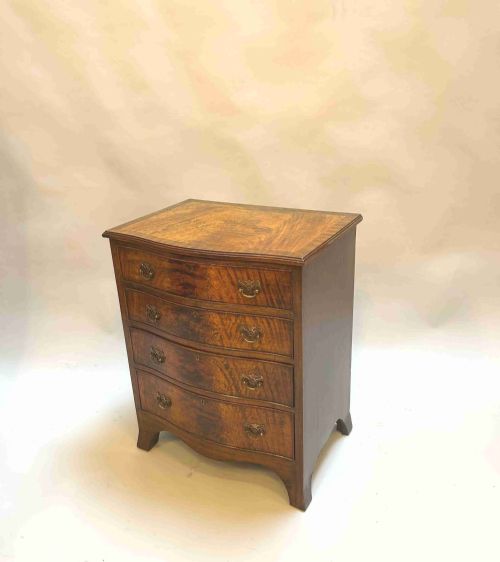
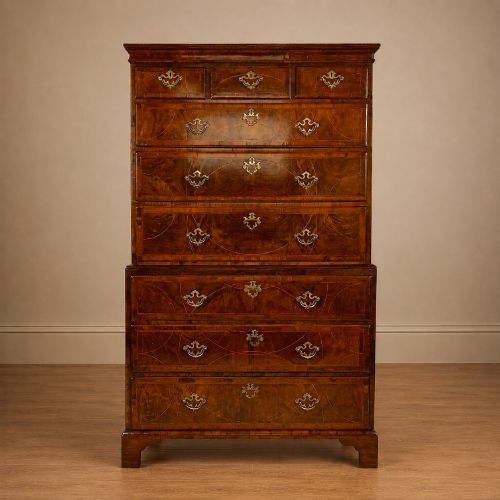
A buyer searching for a georgian burr walnut cabinet encounters forms ranging from bureau bookcases and chests on stand to side cabinets, bedside chests, and corner cupboards. The selection spans pieces from the seventeenth and eighteenth centuries alongside later revival examples from the twentieth century.
The predominant origins are English, appearing in styles from William and Mary through Queen Anne, George I, and George II. Bureau bookcases and chests of drawers represent the most frequent formats, frequently accompanied by bedside cabinets and sideboards.
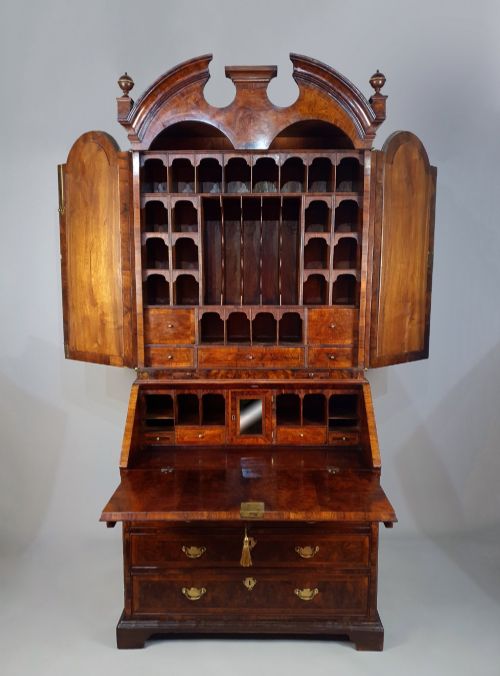
Earlier examples show architectural fitted interiors and candle slides, whilst twentieth-century revivals offer matching pairs of bedside tables and side cabinets. The variety encompasses miniature chests and tall escritoires alongside larger two-part furniture.
Materials and Construction
Makers utilised walnut and burr walnut veneer laid over secondary timbers such as oak, creating complex grain patterns across primary surfaces. Featherbanding and herringbone stringing delineate the drawer fronts and borders of superior pieces.
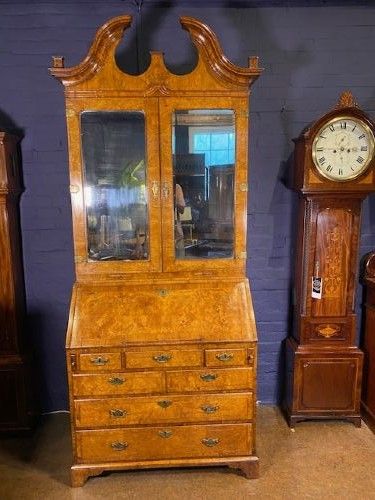
Brass handles, escutcheons, and mirror glass feature as structural and decorative elements, particularly within bureau bookcase doors and hanging corner cupboards. Timber construction methods rely on solid carcases supporting carefully selected figured veneers.
Several pieces preserve original candle slides, ready to illuminate late-night correspondence.
Evaluating Quality
Quality rests upon the selection and matching of the burr walnut veneer, where symmetrical grain alignment across drawer fronts elevates a piece. The crispness of inlay work, including herringbone banding and line inlay, demonstrates the maker's precision.
Proportion and the retention of original brass hardware, glass, and fitted interior compartments distinguish the finest examples from standard production. The integration of structural elements such as candle slides and original stands marks the distinction between ordinary and exceptional survivals.
The Georgian Burr Walnut Cabinet Glossary
- Burr Walnut
- A figured wood obtained from the wart-like growths on walnut trees, prized for its swirling, organic patterns. It is sliced into thin veneers for application onto furniture surfaces.
- Bureau Bookcase
- A dual-purpose piece combining a sloping writing desk compartment below with shelving enclosed by doors above. These often incorporate fitted pigeonholes and secret drawers.
- Featherbanding
- A decorative inlay technique using small strips of veneer laid diagonally to form a herringbone or arrow pattern around the borders of panels and drawers.
- Chest on Stand
- A tall storage chest elevated on a separate framework with legs, typical of earlier periods. This form lifts the main body of the furniture off the floor for a lighter visual balance.
- Escritoire
- A writing cabinet featuring a fall-front flap that conceals an arrangement of small drawers and pigeonholes. It provides a formal workspace within a disciplined rectangular case.
Georgian Burr Walnut Cabinet: Frequently Asked Questions
What is a bureau bookcase?
A bureau bookcase combines a sloping desk with a glazed or panelled upper storage section.
Inside, these pieces typically feature small pigeonholes and fitted compartments for writing materials.
How do I spot a revival piece?
Revival pieces often date from the early twentieth century and replicate earlier seventeenth or eighteenth-century styles.
Examination of timber movement, secondary woods, and construction methods helps differentiate these from period originals.
Where were these cabinets placed?
These cabinets served primary living and reception spaces, holding books, tableware, or writing equipment.
Bedside chests and corner cupboards fulfilled similar functional storage roles in private rooms.
What is herringbone inlay?
Herringbone inlay consists of contrasting veneer strips cut at angles to form a continuous V-shape pattern.
Craftsmen used this detail to frame drawer fronts and cabinet doors on higher-grade pieces.