
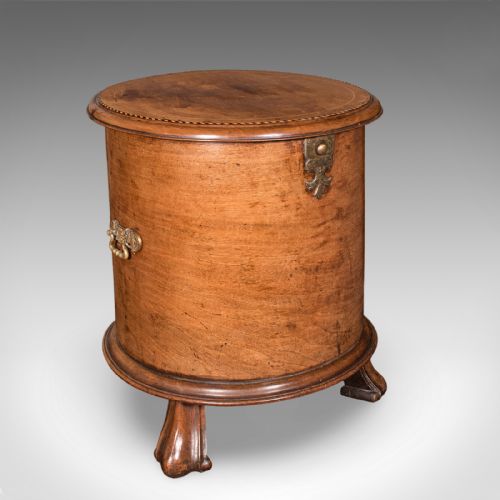


Regency Chest on Stand
A regency chest on stand brings architectural polish to a room, offering compact storage disguised as refined antique furniture.
Regency Chest on Stand
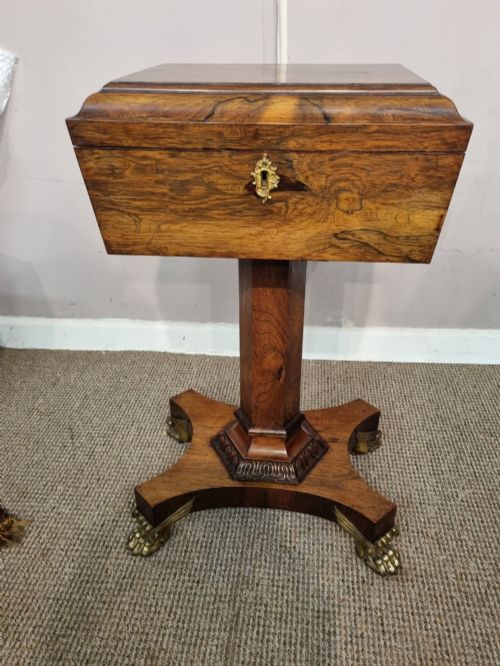
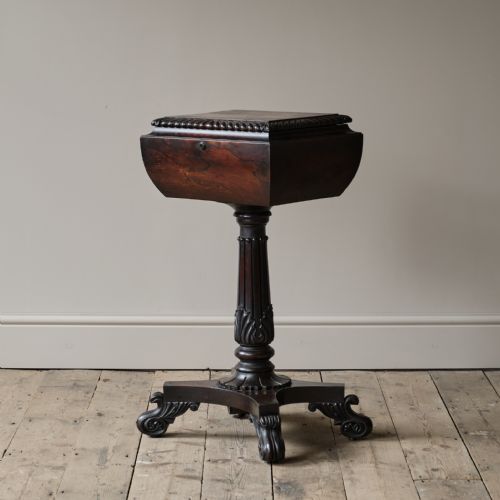
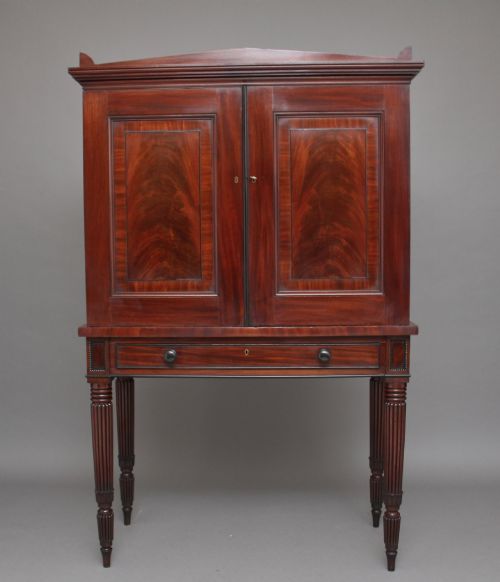
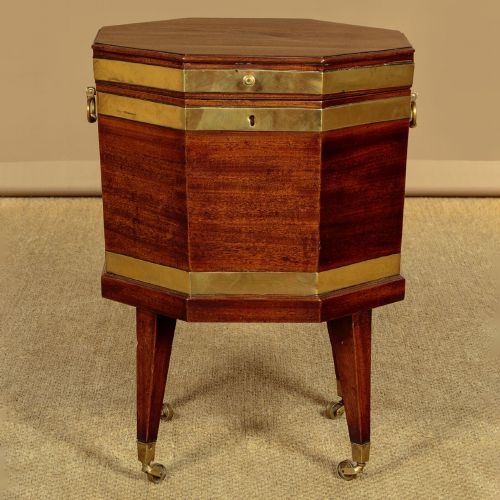
The regency chest on stand search phrase covers a varied group of elevated storage furniture, most commonly represented here by teapoys, collectors' cabinets, and cellarettes.
Teapoys and small cabinets dominate the selection, often resting on dedicated stands or legs originating from the Georgian, Regency, and William IV periods.
Pieces span multiple decades into the Victorian era, showing how cabinet makers adapted formal pedestal forms for domestic sitting rooms and drawing rooms.
Materials and construction
Craftsmen utilised dense native and imported timbers, principally solid mahogany, flame mahogany, and rich rosewood, frequently enhanced by figured mahogany veneers.
Decorative detail relies on precision brass inlay, penwork, lacquer, and cast brass mountings to define the distinct Neoclassical and Chinoiserie styles of the period.
Internal storage compartments, lead linings for wine coolers, and intricate writing or tea storage boxes demonstrate high levels of period joinery.
Listings feature mahogany, rosewood, walnut, and yew wood alongside brass inlay, lacquer, and zinc linings.
Quality and execution
Superior examples show exceptional figure in the timber grain, particularly in flame mahogany and burr walnut surfaces, matched across panels and lids.
The finesse of brass inlay and carved stand details separates standard production pieces from high-workshop outputs attributed to prominent makers.
Original stands and intact internal fittings preserve the historical integrity of the piece far better than later replacements or alterations.
Gillows·Strahan
The Regency Chest on Stand Glossary
- Teapoy
- A small box on a stand designed to hold tea, often fitted with interior canisters and mixing bowls. These evolved from table-top caddies into independent pedestal furniture during the early nineteenth century.
- Cellarette
- A lockable container used for storing wine bottles safely within the dining room. They frequently feature brass banding and internal dividers lined to keep bottles secure.
- Penwork
- A decorative surface technique involving fine ink drawing on wood, sealed with varnish. This painstaking method creates intricate Chinoiserie scenes on cabinet doors and lids.
- Sarcophagus
- A distinct burial-vault box shape with a domed or peaked lid adopted for wine coolers and teapoys. The classical silhouette proved popular in formal Regency interiors.
- Folio cabinet
- A specialised storage unit built to hold large paper sheets, prints, and drawings flat. These utilitarian pieces utilised wide, shallow drawers housed within sturdy timber carcases.
Regency Chest on Stand: Frequently Asked Questions
What is a regency chest on stand used for?
These elevated pieces served specific domestic functions like holding dry tea leaves, storing wine bottles, or organising miniature collections and writing materials.
Today they operate effectively as compact side tables, decorative display surfaces, or specialised storage in living spaces and studies.
What is a wine cooler cellarette?
Cellarettes were heavy timber containers placed near the dining table to hold bottles of wine before service. Many incorporated brass bands and lead linings.
Some stood directly on the floor while others sat on dedicated low stands or frames with castors for easy movement.
How do I distinguish Georgian from Victorian styles?
Georgian and Regency pieces lean heavily on restrained classical proportions, fine mahogany veneers, and precise brass inlay. Victorian examples often display heavier carving, darker walnut timber, and more exuberant embellishment.
Examining the internal secondary woods and construction joints helps confirm the period of manufacture.