
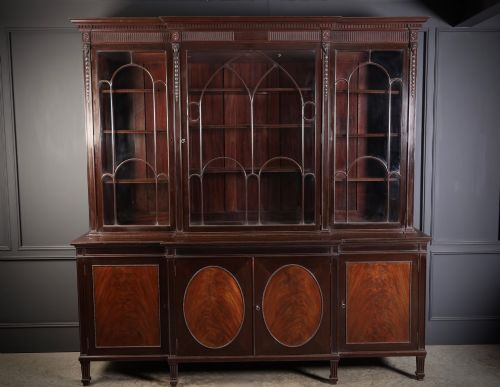
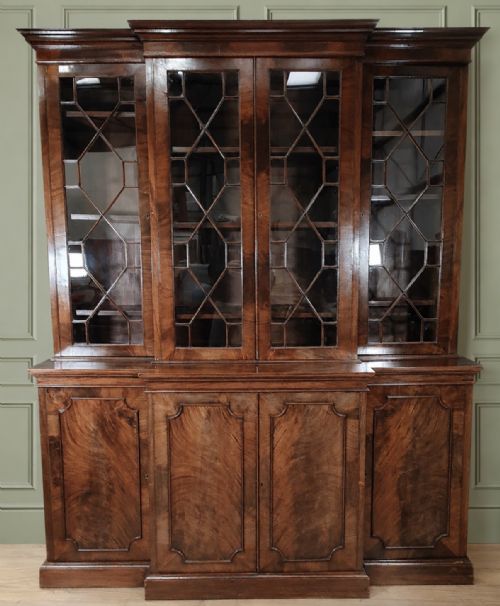


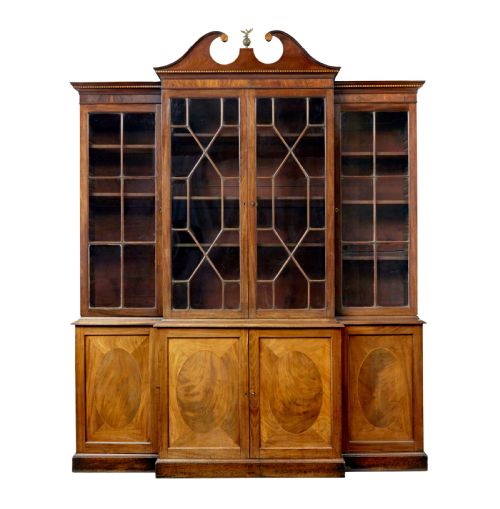


Georgian Breakfront Display Cabinet
A Georgian breakfront display cabinet brings architectural presence and refined timber to a room, offering grand storage for books and display.
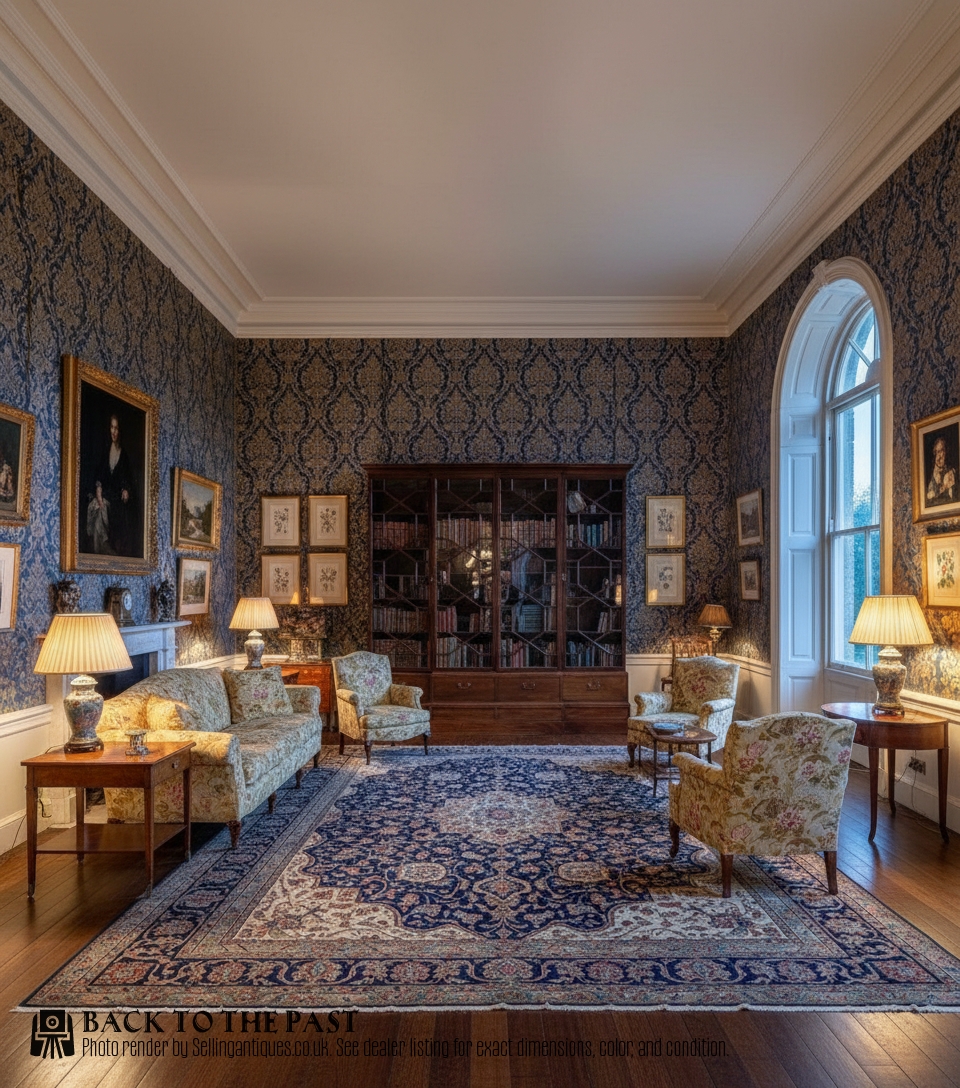
Georgian Breakfront Display Cabinet
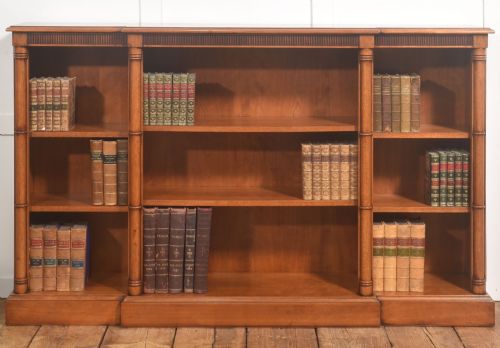
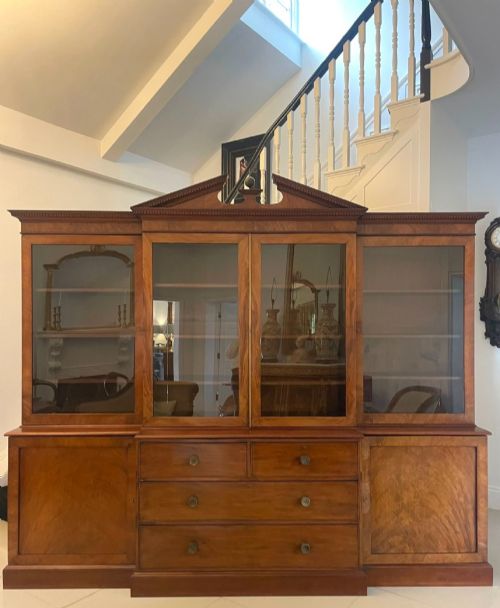
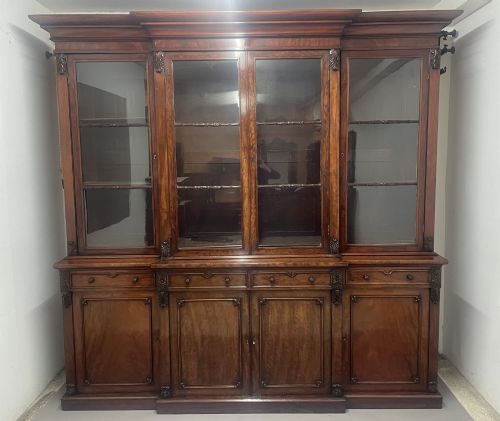
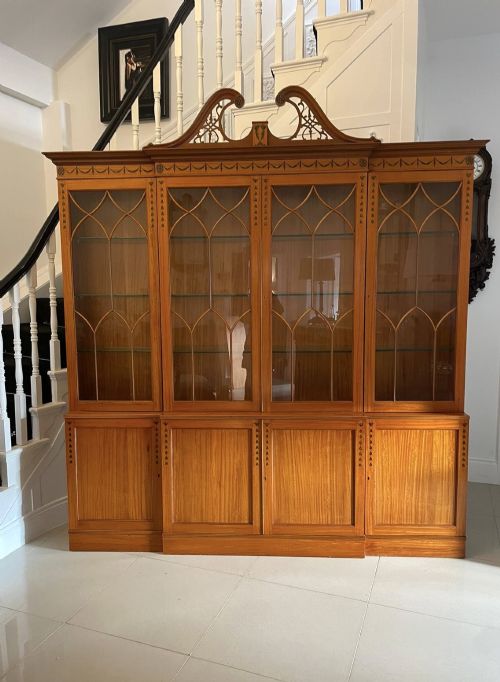
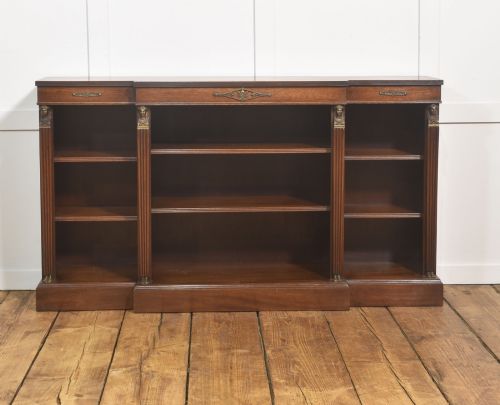
A georgian breakfront display cabinet is a substantial piece of furniture defined by its projecting central section, giving the facade a tiered appearance. These pieces primarily function as grand bookcases or display cabinets, designed to house libraries and treasured objects.
The versions met most often on this page date from the eighteenth and nineteenth centuries, alongside revival pieces from the twentieth century. They range from formal George III library bookcases in mahogany to painted country house examples and compact satinwood cabinets.
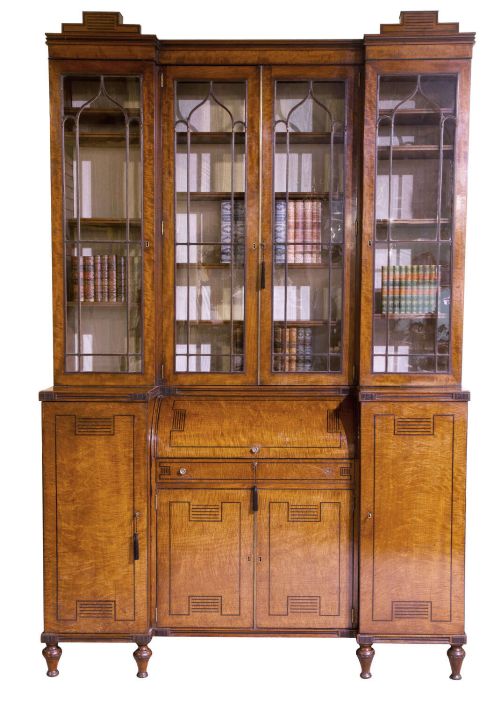
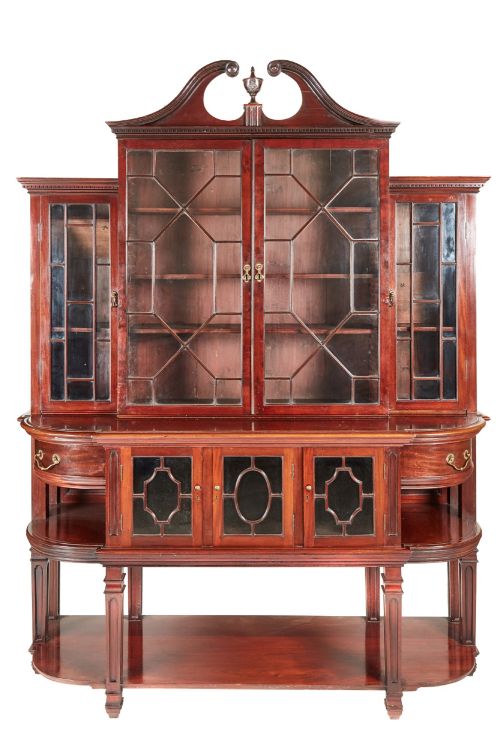
Makers constructed these cabinets in various formats, including glazed upper doors with astragal bars, secretaire drawers, and lower cupboards. Regional variations include Irish and Scottish pieces alongside English workshops, showing different timber selections and decorative finishes.
How they were made
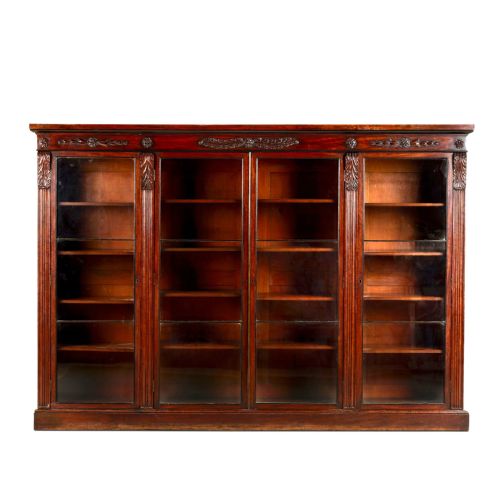
Cabinet makers relied principally upon solid mahogany and flame mahogany veneers, often enhanced with contrasting satinwood inlay, brass fittings, and oak internal framing. Craftsmen selected timber for figured grain patterns, laying veneers carefully across the prominent flat surfaces of the doors and drawers.
Glazing represents a major structural and decorative element, utilising timber astragal bars arranged in geometric or gothic patterns to hold individual panes of glass. Carved mouldings, bracket feet, and dental cornices completed the architectural facade of the breakfront structure.
Materials recorded across the selection include mahogany, satinwood, oak, pine, and painted wood with brass hardware.
What varies in quality
The standard of a breakfront cabinet rests upon the selection of timber and the precision of its construction. Superior examples display highly figured flame mahogany or finely painted satinwood surfaces that retain depth and warmth across every section.
Proportion and detail distinguish finer pieces, visible in the delicacy of the astragal glazing bars and the crispness of the carved mouldings. Original glass panes, well-fitted drawers, and unbroken architectural lines elevate a piece above simpler utilitarian furniture.
The Georgian Breakfront Display Cabinet Glossary
- Breakfront
- A cabinet design where the central section projects forward from the flanking side sections, creating a pronounced architectural rhythm. This layout was favoured by eighteenth-century designers to break up the flat facade of large library bookcases.
- Astragal
- A narrow moulding used to divide glass panes within a cabinet door, often shaped into intricate geometric patterns. Fine astragal bars require considerable joinery skill to assemble securely.
- Secretaire
- A drawer fitted with a drop-front writing surface and internal pigeonholes and small drawers. This clever incorporation allowed a large bookcase to double as a writing desk.
- Flame mahogany
- A veneer cut from the fork of a mahogany tree where the branches join the trunk, producing a rippling, flame-like grain pattern. Cabinet makers reserved this striking timber for the most prominent door panels.
- Cornice
- The decorative moulded projection running along the top of a cabinet. Georgian examples frequently feature classical architectural motifs such as dentils or Greek key patterns.
Georgian Breakfront Display Cabinet: Frequently Asked Questions
What is a breakfront cabinet?
A breakfront cabinet is a large piece of furniture featuring a central section that extends further forward than the two wings on either side.
This architectural arrangement creates shadow and depth, making the cabinet a commanding focal point in a dining room or library.
How were these cabinets used?
They were originally commissioned for grand country houses and town libraries to store leather-bound volumes and display valuable porcelain.
The upper glazed sections protected delicate items from dust while keeping them visible, and lower cupboards concealed larger volumes or household papers.
How do I date a breakfront cabinet?
Dating relies on examining timber species, construction methods, hardware, and stylistic details such as cornice mouldings and foot design.
Eighteenth-century pieces often display dense solid mahogany and hand-cut dovetails, whereas later revival pieces from the twentieth century may show different internal framing and secondary timbers.
Are these cabinets modular or one piece?
Most large breakfront bookcases are constructed in multiple modular sections to facilitate transport and placement within a room.
The upper display case typically lifts away from the lower base cabinets, and the wings often separate from the central section.
How do I care for mahogany timber?
Mahogany requires stable room humidity and protection from direct sunlight to prevent the timber and veneers from drying out or fading.
Occasional light dusting with a dry, soft cloth preserves the polished surface without the need for heavy silicone polishes.