
Large Bookshelf
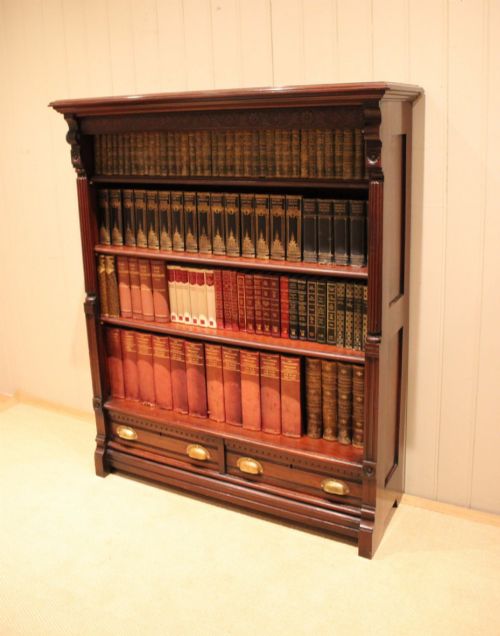
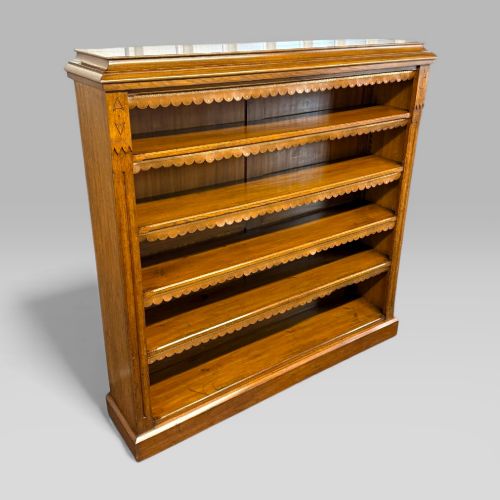
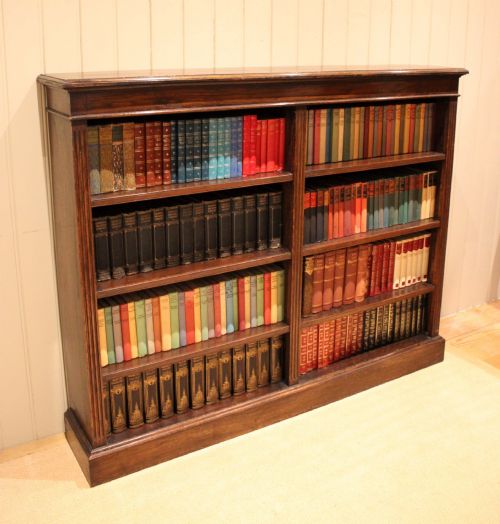
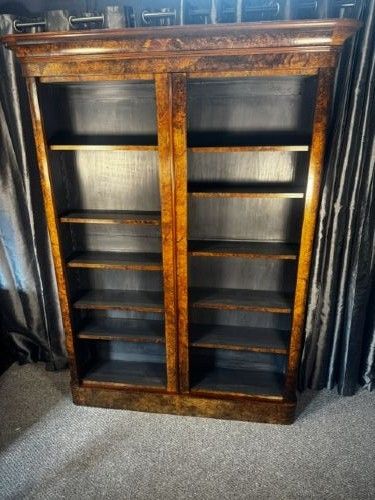
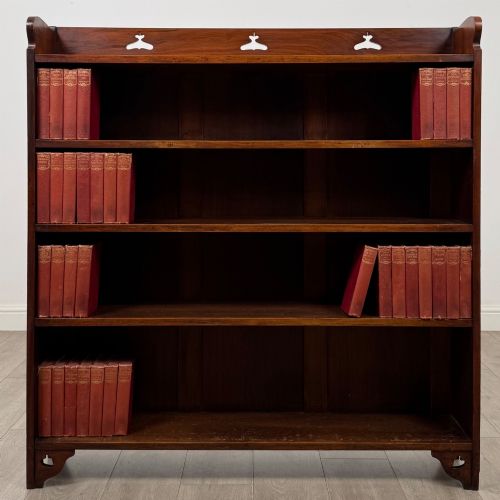
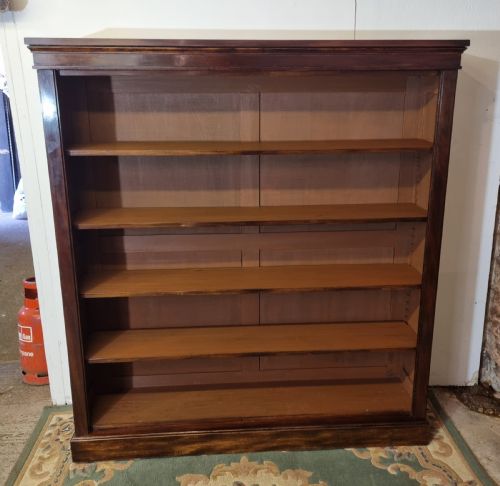
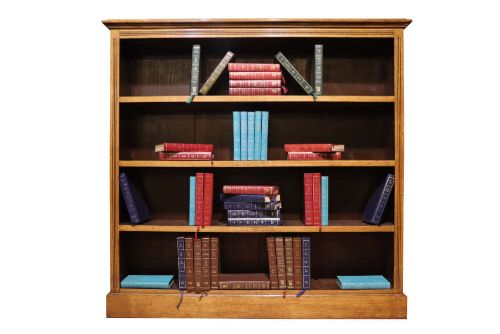
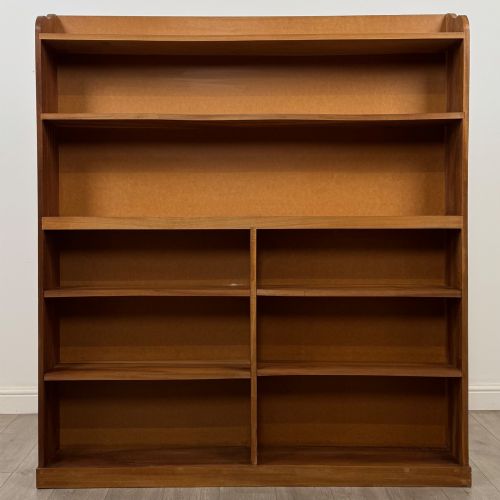
A large antique bookshelf organises heavy volumes while anchoring a room with substantial timber and period proportion.
Large Bookshelf
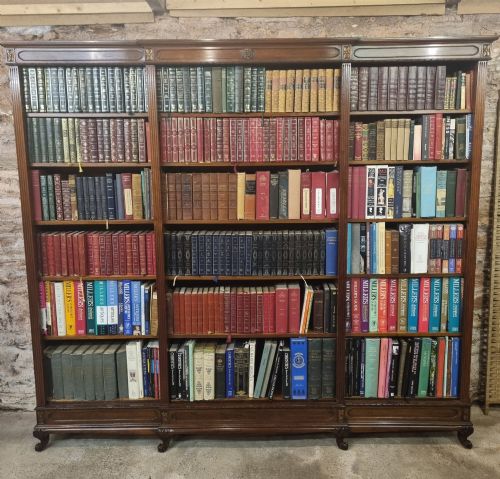
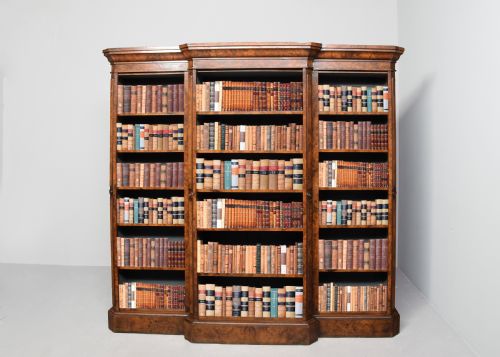
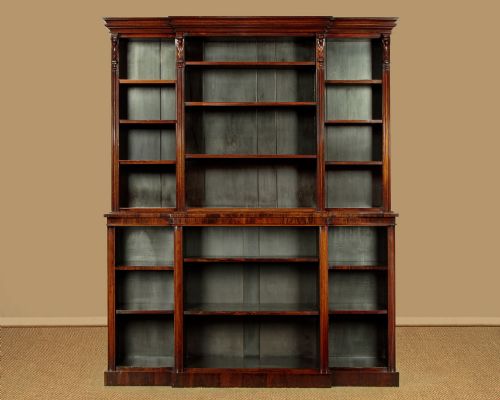
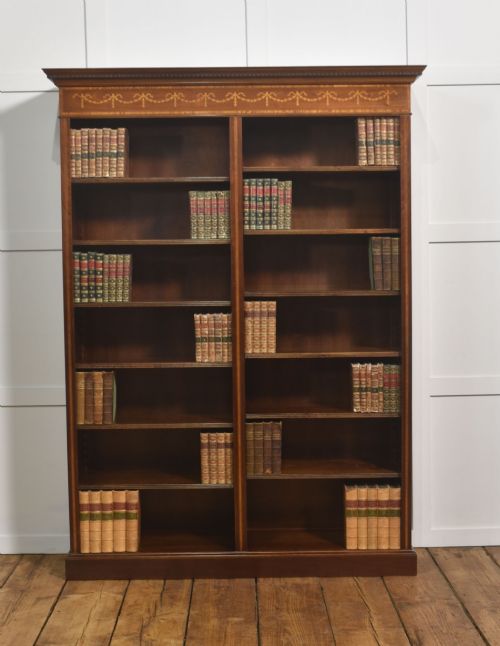
When you search for a large antique bookshelf, you encounter substantial library pieces designed to hold extensive private collections. These pieces appear primarily as open bookcases and breakfront formats from the nineteenth century, including Victorian and Edwardian eras.
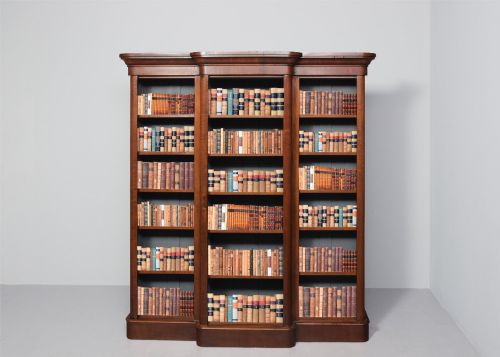
The dominant forms on this page include open front library bookcases and breakfront configurations constructed from timbers such as mahogany, oak, and walnut. These formats provide deep, adjustable shelving suited to domestic and institutional spaces.
Originating largely from British and continental workshops, these items reflect specific stylistic movements like the Aesthetic Movement, Arts and Crafts, and Sheraton Revival. Each example demonstrates the domestic scale and scholarly ambitions of its period.
How they were made
Cabinet makers utilised dense hardwoods including mahogany, oak, walnut, rosewood, and satinwood, often selecting figured veneers like burr walnut or flame mahogany for breakfront facades. Solid pine and deal served for secondary timbers and regional country house furniture.
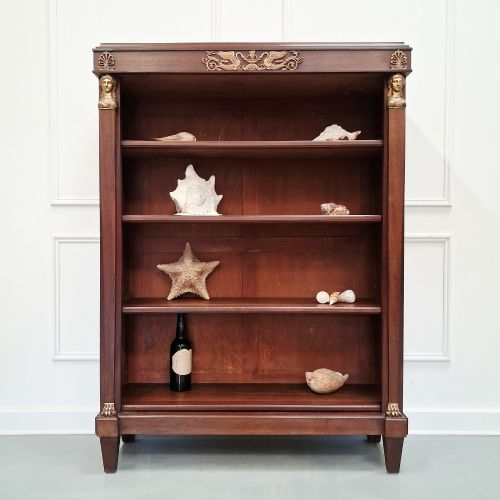
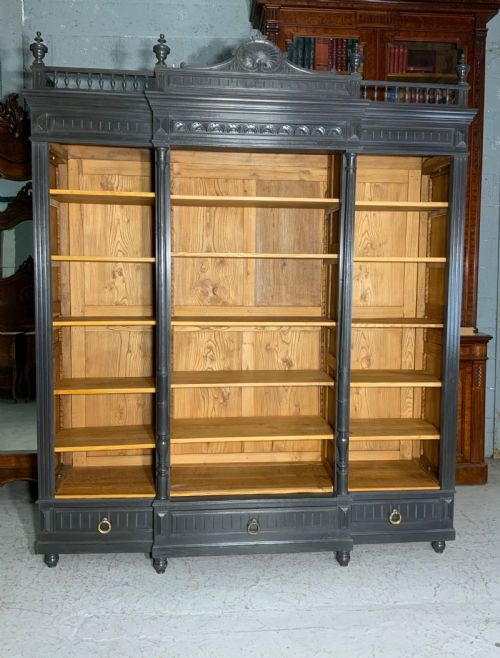
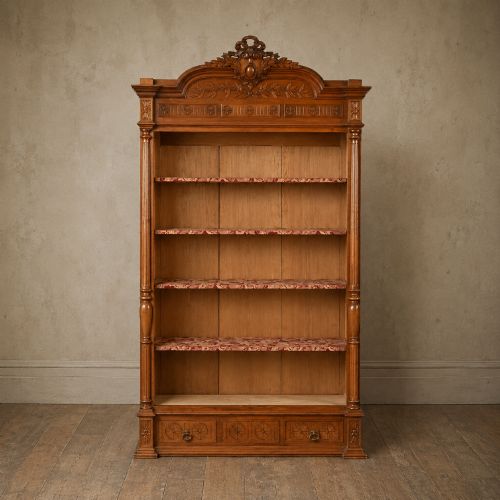
Construction techniques combined traditional joinery with functional hardware such as brass fittings, ormolu mounts, and carved decorative details characteristic of Gothic, Renaissance, and classical revivals. Shelves frequently incorporated adjustable mechanisms to accommodate varying book heights.
What varies in quality
The calibre of a large antique bookshelf depends heavily on the selection of timber and the ambition of its architectural form. Breakfront proportions, fine figuring in flame mahogany or burr walnut, and sophisticated inlays separate standard storage from exceptional library furniture.
Execution of carved ornamentation, such as Renaissance Revival motifs or Gothic tracery, dictates the upper tier of craftsmanship. Integrated adjustable shelving mechanisms and secondary woods of equal integrity further distinguish superior regional and country house examples.
Sir Charles Barry
The Large Bookshelf Glossary
- Breakfront
- A piece of furniture featuring a central section that projects forward from the flanking wings. This architectural layout creates depth and visual rhythm in large library bookcases.
- Open Bookcase
- A shelving unit without glazed or wooden doors, designed for immediate access to volumes. These units frequently feature adjustable shelves.
- Adjustable Shelves
- Shelving supported by moveable pegs, ratchets, or traditional vertical tracks, allowing the interior layout to adapt to different book sizes. This feature appears widely in nineteenth-century library furniture.
- Satinwood
- A durable, yellowish-grey or pinkish hardwood prized for its lustrous grain, utilised for fine inlay and marquetry during the Sheraton Revival and later periods.
- Ormolu
- Cast brass that is gilded with gold leaf and applied as an ornamental mount on nineteenth-century walnut and mahogany furniture.
Large Bookshelf: Frequently Asked Questions
How do I spot an Edwardian piece?
Edwardian bookcases often display lighter timbers such as golden oak or satinwood inlay, reflecting the decorative tastes of the early twentieth century. Their proportions remain generous, yet the overall aesthetic tends towards airier domestic interiors.
Construction details from this era frequently include machine-standardised adjustments alongside traditional joinery, bridging Victorian heft with Edwardian utility.
Are the shelves usually adjustable?
Many nineteenth-century and Edwardian library bookcases include adjustable shelving systems to accommodate varying heights of volumes. These utilise wooden tracks, pegs, or metal ratchets.
Original adjustable mechanics indicate thoughtful cabinet making designed for functional libraries rather than static display.
Which woods were most commonly used?
Mahogany, oak, and walnut dominate the selection, appearing in both solid form and as veneers over secondary woods like pine. Exotic timbers such as rosewood and satinwood appear in specific stylistic revivals.
Makers selected these hardwoods for their structural strength and capacity to take a fine polished finish.