


Walnut Breakfront Bookcase
A walnut breakfront bookcase is a grand statement piece of furniture that anchors a room and displays a serious library.
Identifying walnut breakfront bookcases
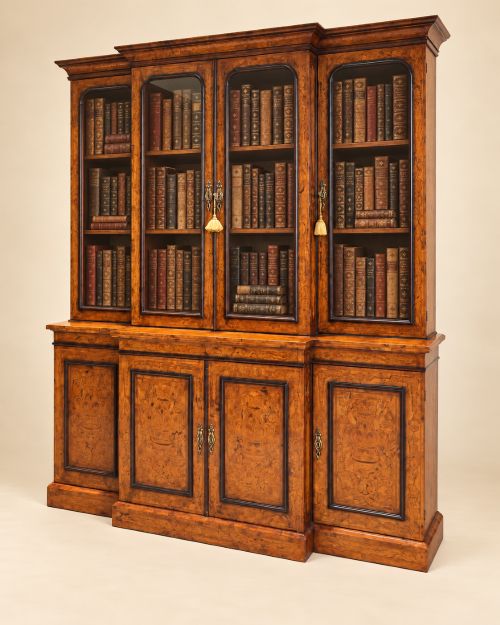
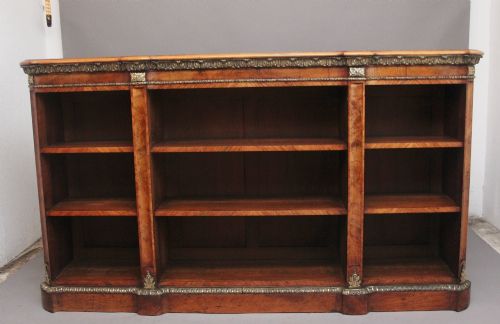
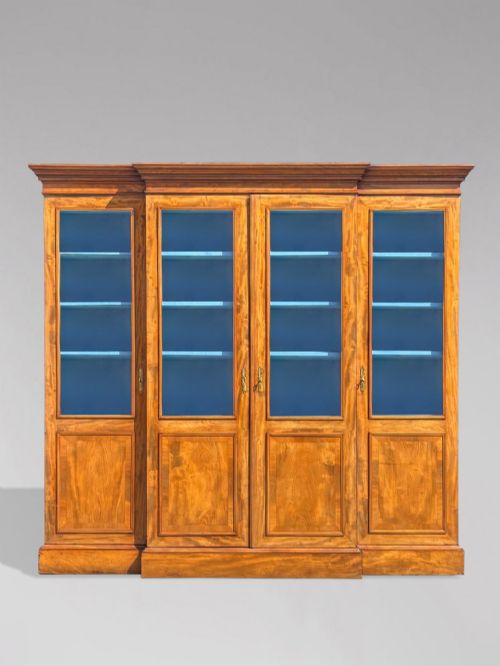
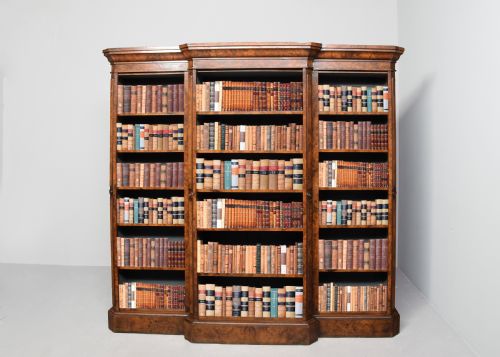
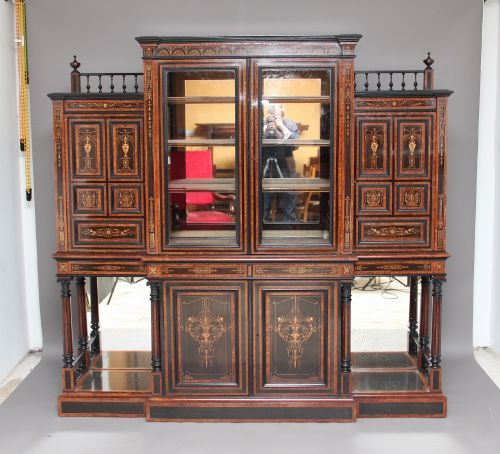
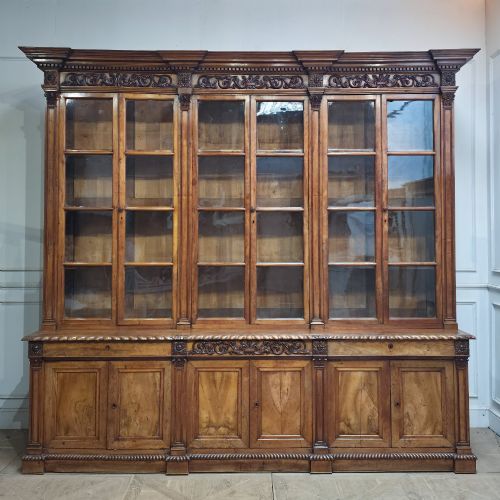
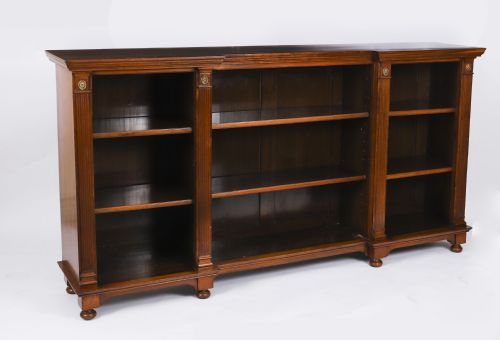
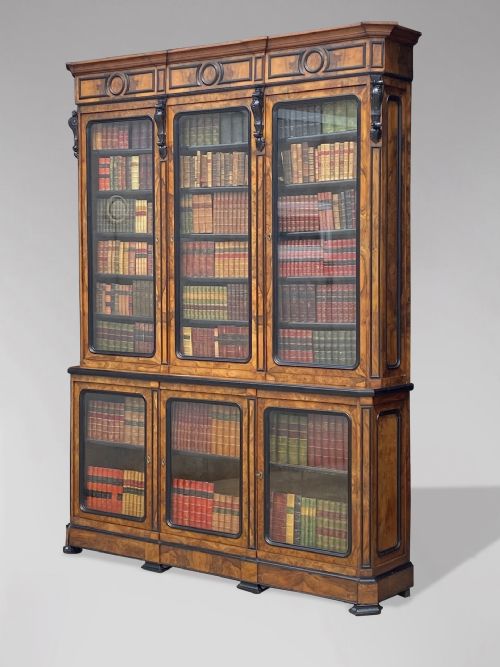
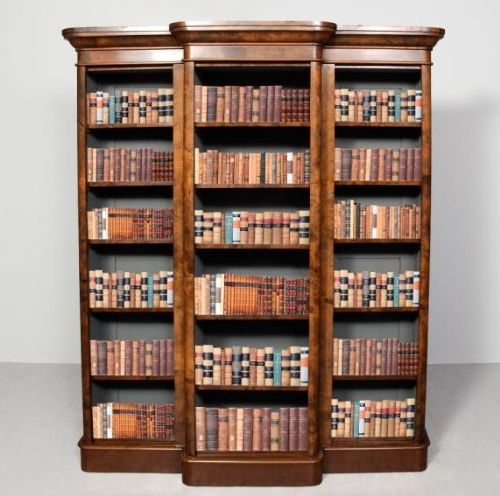
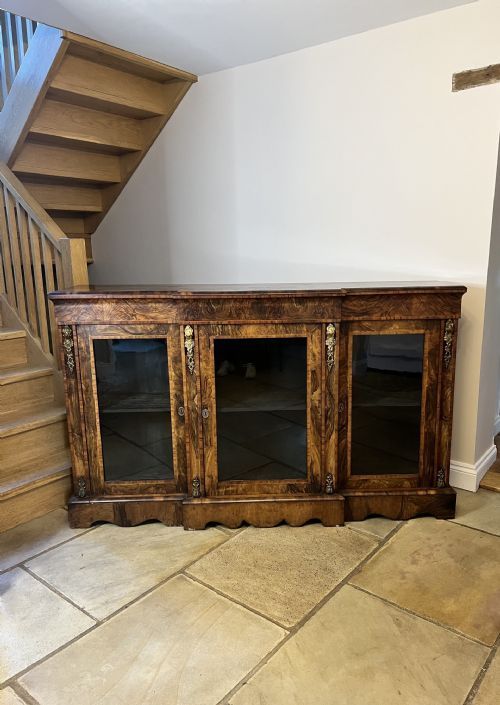
A walnut breakfront bookcase presents a stepped facade where the central section projects forward from the flanking wings, offering a commanding presence in a large room. The pieces found here span the Victorian era, the Edwardian period, and the early twentieth century, incorporating revivals of Queen Anne, Italian Baroque, and Neoclassical styles.
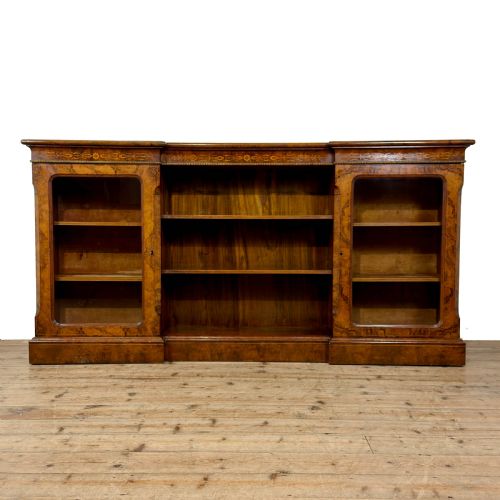
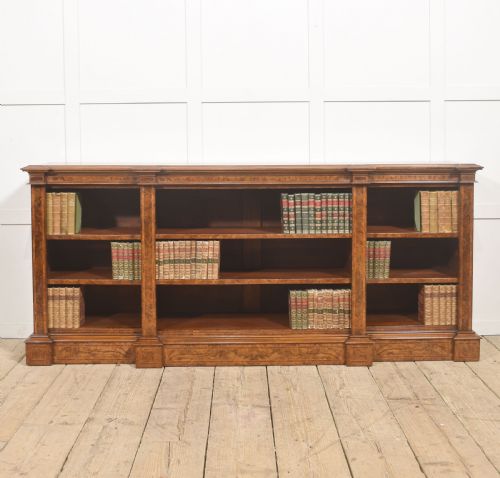
Most examples you encounter rely on figured burr walnut veneers or straight-grained walnut timbers, occasionally complemented by fruitwood inlay, boxwood marquetry, and brass mounts. You will find both glazed door cabinets and open shelving arrangements, with some variations functioning as secretaires, credenzas, or display sideboards.
Makers from the nineteenth and early twentieth centuries produced these items in varying scales, from low open bookcases to large four-door library cabinets. The architectural proportions of the breakfront design remain the unifying characteristic across English and continental workshops alike.
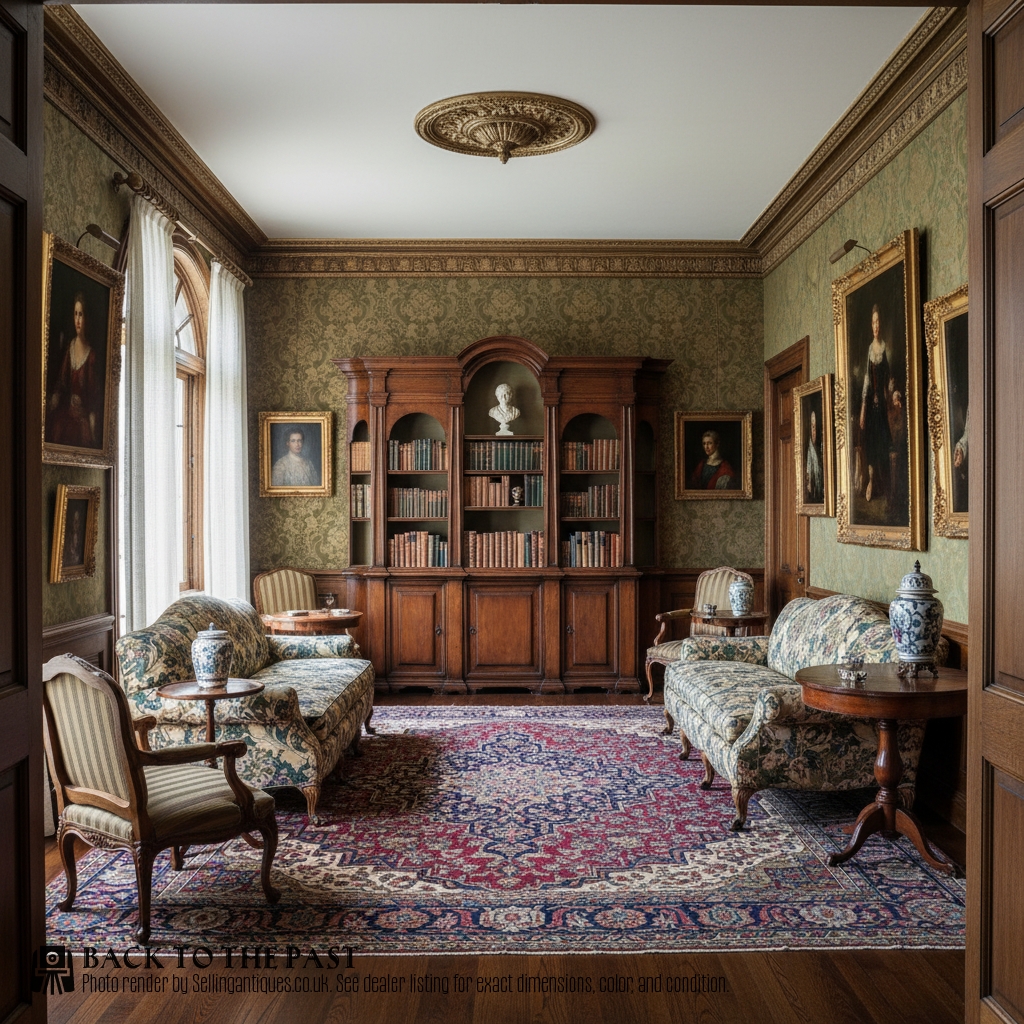
Materials and construction
Cabinet makers utilised choice cuts of walnut and burr walnut over secondary pine or oak carcases, deliberately selecting timber for its rich grain patterns and warm hue. Veneers were sawn rather than sliced in earlier examples, creating substantial surfaces that took a deep polish.
Decorative detailing relied on fine fruitwood inlay, boxwood stringing, and marquetry panels set into the walnut ground. Glazed doors utilised shaped glass panes held by slender wooden glazing bars, while hardware incorporated cast brass mounts and escutcheons.
Retail Price Guide 2026
Typical UK retail prices for walnut breakfront bookcase, calculated from the Sellingantiques database of over a million retail prices indexed since 2003. This retail price guide relies exclusively on Sellingantiques data; no external sources or auction records are used, so the figures do not describe the wider market.
Listings feature walnut breakfront bookcases from the Victorian, Edwardian, and early twentieth-century periods, alongside Queen Anne Revival and Italian styles.
Distinguishing quality in walnut breakfront bookcases
The choice of timber defines the upper tier of production, where cabinet makers selected highly figured burr walnut or figured walnut veneers matched symmetrically across the breakfront doors and drawers. Lesser pieces utilised plain walnut with minimal grain movement and simpler carcass construction.
Execution of decorative elements separates standard workshop output from premier cabinet work. Finely cut boxwood and fruitwood marquetry, crisp architectural moulding, and integrated adjustable shelving systems indicate superior commissioning and advanced joinery.

Maple & Co.·Holland & Sons·Waring & Gillows
The Walnut Breakfront Bookcase Glossary
- Breakfront
- A cabinet design where the central section projects forward from the recessed left and right sections. This architectural arrangement creates shadow and depth across the front elevation of the furniture.
- Burr walnut
- Timber taken from the wart or burl growth on a walnut tree, yielding highly convoluted and swirling grain patterns. Cabinet makers prized this material for veneering prominent door and drawer surfaces.
- Marquetry
- The art of forming decorative patterns using thin veneers of different woods, fruitwoods, and other materials. Craftsmen applied this technique to embellish door panels and friezes.
- Secretaire
- A cabinet incorporating a pull-down writing flap revealing a fitted interior of small drawers and pigeonholes. This hybrid form combines library storage with a writing desk.
- Glazed door
- A door fitted with glass panes to protect books from dust while maintaining visibility of the library contents. These doors often feature wooden muntins dividing the glass into individual lights.
Frequently Asked Questions
What is a breakfront bookcase?
A breakfront bookcase is a large cabinet featuring a central section that extends forward past the recessed side sections. This layout breaks up the flat facade of traditional library furniture.
The configuration typically provides deeper storage or a desk space in the middle while maintaining narrower shelving wings.
How do I date a walnut bookcase?
Dating relies on observing construction methods, timber choices, hardware, and stylistic revival cues. Victorian and Edwardian examples show distinct architectural proportions and veneer treatments.
Secondary woods inside the drawers and the style of the adjustable shelf mechanisms also offer reliable clues to the period of manufacture.
Where should I place a large bookcase?
These substantial pieces require a room with adequate wall space and ceiling height to accommodate their architectural scale. Placing them in a study, library, or drawing room provides a suitable traditional context.
Position the cabinet away from direct sunlight and heat sources to protect the walnut veneer and polished finish.
Are the shelves adjustable?
Many examples feature adjustable shelving supported by wooden rack-and-pinion systems, brass studs, or traditional sliding notches. This adaptability allows the interior to accommodate volumes of varying heights.
Open bookcases on this page frequently highlight this practical feature for library use.