
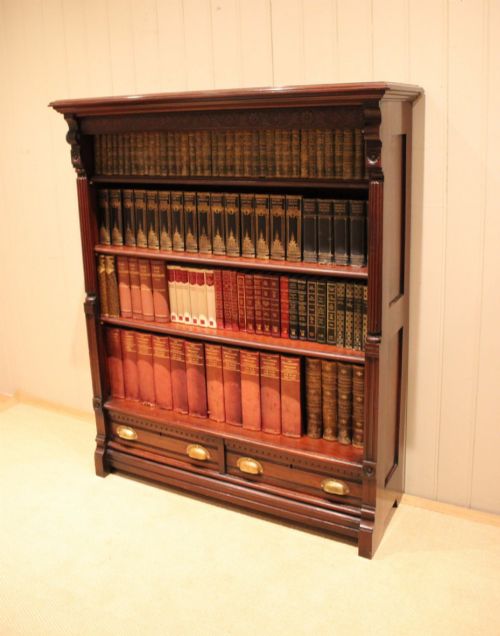
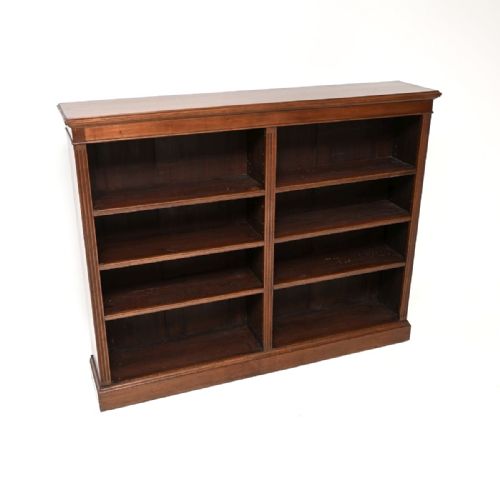
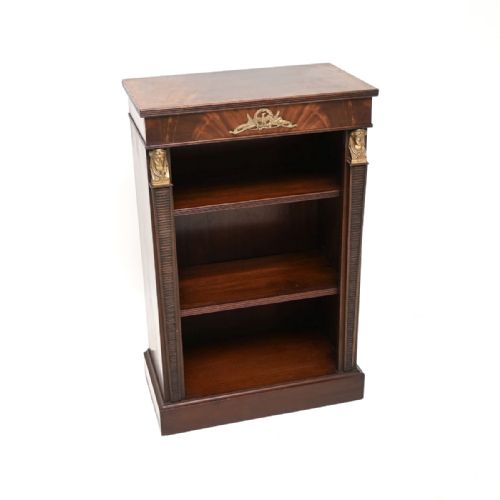
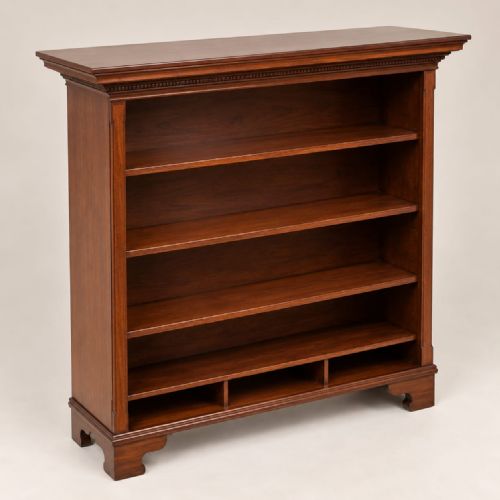
Open Mahogany Shelving
Open mahogany shelving offers accessible display and storage, bringing warm timber tones and period character to everyday rooms.
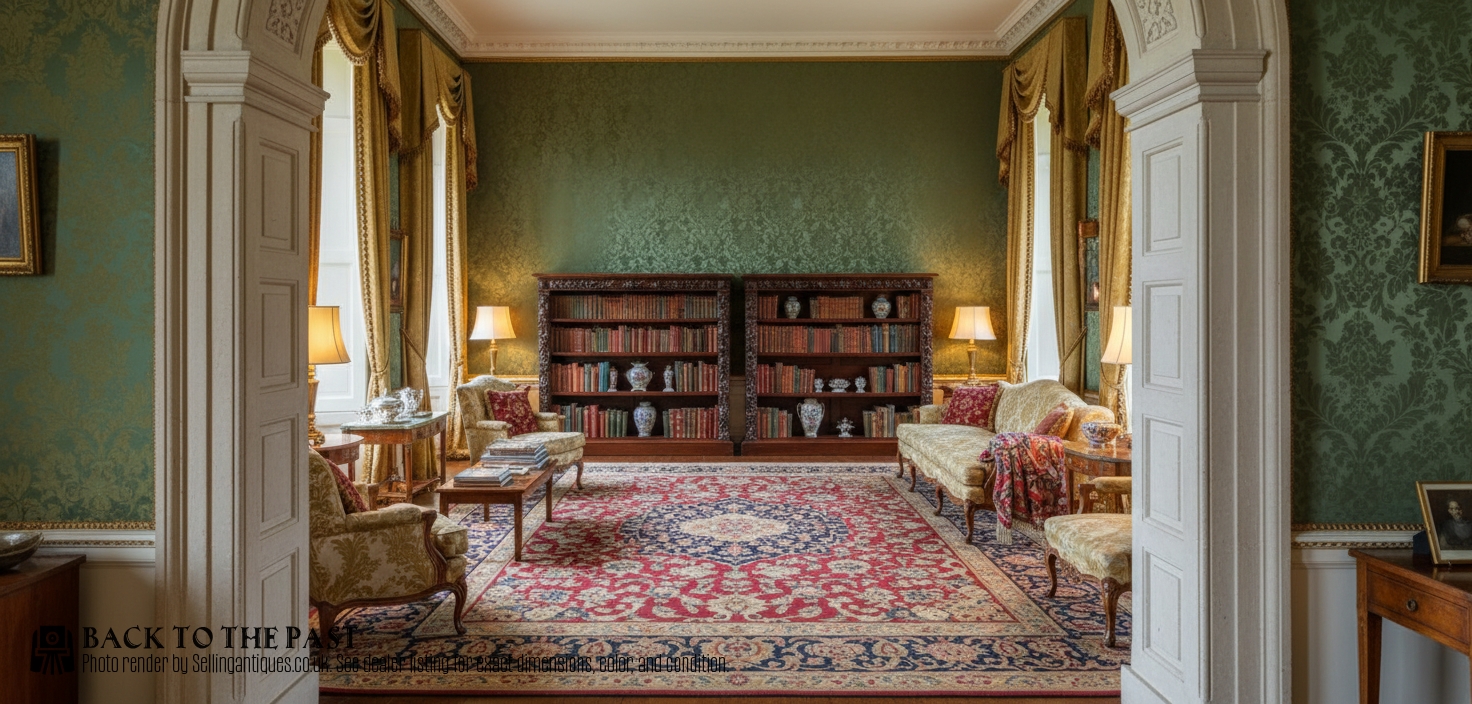
Open Mahogany Shelving
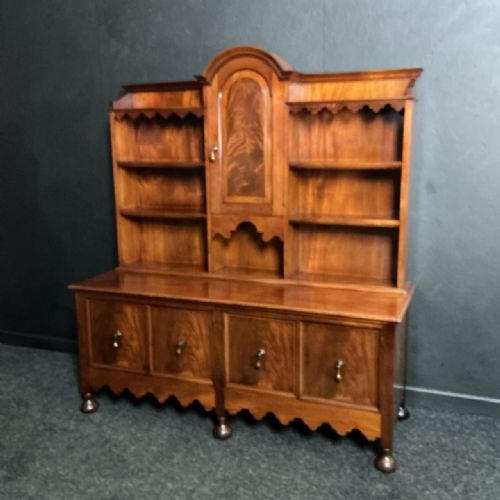
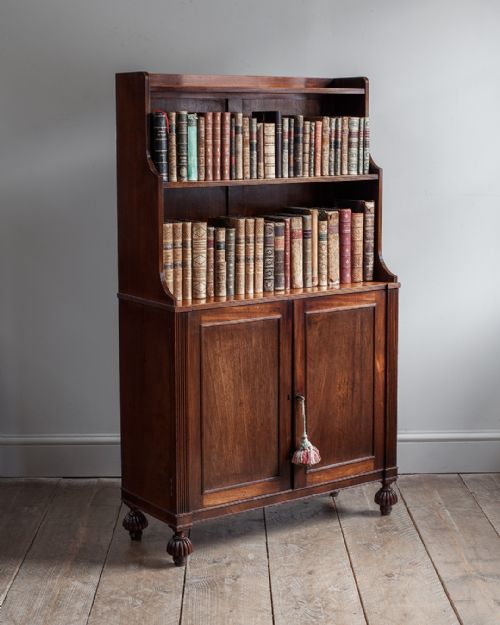
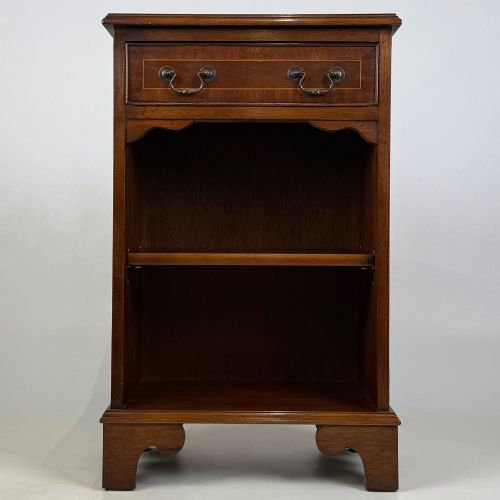
Open mahogany shelving appears across multiple periods, including Regency, Georgian, Victorian, and Edwardian eras. Pieces take diverse forms such as bookcases, whatnots, etageres, wall shelves, and dressers.
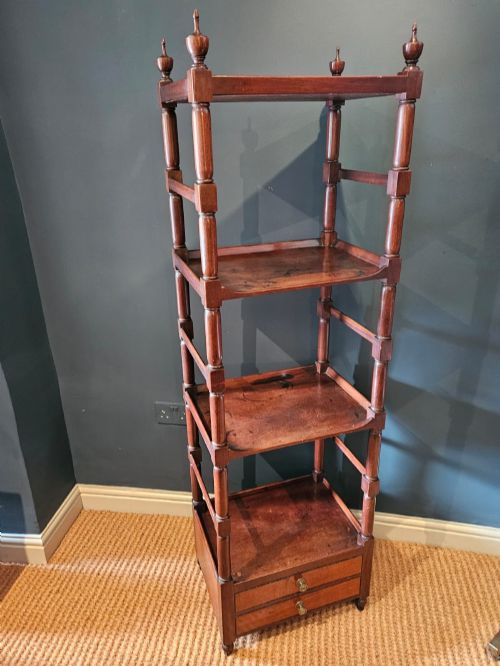
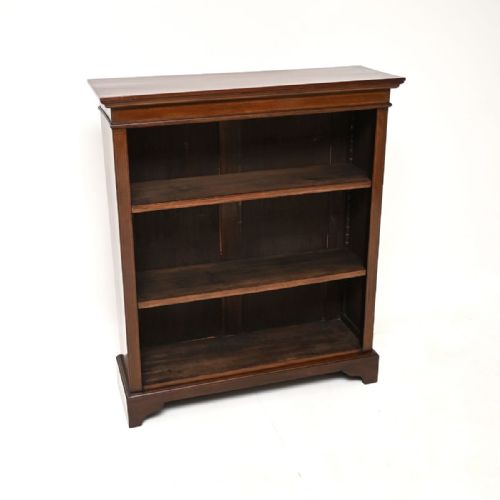
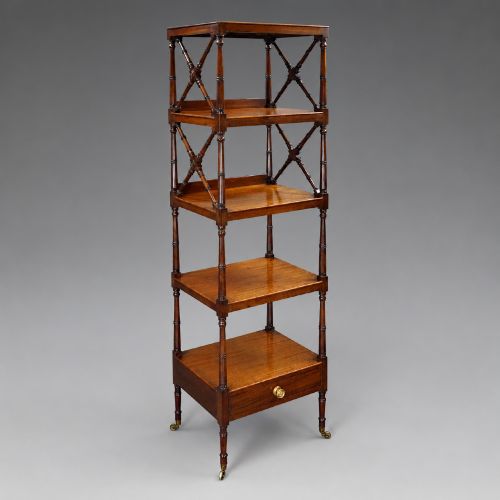
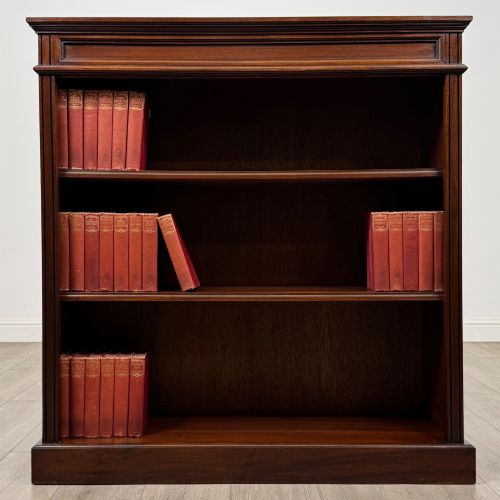
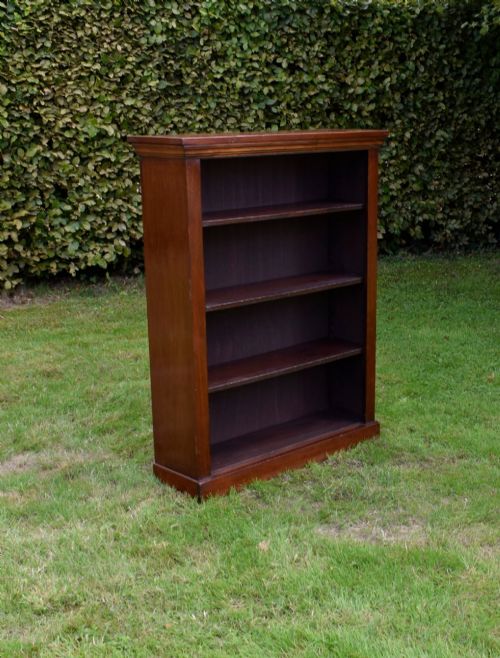
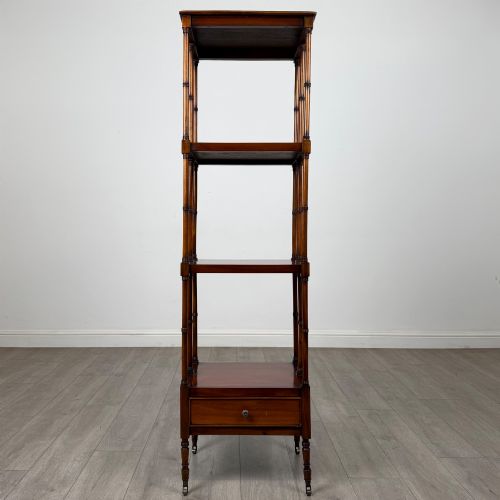
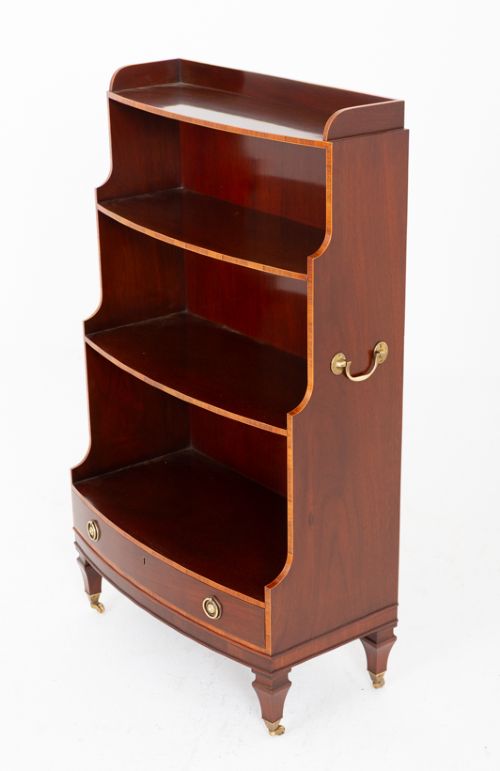
The version most commonly met on this page is the freestanding open bookcase or tiered whatnot. These items often feature adjustable shelves or multiple tiers supported by slender uprights.
Origins span from the late eighteenth century through the early twentieth century, including revival pieces and classical designs. Many incorporate secondary timbers, satinwood inlay, or brass castors.
Materials and construction
Construction relies primarily on solid mahogany and mahogany veneers, sometimes enhanced with flame mahogany grain patterns. Satinwood provides contrasting inlay work for decorative detail on late nineteenth and early twentieth-century examples.
Metal components such as brass appear on castors and structural fittings, particularly on tiered whatnots and cabinet bases. Paint and ormolu occasional finishes add further decorative nuance to specific revival styles.
Listings feature mahogany combined with brass, satinwood, and ormolu across Victorian, Regency, and Edwardian periods.
Judging quality
Quality separates pieces through the selection of timber figure, such as richly grained flame mahogany, and the crispness of inlaid satinwood stringing. Superior examples display thoughtful proportions and balanced tier heights rather than heavy, utilitarian lines.
Fine craftsmanship reveals itself in well-fitted joints, smoothly operating adjustable shelf mechanisms, and original brass hardware such as castors. The integration of secondary woods and the stability of upright structures distinguish better workshops.
The Open Mahogany Shelving Glossary
- Whatnot
- A multi-tiered piece of freestanding furniture designed for displaying ornaments, books, or small objects. These typically feature three or four open shelves supported by turned columns.
- Waterfall bookcase
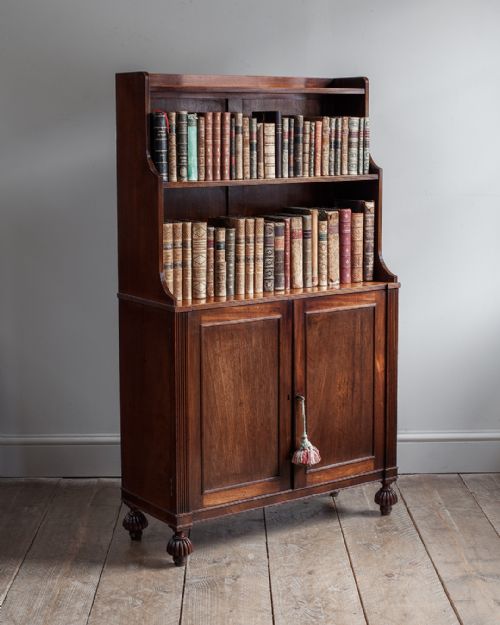
- A tiered shelving unit where each lower shelf projects further forward than the one above it, creating a stepped profile.
- Etagere
- A set of open shelves for displaying small decorative items, functioning similarly to a whatnot or wall shelf.
- Flame mahogany
- A decorative veneer cut from timber where the branch meets the trunk, producing a distinctive flickering flame-like pattern.
- Breakfront
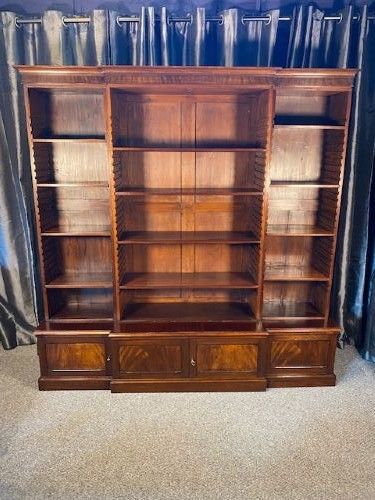
- A piece of furniture where the central section projects forward from the flanking outer sections.
Open Mahogany Shelving: Frequently Asked Questions
How do I choose the right size?
Consider the available wall space and floor area in your room before selecting a piece. Taller four-tier whatnots demand vertical clearance, while slim etageres or hanging wall shelves suit compact areas.
Measure the depth of the shelves against the items you intend to display, ensuring books or objects fit comfortably without overhang.
Are the shelves adjustable?
Many of the larger nineteenth-century bookcases feature adjustable shelves supported by wooden ratchets or metal pins. This allows you to alter shelf heights for varying book sizes.
Tiered whatnots and waterfall units typically have fixed shelves structured permanently into the upright supports.
Where should I place these pieces?
Freestanding open bookcases and whatnots work well against living room walls or home libraries. Ensure they rest on level flooring, using appropriate wall fixings if stability requires it.
Keep mahogany away from direct heat sources and strong sunlight to protect the polished timber finish from fading.
How do I date an open bookcase?
Dating relies on stylistic clues, construction methods, and timber characteristics. Georgian and Regency pieces often show simpler architectural lines and hand-cut joinery, while Victorian and Edwardian examples may incorporate machine-made elements, brass castors, or satinwood inlay.
Revival styles from the early twentieth century intentionally replicate earlier eighteenth-century aesthetics.