



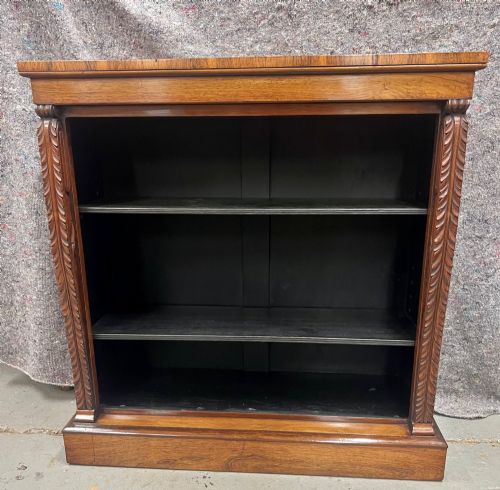
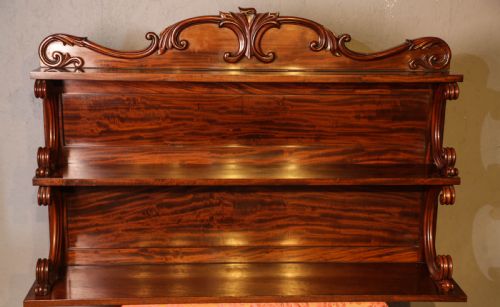


Carved Mahogany Bookshelf
A carved mahogany bookshelf brings solid timber warmth and timeless organisation to any room, holding heavy volumes with quiet elegance.
Carved Mahogany Bookshelf
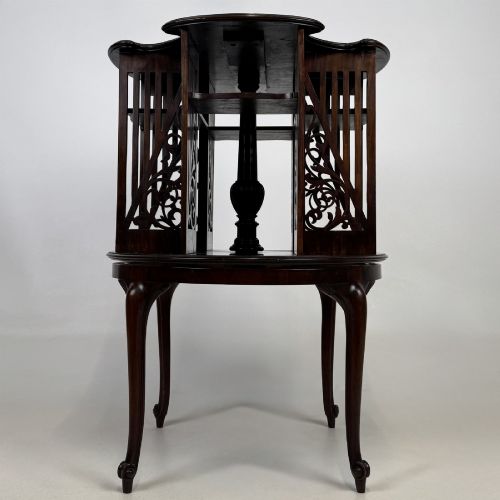
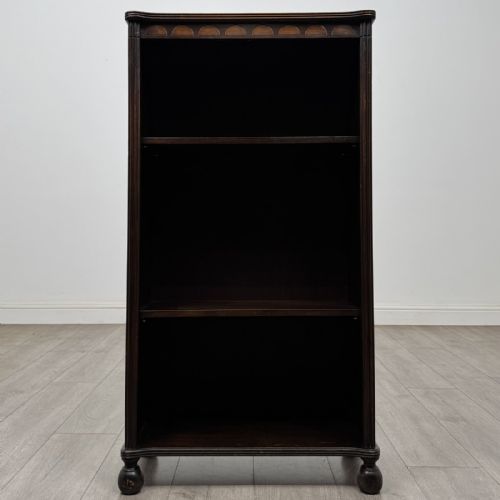
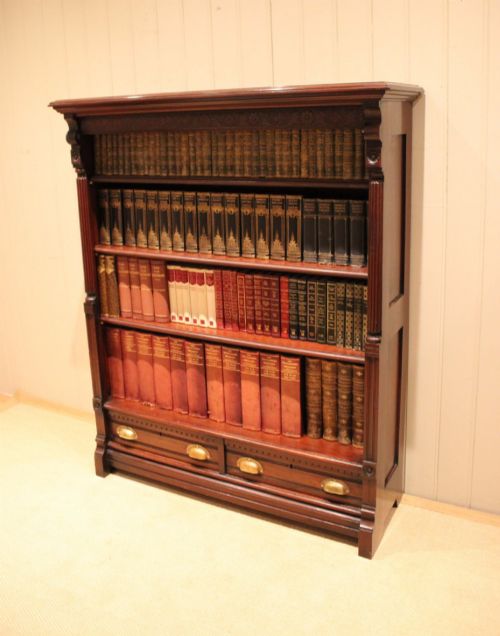
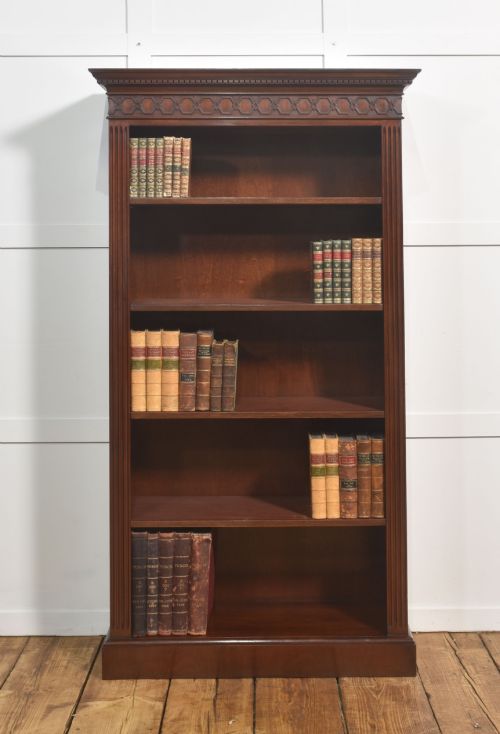
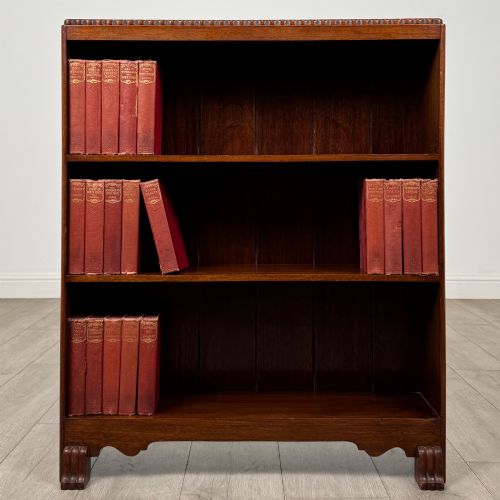
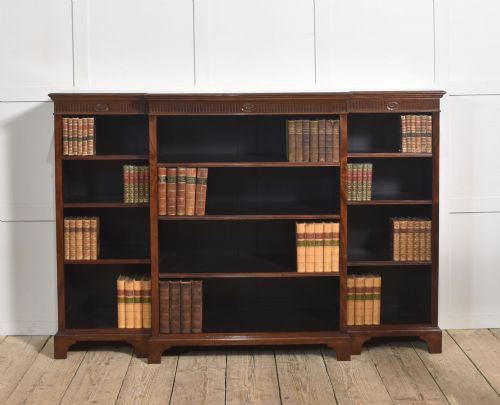
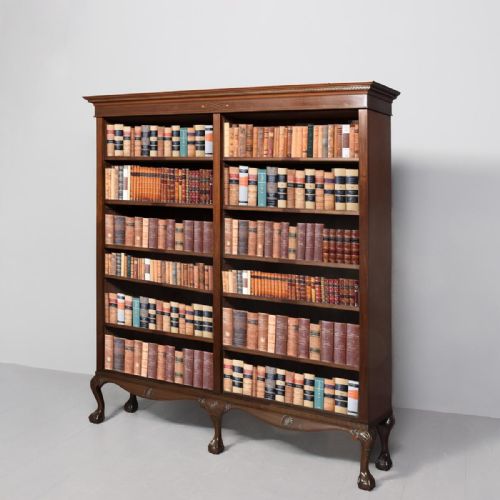
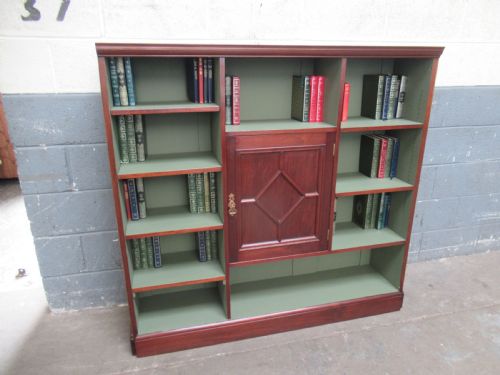
A carved mahogany bookshelf serves as a sturdy piece of furniture designed to store and display books, journals, and decorative items. These items range from large library bookcases and breakfront floor units to compact wall shelves, desktop cases, and revolving designs.
Buyers on this page most frequently encounter open bookcases and wall shelves originating from the nineteenth and early twentieth centuries, spanning Victorian, Regency, and Edwardian periods.
Makers utilised dense timbers and functional formats, producing tall freestanding libraries alongside smaller portable shelves and multi-tiered etageres suited for domestic interiors.
How they were made
Craftsmen built these pieces primarily using solid mahogany, occasionally incorporating Spanish mahogany, goncalo alves, or rosewood veneers over secondary timbers like pine. Structural elements often integrated brass fittings, ormolu mounts, and delicate wood inlay to enhance the primary wood grain.
Joinery techniques focused on durability, allowing for adjustable shelving systems and stable freestanding or wall-mounted frames. Surface finishes typically relied on traditional polishing methods that highlighted the deep reddish-brown tones and natural figure of the timber.
Carved Mahogany Bookshelf Retail Price Guide 2026
Typical asking prices for carved mahogany bookshelf among the pieces listed under this phrase on Sellingantiques today, from the lower quarter to the upper quarter. They describe what is for sale here now, not the wider market.
Materials documented across the collection include mahogany, rosewood, brass, leather, and painted finishes.
What varies in quality
Quality rests upon the selection of timber figures, the precision of the carving, and the integrity of the structural proportions. Pieces featuring dense Spanish mahogany, crisp architectural mouldings, and refined inlay work sit comfortably above plain utility items.
The sophistication of the internal mechanics, such as smooth-turning revolving bases and neatly engineered adjustable shelf racks, distinguishes standard domestic examples from grand library commissions.
Shapland and Petter
The Carved Mahogany Bookshelf Glossary
- Breakfront
- A cabinet or bookcase whose central section projects forward from the flanking wings. This architectural arrangement creates depth and visual interest in larger library pieces.
- Etagere
- A set of open shelves for displaying small objects and books, often freestanding with multiple tiers. They gained popularity during the Victorian era for domestic display.
- Whatnot
- A piece of furniture consisting of a series of open shelves supported by slender pillars, used for books and ornaments. Many examples incorporate mirrors or small drawers.
- Revolving bookcase
- A compact shelving unit mounted on a rotating pivot base designed to sit on a table, desk, or floor. It allows easy access to a selection of frequently used volumes.
Carved Mahogany Bookshelf: Frequently Asked Questions
How do I spot a Victorian bookshelf?
Victorian examples frequently display deeper red mahogany tones, robust architectural proportions, and practical adjustable shelving systems designed for growing home libraries.
They often feature restrained linear carving or decorative crests reflecting the revival styles popular during the nineteenth century.
Are these shelves suitable for heavy books?
Most pieces listed are constructed from solid mahogany or sturdy secondary woods designed to bear significant weight across their timber boards.
Many period versions include adjustable shelf supports, allowing you to space heavier volumes securely.
What is a revolving bookcase?
A revolving bookcase is a compact shelving unit set on a pivoting base that lets users spin the structure to access books from any angle.
Cabinetmakers produced these in tabletop and floor-standing formats during the late Victorian and Edwardian eras.
How do Regency shelves differ?
Regency pieces often display cleaner classical lines, simpler proportions, and subtler brass or wood inlay details compared to later Victorian items.
They lean towards architectural restraint, reflecting the classical design influences of the early nineteenth century.