
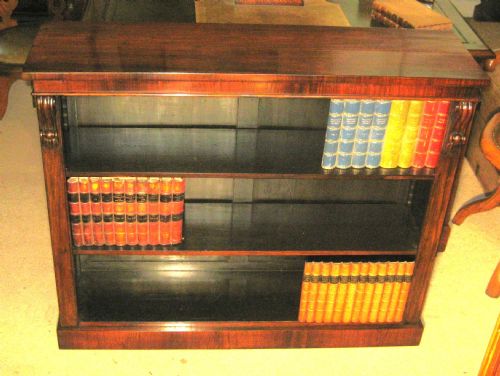
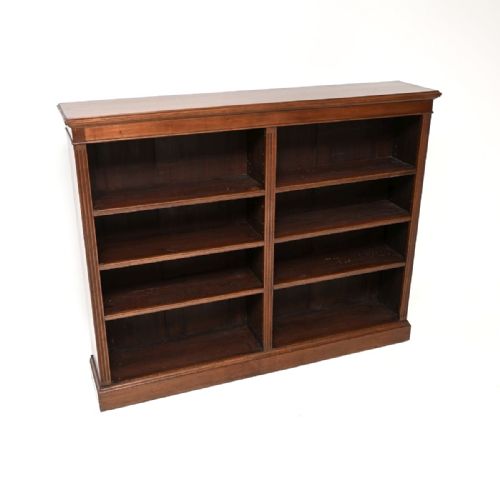
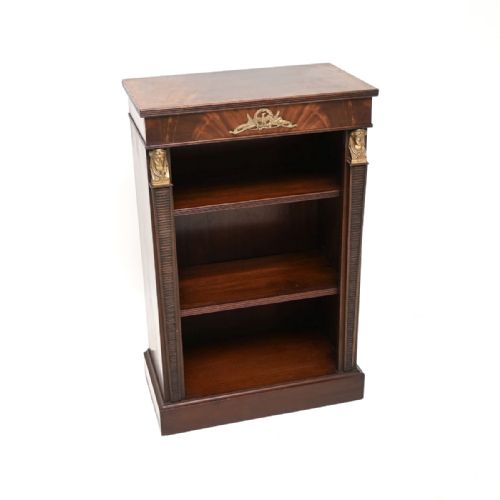
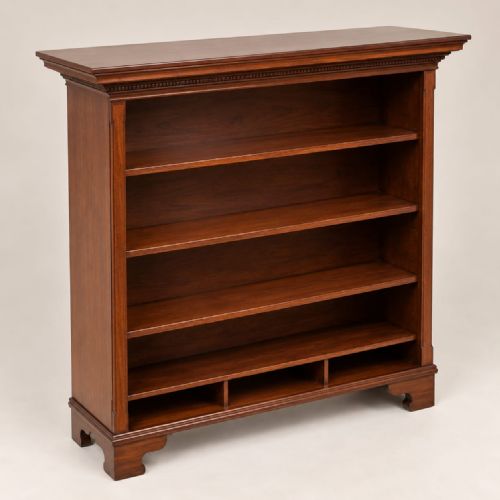
Low Open Shelving
Low open shelving organises books and displays objects at a convenient height, bringing accessible storage into any room.
Low Open Shelving
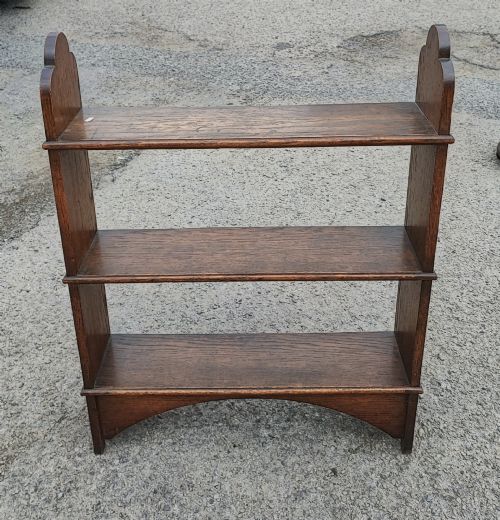
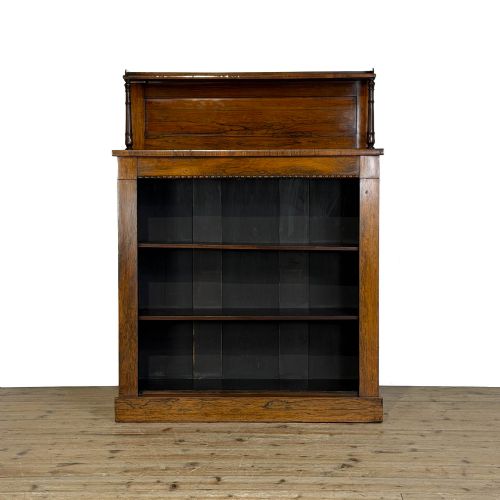
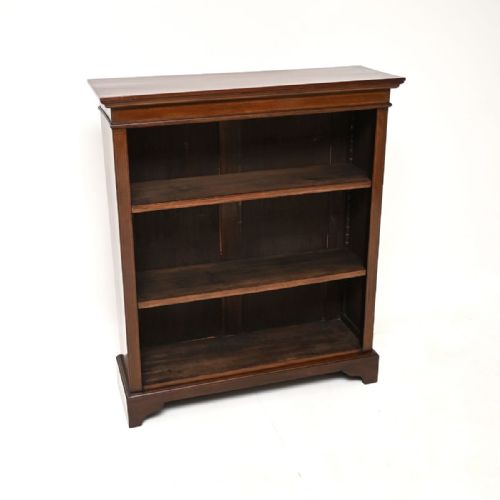
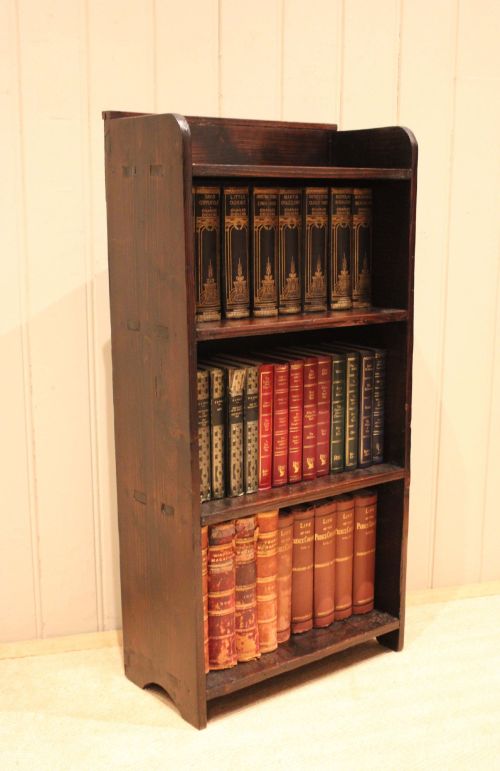
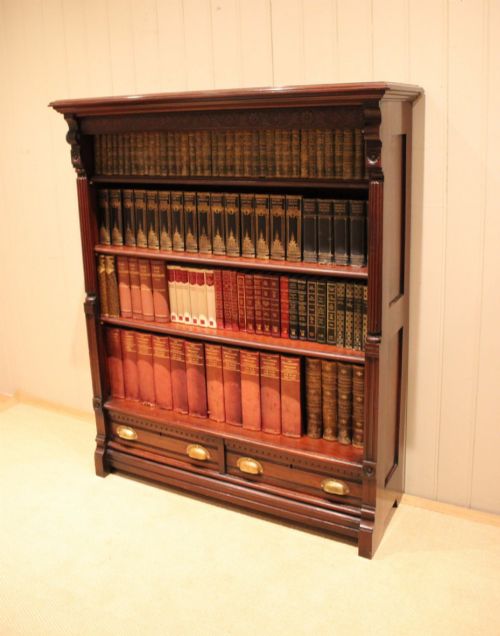
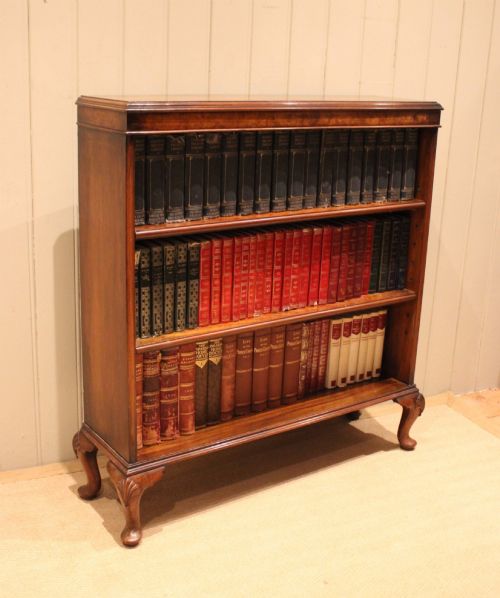
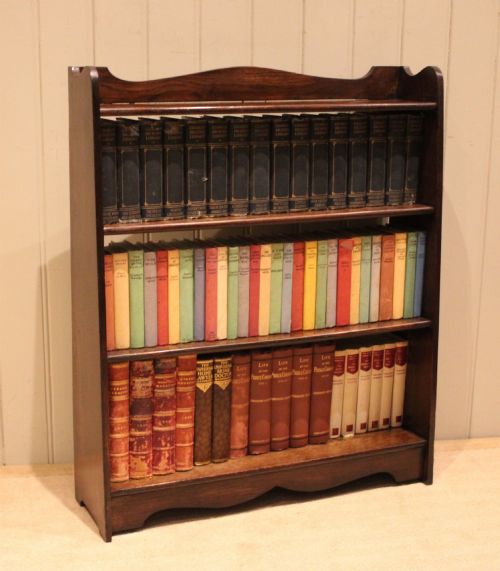
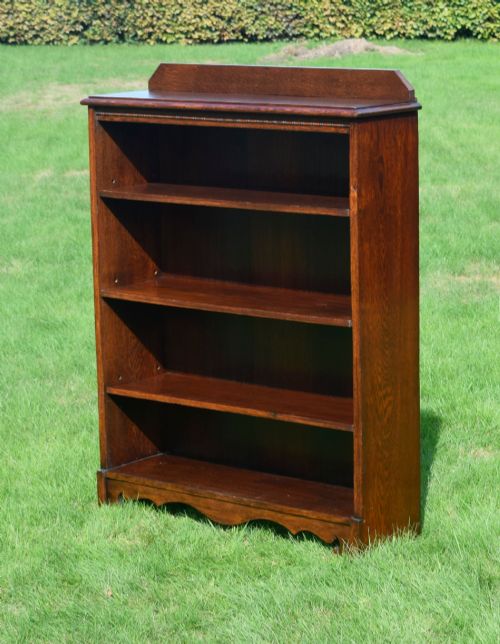
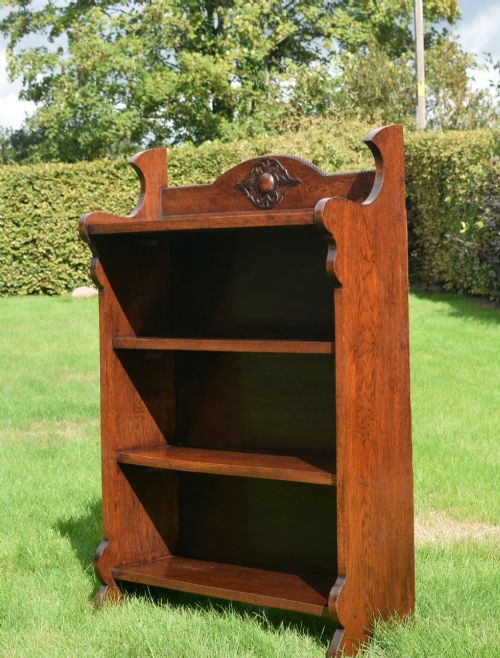
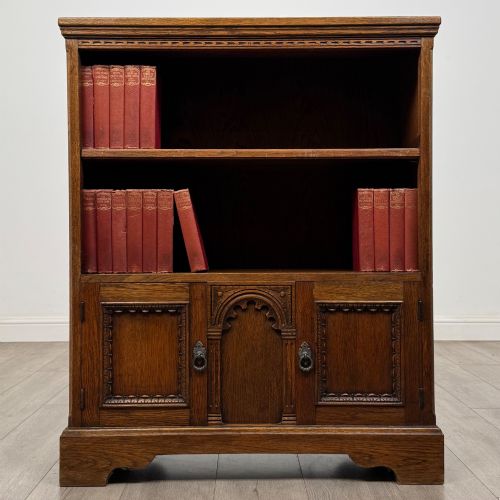
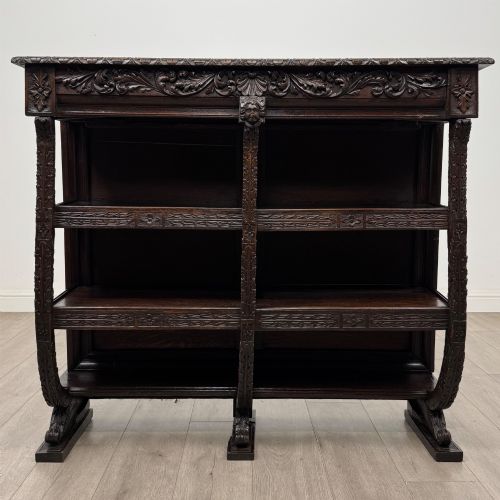
Low open shelving comprises bookcases and display units designed to sit at a manageable height without doors. When searching for low open shelving, you encounter pieces primarily from the Victorian and Edwardian periods, alongside Edwardian, Art Deco, and Arts and Crafts examples.
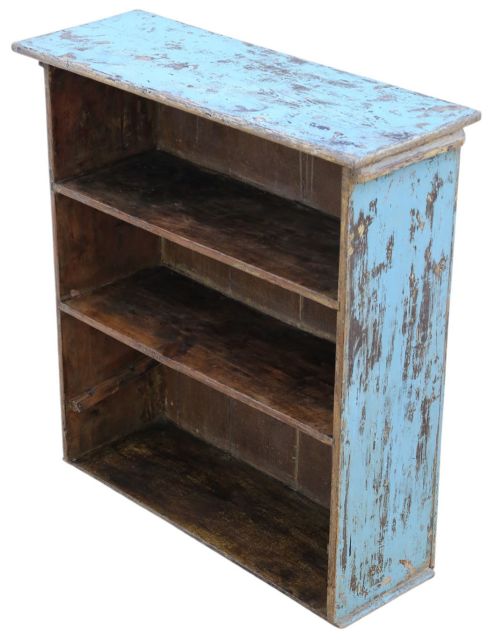
The form appears frequently in oak and mahogany, though walnut, rosewood, pine, and painted finishes also occur. These pieces range from small rustic country examples to large library bookcases and breakfront designs.
Many items incorporate adjustable shelves or specific details such as carved ornament, beaded edges, and inlaid mahogany. The selection spans the nineteenth century through to the nineteen thirties.
Materials and construction
Cabinet makers utilised hardwoods such as oak, mahogany, walnut, and rosewood, alongside softer pine for utilitarian items. Timber selection dictated the character of the piece, from the golden tones of oak to the rich grain of mahogany.
Construction techniques include adjustable shelf mechanisms, carved ornamentation, and inlaid decorative motifs. Some pieces feature brass hardware, painted surfaces, or ormolu mounts to complement the timber structure.
Styles recorded range from Victorian and Edwardian to Art Deco, Arts and Crafts, and Jacobean Revival.
Judging quality in open bookcases
Quality rests in the selection of timber and the precision of the joinery rather than mere age. Finer pieces display carefully chosen wood grain, solid backboards, and well-executed carving or inlay.
The presence of functional mechanisms, such as neatly engineered adjustable shelf systems, distinguishes superior workshop production from simpler domestic carpentry. Proportion and restraint in ornamentation mark out the better examples across all periods.
Heal s·Johnstone and Jeanes
The Low Open Shelving Glossary
- Adjustable shelves
- Shelves that can be moved to different heights using vertical tracks or pins. This allows the interior space to adapt to books of varying sizes.
- Breakfront
- A piece of furniture where the central section projects forward from the flanking wings. It creates a rhythmic variation in the flat plane of a bookcase.
- Ebonised
- Timber treated with a dark stain or finish to resemble ebony. This technique was popular in Victorian design for creating high-contrast decorative effects.
- Inlay
- Pieces of contrasting wood or other material fitted into depressions in the timber surface to form patterns. Edwardian makers often applied this for delicate ornamentation.
- Ormolu
- Gilded bronze applied as a decorative mount on furniture. It provides metallic contrast to dark woods such as walnut.
Low Open Shelving: Frequently Asked Questions
What rooms suit low open shelving?
Low open shelving suits living rooms, studies, and bedrooms where wall space above the unit remains available for art or windows. The reduced height keeps ceilings feeling high while placing books within easy reach.
The shallow depth of these bookcases takes up minimal floor space. They function well as room dividers or beneath windows.
How do I identify a Victorian bookcase?
Victorian bookcases often display rich timber grains in mahogany, walnut, or oak, frequently accompanied by carved details. Proportions tend to be solid and substantial.
Many examples from this era include adjustable shelves supported by brass tracks or wooden bearer strips.
Are shelves usually adjustable?
Many period bookcases feature adjustable shelves, though simpler rustic or country pieces often have fixed partitions. Adjustable systems usually rely on vertical slots, wooden pegs, or metal pins.
This adaptability proves practical for housing books of mixed heights without wasted vertical space.
What is an Edwardian open bookcase?
Edwardian bookcases typically exhibit lighter construction in oak or inlaid mahogany, reflecting the shift away from heavier Victorian styles. They frequently appear in smaller formats suited to domestic interiors.
Design influences from the Arts and Crafts movement or simple Edwardian neoclassical revivals often appear in these pieces.