

Large Mahogany Shelving
Large mahogany shelving provides substantial architectural presence and practical storage, drawing collectors toward its rich timber grain and enduring utility.
Large Mahogany Shelving
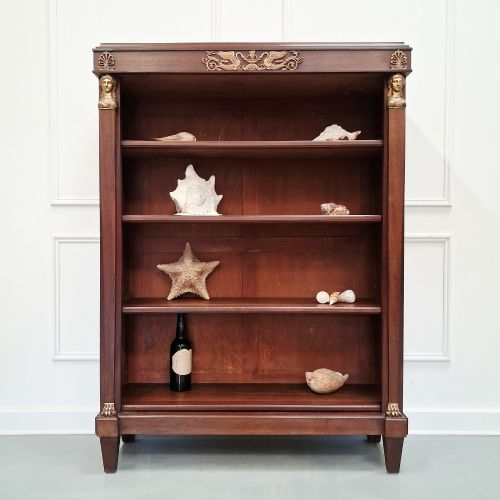
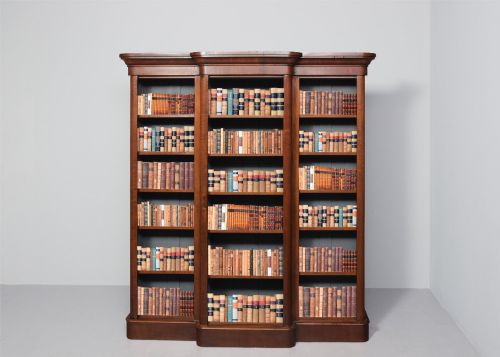
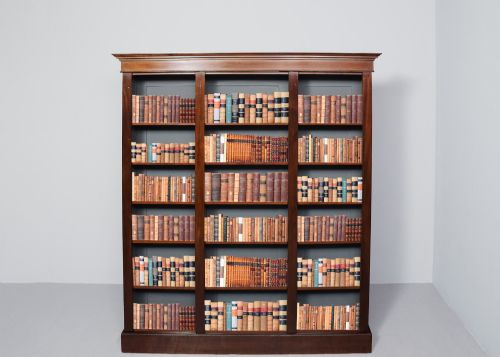
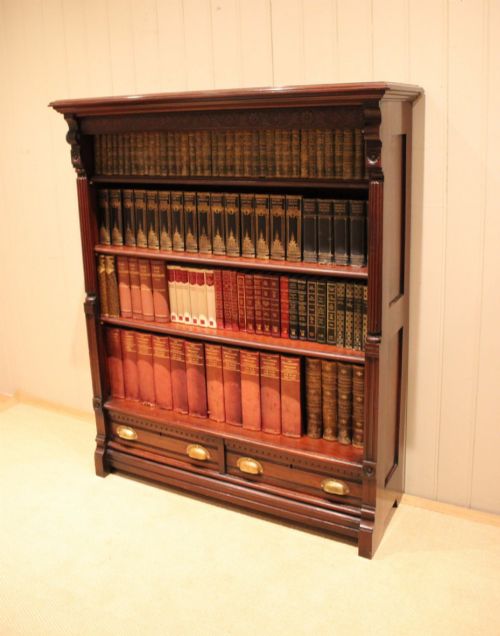
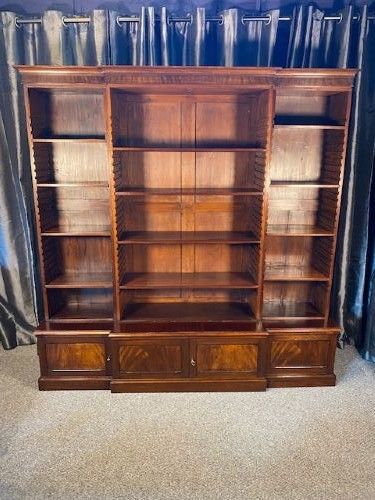
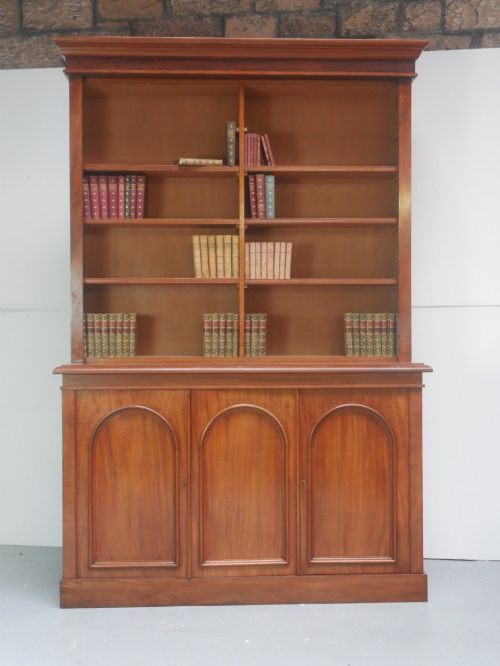
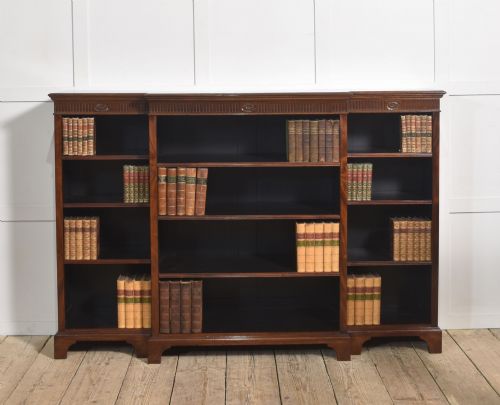
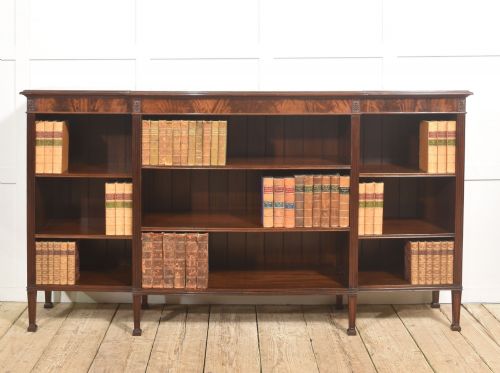
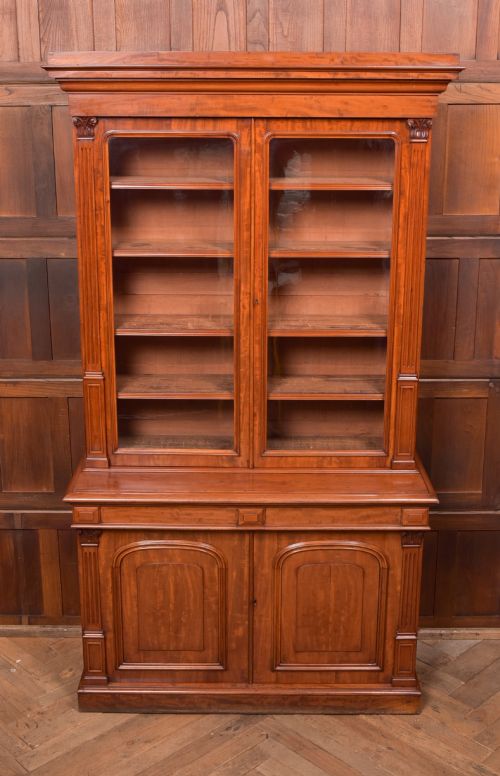
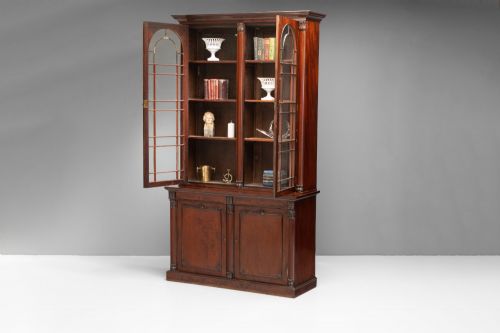
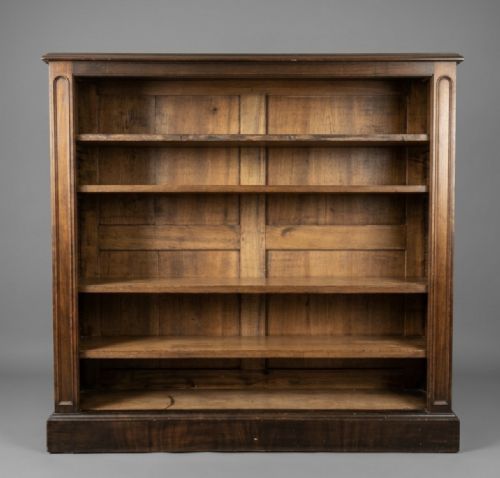
Large mahogany shelving encompasses substantial open bookcases, breakfront library units, and tall display pieces designed to anchor grand rooms. These items emerge predominantly from the nineteenth century, spanning Victorian, Regency, and Edwardian periods.
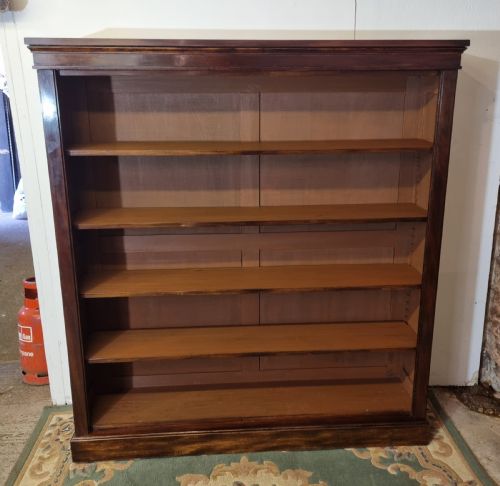
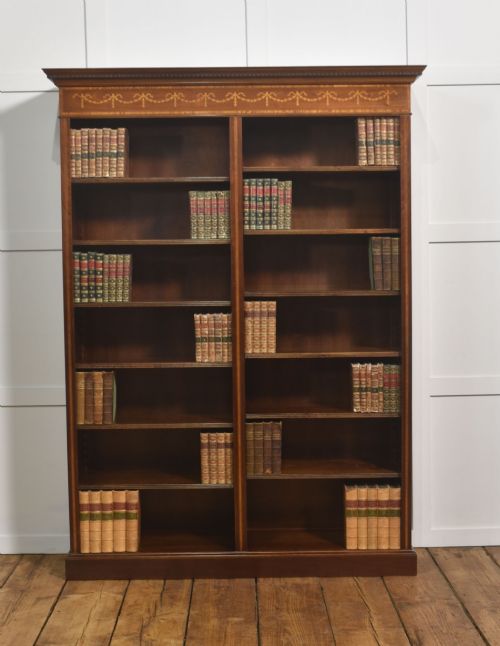
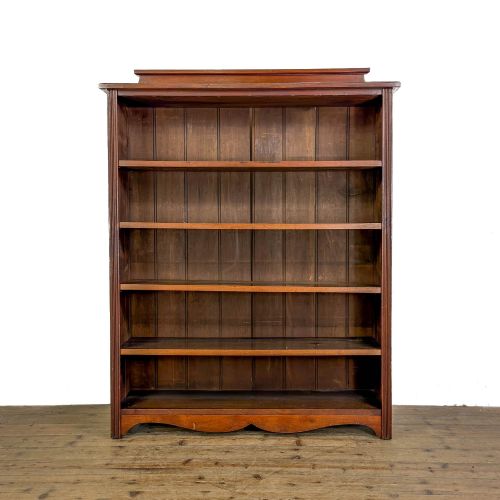
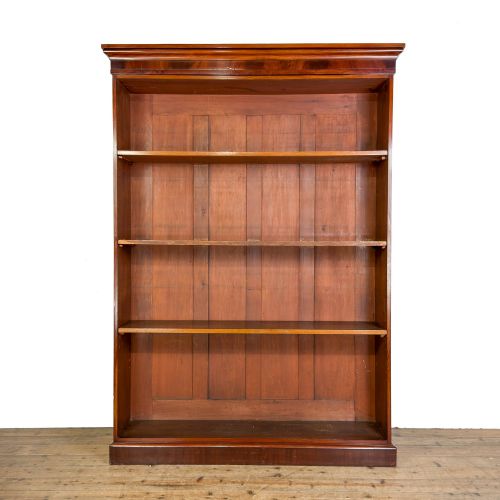
The buyer meets open bookcases most frequently on this page, often fitted with adjustable timber shelves to accommodate varying volumes. Breakfront forms and multi-door library cabinets also appear regularly alongside occasional wall mirrors and whatnots.
Originating largely from British workshops and revival movements, these pieces reflect formal library traditions and domestic architectural demands. The forms range from simple open fronts to elaborate breakfront designs with classical proportions.
Materials and construction
Cabinet makers utilised solid mahogany and flame mahogany veneer over secondary timbers like pine and oak to achieve deep red hues and striking grain patterns. Brass hardware, glass panes, and subtle satinwood inlay appear as supporting materials across the inventory.
Construction techniques involve heavy architectural carcases, often built in two parts for transport, combined with carefully fitted adjustable shelving systems. Carved details, fretwork, and precise joinery define the structural integrity of these large pieces.
Listings feature mahogany, brass, glass, pine, flame mahogany veneer, satinwood, oak, and wood across Victorian, Regency, and Edwardian periods.
Gradations in quality
The hierarchy of quality rests primarily upon the selection of timber, where exceptional flame mahogany veneer or rich Spanish mahogany separates standard utility items from fine library pieces. Figured grain and uniform colour execution elevate the visual impact of the wood significantly.
Architectural ambition and cabinet-making execution further distinguish the range, as seen in complex breakfront configurations, fine carving, and integrated brass detailing. Pieces bearing documented workshop attribution demonstrate superior secondary joinery and thoughtful proportion.
Gillows·Goodhall, Lamb and Heighway·Maison Jansen
The Large Mahogany Shelving Glossary
- Breakfront
- A cabinet design where the central section projects forward from the flanking wings. This architectural arrangement creates depth and shadow across large library furniture.
- Flame mahogany
- A veneer cut from the fork of the mahogany tree where the branches join the trunk. The resulting grain resembles flickering flames with intense figure.
- Waterfall bookcase
- A set of open shelves that recede in depth from bottom to top, creating a stepped profile. The form gained popularity during the Regency period.
- Whatnot
- A piece of open shelving with multiple tiers supported by slender columns or uprights. These units served to display decorative objects in Victorian interiors.
Large Mahogany Shelving: Frequently Asked Questions
How do I adjust the shelves?
Most antique open bookcases utilise traditional wooden bearer strips, brass studs, or notched ratchets attached to the interior sides. Lifting the timber shelf allows it to slide past the support mechanism and relocate into alternative slots.
Care should be taken when shifting older boards to avoid catching the polished interior veneer. Ensure the shelf rests evenly on all four supports before loading books or objects.
Are these bookcases modular?
Certain large formats, particularly breakfront library bookcases and tall Victorian editions, are constructed in distinct upper and lower sections or two-part configurations. This modular approach facilitated transport into historic homes and remains useful for modern positioning.
Fixed single-carcase pieces require careful measurement of doorways and stairwells prior to purchase. The substantial weight of solid mahogany demands adequate clearance during any relocation.
How do I date these pieces?
Stylistic markers such as Regency curves, Victorian proportions, or Edwardian Sheraton Revival inlay provide initial chronological clues. Examining backboards, interior secondary timbers, and screw types helps confirm the period of manufacture.
Construction methods shifted from hand-cut joints in the early nineteenth century toward machine assistance by the Edwardian era. Comparing the timber patination with documented examples narrows the date further.
Can these hold heavy books?
Library bookcases were originally engineered to support dense collections of leather-bound volumes across wide spans. Solid mahogany and sturdy internal shelving provide the necessary structural strength for modern book collections.
Distributed weight prevents sagging over time on adjustable timber boards. Regular arrangement keeps the load balanced across the entire width of the shelf.