
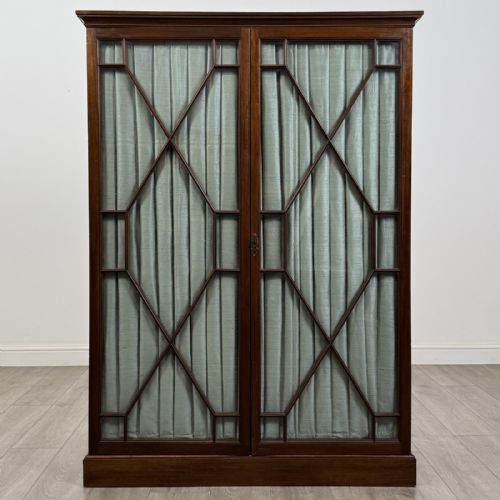
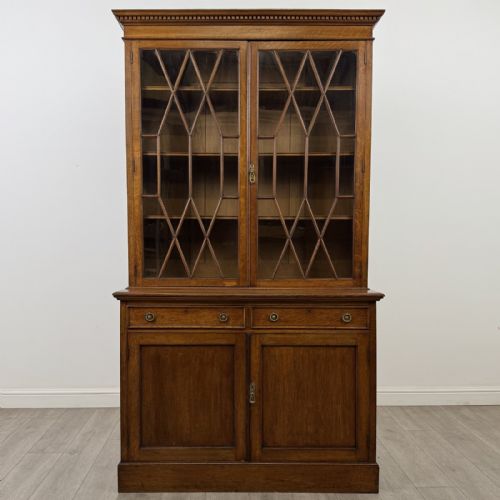
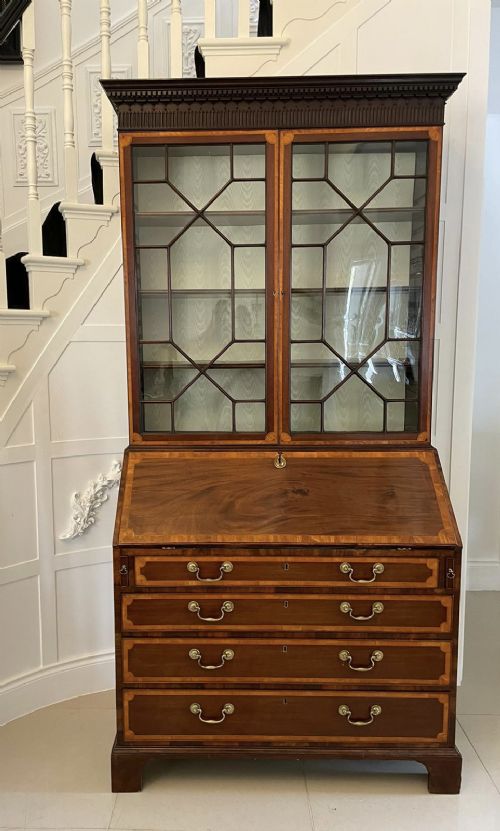
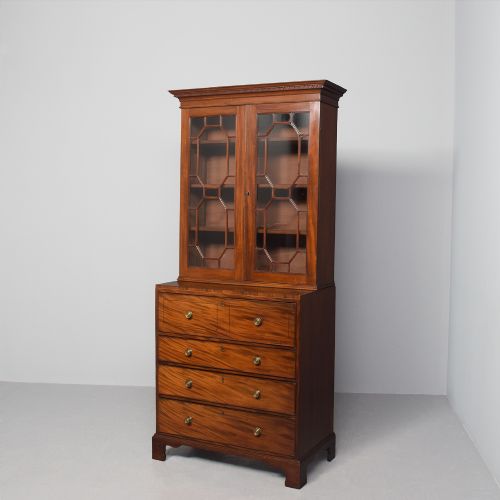
Georgian Astragal Cabinet
A georgian astragal cabinet brings refined mullioned glazing and rich timber framing to a room, offering both display space and architectural presence.
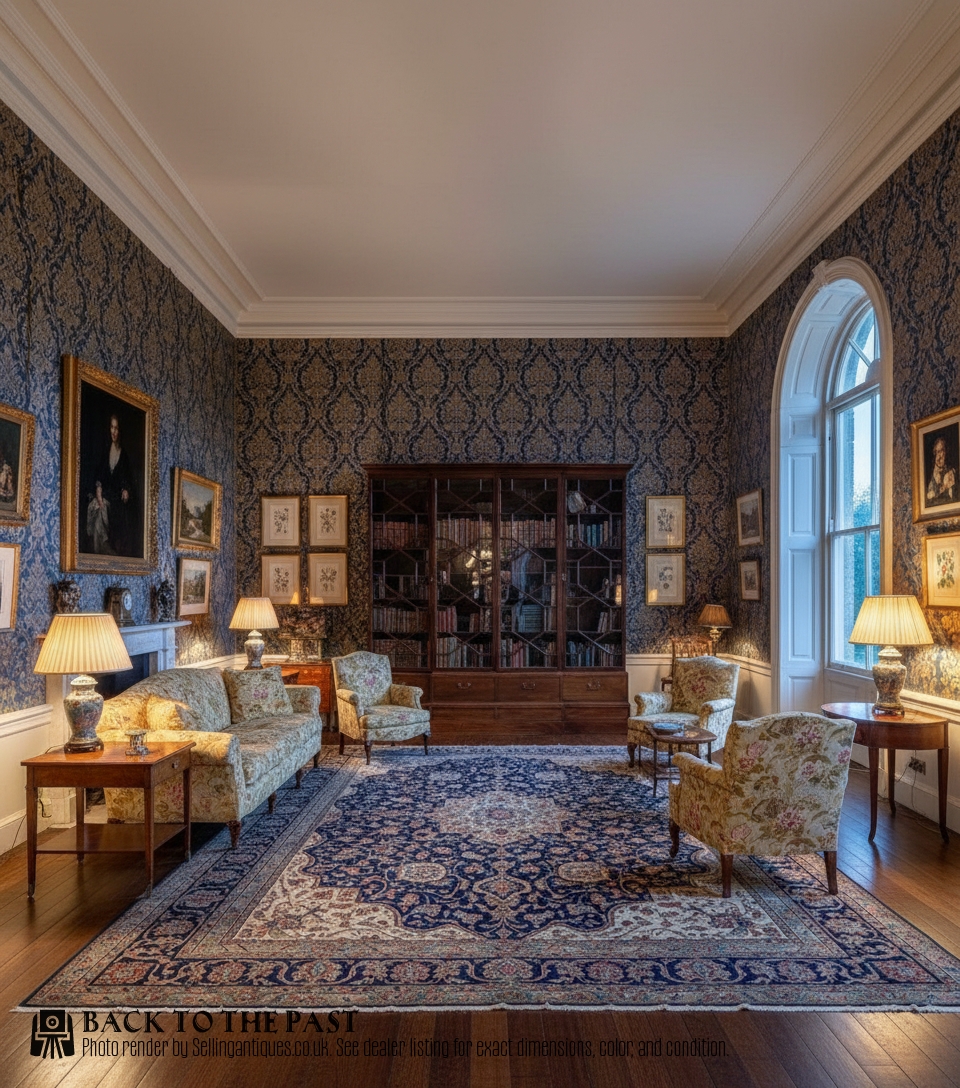
Georgian Astragal Cabinet
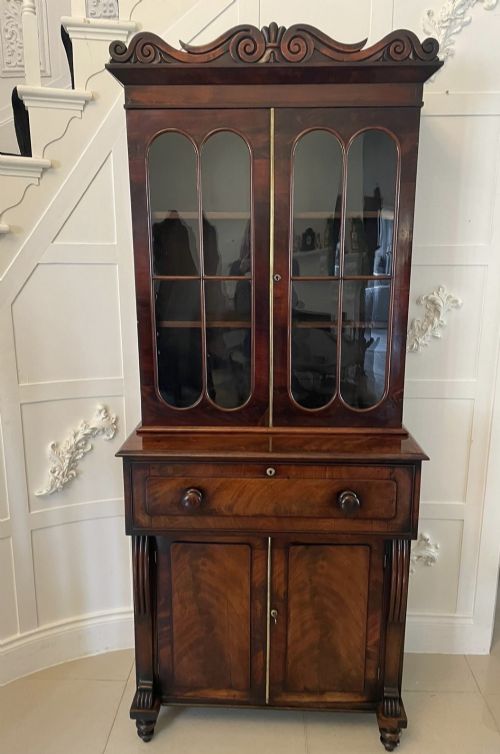
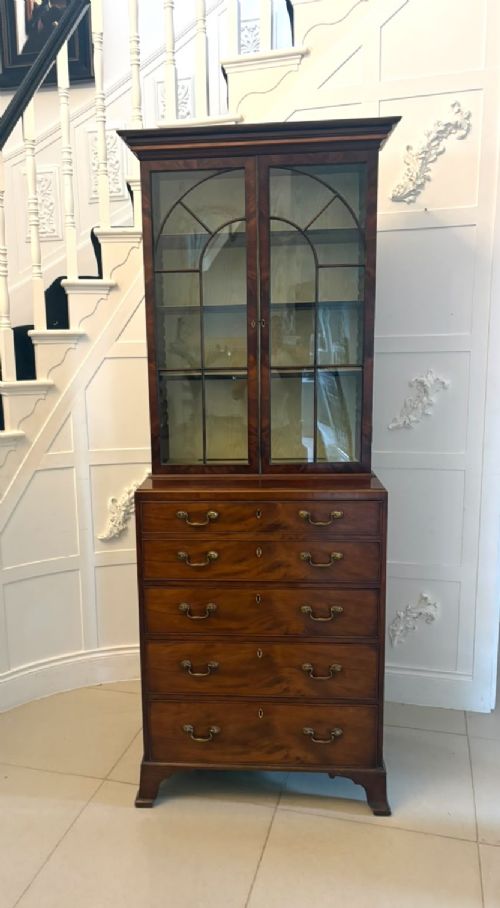
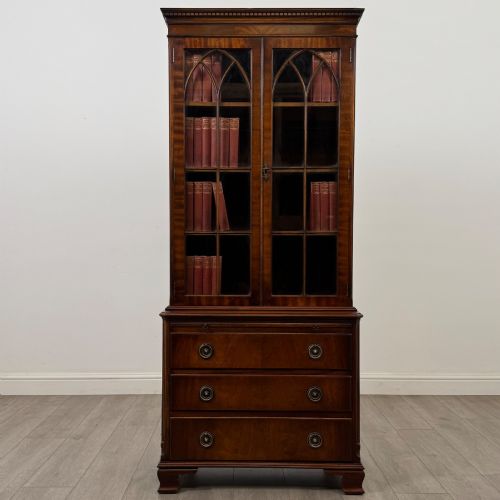
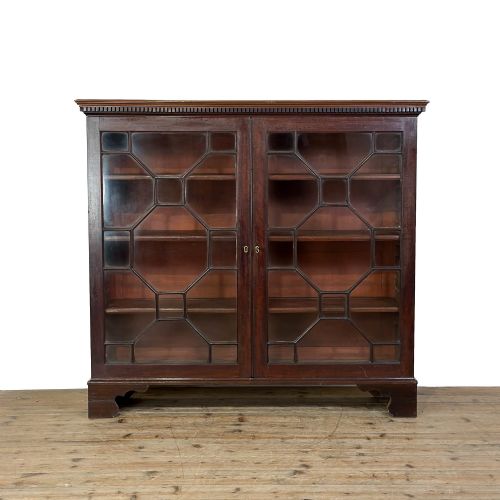
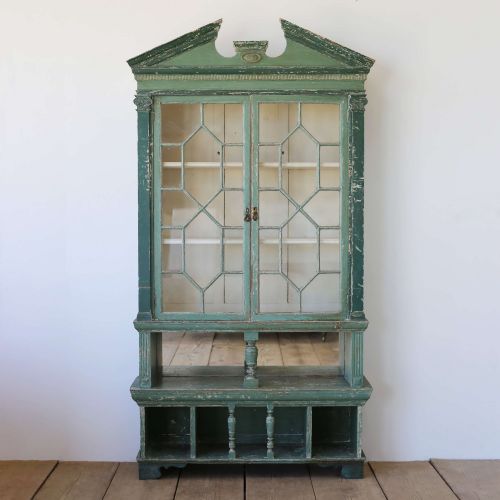
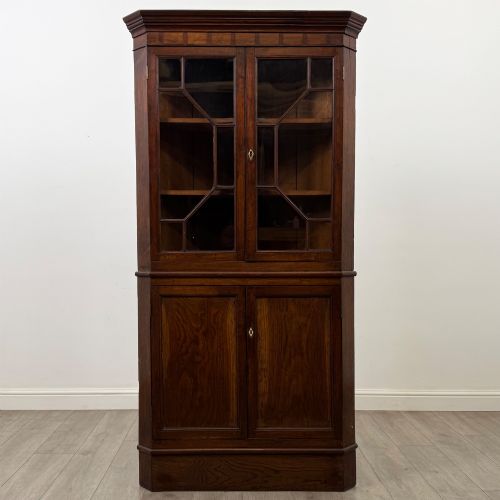
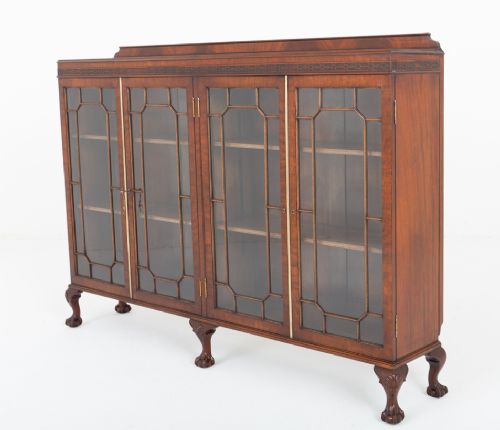
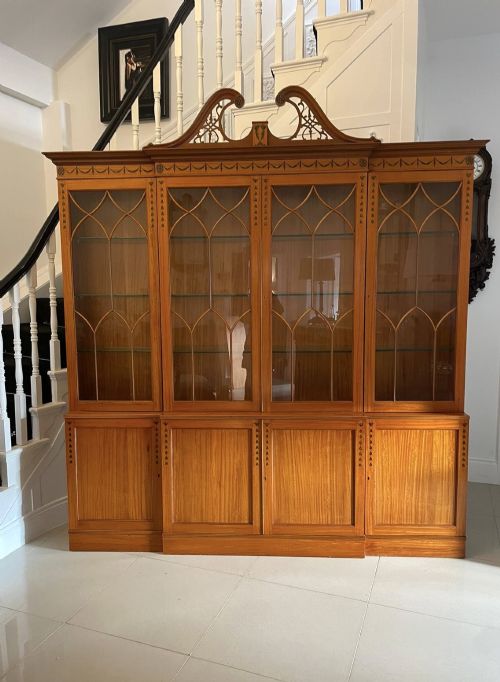
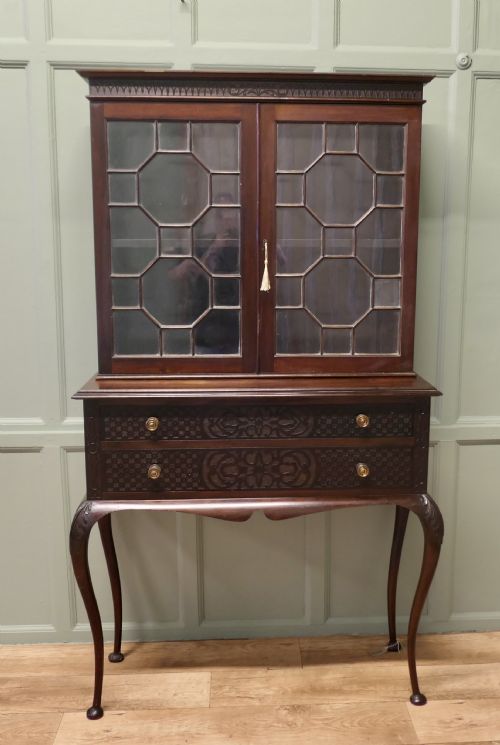
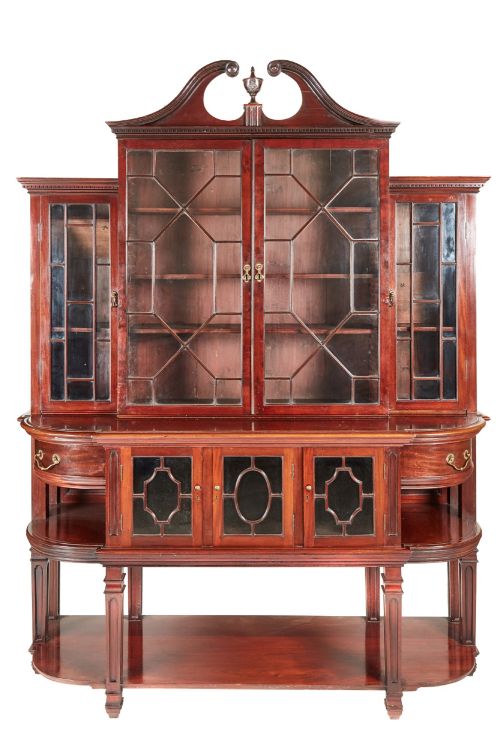
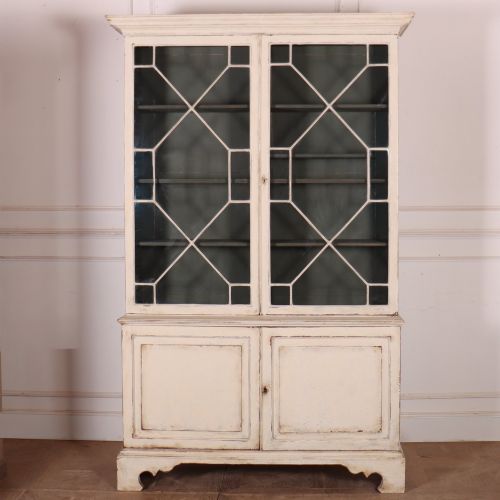
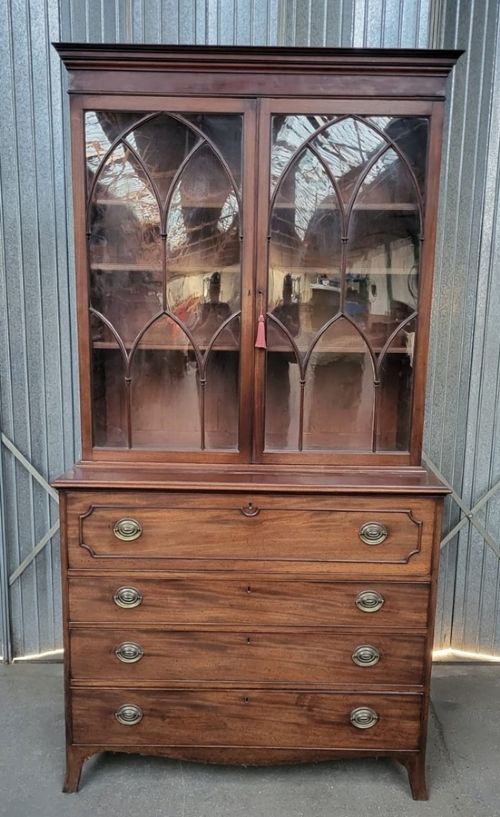
A georgian astragal cabinet is defined by its glazed doors divided into geometric panes by timber bars, housing books or curiosities behind disciplined woodwork. These pieces appear as tall breakfront bookcases, bureau bookcases with fitted writing drawers, and wall-hanging or floor-standing corner cabinets.
The versions most frequently met on this page are mahogany corner cupboards and full-height bookcases originating from the Georgian period through to the nineteenth century, alongside later revival pieces.
Makers and cabinet-makers from provincial workshops to metropolitan centres produced these forms to organise domestic libraries and display prized porcelain. The underlying architectural vocabulary draws heavily upon classical proportions and eighteenth-century pattern books.
What Varies in Quality
Quality rests upon the proportion of the carcass and the crispness of the glazing bars, where narrower, more delicately moulded astragals signify superior craftsmanship. The choice of timber grain, such as heavily figured flame mahogany or finely matched veneers, elevates a piece above standard workshop production.
Listings feature oak, mahogany, satinwood, and yew wood across various cabinet forms.
Thomas Chippendale·Tudor and Burrey
The Georgian Astragal Cabinet Glossary
- Astragal
- The moulding profile used to divide glass panes within a cabinet door. These fine timber bars create the characteristic geometric lattice work of the style.
- Breakfront
- A cabinet design where the central section projects forward from the flanking wings. This configuration adds architectural depth to large bookcases.
- Secretaire
- A desk disguised as a standard drawer that pulls down to reveal a fitted writing surface and small compartments. It combines the utility of a bureau with the upper display space of a bookcase.
- Vitrine
- A glass-sided display cabinet designed primarily for the exhibition of porcelain and decorative objects. These cases emphasise all-round visibility.
- Flame mahogany
- Timber cut from the fork of the mahogany tree to produce a distinct, flickering grain pattern. Cabinet-makers reserved this veneer for prominent drawer fronts and door panels.
Georgian Astragal Cabinet: Frequently Asked Questions
How do I date a cabinet?
Dating relies on examining construction methods, secondary timbers, and overall stylistic proportions. Earlier examples often feature hand-cut dovetails and pegged joints.
Later revival pieces from the nineteenth and twentieth centuries adopt machine-sawn elements and standardised hardware while copying earlier Georgian forms.
Were these used for books?
These cabinets served primarily as libraries for bound volumes, sermons, and ledgers during the eighteenth century. The glazed doors protected valuable bindings from dust and smoke.
Over time, owners also utilised the shelving to display ceramic collections, glassware, and personal mementos.
How do I care for the timber?
Maintaining mahogany and oak requires stable room humidity and protection from direct sunlight to prevent veneer cracking and fading. Regular dusting with a dry, soft cloth preserves the polished surface.
Applying traditional wax polish occasionally nourishes the wood grain without building up heavy chemical layers.