
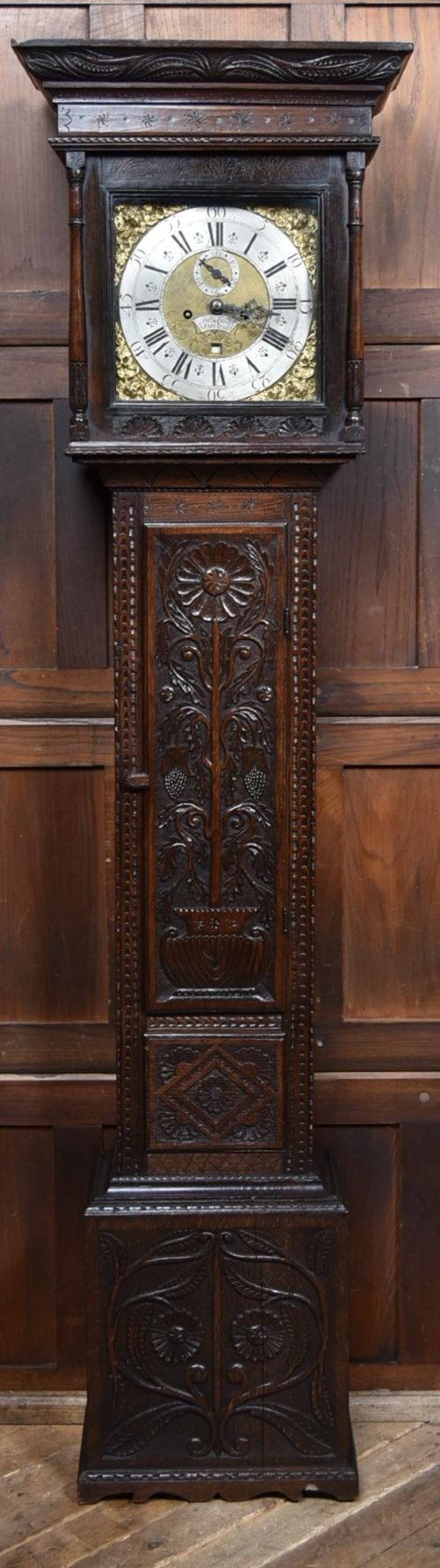
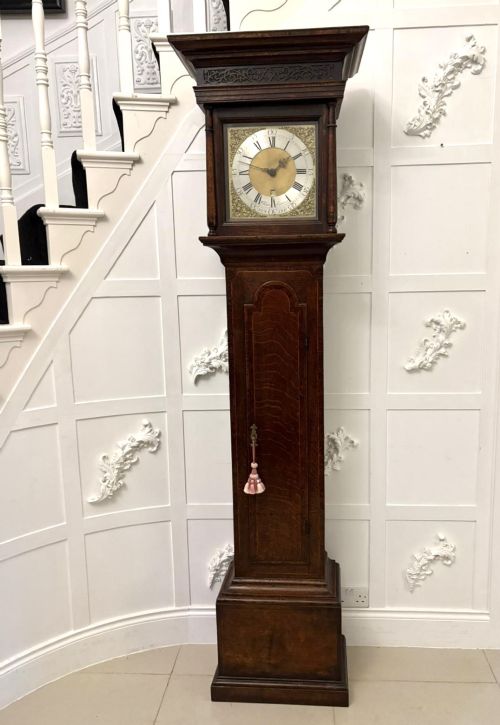
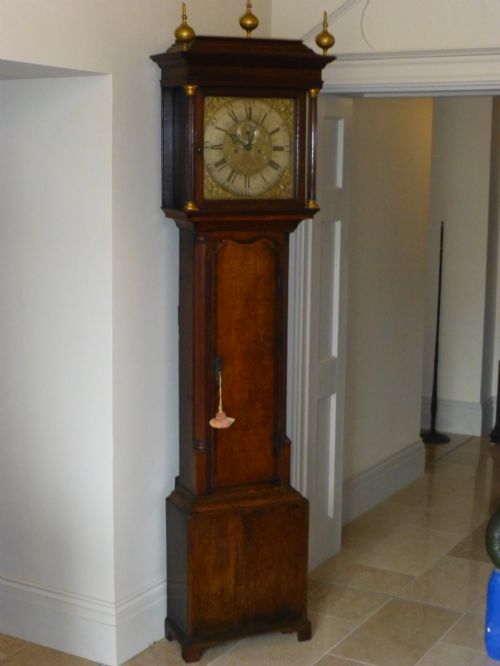
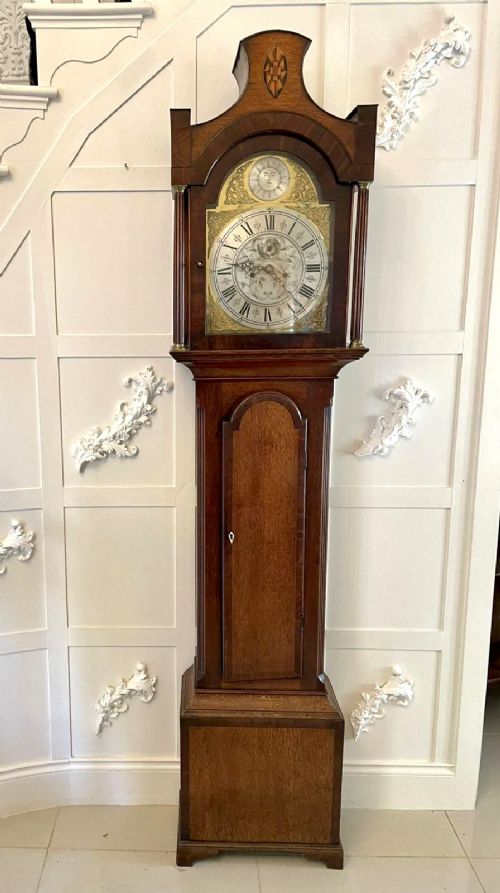
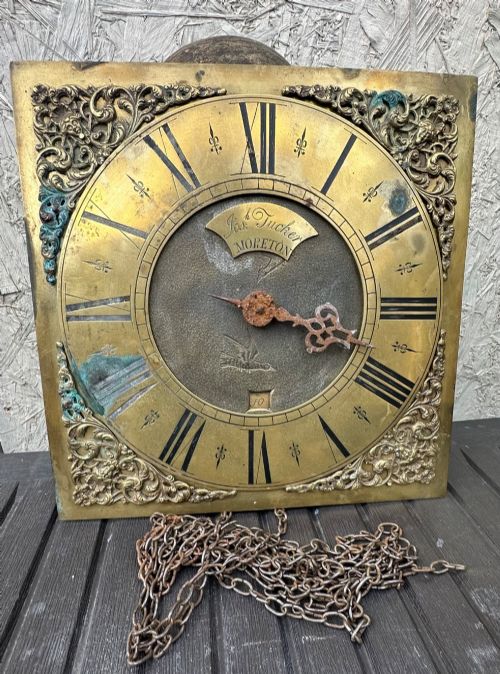
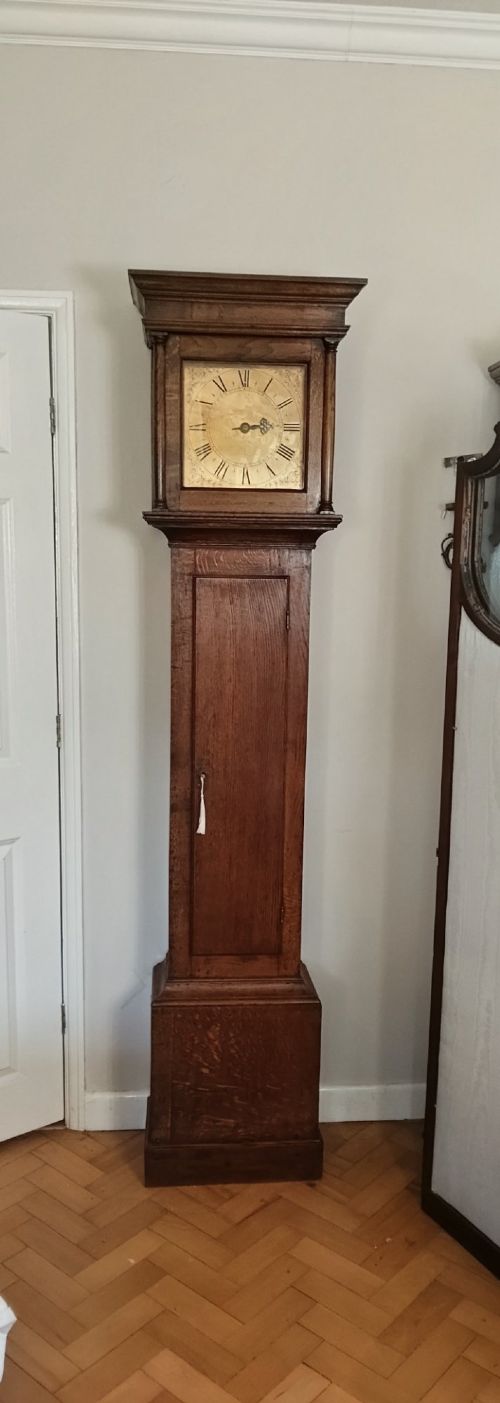
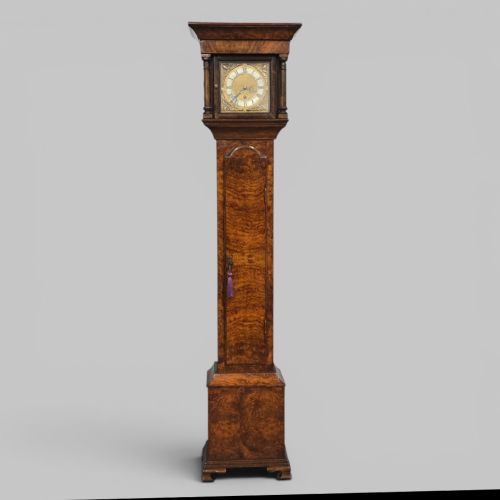


Georgian Brass Face Clock
These pieces are a georgian brass face clock, bringing mechanical heritage and traditional cabinetwork into a room.
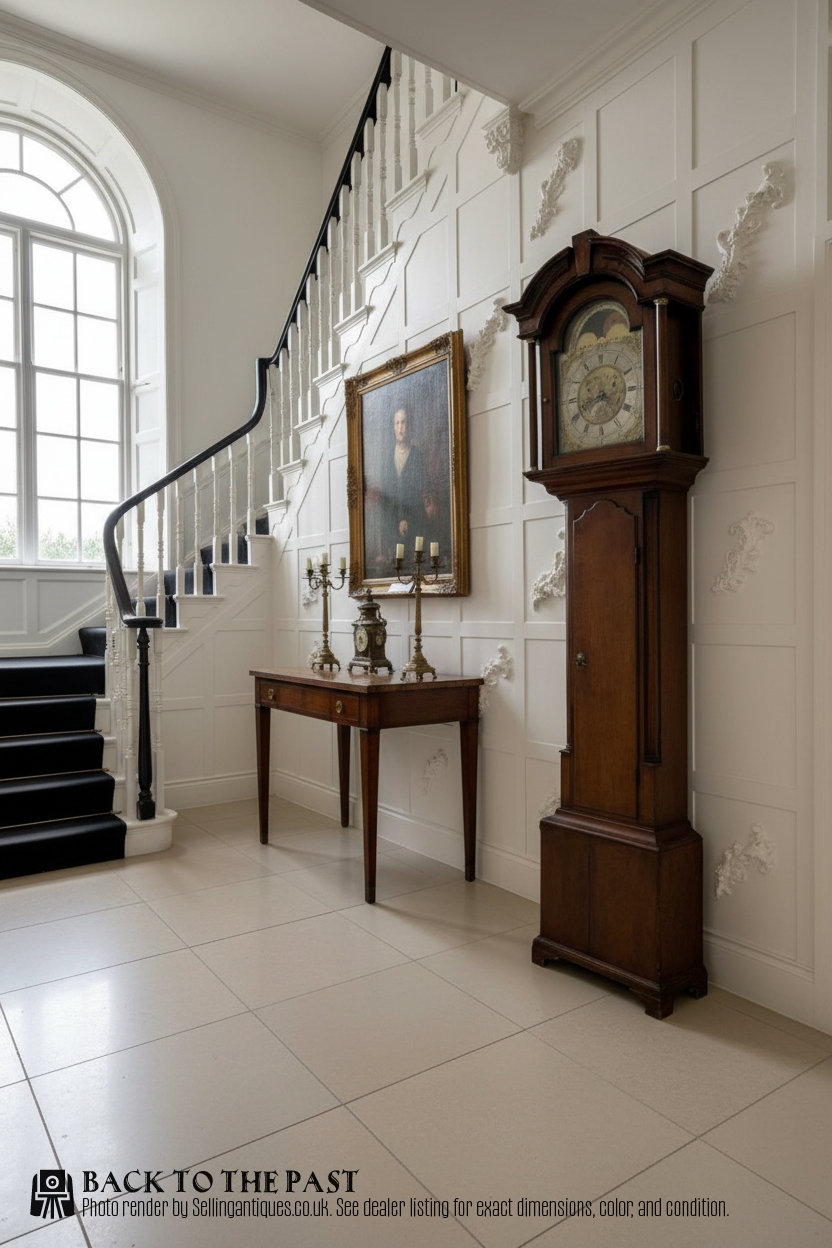
Georgian Brass Face Clock
A georgian brass face clock typically appears as a tall longcase or grandfather clock, alongside wall clocks and smaller desk or bracket examples housed in timber cases. The majority date from the eighteenth century, spanning the Georgian and George III eras, though later nineteenth-century revivals and early twentieth-century interpretations also occur.
The regional variety is wide, featuring makers from London workshops, provincial English towns like Nantwich and Macclesfield, and Scottish or Irish centres. These timepieces served as both domestic timekeepers and central pieces of furniture in the home, combining brass dials with tall wooden housings.
Oak and mahogany dominate the structural timber, frequently paired with secondary woods such as walnut, burr walnut, and ebonised details. Most examples rely on weight-driven movements enclosed within a hood above a long trunk and a weighted base.
Materials and construction
Makers constructed the cases from solid timber planks, employing oak, mahogany, and walnut selected for grain pattern and durability, sometimes enriched with burr veneers or carved ornament. The wood was joined using traditional cabinetmaking techniques to accommodate the weight and movement of the heavy mechanical works inside.
The visible dial components utilise cast brass, engraved with numerals and maker details, often complemented by steel hands and brass movement plates. Glass protects the dial face within the hood door, while iron weights and cords or chains drive the internal gear trains.
Georgian Brass Face Clock Retail Price Guide 2026
Typical asking prices for georgian brass face clock among the pieces listed under this phrase on Sellingantiques today, from the lower quarter to the upper quarter. They describe what is for sale here now, not the wider market.
The listings span the eighteenth and nineteenth centuries, utilising oak, mahogany, walnut, and brass across longcase, wall, and bracket clock formats.
Craftsmanship and proportion
The distinction between standard examples and finer works lies in the execution of the brass dial engraving and the sophistication of the cabinet architecture. Superior pieces display crisp cast spandrels, well-proportioned hoods with architectural mouldings, and carefully matched timber veneers on the trunk door.
The integration of the movement with the case determines the overall integrity of the piece, where original brass dials matched to appropriate eight-day or thirty-hour movements carry greater distinction than later marriages of disparate components.
Jn° Smith·Smith of Chester·Joseph Gibson·William Betagh·David Morice·Samuel Young·John Pollard·Robert Thomson·James Draycot·John Taylor·Standring of Bolton·William Webster·George Clapham·Jonathan Blake·Richard Peckover·William Lister·John Douglas
The Georgian Brass Face Clock Glossary
- Longcase clock
- A tall pendulum-driven timekeeper housed in a wooden case, commonly known as a grandfather clock. These instruments stand directly on the floor and utilise hanging weights.
- Dial
- The visible face of the clock upon which the hours and minutes are marked. On these pieces, the dial is constructed from brass and often bears the engraved signature of the maker.
- Spandrel
- The ornamental corner piece mounted on the dial surrounding the chapter ring. They are typically cast in brass and cast in various decorative patterns according to the period.
- Fusee
- A conical pulley used in spring-driven clocks to maintain equal power as the mainspring unwinds. This mechanism ensures consistent timekeeping across the duration of the wind.
- Quarter repeating
- A complication in mechanical clocks that sounds the quarters of the hour upon demand via bells or gongs. This feature required advanced gear train work within the movement.
Georgian Brass Face Clock: Frequently Asked Questions
How do I wind an eight day clock?
An eight day clock requires winding approximately once a week using a matching crank key inserted into the winding holes on the brass dial. Care must be taken not to overwind the mechanism.
Depending on the specific movement, the weights inside the trunk are gently pulled back up or the spring barrels are tensioned until resistance is met.
What is the difference between a grandfather and a grandmother clock?
A grandfather clock refers to the traditional full-size longcase clock standing over six feet tall, designed to accommodate long pendulums and heavy weights.
A grandmother clock is a smaller, scaled-down version of the longcase form, usually measuring under six feet in height, suited for smaller rooms or lower ceilings.
Where were these clocks placed in a Georgian home?
In a Georgian home, a longcase clock was typically positioned in a hallway, landing, or principal living room where the striking bells could be heard throughout the house.
Because they required a stable, vibration-free vertical surface, they were placed against solid interior walls rather than partition walls.
How can I tell an 18th century dial from a later copy?
An eighteenth-century brass dial shows hand-engraving with sharp, variable depth in the cuts and individual punch work around the chapter ring numerals. The brass itself exhibits natural ageing and patination.
Later reproductions often display uniform machine engraving and lack the crisp casting quality found on period spandrels and signature plates.