

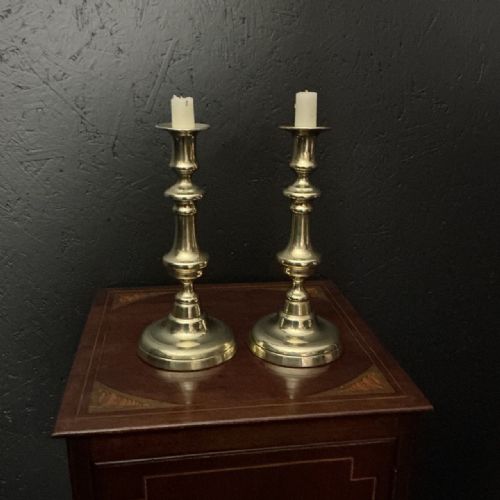
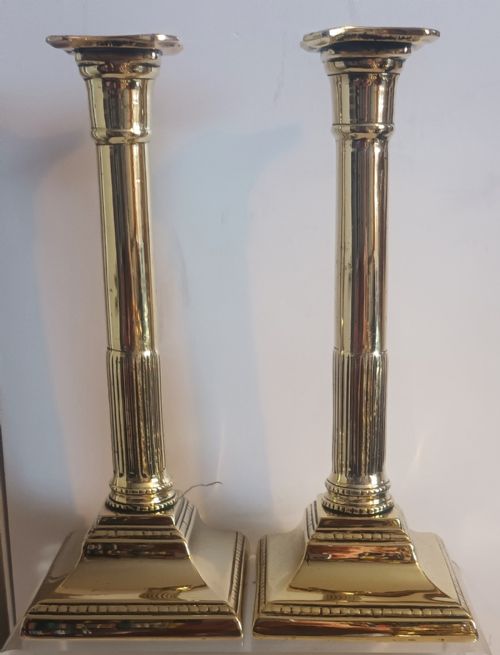
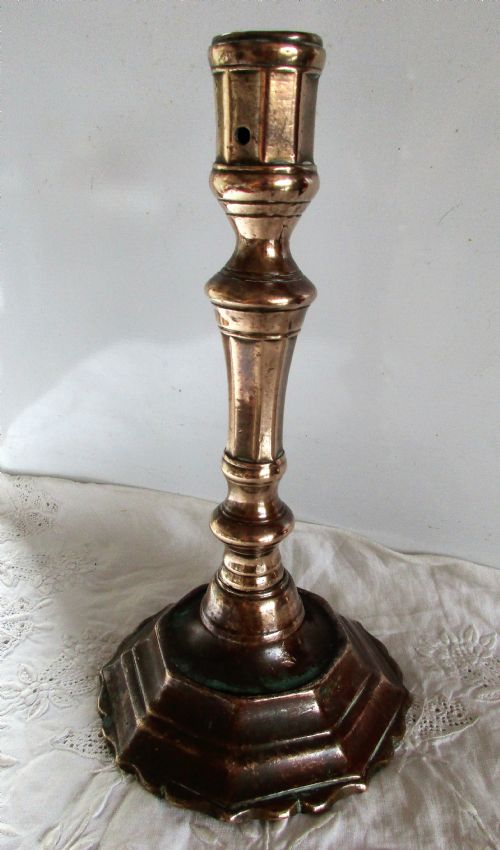
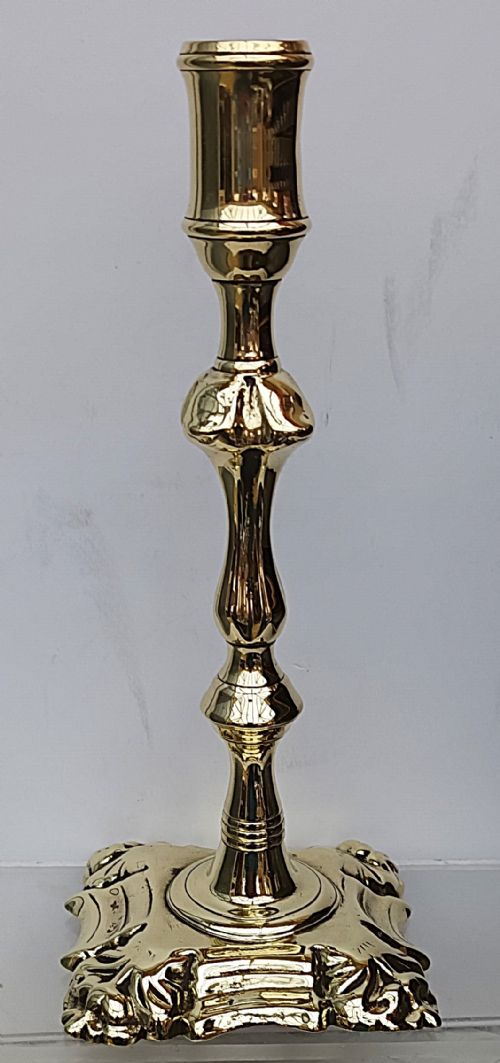
Georgian Brass Candle Holders
Georgian brass candle holders bring weight and warmth to a room, cast in solid metals designed to hold the flame steady through long evenings.
Georgian Brass Candle Holders
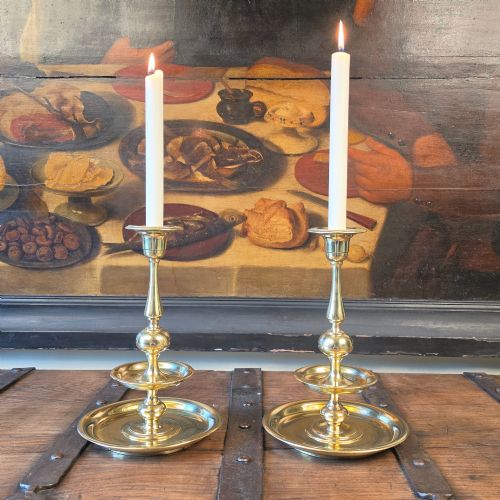
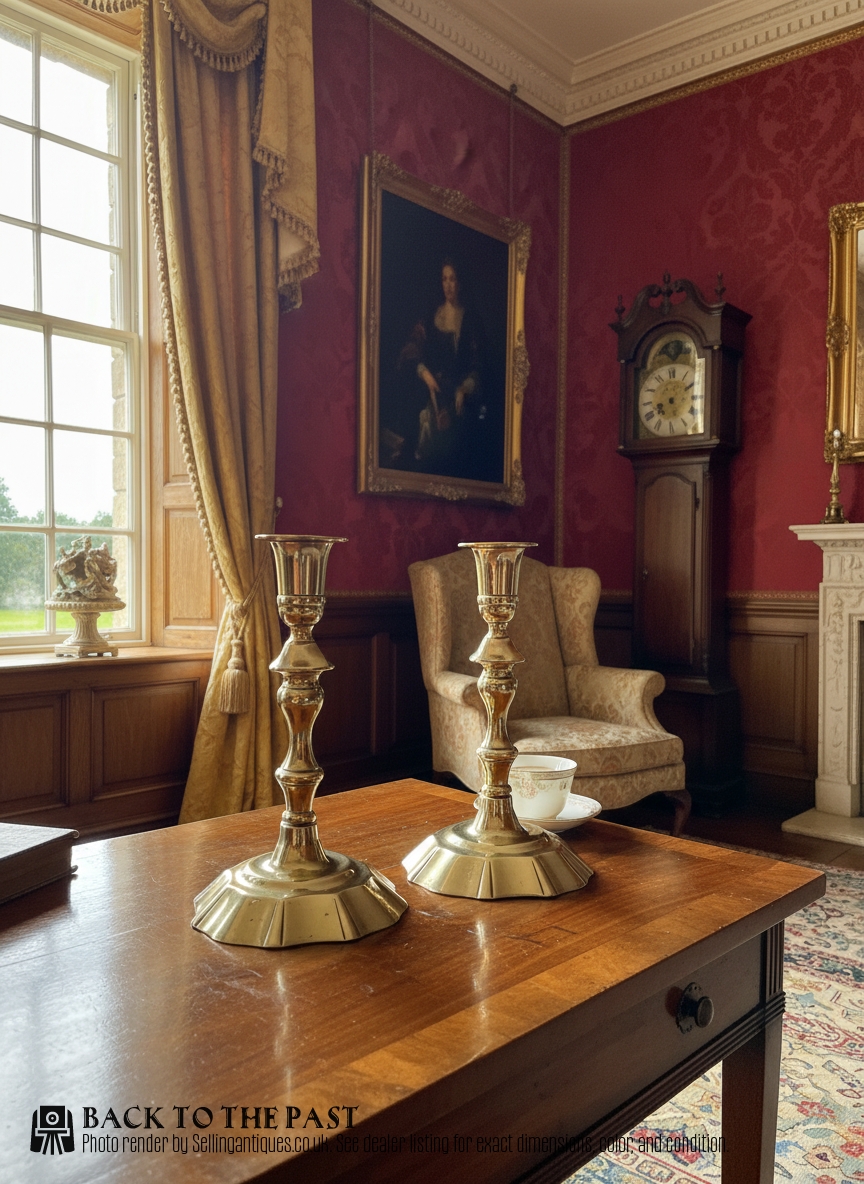
When you search for georgian brass candle holders, you find functional lighting equipment designed to illuminate interiors before the widespread adoption of electricity. These objects encompass candlesticks, chambersticks, and occasional lighting accessories created to support candles securely during the eighteenth and nineteenth centuries.
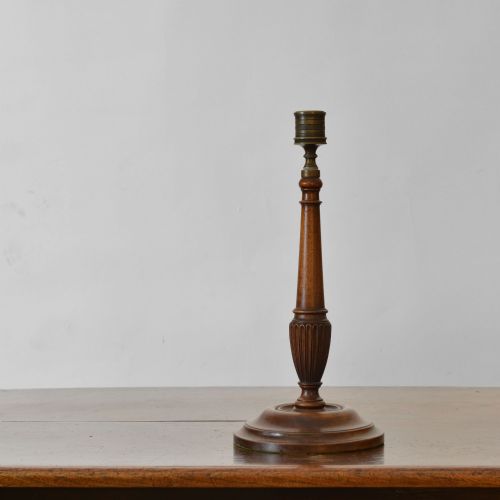
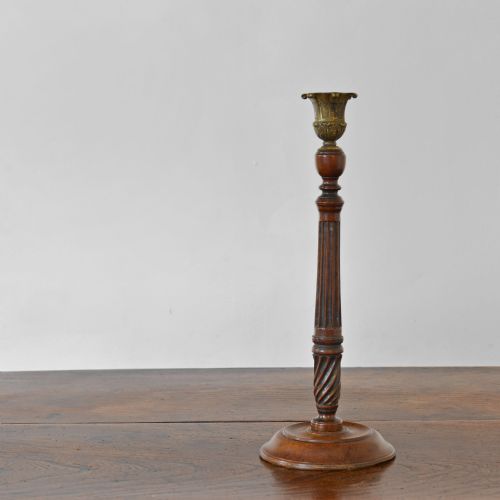
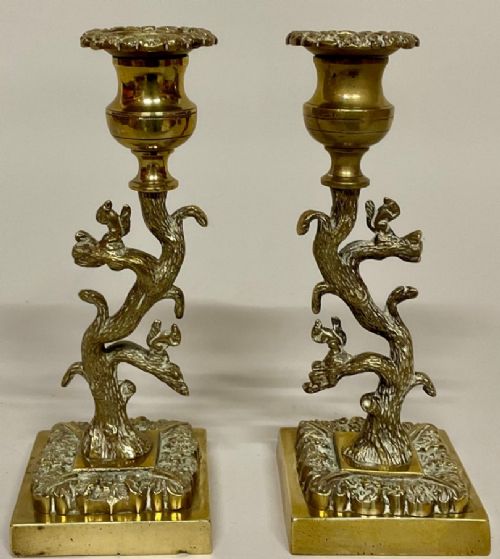
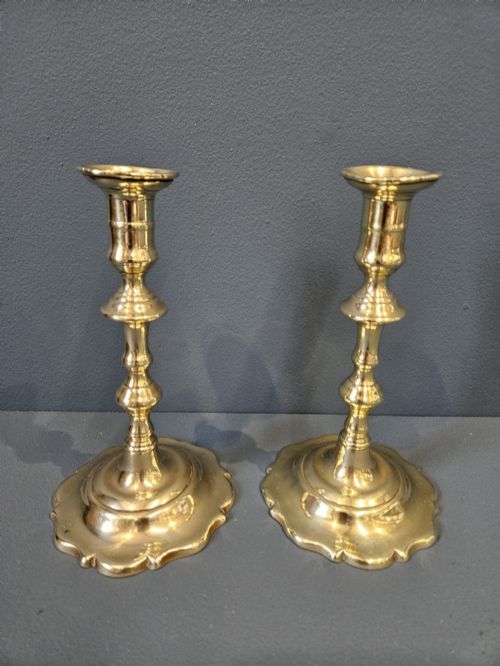
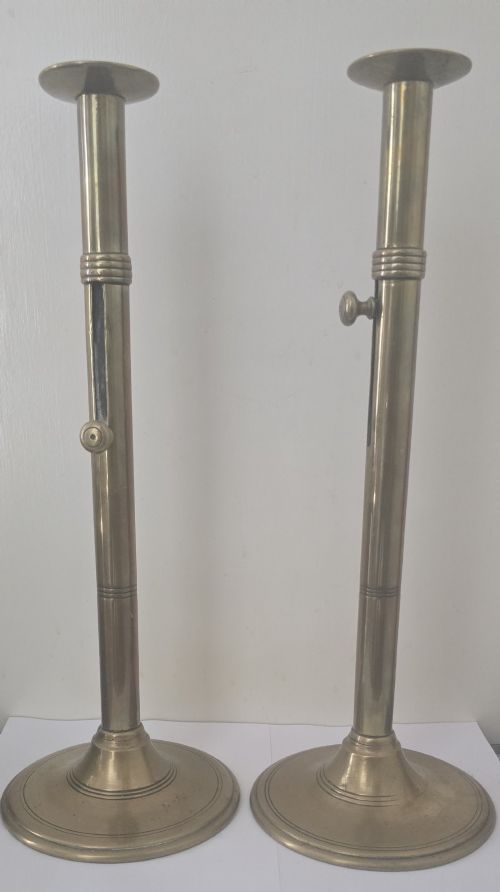
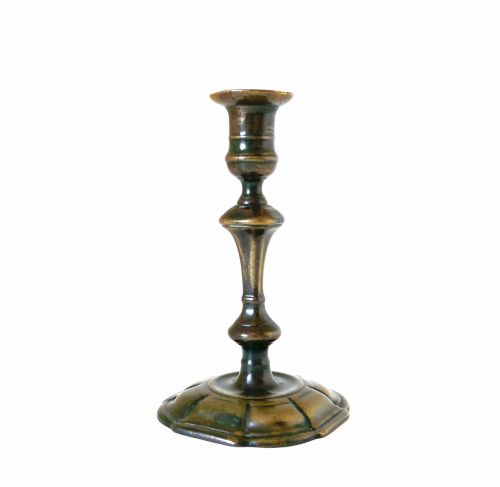
The selections on this page centre on forms originating in the Georgian, Regency, and Victorian eras, alongside related pieces in mahogany, bell metal, and gilt bronze. Pairs predominate, though single examples and occasional tall column variants appear among the listings.
Originating predominantly from British workshops, these items reflect the domestic habits of earlier centuries, utilising metal alloys designed to withstand daily handling and heat from open flames.
How they were made
Makers utilised casting techniques to shape molten brass, bell metal, and bronze into structural stems and heavy bases. Seamed construction appears frequently, joining separately cast components into unified forms.
Turned elements on lathes refined the profiles of columns and candle cups, while hand finishing smoothed surface textures. Patents like the Harrison design introduced mechanical components such as telescopic stems for adjustable height.
Georgian Brass Candle Holders Retail Price Guide 2026
Typical asking prices for georgian brass candle holders among the pieces listed under this phrase on Sellingantiques today, from the lower quarter to the upper quarter. They describe what is for sale here now, not the wider market.
The listings combine brass, bell metal, bronze, and mahogany forms spanning the eighteenth and nineteenth centuries.
What varies in quality
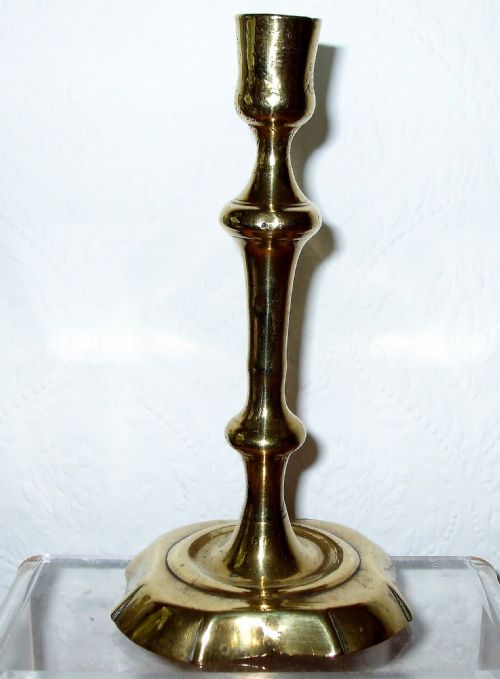
Weight and metal composition distinguish heavy, stable pieces from lighter variants, with bell metal and substantial cast brass offering greater durability. The crispness of cast detail on petal bases or sculptural branches indicates the skill of the original founder.
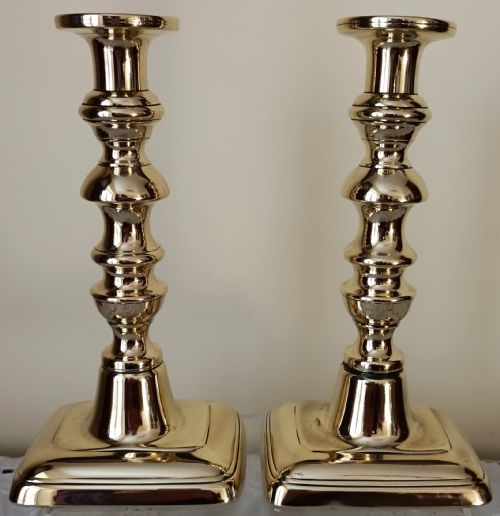
Proportion and symmetry determine visual success, particularly in matched pairs where balance across the stems and drip pans matters. Original mechanisms, such as working side ejectors or functional telescopic screws, retain the integrity intended by the maker.
J.T. & Co·Harrison Patent·J. Miller
The Georgian Brass Candle Holders Glossary
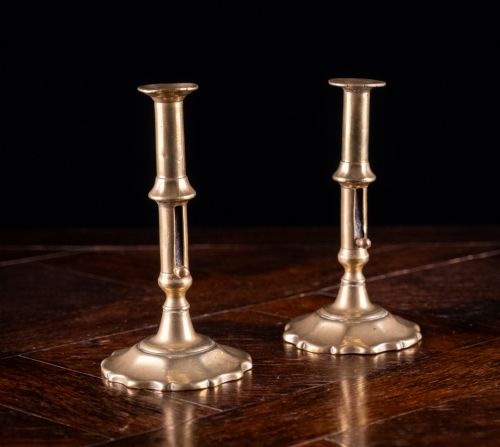
- Petal base
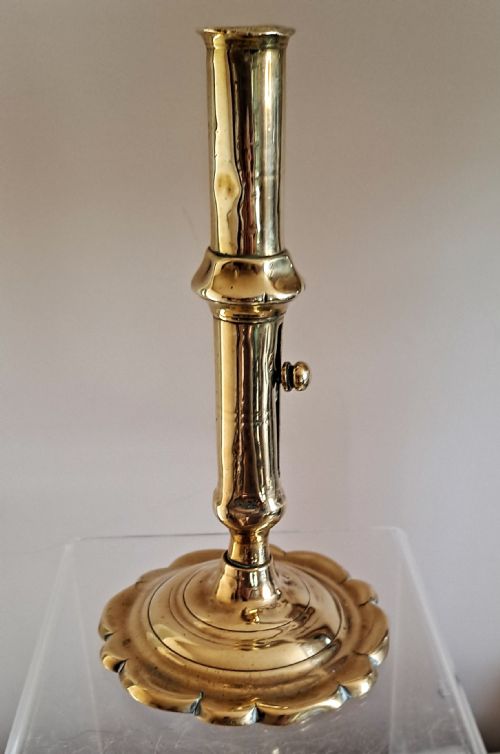
- A foot shaped like overlapping flower petals, common in eighteenth-century designs. This configuration provides a wide, stable footprint for the candlestick.
- Ejector
- A built-in mechanism with a small side lever designed to push the spent candle stub out of the socket. It simplifies clearing and reloading the holder.
- Bell metal
- An alloy of copper and tin that produces a resonant sound when struck. It was frequently utilised for robust domestic lighting pieces.
- Pricket
- A sharp metal spike in the centre of the drip pan designed to impale and secure a candle. This form relates closely to ecclesiastical lighting traditions.
- Campana
- A vase-shaped candle socket resembling an inverted bell, typical of Regency classical revival styles. It holds the taper firmly within the top of the stem.
- Gilt bronze
- Bronze that has been coated with a layer of gold, providing a bright finish. It appears on decorative Regency and neoclassical examples.
Georgian Brass Candle Holders: Frequently Asked Questions
How do I clean antique brass holders?
Maintenance requires gentle dusting with a soft cloth to preserve the patinated surface developed over centuries.
Harsh chemical polishes remove the aged oxidation that collectors value on older metal surfaces.
What is a side ejector candlestick?
A side ejector incorporates an internal sliding platform connected to an exterior thumbpiece.
Pushing the lever upward raises the remaining wax cylinder, allowing easy removal from the socket.
Are these items safe for daily use?
Solid metal construction provides high stability, though care must be taken with fitted candles.
Extinguishing the flame before it reaches the metal socket prevents overheating and potential damage.
How do I distinguish Georgian from Victorian styles?
Georgian examples often feature restrained petal bases, plain columns, or seamed brass construction.
Victorian pieces frequently display heavier ornamentation, taller proportions, and varied manufacturing techniques.