

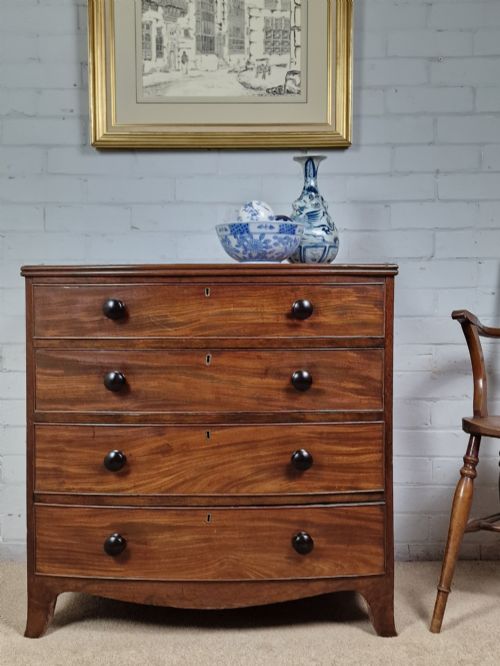
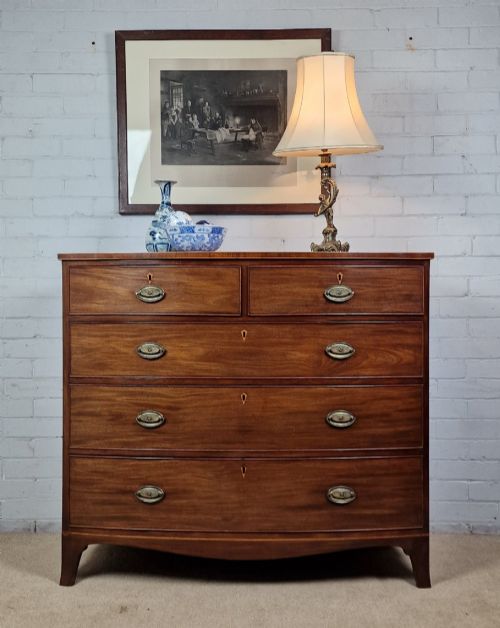
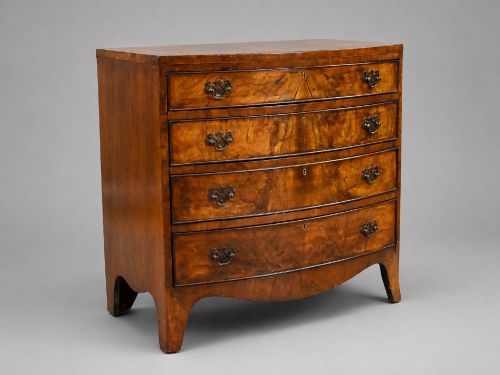
Georgian Bow Front Commode
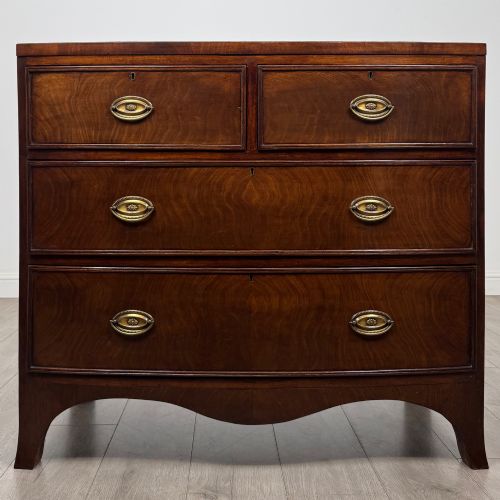
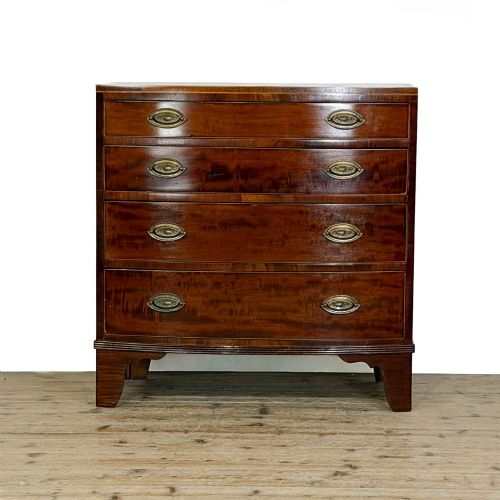
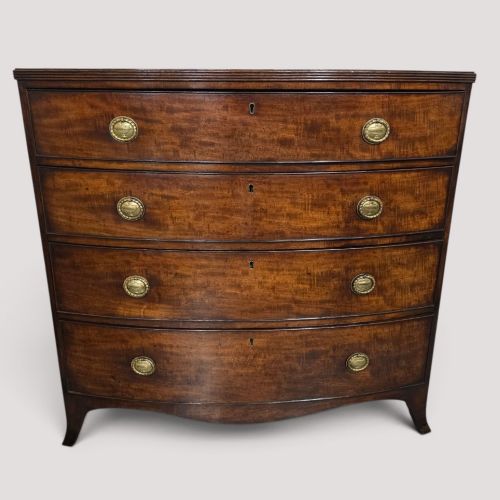
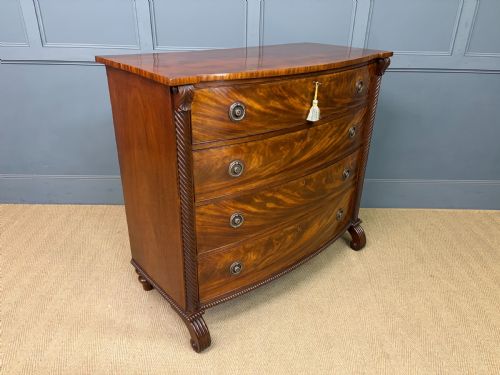
A georgian bow front commode offers a curved, swelling silhouette in timber, bringing refined storage and architectural presence to a room.
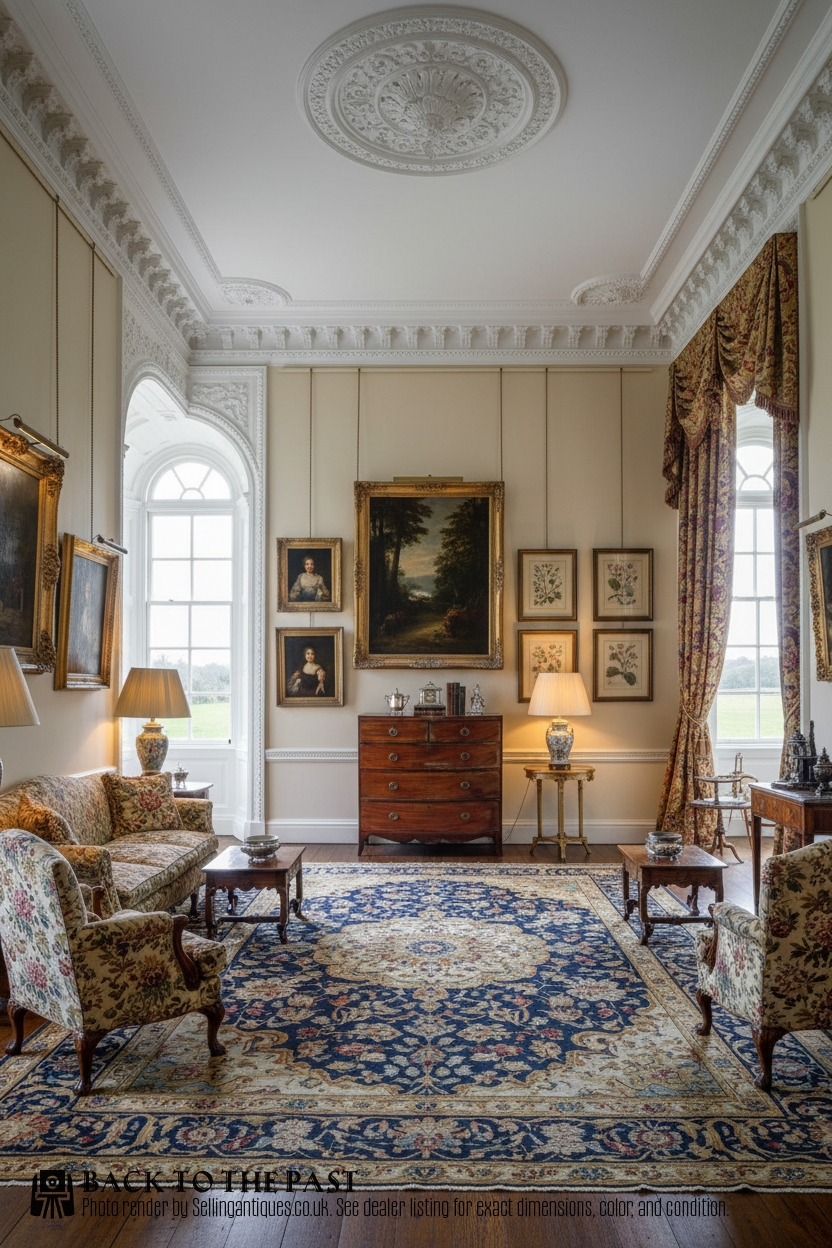
Georgian Bow Front Commode
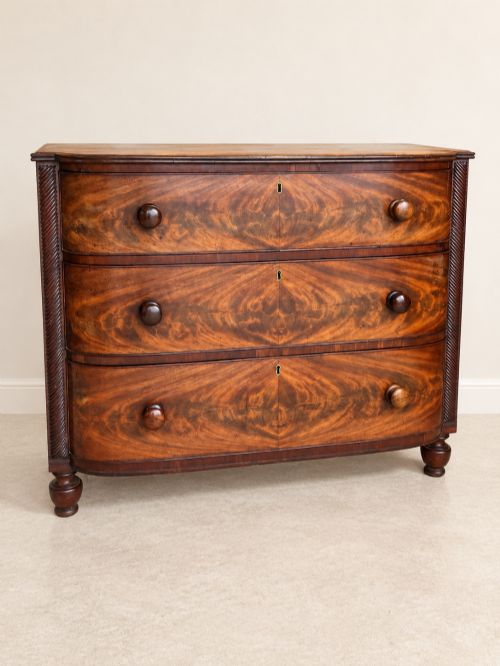
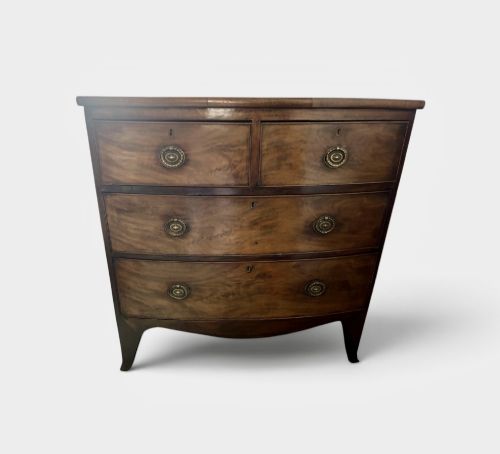
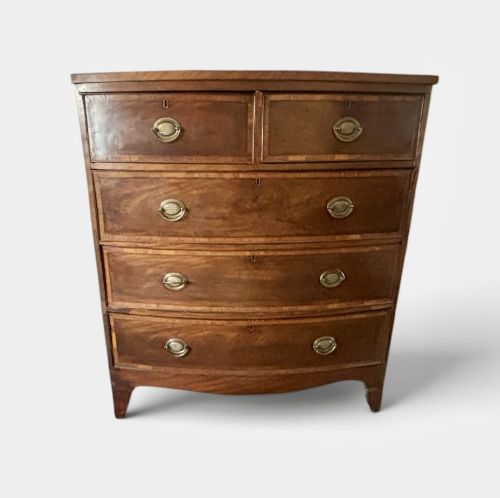
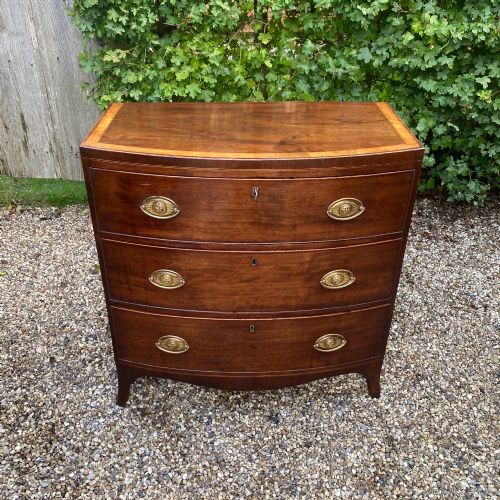
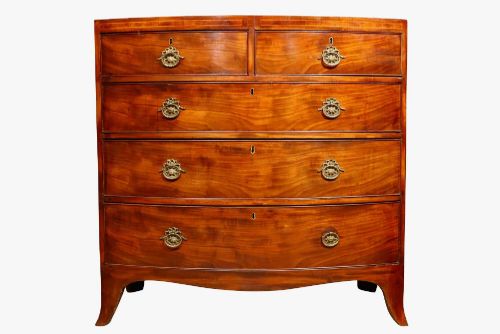
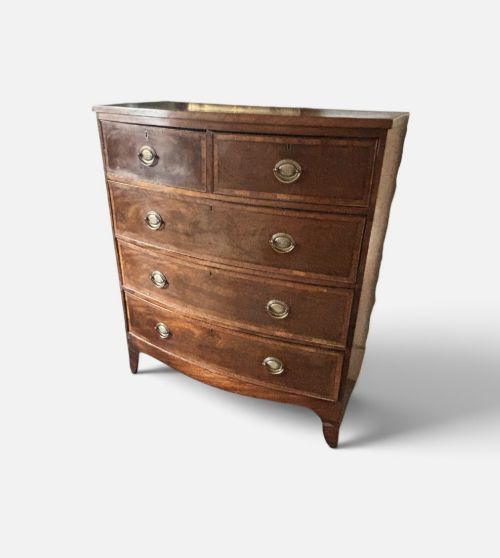
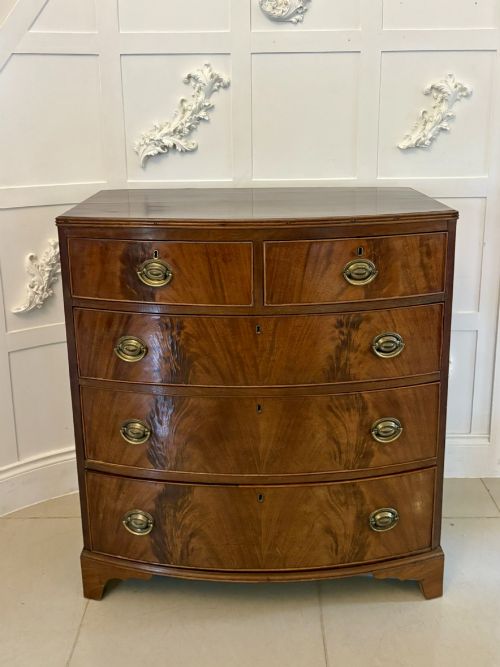
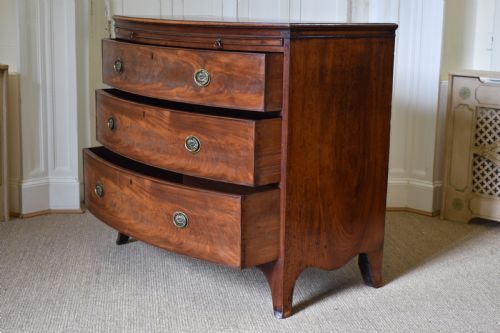
A georgian bow front commode takes the form of a chest of drawers with a rounded, convex front that softens the corners of a room. Buyers searching for this phrase encounter pieces predominantly from the Georgian, Regency, and George III periods, alongside later revivals from the Edwardian era and the early twentieth century.
The primary object types catalogued under this heading are chests of drawers, alongside smaller variants such as miniature furniture and sideboards. These items serve as practical storage furniture while displaying the distinct curved facade characteristic of the style.
Materials and Construction
Cabinet makers utilised solid timber and veneers, with mahogany serving as the predominant material alongside flame mahogany veneer, walnut, satinwood, and oak. Brass hardware such as handles and escutcheons frequently complement the wooden structures.
Surfaces often feature decorative banding and crossbanding in contrasting timbers like satinwood, while marquetry appears on specific decorative pieces. Wood is shaped and polished to produce a smooth finish that highlights the natural grain of the timber.
Georgian Bow Front Commode Retail Price Guide 2026
Typical asking prices for georgian bow front commode among the pieces listed under this phrase on Sellingantiques today, from the lower quarter to the upper quarter. They describe what is for sale here now, not the wider market.
Evaluation of Pieces
Quality rests upon the selection of timber figures, such as flame mahogany or figured walnut, and the precision of contrasting satinwood banding. Finer examples display a warm, aged patina on the wood surface, whereas lesser items may show flat grain patterns or less refined polishing.
Structural integrity and the subtlety of the curved bow front define the upper tiers of craftsmanship. Proportions remain balanced, and decorative inlays align neatly with the primary timber structure.
The Georgian Bow Front Commode Glossary
- Bow front
- A convex, curved front elevation on a chest of drawers or commode. This shape projects outward in the centre, softening linear room geometries.
- Flame mahogany
- A wood veneer cut from timber fork or bough junctions to produce a flame-like grain pattern. Cabinet makers selected this figure for its visual movement on drawer fronts.
- Crossbanding
- A narrow strip of veneer laid perpendicular to the surrounding grain along the edges of a surface. It frames the primary wood panel with a contrasting border.
- Caddy top
- A raised tabletop design with moulded edges resembling the lid of a tea caddy. It sits upon the upper carcase of certain chests of drawers.
- Patina
- The surface sheen and mellow tone developed by wood through age and handling. A deep patina indicates years of natural polishing.
Georgian Bow Front Commode: Frequently Asked Questions
How do I spot a Georgian piece?
Examine the timber selection and construction methods, as authentic Georgian items utilise period hardwoods like mahogany with hand-cut dovetails on the drawer construction.
Look closely at the secondary woods inside the drawers, such as oak or pine, which match the manufacturing practices of the eighteenth and early nineteenth centuries.
Where should I place a commode?
These curved chests suit hallways, bedrooms, or living rooms where a softened corner profile prevents sharp lines in a confined space.
Ensure adequate clearance for drawers to open fully without obstruction from surrounding furniture.
What is flame mahogany?
Flame mahogany is a decorative veneer harvested from specific sections of the tree where branches meet the trunk, creating a distinct flickering pattern.
Cabinet makers placed these veneers centrally on drawer fronts to draw the eye across the curved facade.
Are Edwardian items different?
Edwardian versions often reflect revival styles, incorporating lighter construction techniques and different interior secondary woods compared to their eighteenth-century predecessors.
These later pieces still maintain the characteristic curved front while showing the manufacturing traits of the early twentieth century.