

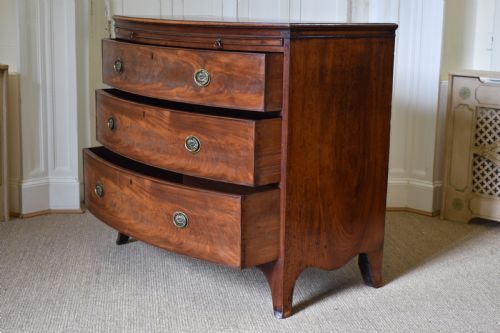
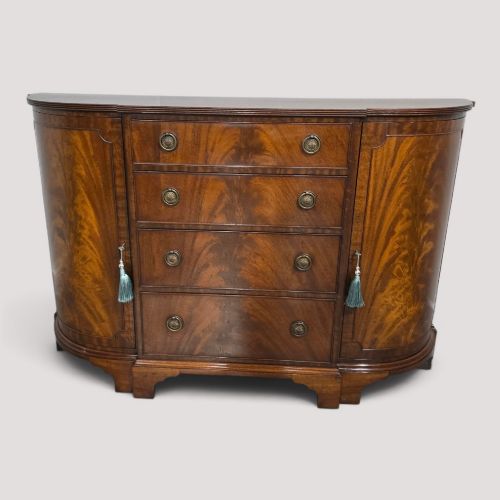
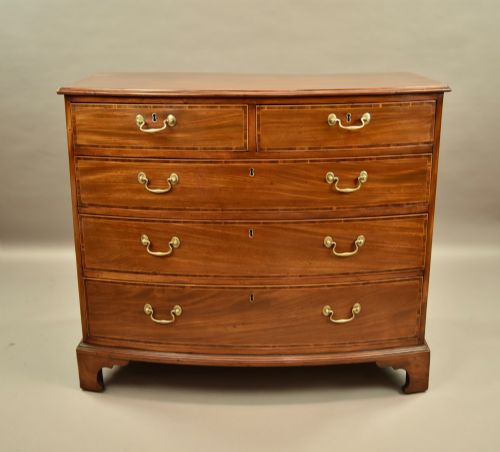
Regency Bowfront Chest Drawers
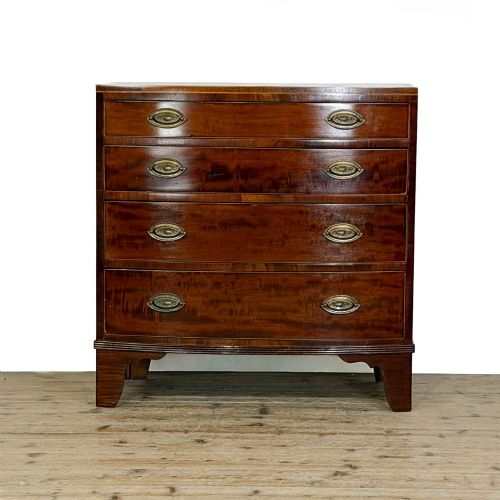
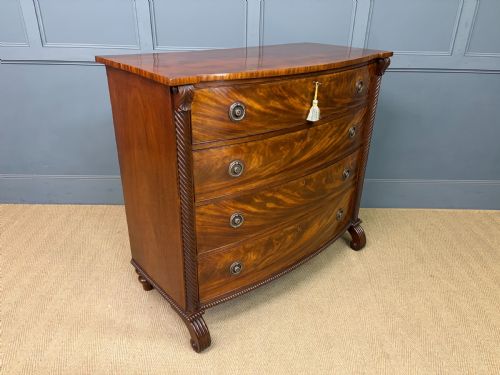
A regency bowfront chest drawers brings architectural curve and figured timber into a room, offering generous storage with a commanding silhouette.
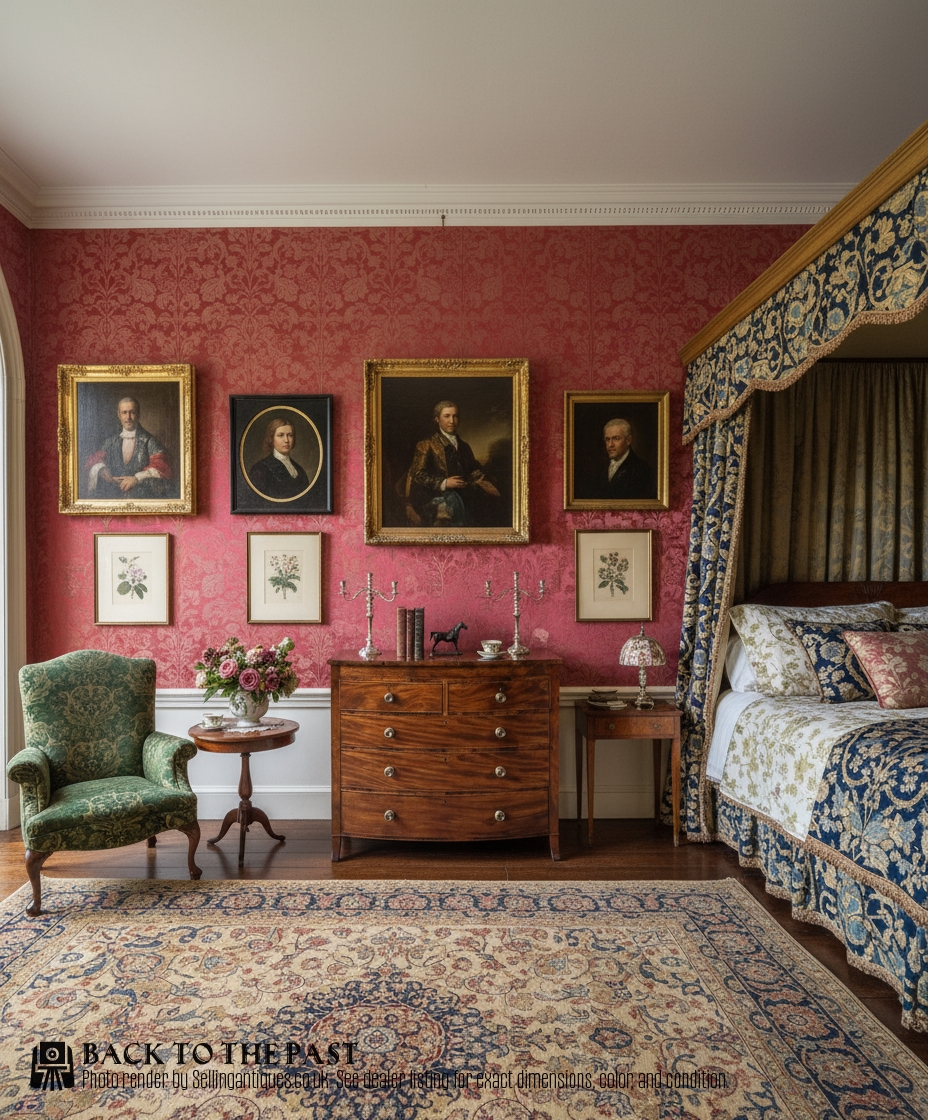
Regency Bowfront Chest Drawers
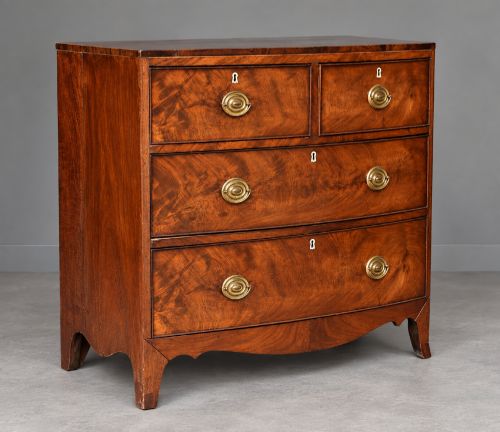
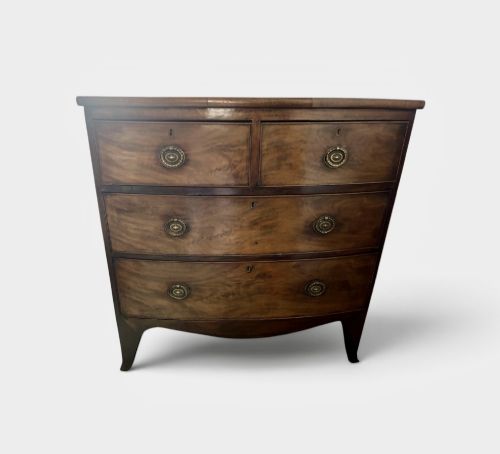
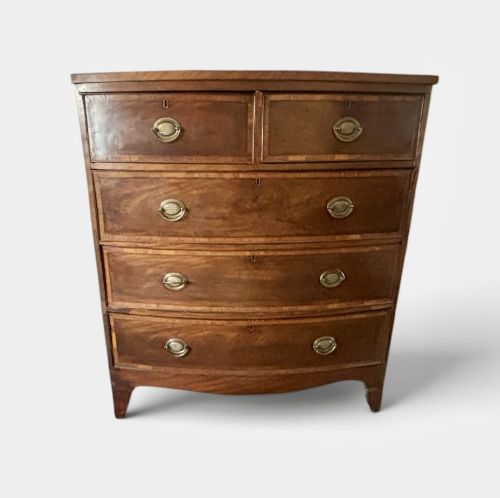
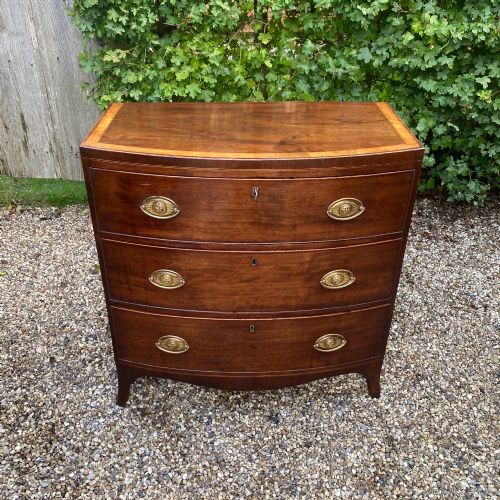
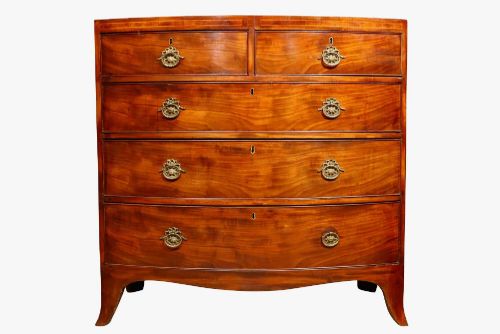
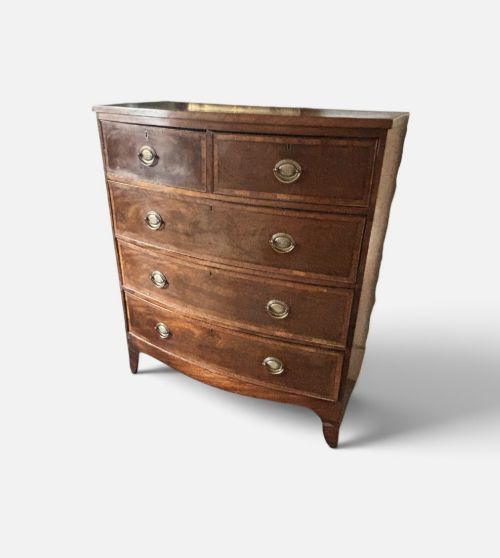
A regency bowfront chest drawers is a storage piece defined by its convex projecting front, appearing frequently in mahogany across Georgian, Regency, and nineteenth-century periods. These items range from compact, small proportions suitable for tight spaces to larger architectural formats with graduated drawers.
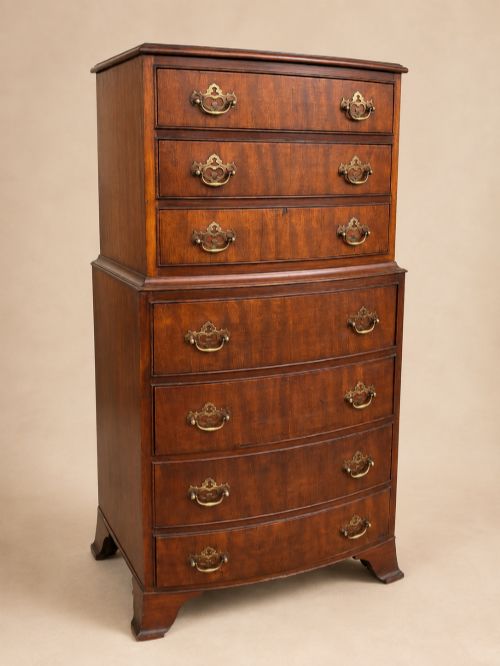
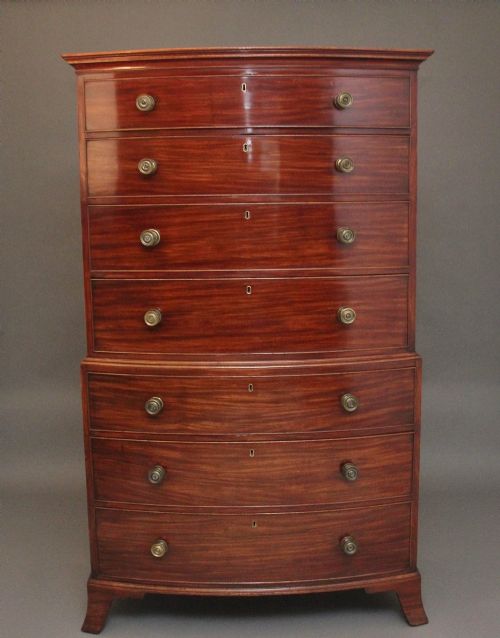
Makers produced regional variants, including Scottish and Welsh examples, alongside occasional variations such as tallboys, chests on chests, and caddy top designs. Most pieces rely on solid carcases fitted with multiple long drawers, occasionally incorporating secret compartments or brushing slides.
While the core aesthetic belongs to the Regency and George IV eras, later nineteenth-century and early twentieth-century interpretations also surface. Buyers encounter everything from neat, modest chamber chests to large, substantial storage items equipped with original brass hardware.
Materials and Construction
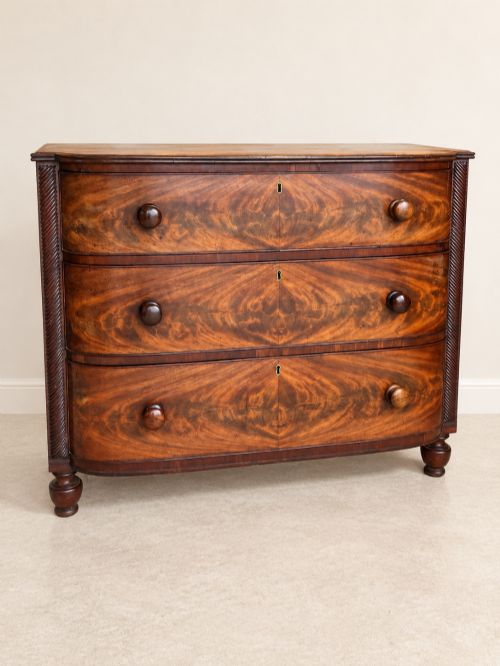
Cabinet makers built the primary carcase of a regency bowfront chest drawers using sturdy timbers like oak or mahogany, applying highly figured mahogany veneers to the curved drawer fronts. Flame mahogany and burr elm add distinctive grain patterns, enhanced by careful polishing.
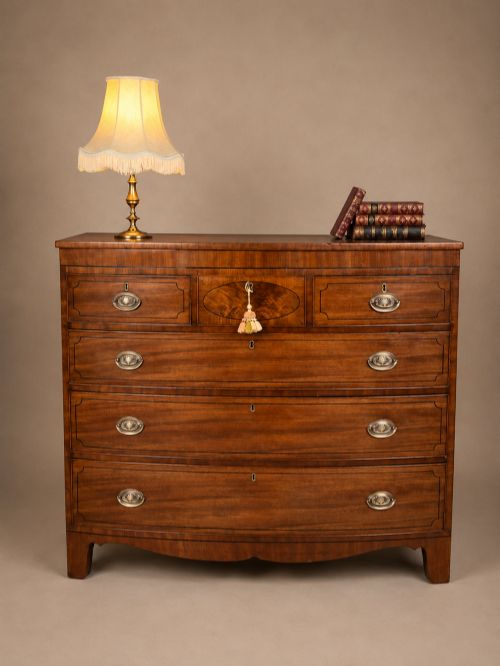
Fine decorative contrast often comes from satinwood, boxwood, and ebony stringing or crossbanding along the edges and top. Brass handles and escutcheons punctuate the dark timber surfaces, while internal drawer linings frequently utilise secondary woods such as oak.
Regency Bowfront Chest Drawers Retail Price Guide 2026
Typical asking prices for regency bowfront chest drawers among the pieces listed under this phrase on Sellingantiques today, from the lower quarter to the upper quarter. They describe what is for sale here now, not the wider market.
Listings feature periods spanning Georgian, Regency, Victorian, and early twentieth-century eras, constructed primarily in mahogany, oak, and satinwood.
Judging Quality
The standard of a regency bowfront chest drawers rests on the selection of veneer and the integration of the curved front. Well-chosen flame mahogany matches symmetrically across the drawer fronts, maintaining grain continuity while ageing gracefully.
Structural integrity shows in the precision of the drawer dovetails and the smoothness of the drawer action within the carcase. Superior examples retain original brasses, crisp inlay work, and unwarped top boards that maintain the subtle sweep of the bow.
The Regency Bowfront Chest Drawers Glossary
- Bowfront
- A convex curved cabinet front that projects outward in an arc. This shape softens the room presence of a standard rectangular case piece.
- Crossbanding
- A narrow strip of veneer laid perpendicular to the grain of the surrounding surface. It frames drawer fronts and top boards with a contrasting border.
- Flame mahogany
- A veneer cut from timber where branches join the trunk, producing a rippling flame effect. It commands attention through its dramatic, light-catching grain.
- Graduated drawers
- A sequence of drawers decreasing in depth from bottom to top. This arrangement provides structural balance and visual harmony to the facade.
- Caddy top
- A raised, moulded tabletop profile resembling the lid of a tea caddy. It adds an extra layer of sculptural definition to the upper edge of the chest.
Regency Bowfront Chest Drawers: Frequently Asked Questions
How do I style a bowfront chest?
Place the piece against a flat wall where its curved projection can catch sidelight without obstructing foot traffic. Because the top surface offers substantial display space, keep items simple to let the figured wood remain the visual focal point.
In a bedroom or hallway, pair the chest with a plain mirror or hang artwork at a height that complements the architectural line of the top. Avoid overcrowding the surface so the proportions of the timber stay clear.
Were these chests used for clothes?
These pieces served primarily as principal bedroom storage for folded garments, linens, and personal accessories. The graduated drawer layout allowed smaller items to sit near the top while bulky textiles occupied the deeper lower drawers.
Some variants included a brushing slide or secret compartments for holding documents and valuables. This functional versatility made them central furnishings in domestic chambers.
How do I spot a Georgian period piece?
Look for hand-cut dovetails, secondary wood linings like oak, and subtle timber shrinkage that confirms age. Georgian and Regency pieces typically display slender proportions and restrained inlay rather than heavy ornamentation.
Hardware placement and the specific style of the bracket feet or turned legs also offer clues to the decade of manufacture. Comparing the construction methods inside the drawers helps distinguish early nineteenth-century work from later revivals.
What is a Scottish regency chest?
Scottish regional pieces often feature distinctive proportions, bolder column details, and deep flame mahogany drawer fronts. Cabinet makers in Scotland developed robust structural characteristics that set them apart from standard English equivalents.
These chests frequently present neat dimensions combined with striking wood selection, making them distinct finds for collectors. Their architectural presence reflects local furniture traditions of the early nineteenth century.