


Regency Period Chest Drawers
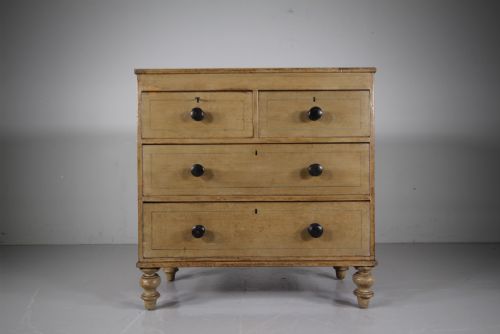
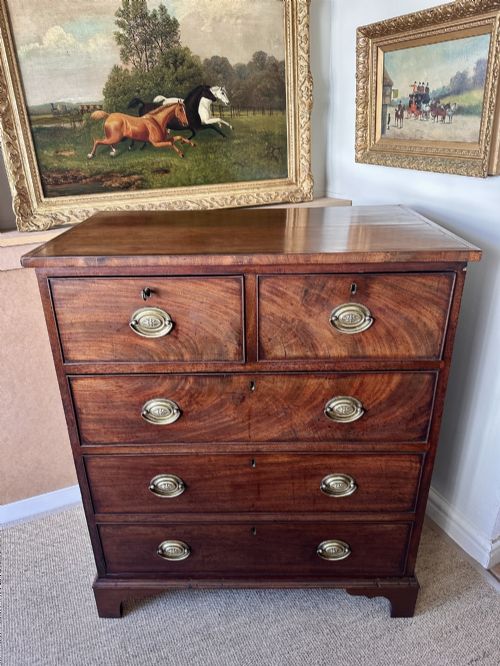
Regency period chest drawers embody an era of confident proportion, offering refined storage through clean architectural lines.
Form and Period
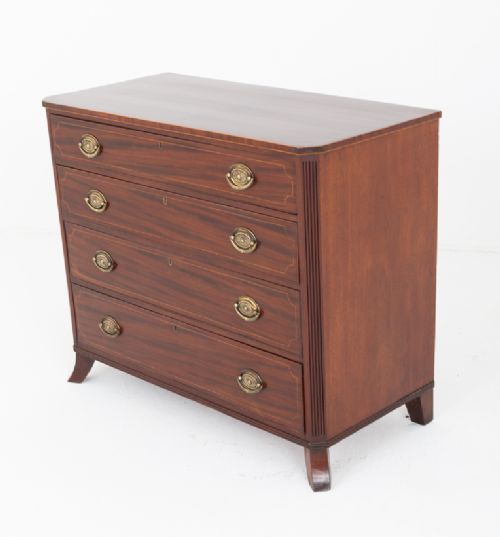
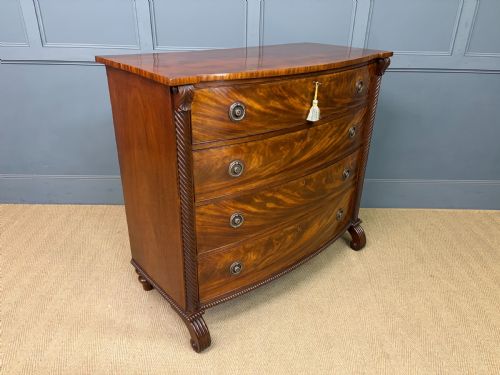
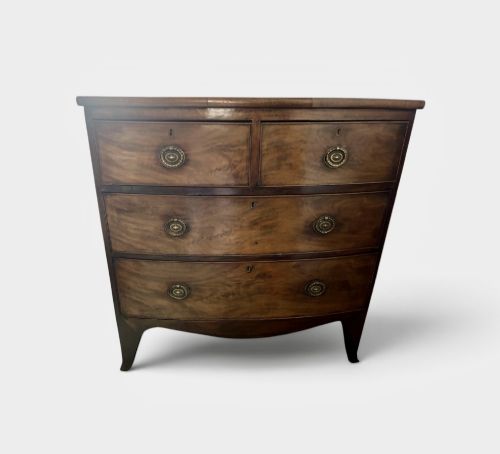
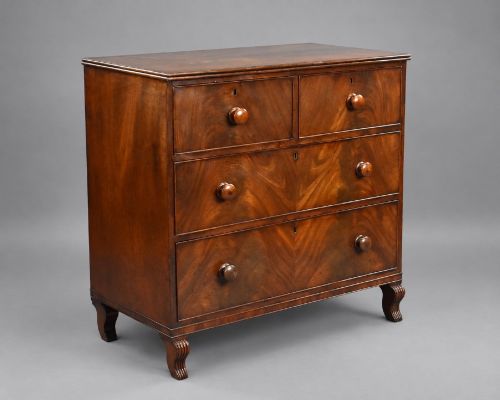
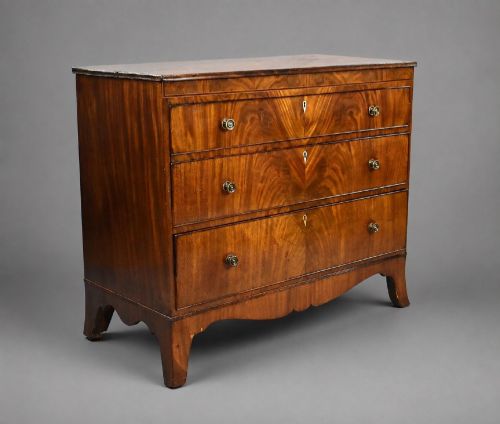
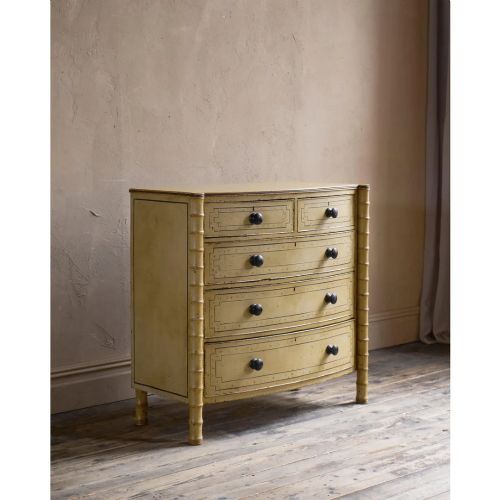
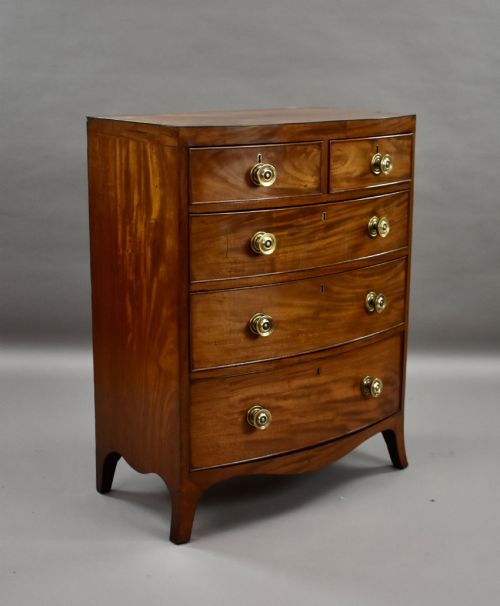
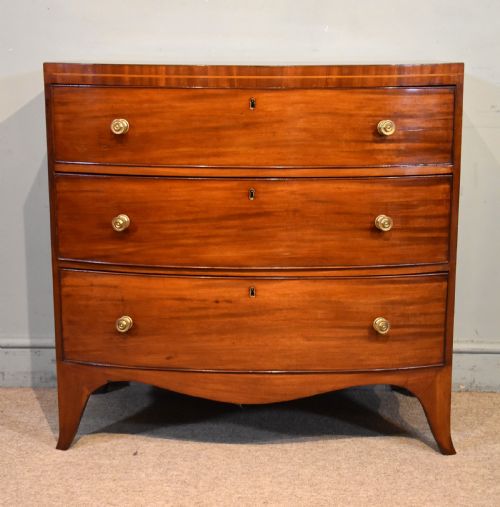
A regency period chest drawers brings together the formal restraint of the early nineteenth century and the practical need for domestic storage. Buyers seeking these pieces encounter robust chests shaped with straight, bow front, concave, or serpentine outlines.
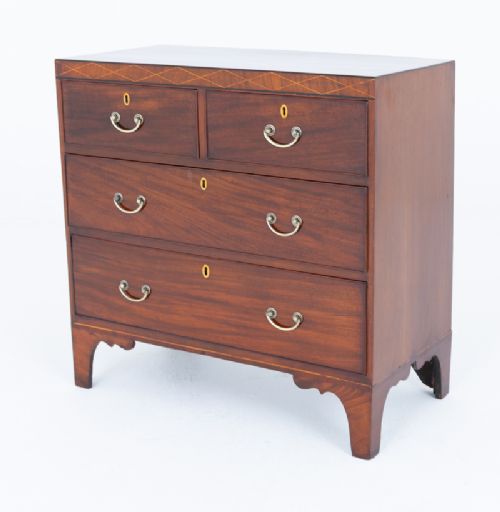
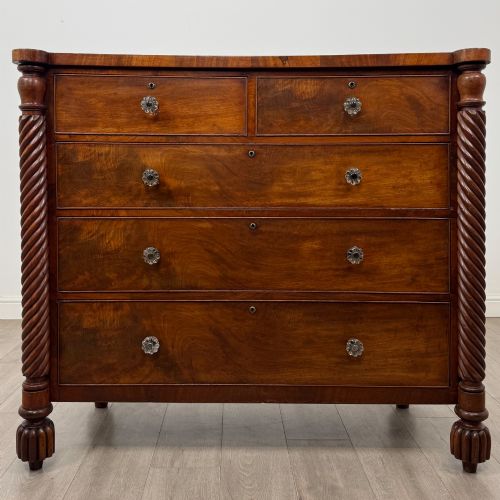
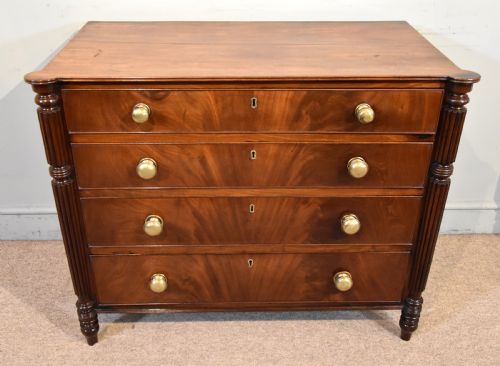
The dominant material across these examples is mahogany, frequently enhanced by flame mahogany veneers or subtle ebony line inlay. Oak routinely appears in secondary construction for drawer linings, grounding the grander exterior timbers.
Most surviving pieces date from the Regency and George IV periods, spanning the opening decades of the nineteenth century. These range from compact three-drawer versions to larger configurations featuring integrated slides or secretaire writing compartments.
Materials and Construction
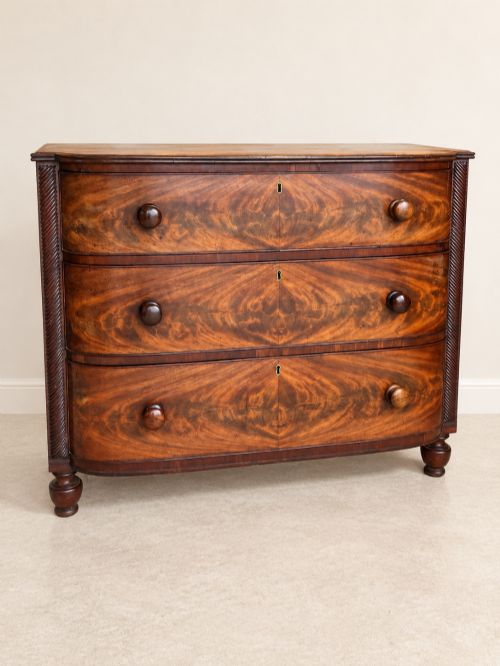
Cabinet makers utilised solid mahogany and rich veneers laid over sturdy secondary woods like oak. Surfaces often display careful figuration, particularly where flame mahogany veneer creates striking grain patterns across the drawer fronts.
Detailing relied on precision inlay, incorporating materials such as ebony lines and contrasting crossbanding. Brass hardware, including drop handles and escutcheons, completes the structural assembly alongside working locks.
Retail Price Guide 2026
Typical UK retail prices for regency period chest drawers, calculated from the Sellingantiques database of over a million retail prices indexed since 2003. This retail price guide relies exclusively on Sellingantiques data; no external sources or auction records are used, so the figures do not describe the wider market.
Some chests arrive with working keys from the early eighteen-hundreds, proving that drawers have guarded secrets for centuries.
Distinction in Craft
Quality rests in the selection of timber and the precision of the cabinet work. Superior examples exhibit carefully matched flame mahogany veneers and crisp ebony line inlay that follows complex curves without distortion.
The handling of secondary timbers reveals structural integrity, where oak-lined drawers move smoothly within their carcases. Refined proportions and harmonious brass fittings elevate individual chests far above standard utilitarian storage.
George Simpson
The Regency Period Chest Drawers Glossary
- Bow front
- A convex curved cabinet front that swells outward from the corners. This shape is characteristic of many Regency designs.
- Flame mahogany
- A veneer cut from the fork of the mahogany tree where the branches join the trunk. It creates a distinctive, flickering flame-like pattern across drawer fronts.
- Secretaire
- A chest fitted with a pull-out writing drawer containing small compartments and pigeon holes. It combines the utility of a desk with the storage of a chest.
- Crossbanding
- A strip of veneer applied to the border of a drawer front with the grain running perpendicular to the surrounding wood. This technique creates a neat framing effect.
Frequently Asked Questions
What defines a regency period chest drawers?
These pieces date from the early nineteenth century, specifically the Regency and George IV eras. They are characterised by architectural proportions and the use of mahogany.
Craftsmen often employed bow fronts, flame veneers, and ebony line inlay to decorate the exterior carcase.
What is a secretaire chest drawers?
A secretaire chest incorporates a top drawer that folds down to reveal a fitted writing surface and small pigeon holes. It allows the piece to function simultaneously as a desk and a chest of drawers.
This dual purpose made them popular in smaller domestic interiors of the nineteenth century.
How should I care for mahogany furniture?
Keep mahogany pieces away from direct sunlight and heat sources to prevent the wood and veneer from drying out. Consistent indoor humidity helps protect the antique structure.
Dust regularly with a soft cloth and avoid abrasive cleaning products that can damage the polish.