

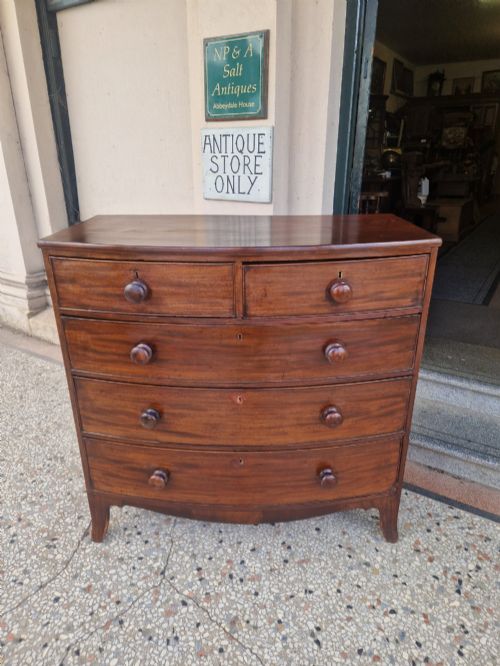
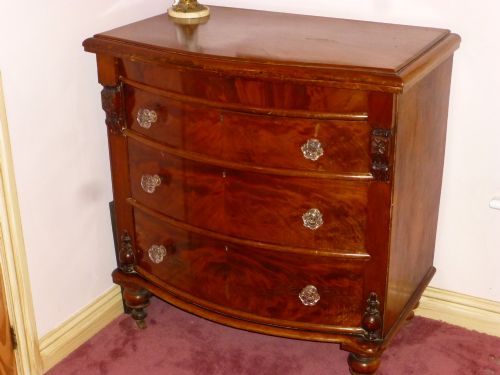
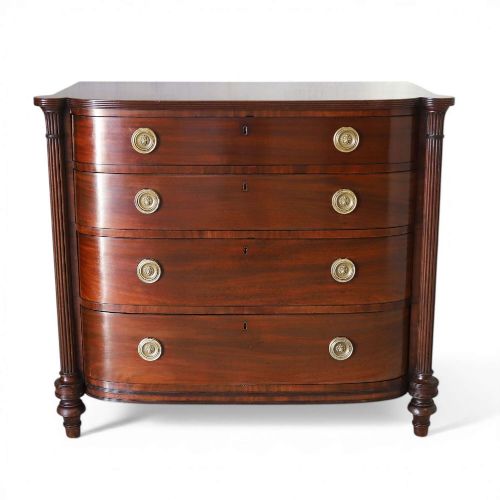
19th Century Bowfront Chest
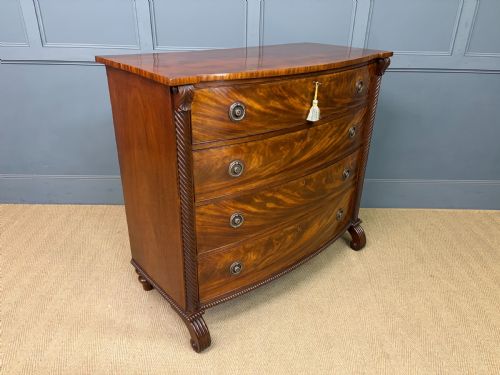
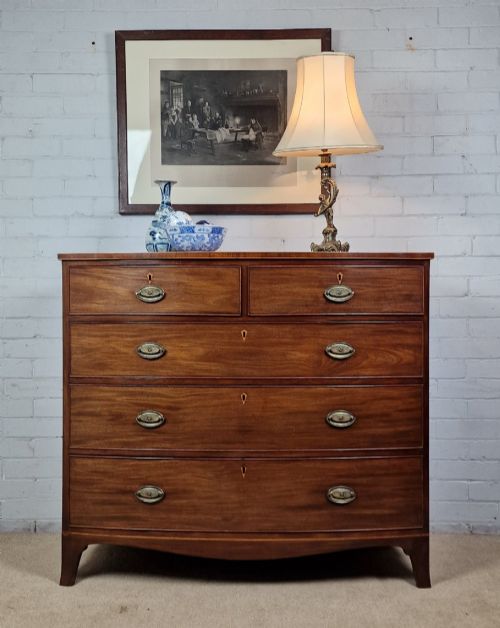
A 19th century bowfront chest brings curving lines and substantial storage to a room through traditional cabinetmaking.
19th Century Bowfront Chest
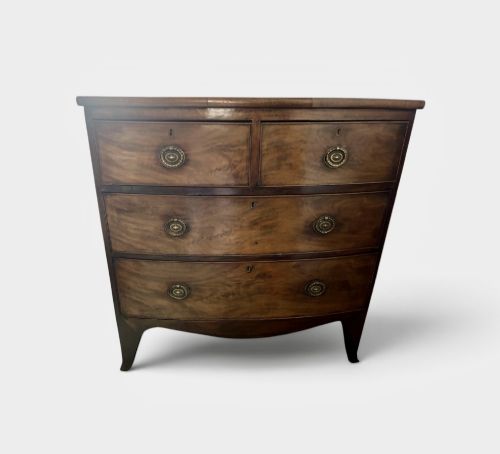
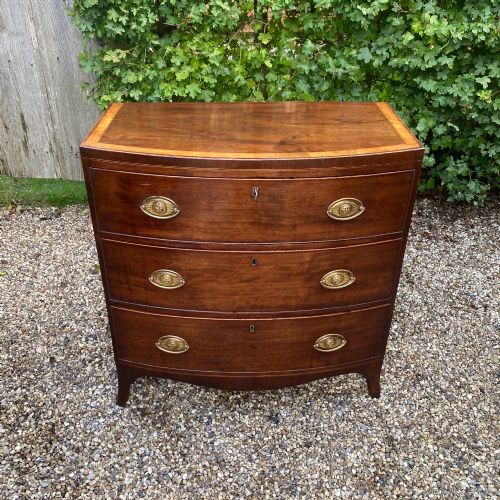
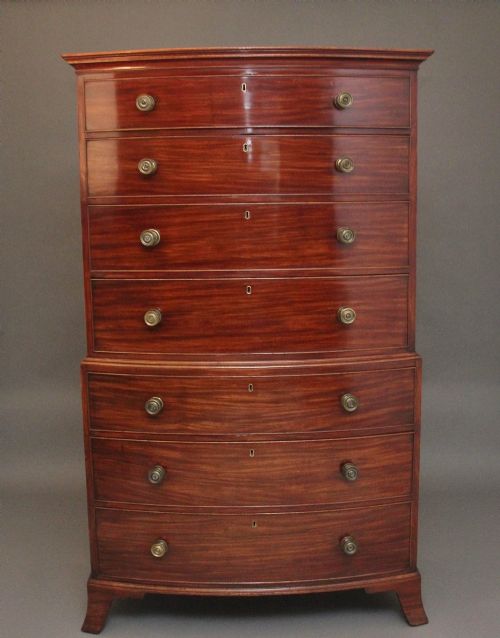
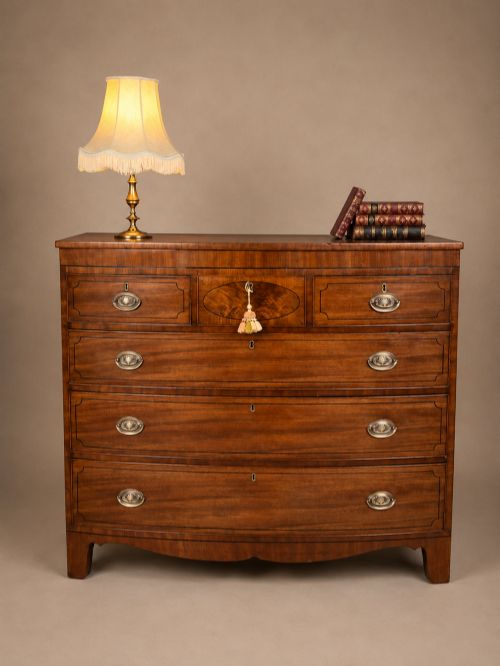
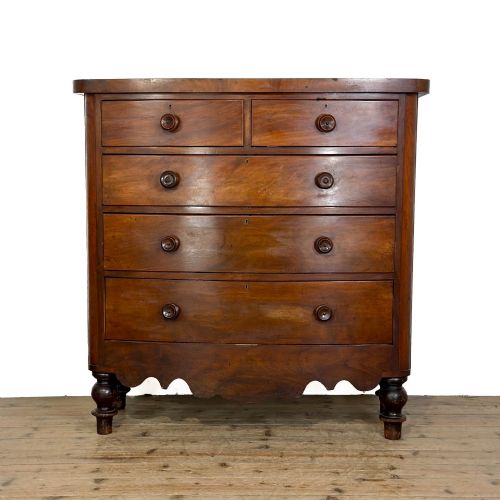
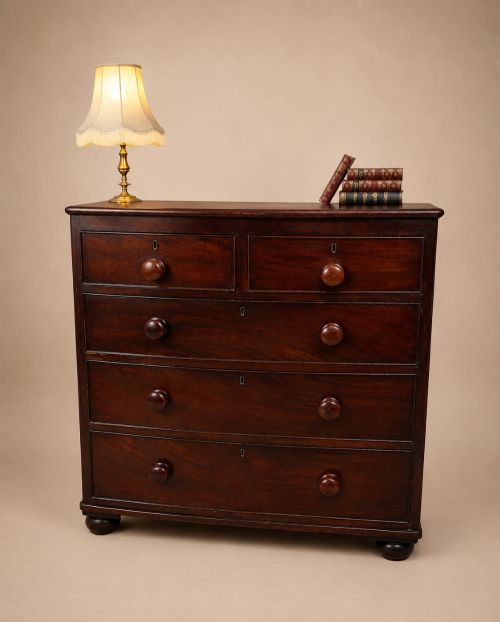
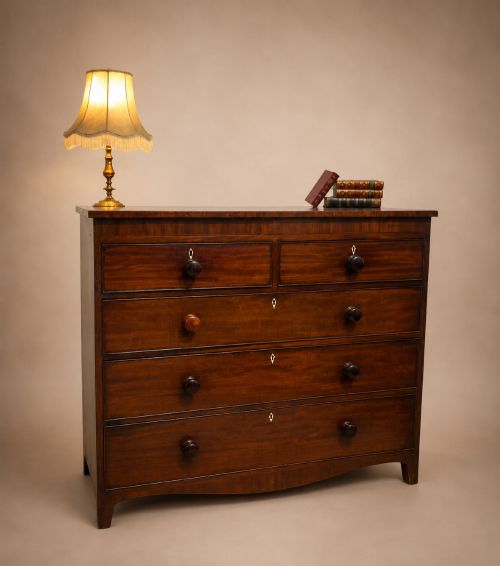
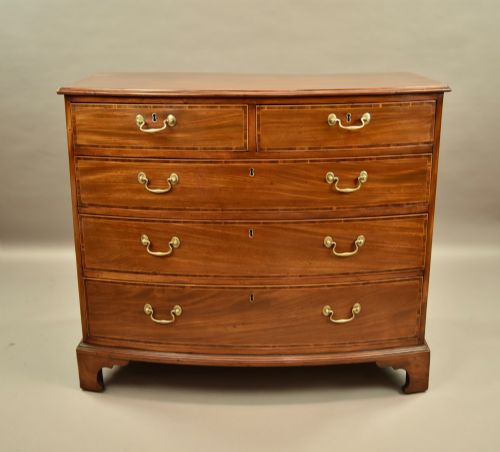
A 19th century bowfront chest provides practical bedroom and hallway storage through a series of stacked drawers, distinguished by a convex curving front facade. These items appear across the Georgian, Regency, and Victorian periods, reflecting shifting tastes in domestic furniture design throughout the 1800s.
The version most commonly met on this page is constructed from mahogany, often featuring smaller proportions or standard bedroom scales with graduated drawer depths. Examples span regional variations including Scottish and Welsh workshops, alongside compact bedside tables and miniature furniture forms.
How They Were Made
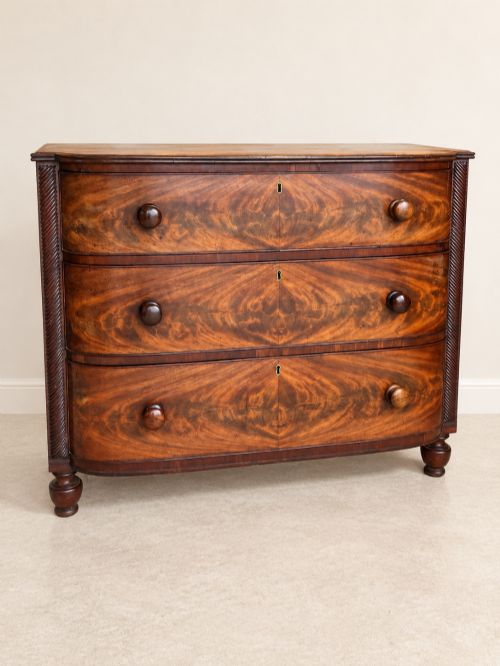
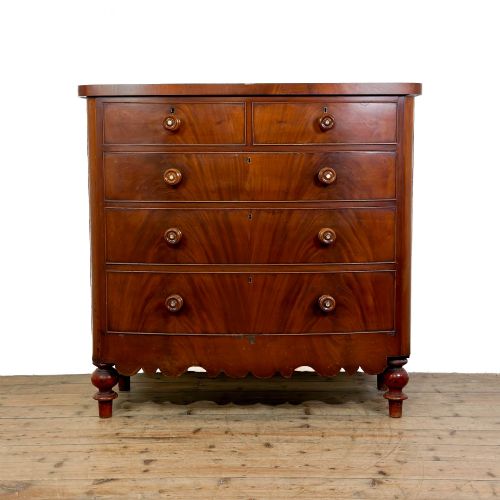
Cabinetmakers built the curving fronts of these chests using solid timber or bent construction techniques, frequently applying flame mahogany veneer to achieve striking grain patterns across the drawer faces. Secondary timbers such as oak and pine commonly form the internal drawer linings and structural framing.
Decorative details rely on contrasting wood inlay, satinwood banding, and bone escutcheons, complemented by turned wooden handles or brass pull fixtures. Drawers were typically constructed with hand-cut dovetail joints to ensure long-term durability during daily domestic use.
Several pieces conceal tiny secret compartments within their upper framing, designed to safeguard family valuables from curious household guests.
What Varies in Quality
The calibre of a 19th century bowfront chest rests heavily on the selection of face veneers and the precision of the curved drawer fitting. Superior pieces display book-matched flame mahogany grains that flow seamlessly across multiple drawer fronts.
Internal construction standards further distinguish the range, where fine examples utilise solid oak secondary woods and clean hand-cut dovetailing. Proportion, harmonious drawer graduation, and crisp edge definition separate standard utility items from exceptional workshop productions.
Gillows
The 19th Century Bowfront Chest Glossary
- Bowfront
- A convex curving cabinet front that projects outward from the corners. This shape gained widespread popularity in British furniture design during the late Georgian and Regency eras.
- Flame mahogany
- A highly figured timber veneer displaying dramatic, flame-like patterns derived from branch junctions. Makers selected this material to create decorative visual movement on primary drawer facades.
- Graduated drawers
- A sequence of drawers that decrease in depth from the bottom to the top of the chest. This arrangement creates a balanced visual proportion across the vertical facade.
- Caddy top
- A raised or moulded tabletop style with shaped edges reminiscent of tea caddy lids. This detail frequently appears on smaller cabinet forms from the early 19th century.
- Tallboy
- A tall chest of drawers constructed in two stacked sections, often combining a lower chest base with an upper storage compartment. These pieces maximise vertical storage capacity in smaller rooms.
19th Century Bowfront Chest: Frequently Asked Questions
How do I date a bowfront chest?
Dating relies on examining construction methods, timber choices, and hardware styles associated with specific periods like the Regency or Victorian eras. Secondary woods and foot designs also provide reliable chronological clues.
Earlier pieces from the Georgian period often feature hand-cut dovetails and subtle inlay, while later Victorian examples tend to show heavier turned handles and different internal framing techniques.
Can I use one as a bedside table?
Smaller variations and specialised bedside pieces fit well beside low or standard bed frames while offering generous drawer capacity. Miniature chests also serve this purpose in compact spaces.
Consider the surface height and the projection of the curved front relative to surrounding clearance before placing the item next to a bed.
What is flame mahogany?
Flame mahogany is a decorative veneer cut from specific sections of timber to reveal rippling, flame-like grain figures. It was prized by period cabinetmakers for creating striking visual effects.
This veneer requires careful maintenance to preserve its polished surface and prevent lifting along the curved drawer edges.
How do I care for antique mahogany?
Maintenance involves keeping the timber away from direct heat sources and sudden humidity changes to prevent wood movement and veneer cracking. Regular dusting with a soft cloth preserves the polished finish.
Avoid silicone-based polishes and instead utilise traditional beeswax formulations to nourish the historic wood surface over time.