

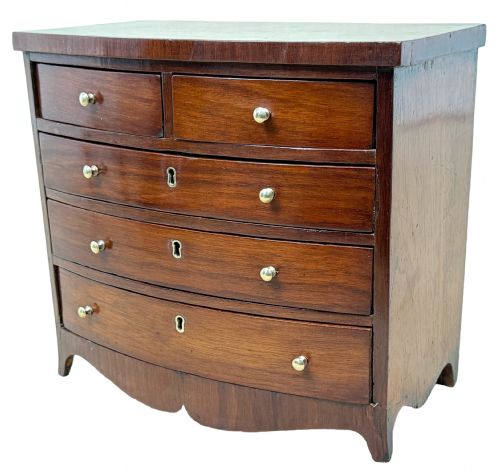
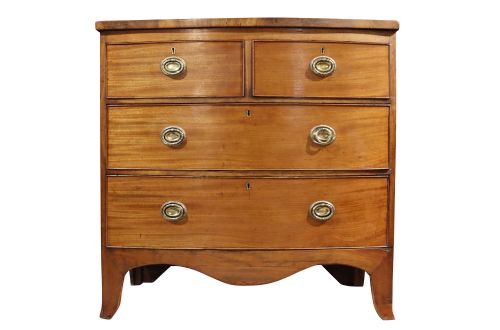

Victorian Bowfront Chest
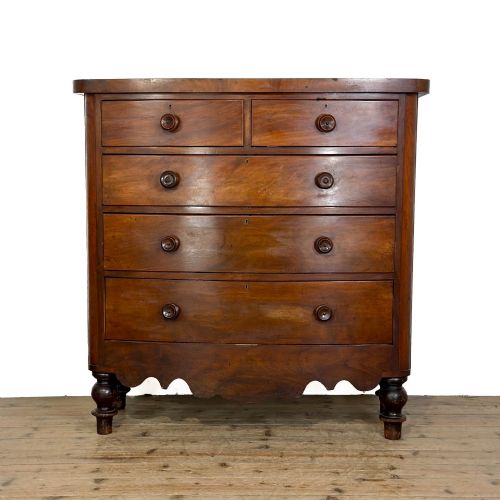
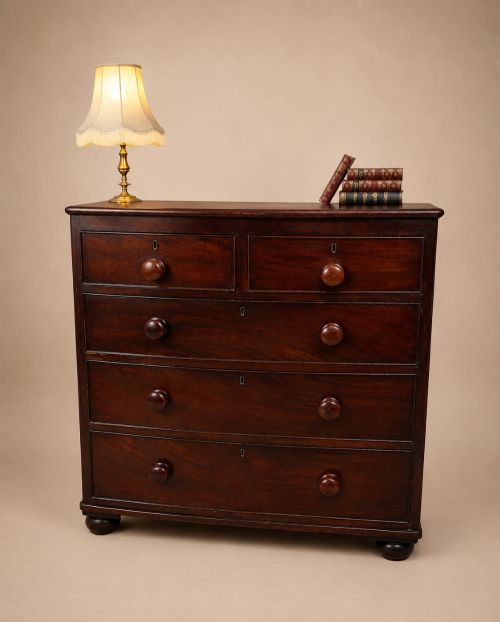
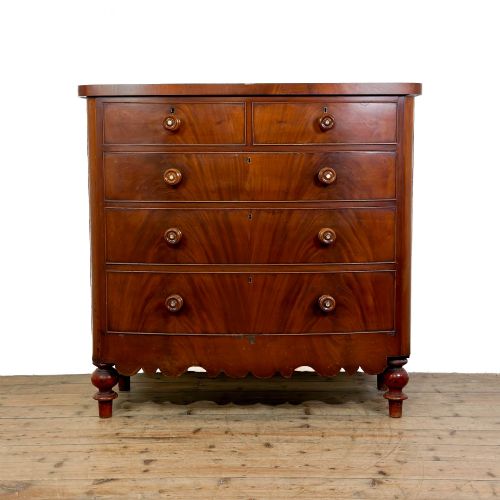
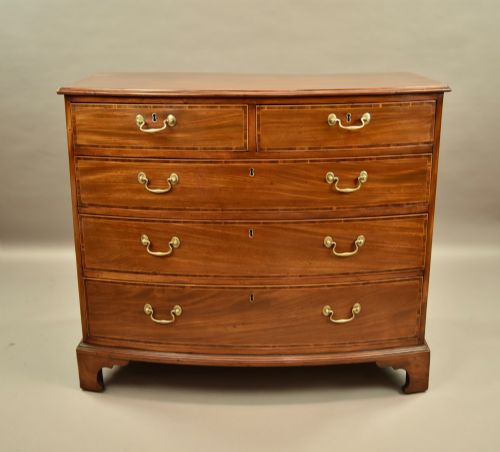
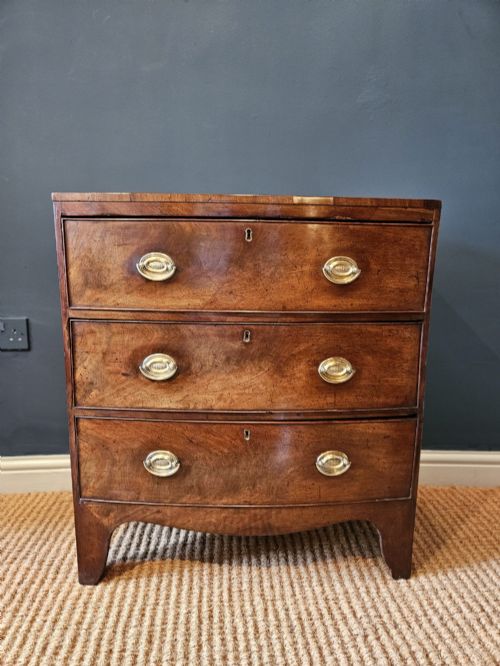
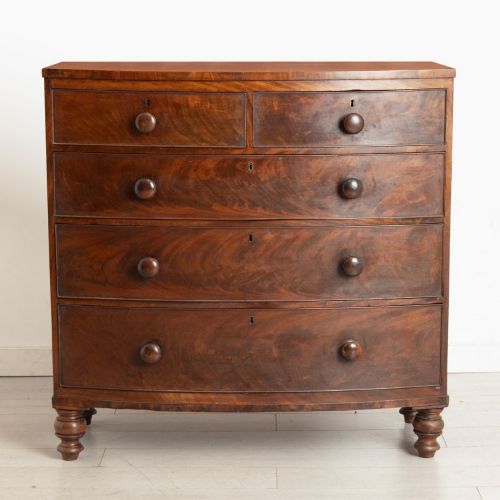
A victorian bowfront chest offers generous bedroom storage through a curved mahogany facade that catches the ambient light.

Victorian Bowfront Chest
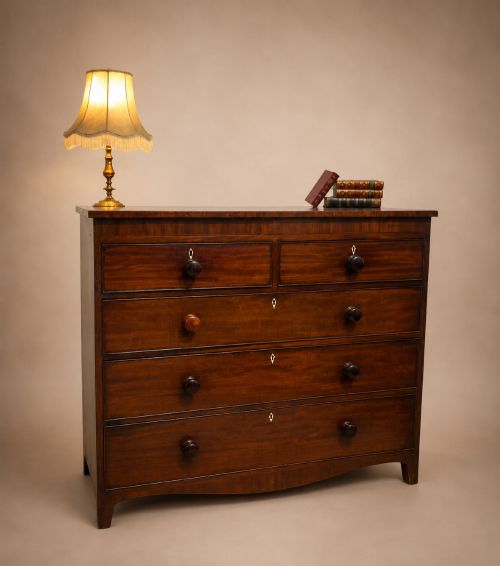
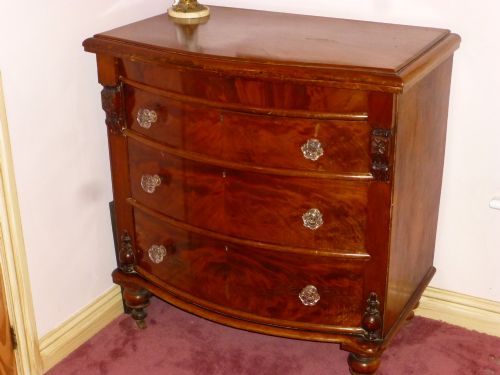
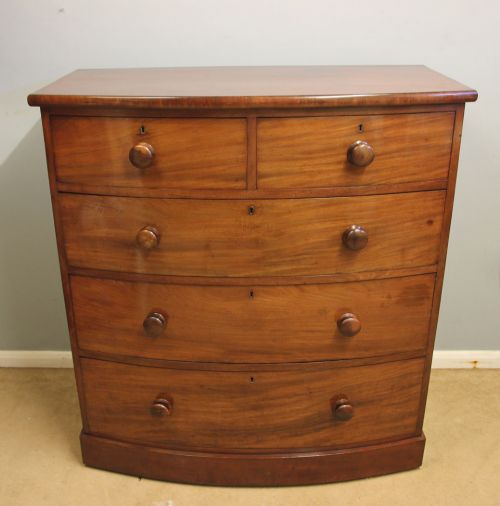
A victorian bowfront chest is a substantial storage piece defined by its protruding, curved front facade and multiple stacked drawers. These items emerge primarily from nineteenth-century workshops, ranging from full-scale bedroom furniture down to smaller compact examples and miniature versions.
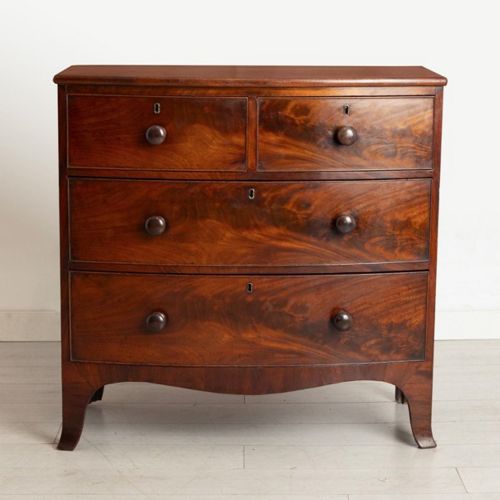
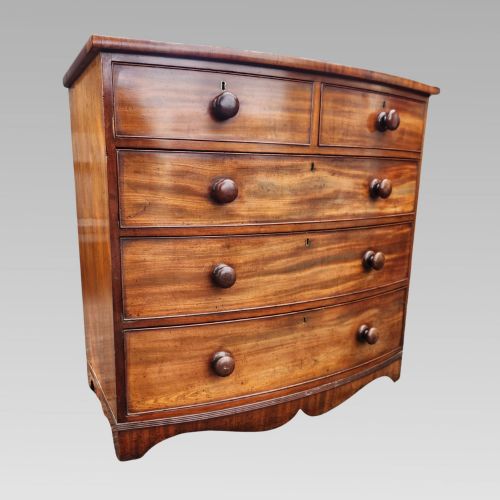
The standard form encountered on this page is constructed from mahogany, often displaying a rich grain across the curved drawer fronts. Variants include bedside chests, commode chests, and pieces incorporating secret drawers or marble tops.
Origin points span English, Welsh, and continental workshops, showing how cabinetmakers adapted the curved frontal profile across different regional scales during the period.
Materials and construction
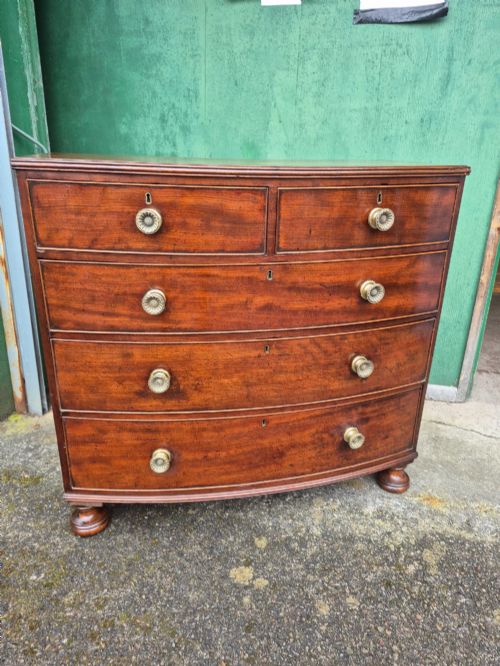
Makers relied heavily on solid mahogany and flame mahogany veneer applied over secondary timbers such as pine, building the distinctive curved carcass to house the graduated drawers. Turned wooden handles, brass fittings, and bone escutcheons punctuate the polished timber surfaces.
Structural integrity depended on disciplined framing techniques that allowed the curved front to maintain its tension and shape over decades of use. Veneers were carefully matched across the sweeping drawer faces to create continuous visual patterns in the wood grain.
Victorian Bowfront Chest Retail Price Guide 2026
Typical asking prices for victorian bowfront chest among the pieces listed under this phrase on Sellingantiques today, from the lower quarter to the upper quarter. They describe what is for sale here now, not the wider market.
What separates the tiers
Quality rests in the handling of the mahogany veneer and the precision of the curved drawer joints. Superior examples exhibit tightly matched grain patterns that follow the sweeping contours of the bow without interruption.
The weight and selection of secondary timbers, the crispness of the turned handles, and the smoothness of the drawer action separate standard utility items from pieces finished with exceptional cabinetmaking skill.
The Victorian Bowfront Chest Glossary
- Bowfront
- A convex curved front profile that projects outward from the centre of the chest. This shape softens the room presence of heavy timber furniture.
- Flame mahogany
- A veneer cut from the fork of the mahogany tree to produce a flickering, flame-like grain pattern. Cabinetmakers reserved this timber for prominent drawer faces.
- Escutcheon
- A protective plate surrounding the keyhole of a drawer, frequently fashioned from brass or bone. It prevents the surrounding wood from wearing down through repeated key use.
- Secret drawer
- A concealed compartment built into the upper section of the chest behind the moulding. These hidden spaces required precise joinery to remain unnoticed.
- Apprentice piece
- A miniature version of a full-size chest created by a trainee to demonstrate cabinetmaking proficiency. These smaller items display the same joinery standards as standard furniture.
Victorian Bowfront Chest: Frequently Asked Questions
Where should I place a bowfront chest?
These chests suit bedrooms, hallways, or living spaces where the curved front softens linear room layouts. Their projecting profile requires adequate clearance from walking paths.
Ensure the surface is level so the graduated drawers slide evenly within the curved carcass without binding against the frame.
How do I care for the mahogany surface?
Dust the timber regularly with a soft, dry cloth to prevent particulate accumulation in the grain. Avoid placing the chest in direct sunlight or near heat sources to protect the mahogany veneer.
Apply a microcrystalline wax periodically to nourish the polished wood and maintain its natural lustre over time.
How do I distinguish early pieces from later ones?
Early nineteenth-century examples often display simpler turned handles and deeper mahogany tones without extensive inlay work. Construction details inside the drawer boxes reveal hand-cut dovetails typical of earlier workshop practices.
Later Victorian and Edwardian variations incorporate satinwood inlay, varied handle materials, or altered proportions reflecting changing domestic tastes.
What is the function of the top drawer?
The topmost drawer often served as a shallow compartment for smaller garments, documents, or valuables. In some instances, makers integrated secret locking mechanisms or compartments within this upper rail.
Because it sits at eye level, cabinetmakers frequently reserved their finest veneer matching for this specific drawer face.