


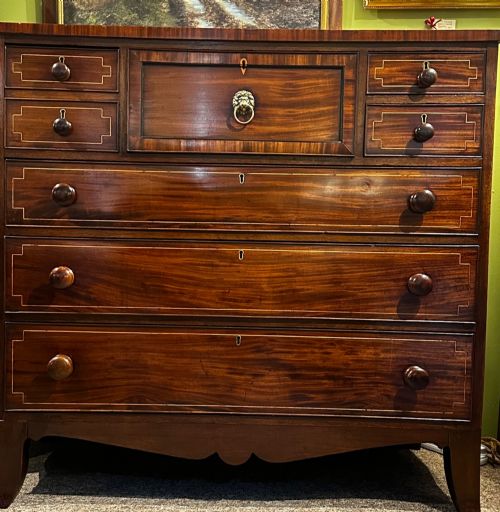

Scottish Mahogany Chest
A Scottish mahogany chest brings robust regional scale and striking timber grain to a room.
Forms and Origins
A Scottish mahogany chest of drawers is a substantial regional storage piece defined by generous proportions and strong architectural lines. These chests appear most frequently from the Victorian period and the nineteenth century, alongside earlier George III and Regency examples.
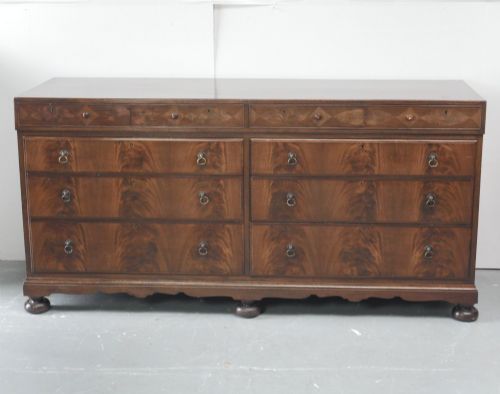
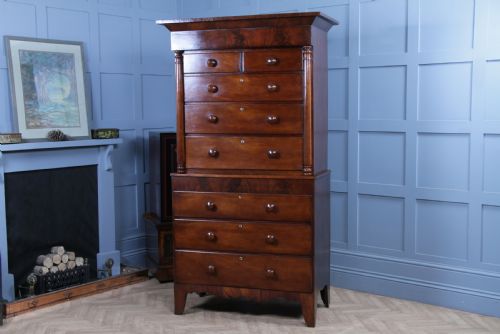
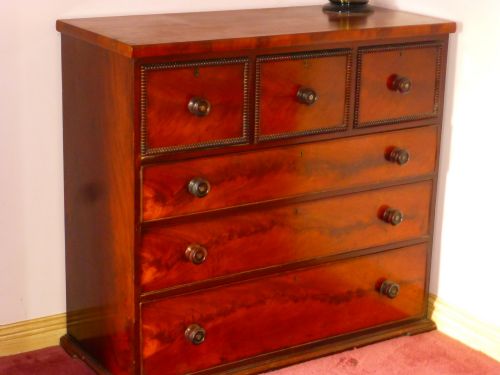
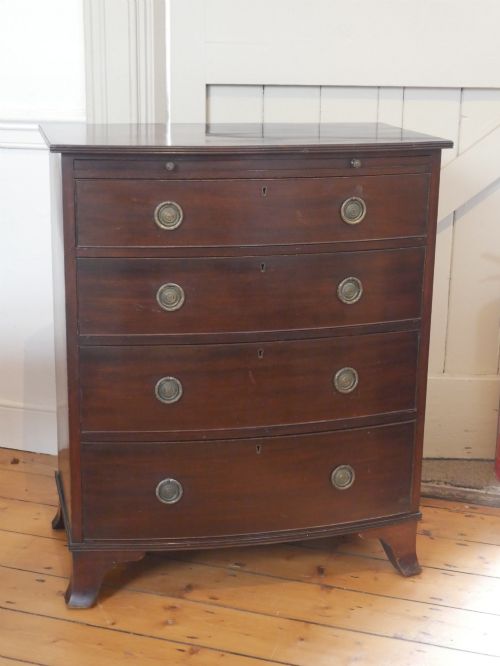
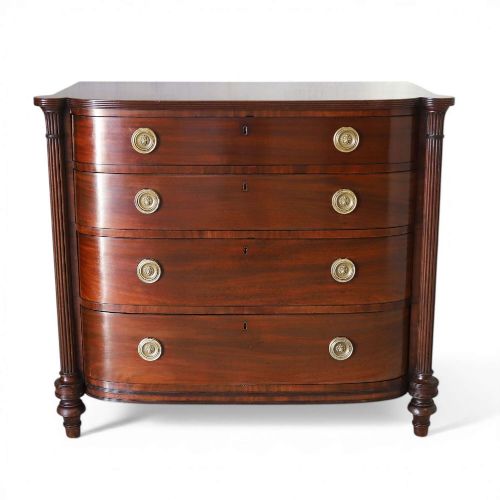
The layout often spans a configuration of six to eight drawers, frequently incorporating a deep cushion drawer or ogee moulding at the top. Buyers regularly encounter grand tall forms, bow fronts, and lower proportions built with solid carcasses and deep drawer capacities.
Materials and Construction
Makers utilised solid mahogany and flame mahogany veneer laid over secondary timbers such as pine. Surfaces frequently highlight active grain patterns including flame grain, fiddle back, and tiger wood figuring.
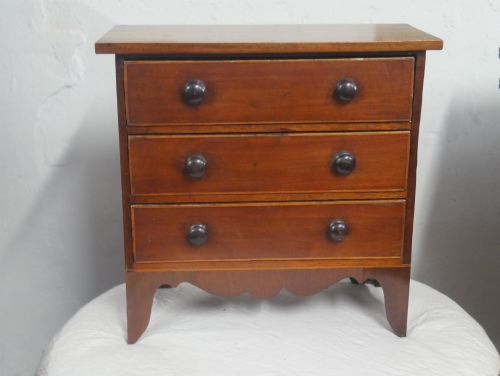
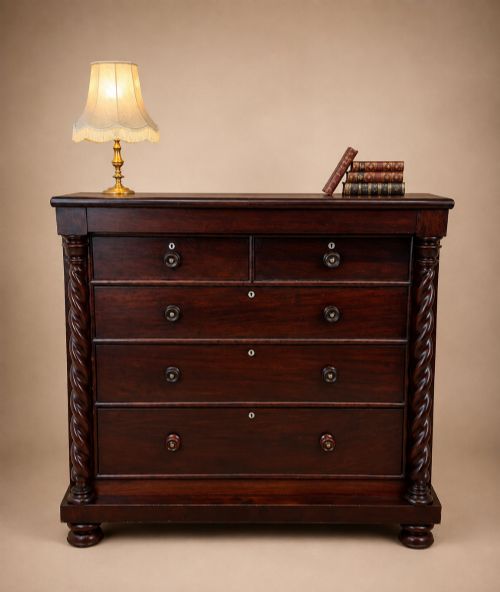
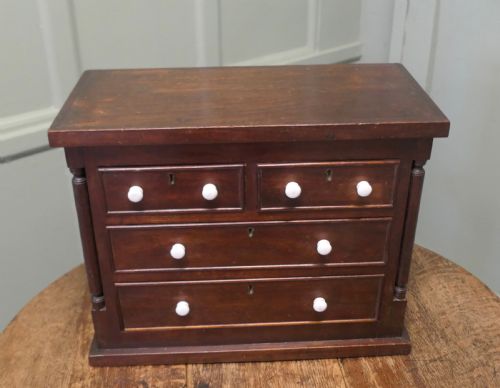
Construction details incorporate turned wood handles, boxwood stringing, and brass hardware. Certain regional variations utilise bobbin turned decorations and ogee profiles to accent the facade.
Retail Price Guide 2026
Typical UK retail prices for scottish mahogany chest, calculated from the Sellingantiques database of over a million retail prices indexed since 2003. This retail price guide relies exclusively on Sellingantiques data; no external sources or auction records are used, so the figures do not describe the wider market.
Certain grand nineteenth-century editions stretch to eight drawers, providing ample storage for the dedicated collector.
Distinctions in Execution
Quality rests upon the selection of the mahogany veneer and how symmetrically the flame grain is matched across the drawer fronts. Finer examples display superior timber selection with intense figuring and carefully balanced patterns.
The integration of structural elements such as bobbin turned columns, crisp ogee mouldings, and well-fitted drawer box construction separates standard utility pieces from masterwork productions.
Francis and William Deacon Brodie·William Deans of Melrose
The Scottish Mahogany Chest Glossary
- Flame Mahogany
- A veneer cut from the fork of the mahogany tree to create a distinctive flame-like pattern. This timber figuring defines the aesthetic of high-end nineteenth-century furniture.
- Ogee
- An S-shaped double curve profile used in mouldings and drawer framing. Scottish cabinet makers frequently applied this contour to the top drawer frame.
- Bobbin Turned
- A decorative turning technique resembling a string of bobbins or spools. This style appears on the stiles and columns of Victorian Scottish chests.
- Fiddle Back
- A figured wood grain displaying fine cross-ripples that resemble the back of a violin. It results from undulating wood fibres within the mahogany tree.
- Cushion Drawer
- A rounded, protruding top drawer projecting beyond the main carcass plane. It serves as a signature feature on many regional Scotch chests.
Frequently Asked Questions
How do I identify a Scottish chest?
Look for distinct regional proportions, including tall configurations with deep top cushion drawers and heavy ogee mouldings.
Cabinet makers in Scotland frequently utilised flame mahogany veneers and turned wood handles that differ from standard English furniture designs.
What periods do these chests date from?
The available evidence records pieces spanning the eighteenth century through the nineteenth century.
Victorian examples dominate the listings, alongside earlier George III and Regency period items.
What timbers were used?
Primary surfaces feature solid mahogany, flame mahogany veneer, and fiddle back grain.
Internal construction and secondary elements incorporate pine, boxwood for stringing, and turned wood or brass for handles.
How should I place one in a room?
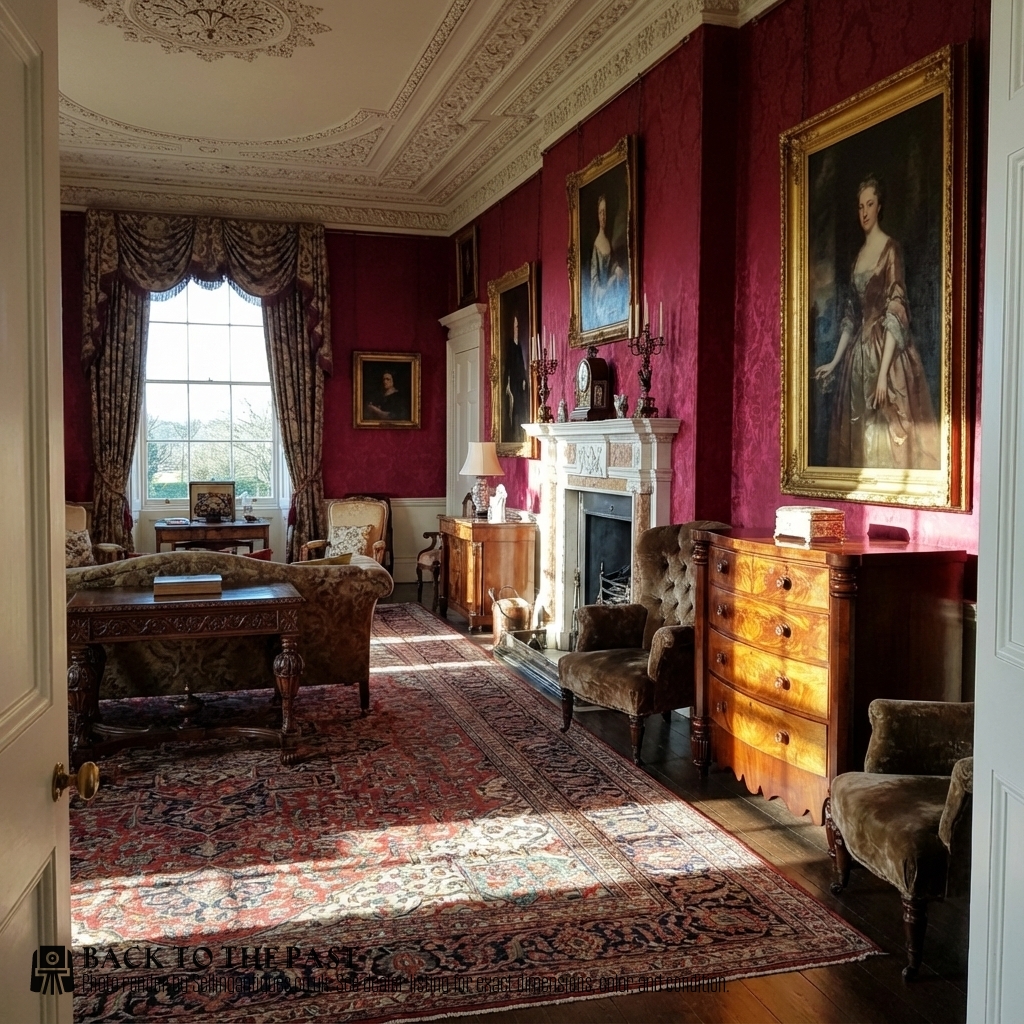
Due to their substantial height and depth, these chests function well as anchor pieces in spacious bedrooms or hallways.
Their striking grain patterns allow them to stand alone against plain walls without requiring competing decoration.