
Mahogany Bow Front Dresser
A mahogany bow front dresser combines curved timber with generous storage, bringing practical elegance and period character to any room.

Mahogany Bow Front Dresser
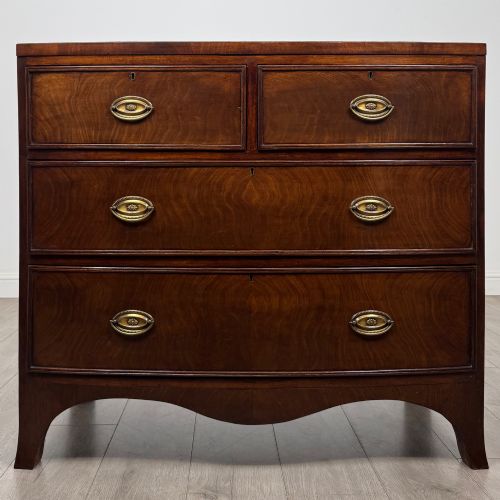
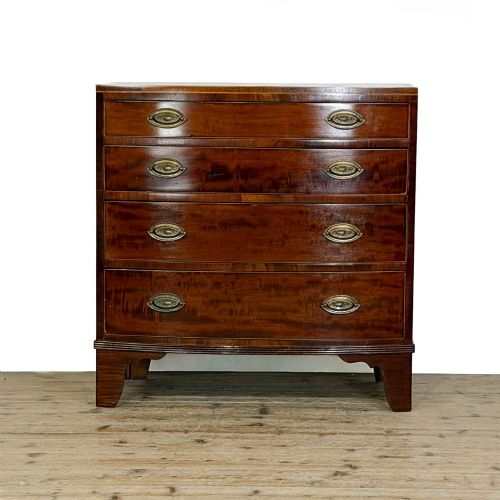
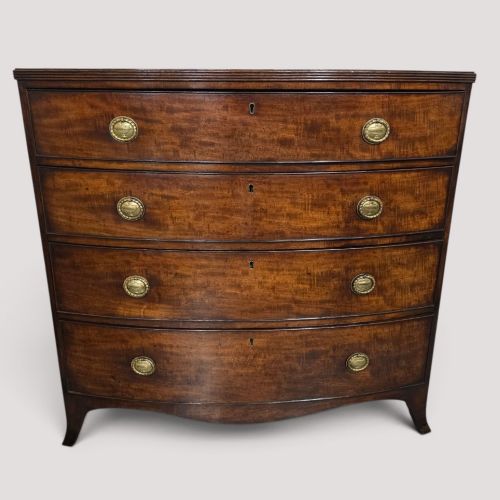
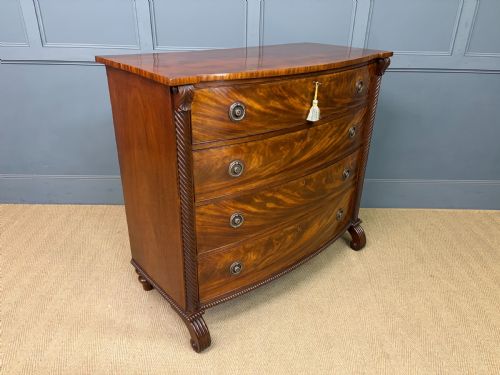
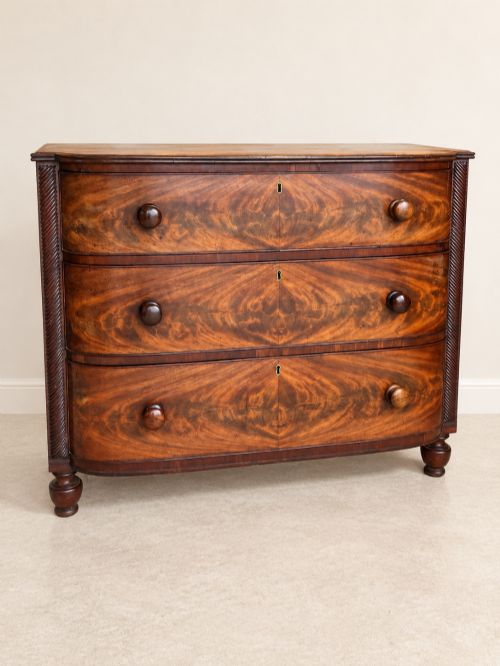
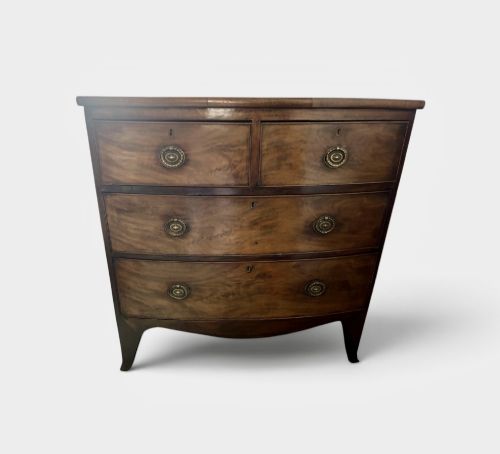
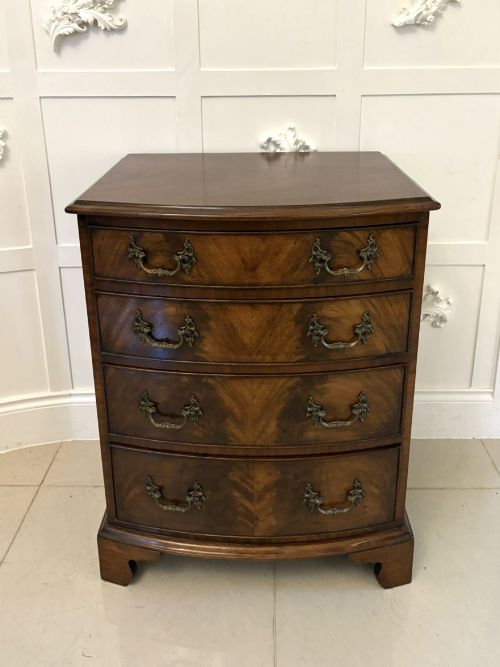
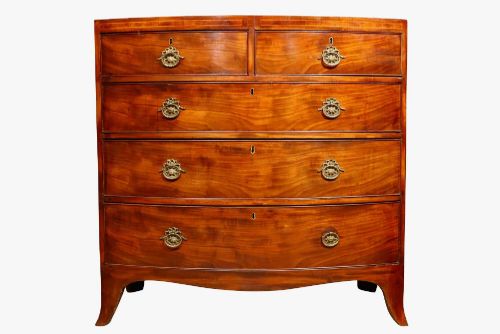
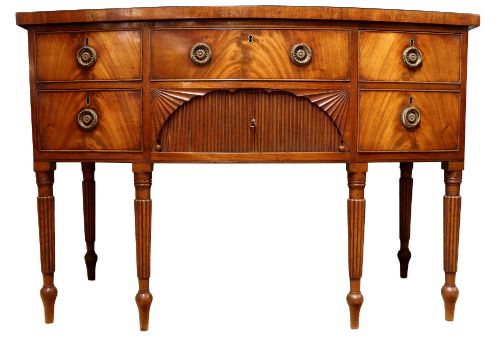
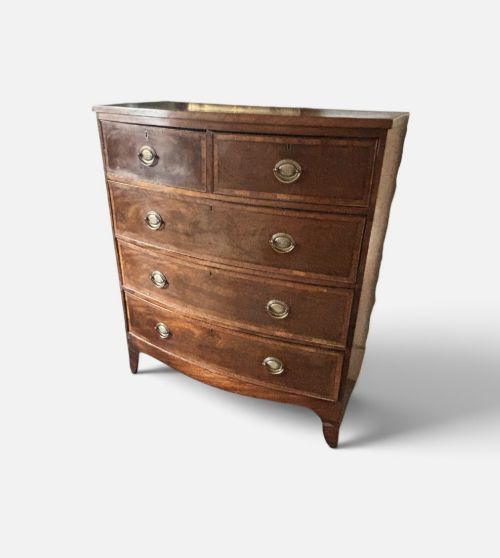
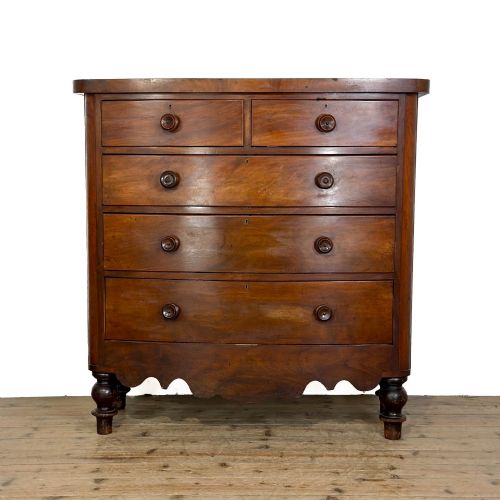
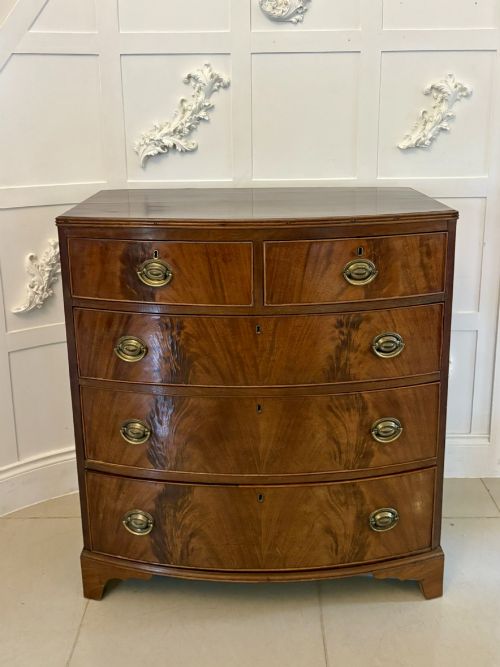
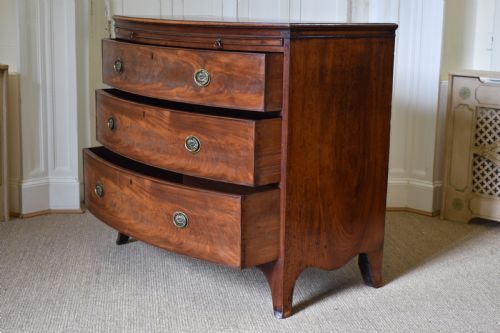
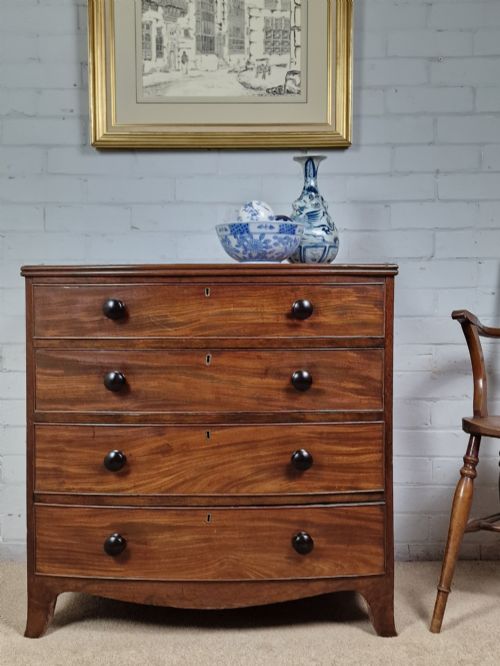
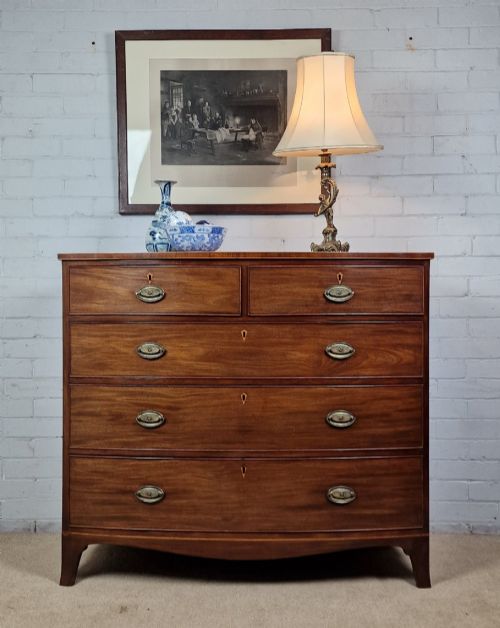
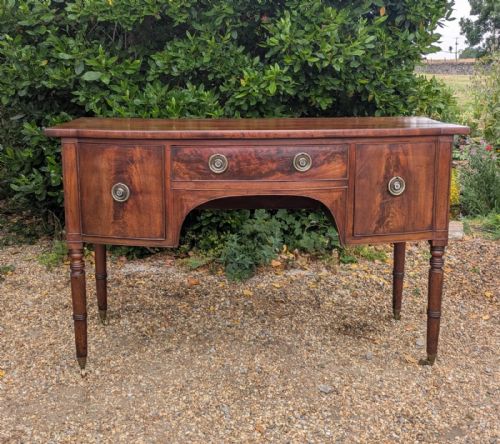
A mahogany bow front dresser typically appears as a chest of drawers or a sideboard shaped with a curved, convex front. These pieces emerge predominantly from the Georgian, Regency and Victorian periods, alongside later 20th-century adaptations.
The chest of drawers form dominates the selection, ranging from small compact examples to taller four or five-drawer configurations. Sideboards and chiffonier dresser bases also appear, offering alternative storage arrangements within the same curved silhouette.
Materials and construction
Cabinet makers utilised solid mahogany and flame mahogany veneer applied over secondary woods such as pine. Crossbanding in contrasting timbers like satinwood frequently frames the drawer fronts.
Brass handles and escutcheons accent the timber, while specialised construction techniques allowed craftsmen to curve the drawer frames and carcases smoothly.
Mahogany Bow Front Dresser Retail Price Guide 2026
Typical asking prices for mahogany bow front dresser among the pieces listed under this phrase on Sellingantiques today, from the lower quarter to the upper quarter. They describe what is for sale here now, not the wider market.
Some Welsh pieces conceal a secret drawer, offering a hidden compartment originally designed to outwit wandering eyes.
Assessing the execution
Quality rests upon the selection of timber grain, particularly the vibrancy of flame mahogany and the precision of satinwood crossbanding. Subtle details such as hand-cut dovetails and well-figured wood elevate an item significantly.
Proportion and execution of the curved front dictate the visual success of the piece. Superior examples maintain crisp lines and smooth drawer operation despite the complex curved geometry.
The Mahogany Bow Front Dresser Glossary
- Bow front
- A convex curved cabinet front that projects outward in an arc. This design softens the room visually while increasing interior drawer capacity.
- Flame mahogany
- A highly figured wood veneer displaying flickering, flame-like patterns. Cabinet makers selected this decorative grain for prominent drawer surfaces.
- Crossbanding
- A narrow strip of veneer applied perpendicular to the surrounding grain. It creates a contrasting border around drawer edges and tabletops.
- Graduated drawers
- A set of drawers decreasing in depth from bottom to top. This arrangement maintains visual balance on chests of drawers.
- Secret drawer
- A concealed compartment built into the carcase structure. Craftsmen used these hidden spaces to secure valuables.
Mahogany Bow Front Dresser: Frequently Asked Questions
Where do I put a bow front chest?
These pieces fit well in bedrooms, hallways or living rooms where a curved profile prevents sharp corners in tight spaces.
Their substantial top surfaces also serve effectively for displaying lamps, mirrors or decorative objects.
How do I date a mahogany piece?
Dating relies on examining the construction methods, hardware types and wood patination visible across the piece.
Georgian and Regency items display hand-cut joinery and specific timber treatments distinct from later Victorian or Edwardian manufacturing.
Are these drawers suitable for daily use?
Solid construction and traditional timber runners allow these drawers to function reliably for modern storage needs.
Careful maintenance of the interior wood keeps the sliding mechanism smooth over decades of regular opening.
What is the difference between a chest and a sideboard?
A chest of drawers focuses primarily on stacked drawer storage for clothing or linens within a compact footprint.
Sideboards offer wider surfaces and lower profiles historically designed for dining rooms to store serving items.