


George III Buffet
When you search for a george iii buffet, you are looking at substantial dining furniture designed for serving food and displaying silver during the Georgian period.
George III Buffet
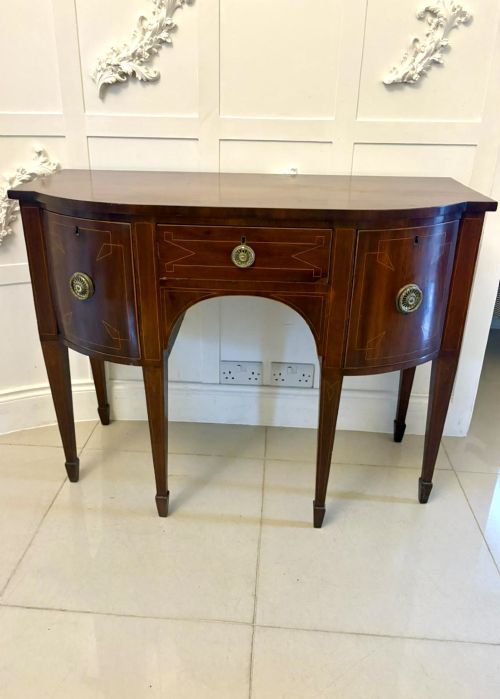
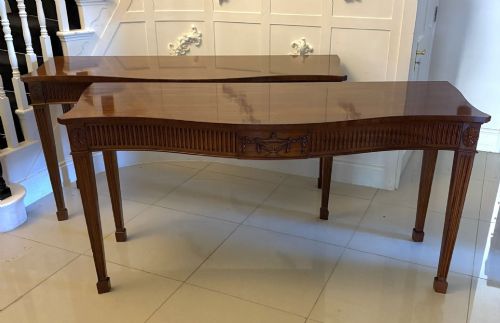
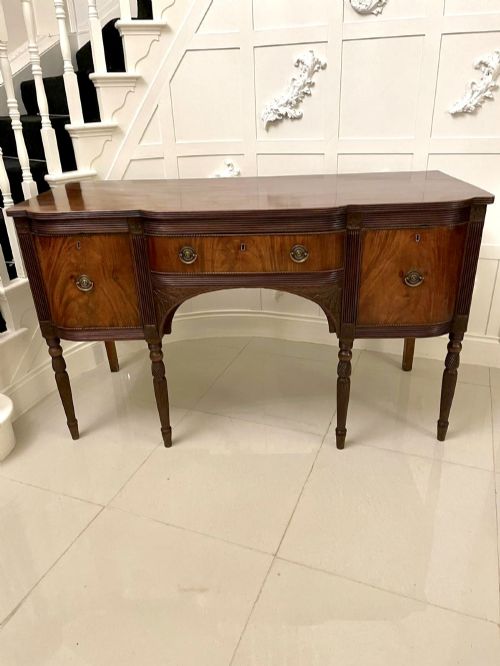
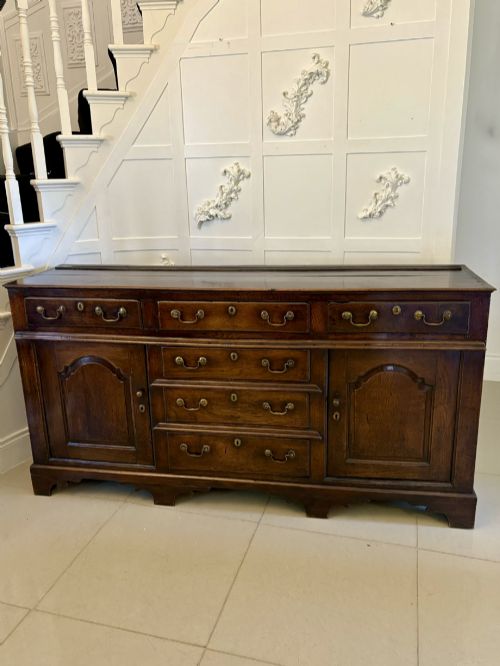
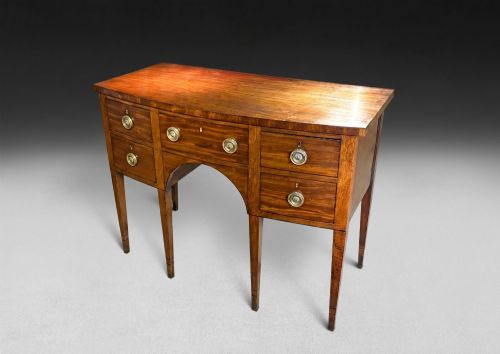
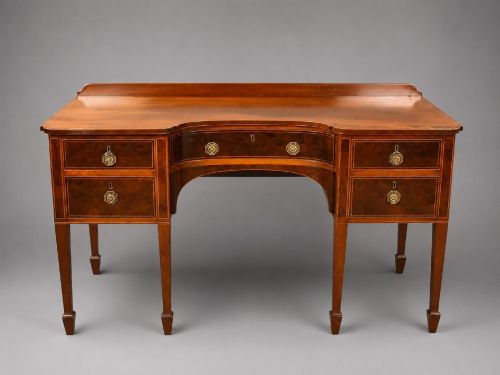
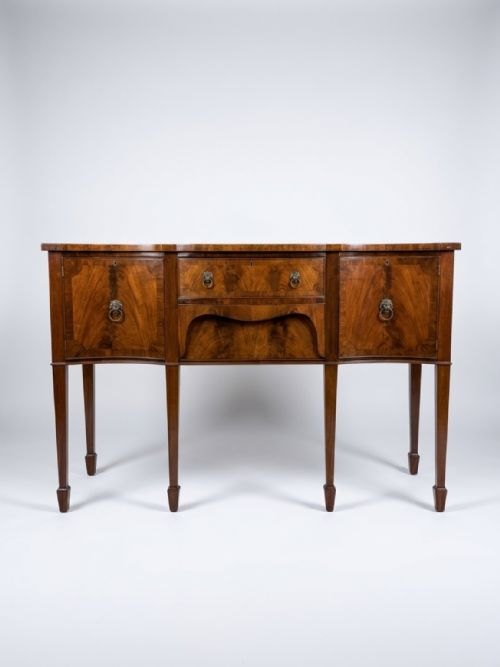
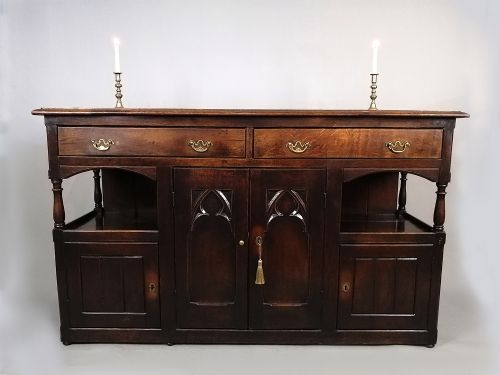
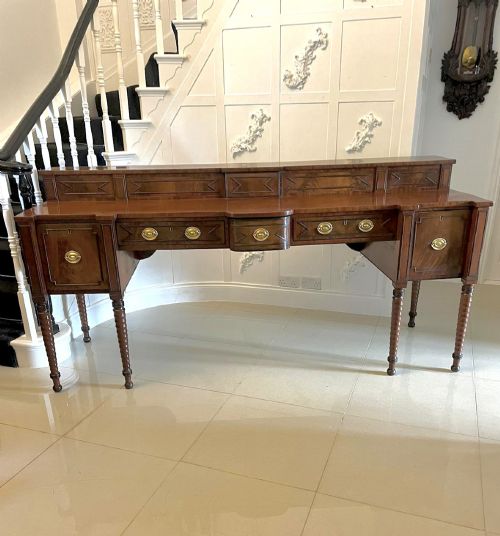
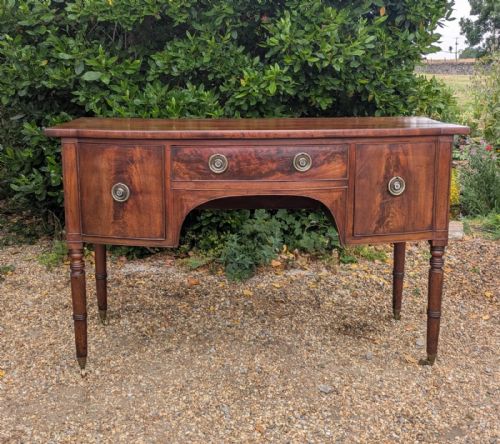
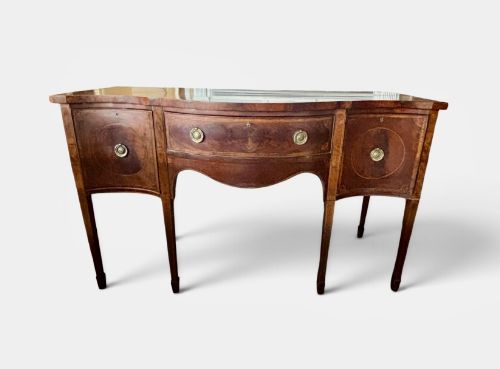
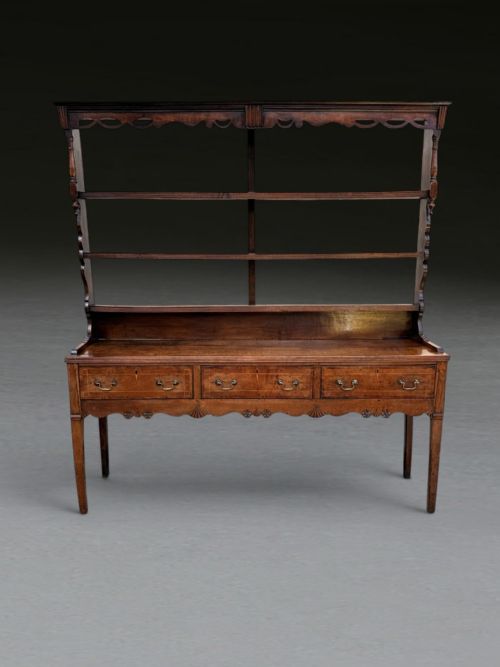
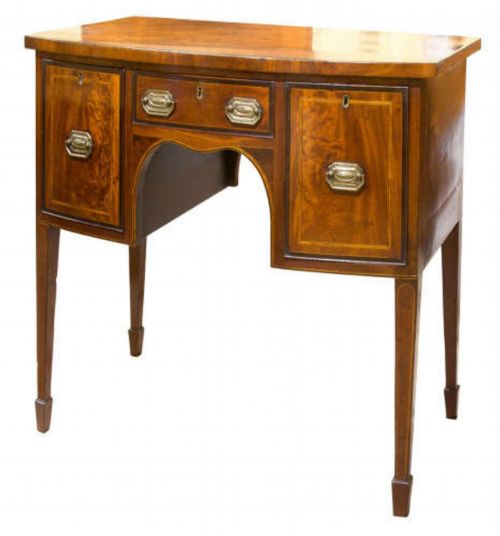
When looking for a george iii buffet, you encounter serving tables, sideboards, and potboard dresser bases that date from the eighteenth century or follow its classical lines. The most common form on this page is the mahogany sideboard, often shaped with a serpentine or bow front.
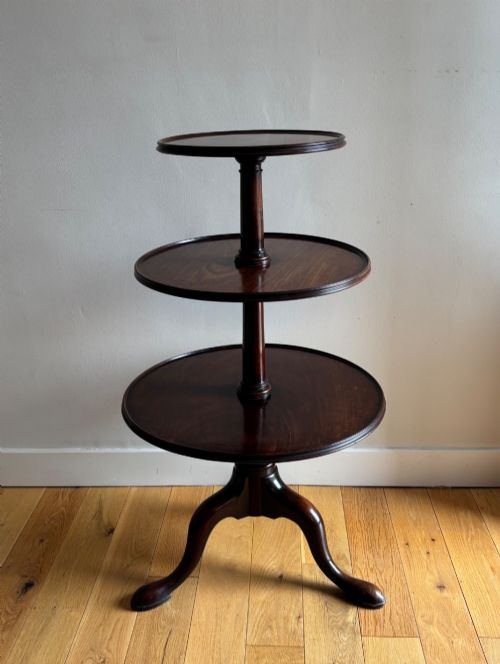
These items originate from the Georgian era, spanning the eighteenth century alongside later revivals from the nineteenth and twentieth centuries. Alongside sideboards, the selection includes tiered dumb waiters and console tables intended for dining room service.
How they were made
Cabinetmakers constructed the primary carcases of these pieces using solid mahogany, oak, or fruitwood, frequently applying flame mahogany veneer to large surfaces. Workshops enhanced the visual depth of the timber through contrasting stringing and banding in satinwood, boxwood, and purpleheart.
Decoration relied on fine woodworking techniques rather than heavy relief, incorporating boxwood inlay, neoclassical carving, and marquetry details. Brass handles and fittings provided functional contrast to the dark polished wood.
Lord Leverhulme's own serving table sits among the selections, carrying centuries of dining history within its polished timber top.
What varies in quality
The distinction between standard and superior pieces rests on the choice of timber and the precision of the cabinetwork. Grain selection in the flame mahogany veneer and the crispness of the boxwood inlay dictate the visual standing of a sideboard.
Proportion and line separate ordinary items from the finest examples, particularly in serpentine and bow-fronted designs where curved drawers require expert joinery. Original brass hardware and untouched secondary woods further elevate the stature of a piece.
The George III Buffet Glossary
- Serpentine
- A front line or surface that curves outward in the centre and inward at the ends, creating a flowing undulating shape common on high-status sideboards.
- Bow front
- A convex curved front projecting outward in a simple arc, frequently utilised on smaller sideboards and serving tables to soften room angles.
- Dumb waiter
- A freestanding tiered revolving table with graduating circular trays supported on a central pillar and tripod base, used for passing food without servants.
- Potboard
- A lower open shelf built into the base of an oak dresser or serving table, originally intended for storing pots and heavy kitchen utensils.
- Marquetry
- Decorative patterns formed by fitting together small pieces of tinted woods, veneers, and shell to create elaborate pictorial designs on cabinet surfaces.
George III Buffet: Frequently Asked Questions
What is the difference between a sideboard and a buffet?
A buffet generally refers to a serving surface designed specifically for laying out food during meals, whereas a sideboard often includes enclosed cupboards and drawer space for storing cutlery and linen.
In eighteenth-century usage, the terms overlap considerably, and many pieces described as buffets share identical forms with serving tables and sideboards.
How do I spot a later revival piece?
Nineteenth and twentieth-century revival pieces often display machine-sawn timber uniformity and secondary woods like pine or plywood inside drawer linings where eighteenth-century makers utilised oak or mahogany.
Examine the construction methods of the drawer joints and the internal timber ageing to determine whether a piece dates to the Georgian period or a later revival.
Where should I place a serving table in a modern home?
These long serving tables suit dining rooms, wide hallways, or living spaces where their shallow depth allows them to sit flush against a wall without obstructing movement.
They function effectively as display surfaces for lamps and ceramics, or as serving stations during dinner parties just as they did in the eighteenth century.
What maintenance do these mahogany pieces need?
Keep mahogany furniture away from direct heat sources and strong sunlight to prevent the timber veneers from drying out, shrinking, or fading over time.
Apply a traditional beeswax polish occasionally and buff with a soft cloth to nourish the wood and maintain its natural lustre without building up sticky residues.