
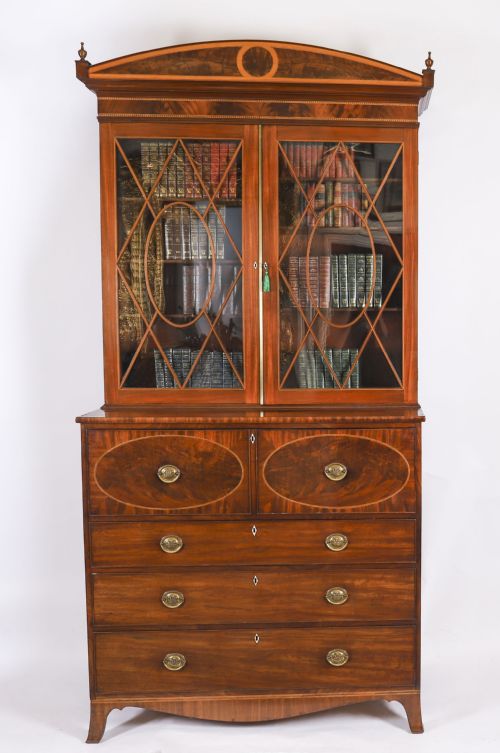
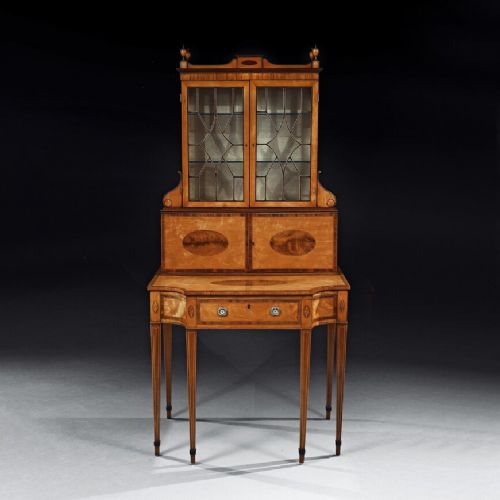
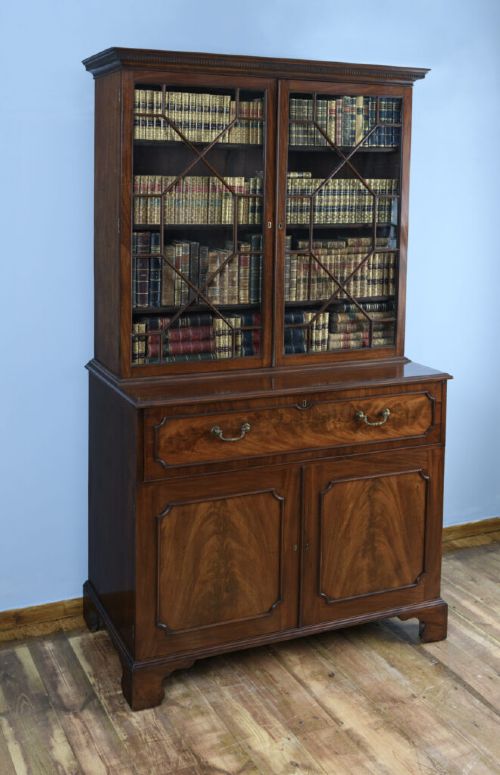

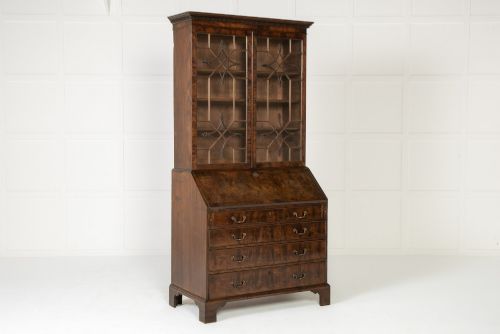


George III Secretaire Bookcase
A george iii secretaire bookcase combines a glazed display upper section with a fitted writing drawer, serving both library and study needs.
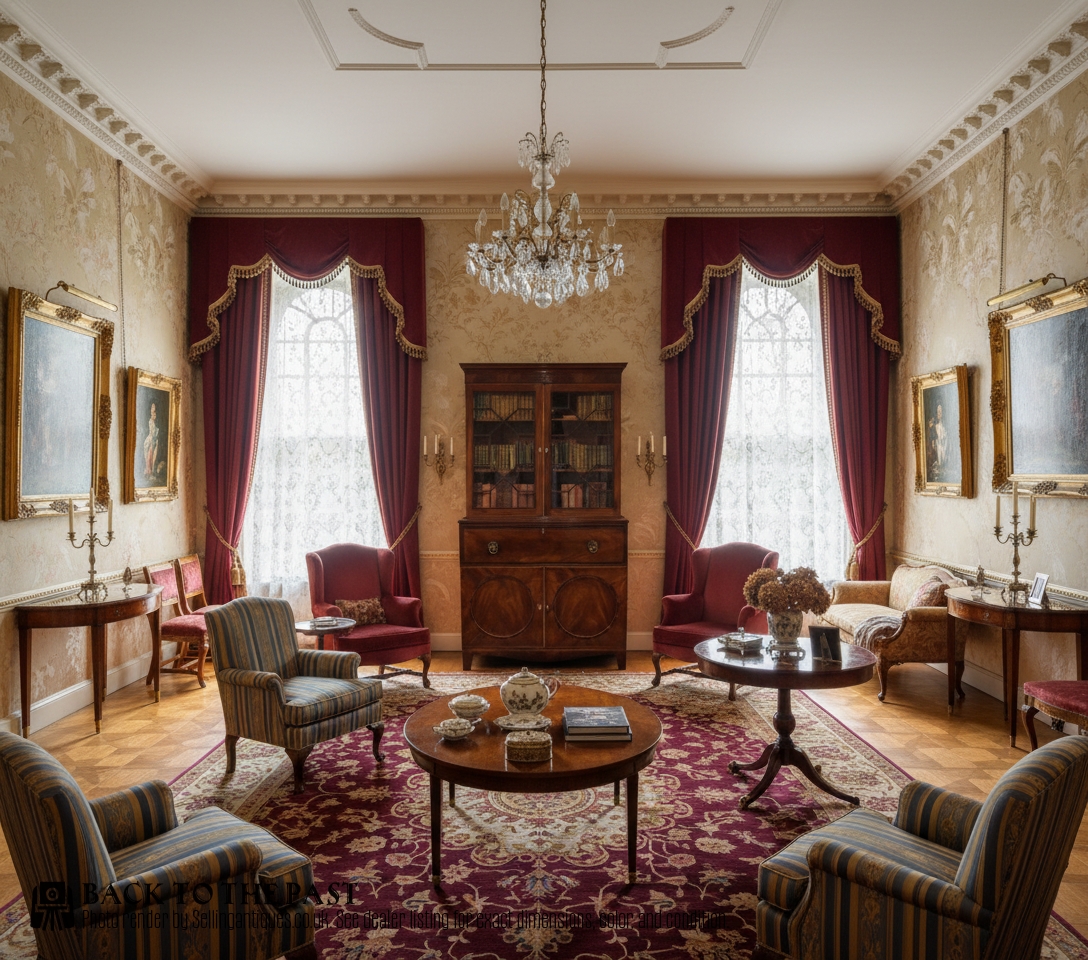
George III Secretaire Bookcase
A george iii secretaire bookcase unites a glazed upper cabinet for books with a lower section containing a pull-down writing drawer fitted with small internal compartments. The most frequent examples found in these records date from the Georgian and eighteenth-century periods, constructed primarily as tall cabinet furniture.
Makers utilised various formats, including breakfront designs, low press cupboards, and serpentine configurations, alongside standard upright library bookcases. Walnut, satinwood, and sabicu appear alongside the predominant timber forms, which often feature inlaid flame mahogany veneer.
These pieces served upper-class domestic libraries and studies, functioning simultaneously as a repository for volumes and a concealed desk for correspondence. The drop-front drawer conceals pigeonholes and small drawers behind its fall, maintaining a tidy exterior when not in use.
How They Were Made
Cabinet makers built the primary carcass and doors using solid mahogany and flame mahogany veneers, frequently incorporating boxwood stringing and contrasting timbers such as satinwood, purple heart, and sabicu. Glass panes in the upper doors were held within wooden glazing bars, often arranged in astragal patterns to divide the light.
Brass hardware, including handles, escutcheons, and hinges, secured doors and drawers, while leather inserts provided a suitable writing surface inside the fall-front secretaire drawer. Secondary woods formed the internal drawer linings, and swan neck pediments frequently crowned the upper cornice.
George III Secretaire Bookcase Retail Price Guide 2026
Typical asking prices for george iii secretaire bookcase among the pieces listed under this phrase on Sellingantiques today, from the lower quarter to the upper quarter. They describe what is for sale here now, not the wider market.
Listings feature mahogany, satinwood, sabicu, and walnut, alongside flame mahogany veneer and brass hardware.
What Varies in Quality
The choice of timber grain dictates much of the visual merit, with heavily figured flame mahogany and balanced satinwood veneers marking superior examples over plain stock. The intricacy of internal joinery within the secretaire drawer, such as secret compartments and finely dovetailed pigeonholes, separates standard workshop production from finer cabinet work.
Proportions and architectural detailing, including the execution of swan neck pediments, breakfront configurations, and fine brass inlay, distinguish grander library pieces from simpler utilitarian writing cabinets. Original glass and undisturbed brasses contribute further to the integrity of a piece.
Gillows
The George III Secretaire Bookcase Glossary
- Secretaire
- A writing drawer with a drop-front that conceals internal compartments and pigeonholes. It allows the cabinet to function as a desk without sacrificing storage space.
- Astragal glazed
- Glass doors divided into smaller panes by narrow wooden glazing bars. This framing style lightened the appearance of large upper library sections.
- Flame mahogany
- Timber cut from the fork of the mahogany tree to produce a distinctive rippling, flame-like grain pattern. Cabinet makers used veneer sheets of this wood on primary surfaces.
- Breakfront
- A piece of furniture where the central section projects forward from the flanking wings. This architectural arrangement added depth and presence to large bookcases.
- Swan neck pediment
- A broken scroll pediment curving upward and inward from the corners toward a central finial or plinth. It provides an ornamental crown to the top of tall cabinets.
George III Secretaire Bookcase: Frequently Asked Questions
What is a george iii secretaire bookcase?
A george iii secretaire bookcase is a tall cabinet featuring glazed doors above and a pull-down writing drawer concealing small compartments below. It combines display space for books with a concealed workspace for letters and accounts.
Most surviving examples date from the Georgian era, constructed in mahogany with fitted desk interiors. They served as dual-purpose furniture for domestic libraries and studies.
How do you use the secretaire drawer?
The front of the top large drawer pulls down on hinges to form a horizontal writing surface. Inside, small drawers, pigeonholes, and sometimes hidden compartments keep writing materials organised.
When closed, the drawer locks or fastens to look like a standard chest drawer, keeping the desk contents out of sight. This mechanism provides a writing desk without requiring a separate piece of furniture.
Where were these bookcases placed?
These cabinets stood principally in libraries, drawing rooms, and studies of substantial Georgian houses. Their height and capacity made them permanent wall fixtures rather than movable pieces.
The upper glass doors allowed owners to display leather-bound volumes while protecting them from dust, while the lower cupboards provided enclosed storage for additional papers or household goods.
What woods were used?
Mahogany forms the primary structure of most examples, frequently enhanced by figured flame mahogany veneer across the drawer fronts and doors. Cabinet makers also incorporated satinwood, sabicu, walnut, and purple heart.
Inlays of boxwood and stringing added fine linear detail to the carcase edges and cornices. Secondary timbers like oak or pine lined the interior drawers.