
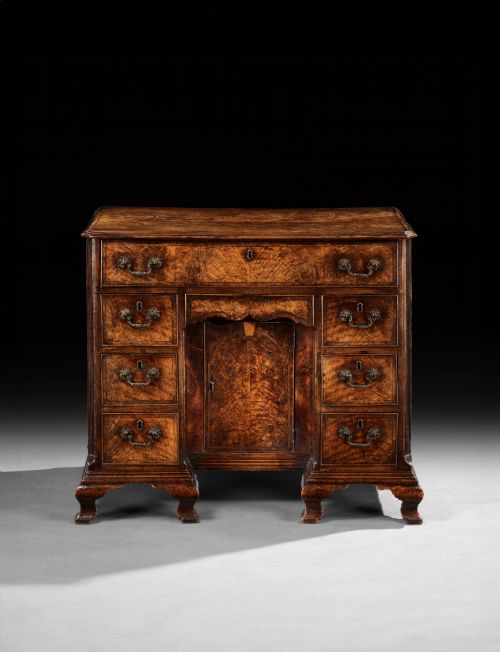
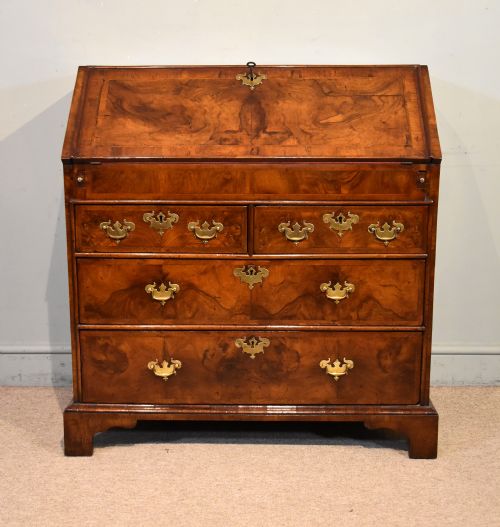


George II Bureau Desk
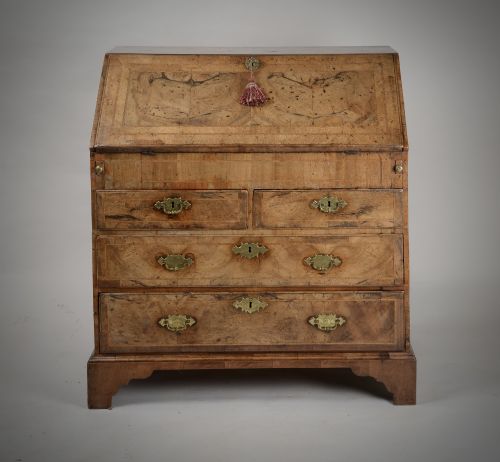
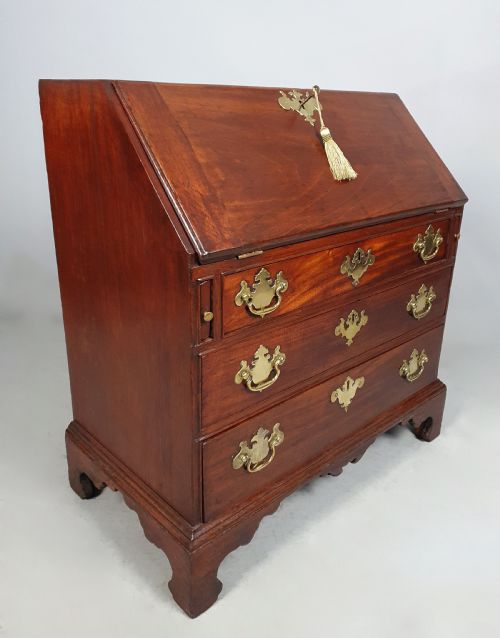
A george ii bureau desk offers fitted writing compartments and concealed drawers housed in walnut, mahogany, or oak.
George II Bureau Desk
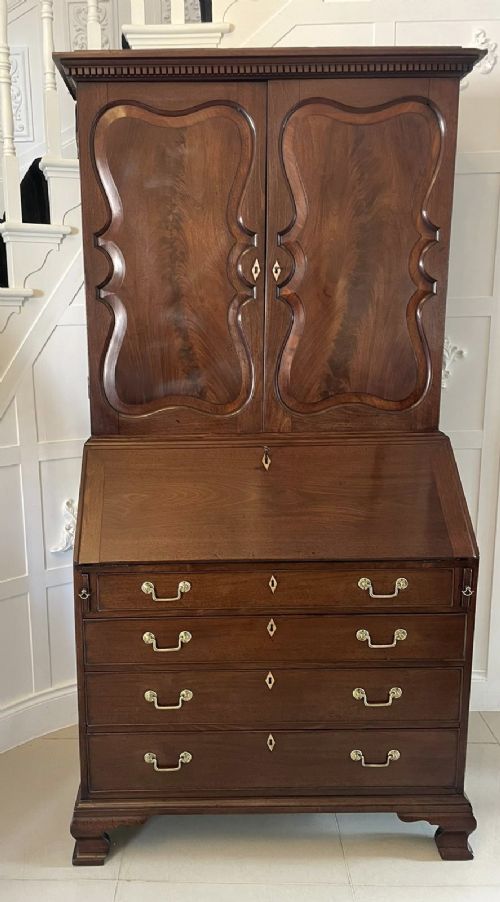
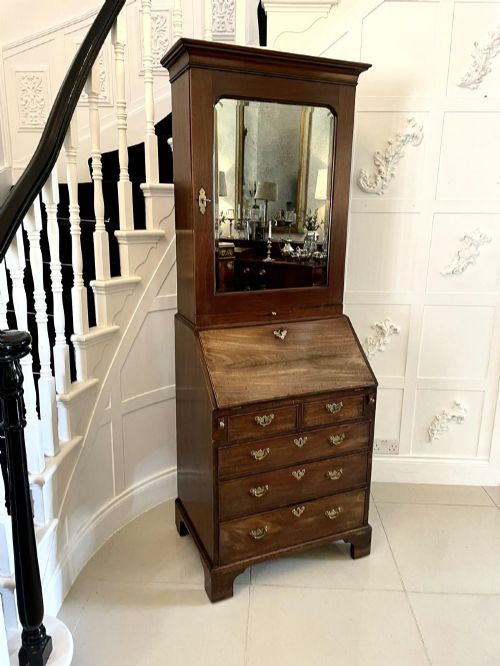
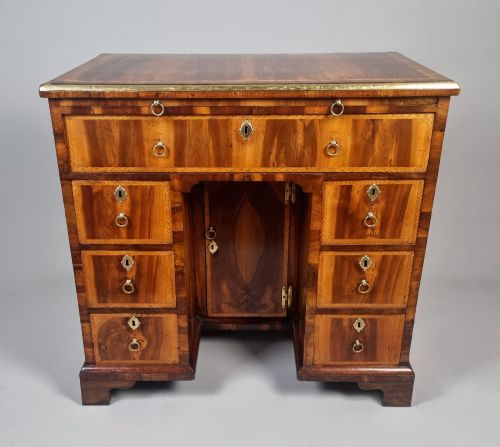
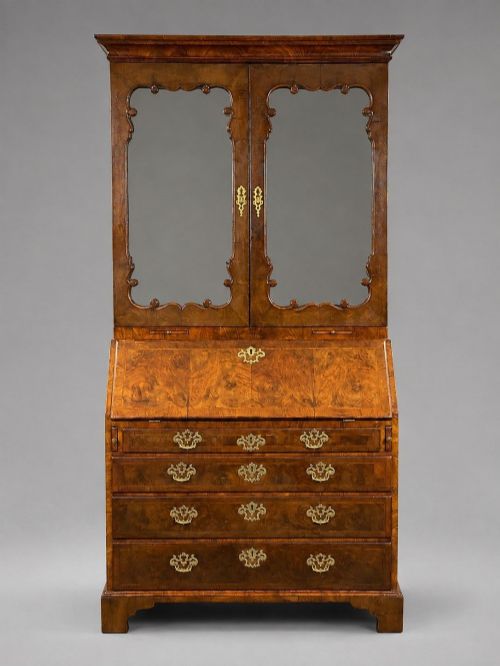
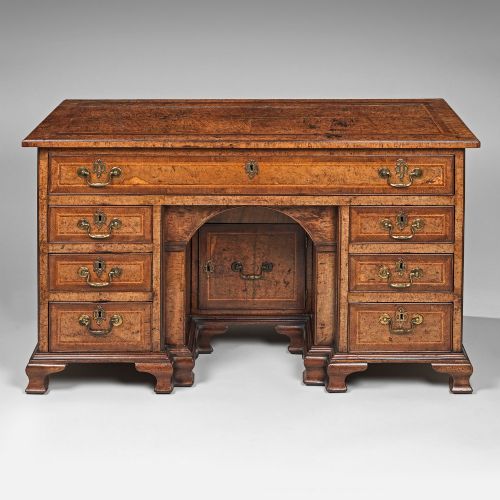
A george ii bureau desk bridges the transition from simple writing furniture to sophisticated domestic cabinetry of the eighteenth century. You will encounter tall bureau bookcases with glazed upper cabinets alongside compact writing chests and kneehole desks designed for domestic chambers.
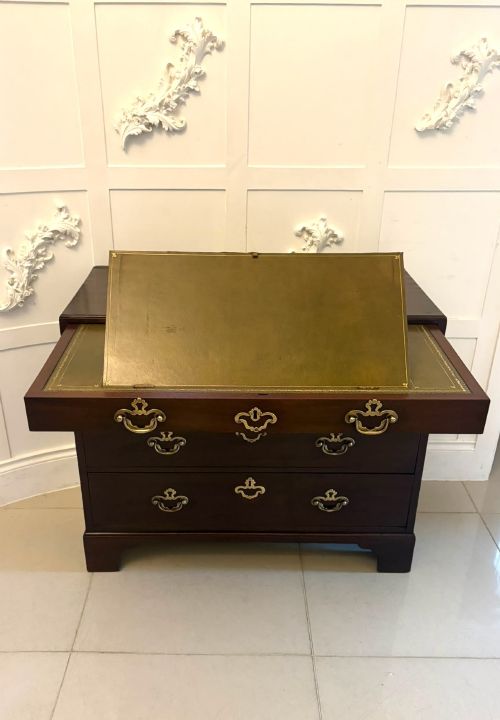
The selection spans walnut, mahogany, and oak forms, often incorporating fitted interiors with pigeonholes and secret compartments behind a fall-front writing slope.
Materials and Construction
Cabinetmakers utilised figured timbers including burr walnut, fiddleback walnut, and Cuban mahogany, laid as veneers over secondary woods or constructed in solid planks. Featherbanding and crossbanding frequently accent drawer fronts and writing flaps.
Brass drop handles, escutcheons, and original carrying or drawer brasses secure the operational components, whilst dovetail joints bind the interior drawer construction.
Listings feature eighteenth-century pieces constructed from walnut, mahogany, oak, yew, fruitwood, and elm.
Assessing Excellence
The distinction between tiers rests upon the selection of timber figure, the crispness of internal drawer configuration, and the retention of original surface patination. Grain continuity across drawer fronts and the integrity of secondary woods signal superior workshops.
Proportion dictates value, with diminutive or narrow examples commanding greater attention than standard proportions, particularly when retaining original brass hardware.
Giles Grendey·Edwards and Roberts·Robert Gillows II
The George II Bureau Desk Glossary
- Bureau
- A writing cabinet featuring a hinged sloping flap that opens to reveal a fitted interior of small drawers and pigeonholes.
- Kneehole desk
- A compact desk form featuring a central recessed cupboard flanked by banks of small drawers beneath a writing surface.
- Featherbanding
- Decorative inlay work utilising small diagonal veneer segments arranged in a herringbone pattern around panel borders.
- Escutcheon
- A protective plate surrounding a keyhole, commonly cast in brass during this period.
- Secretaire
- A cabinet or chest incorporating a dedicated writing drawer or pull-out compartment.
George II Bureau Desk: Frequently Asked Questions
How do I identify a bureau desk?
A bureau desk relies upon a hinged fall-front writing flap that drops down to form a horizontal working surface.
Opening this flap exposes a collection of stationery compartments, pigeonholes, and small concealed drawers.
What woods were used for these desks?
Cabinetmakers worked predominantly with walnut, mahogany, and oak throughout the period.
Figured veneers such as burr walnut and fiddleback walnut appear alongside solid red walnut, cedarwood, and elm.
Where were these pieces placed?
These desks served private studies, bedrooms, and principal reception rooms for correspondence and estate management.
Their compact proportions allowed them to sit against parlour walls or within private chambers.
What is a kneehole desk?
A kneehole desk provides a recessed central opening for the user's legs beneath a flat writing top.
Banks of small drawers flank the recess on either side, often accompanied by a small cupboard door in the centre.