




Georgian Period Writing Bureau
A georgian period writing bureau provides a fitted drop-front desk surface alongside concealed compartments and drawers for correspondence.
Georgian Period Writing Bureau
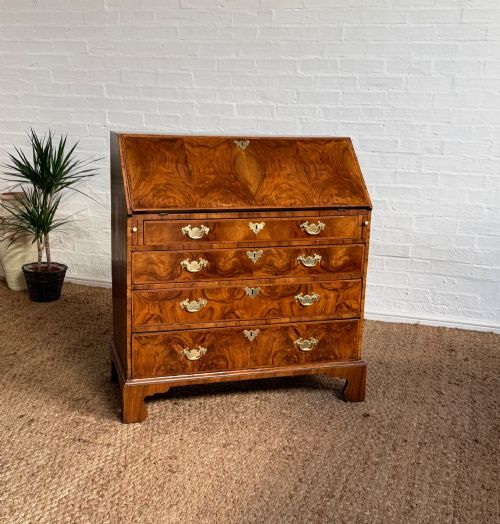
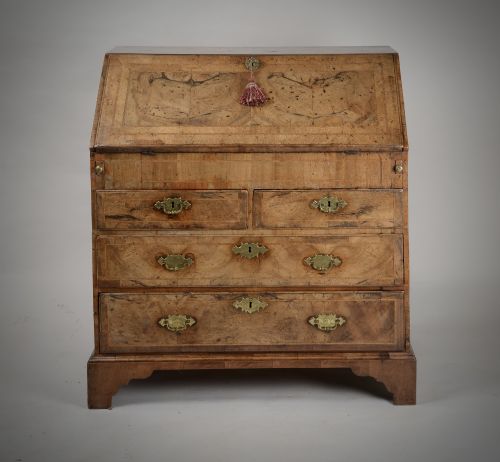
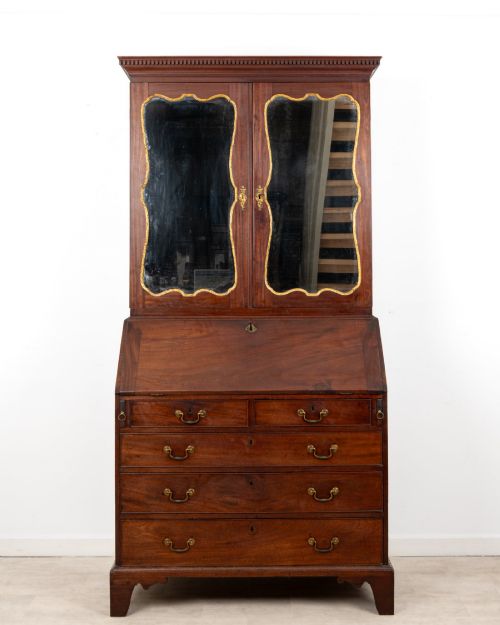
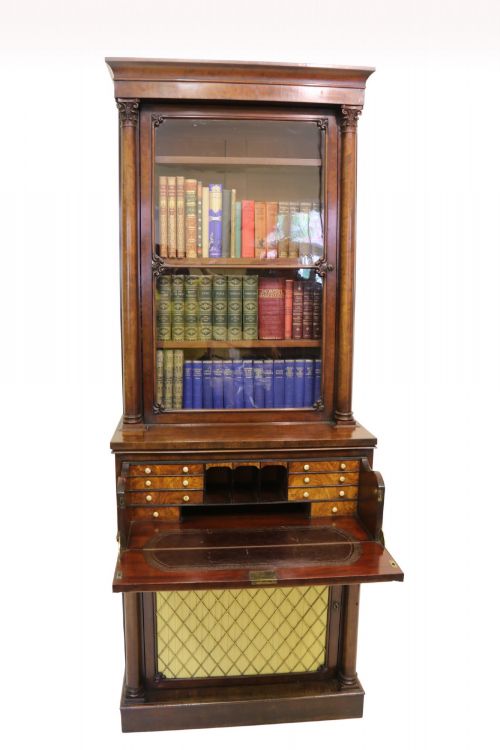
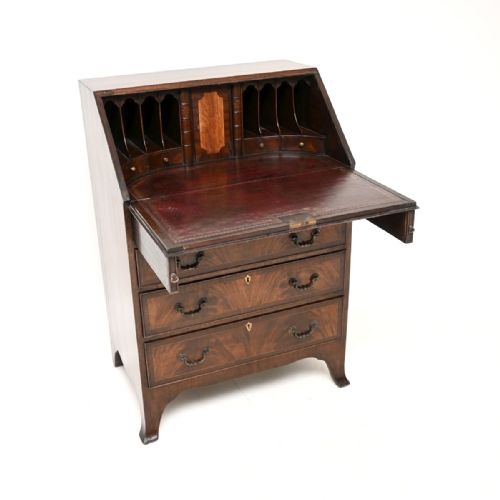
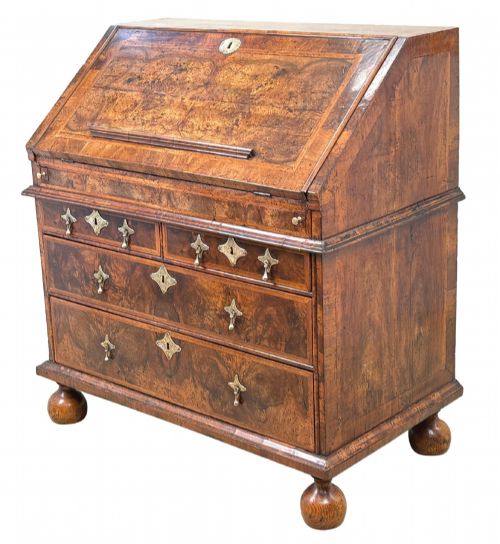
A georgian period writing bureau typically takes the form of a sloped fall-front desk enclosing pigeonholes and small drawers, often set above graduated lower drawers or mounted upon a stand. Examples span the eighteenth and early nineteenth centuries, encompassing reigns from Queen Anne through to the Regency era.
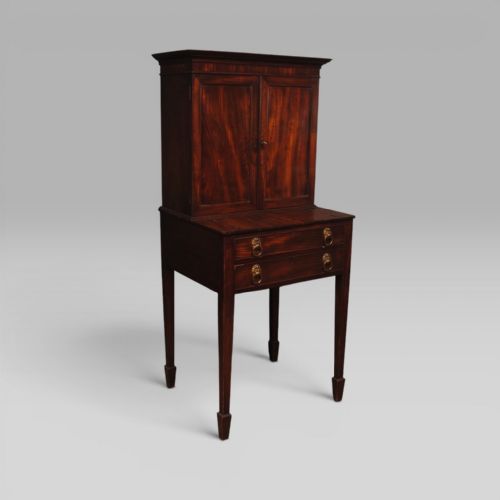
The selection ranges from compact oak and walnut specimens to large mahogany bureau bookcases and satinwood secretaire cabinets. Makers utilised diverse regional timbers and sophisticated cabinet-making techniques to construct these functional pieces for domestic studies and parlours.
How they were made
Cabinet-makers relied primarily on solid and veneered mahogany, walnut, and oak, frequently incorporating secondary woods like oak for drawer linings. Decorative surfaces often displayed figured grain patterns, complemented by banded inlays in satinwood and partridgewood.
Hardware played a functional and decorative role, with brass drop handles, escutcheons, and keyplates securing drawers and fall-fronts. Structural joints relied on traditional hand-cut dovetails, ensuring the longevity of carcases and internal compartments.
Secret spring-loaded catches inside the pigeonholes often release hidden document drawers for private correspondence.
What varies in quality
The sophistication of the internal fitments distinguishes standard examples from finer works, particularly where secret compartments, carved document wells, and miniature drawers demonstrate advanced carpentry. The choice of timber grain, such as burr walnut or figured mahogany, directly reflects the ambition of the original commission.
Proportion and decorative restraint dictate the visual success of each piece, from simple provincial oak desks to sophisticated satinwood bureau bookcases adorned with glazing bars and classical stringing.
Gillows of Lancaster·Giles Grendey
The Georgian Period Writing Bureau Glossary
- Fall-front
- A hinged panel that drops forward to provide a horizontal writing surface. It conceals the internal pigeonholes and small drawers when closed.
- Secretaire
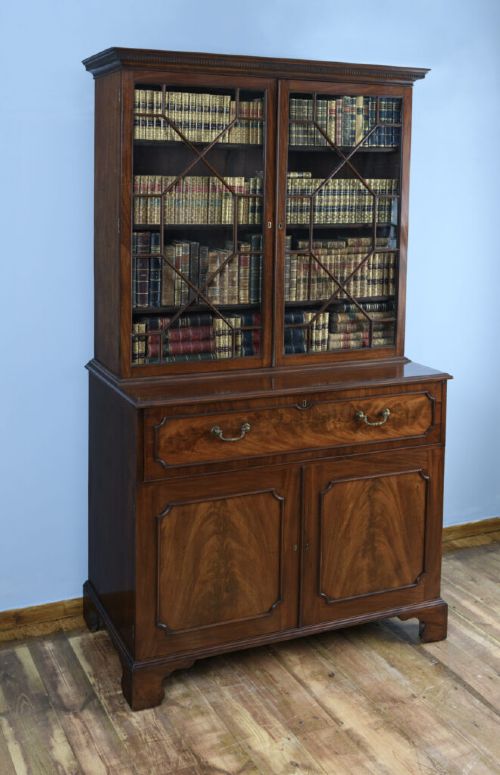
- A piece of furniture incorporating a writing drawer or pull-down desk compartment disguised as a standard chest of drawers or bookcase base.
- Kneehole desk
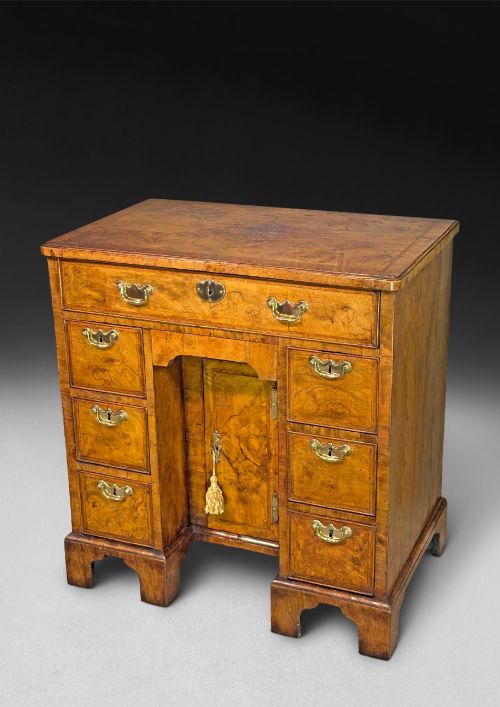
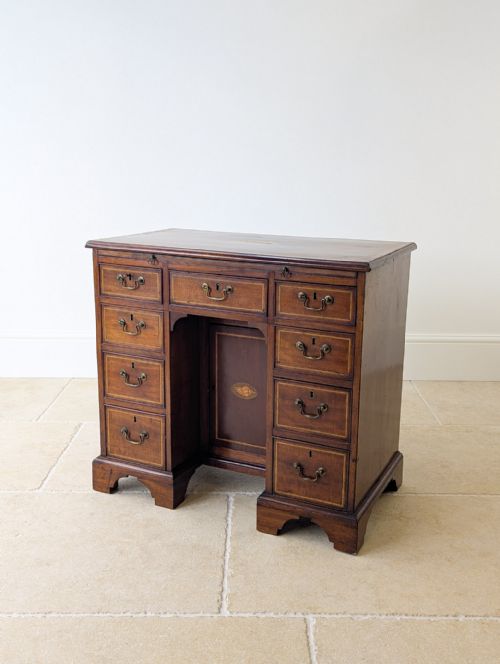
- A compact desk featuring a central recess for the user's legs, flanked by pedestals of small drawers. This form appeared frequently in walnut and mahogany during the eighteenth century.
- Bureau bookcase
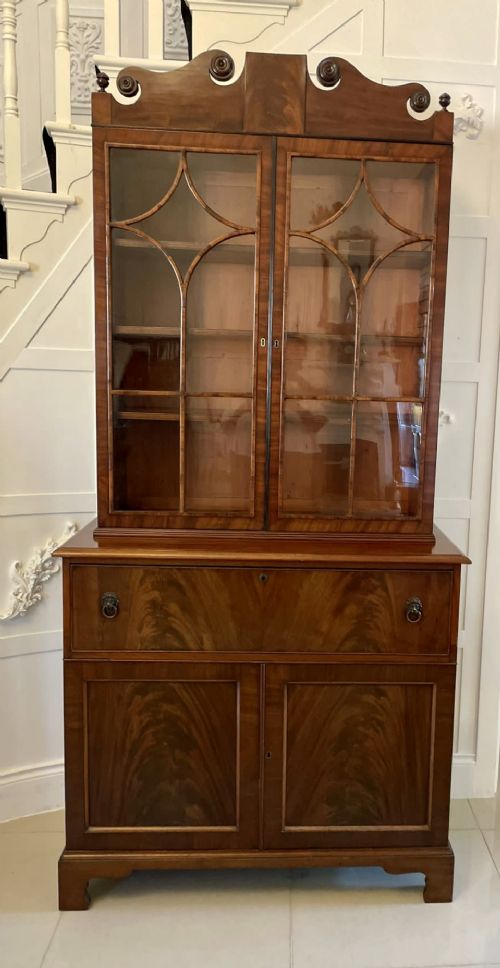
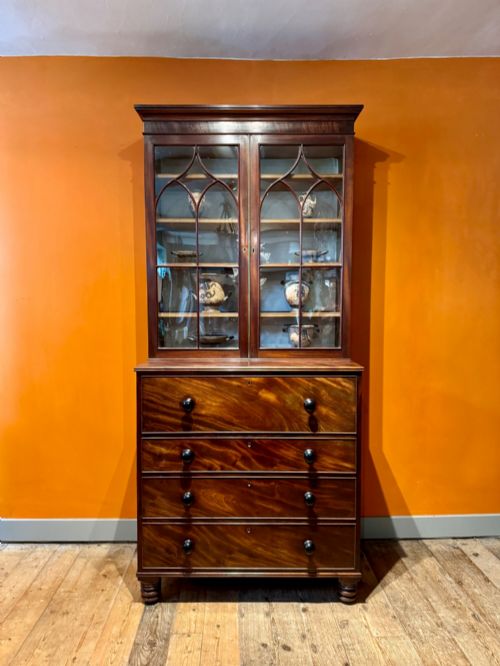
- A dual-purpose piece combining a sloping desk bureau base with an upper glazed or panelled cabinet for books. These structures dominated elite libraries and parlours.
- Pigeonhole
- A small, open compartment situated within the desk interior for sorting letters and documents. They form an integral part of the internal arrangement.
Georgian Period Writing Bureau: Frequently Asked Questions
What is a georgian period writing bureau?
A georgian period writing bureau is an enclosed desk featuring a sloping hinged lid that opens to reveal internal compartments for writing materials and letters.
Beneath the writing surface, these pieces typically provide multiple drawers for storage within a timber carcase.
How were these desks used?
Owners utilised the drop-front surface for drafting letters, managing household accounts, and recording personal journals. The internal pigeonholes kept stationery organised while lockable falls secured private documents.
Larger bureau bookcases combined this writing facility with upper shelving for the display and storage of bound volumes.
How do I identify different timber periods?
Early eighteenth-century examples frequently employ walnut veneer over oak carcases, often displaying rich figuring and cross-banding. Mahogany largely succeeded walnut from the mid-eighteenth century onward under George III.
Late periods introduced lighter exotic woods like satinwood and partridgewood, accompanied by delicate neoclassical stringing and painted details.
Where should I place a bureau?
A bureau suits studies, living rooms, and bedrooms where its compact footprint allows it to function as both a decorative cabinet and a working desk. Adequate clearance must be left in front to allow the fall-front to drop down fully.
Keeping timber furniture away from direct heat sources prevents the wood and veneers from drying out or splitting.