


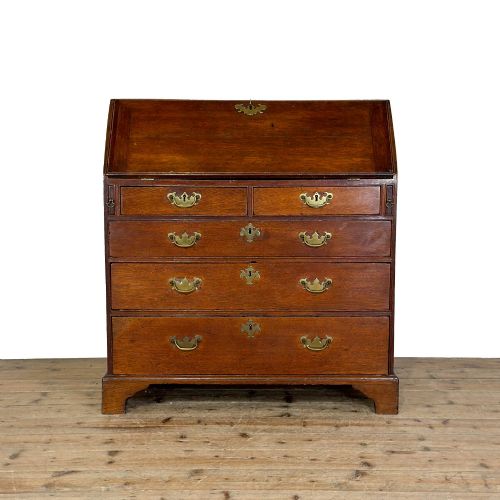
Antique Cabinet with Slant Front
An antique cabinet with slant front provides a practical writing surface that conceals your papers when closed.
Antique Cabinet with Slant Front
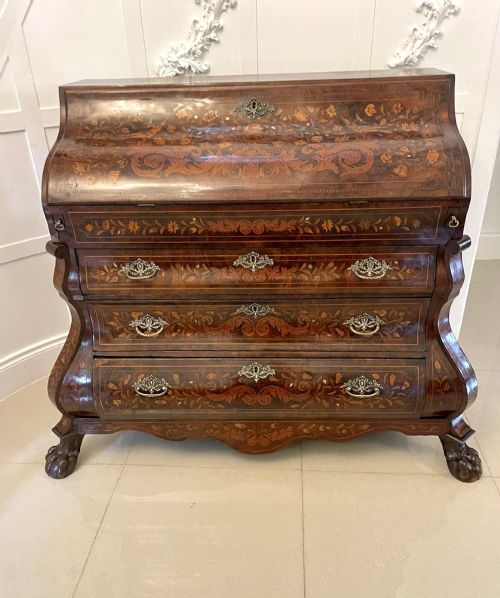
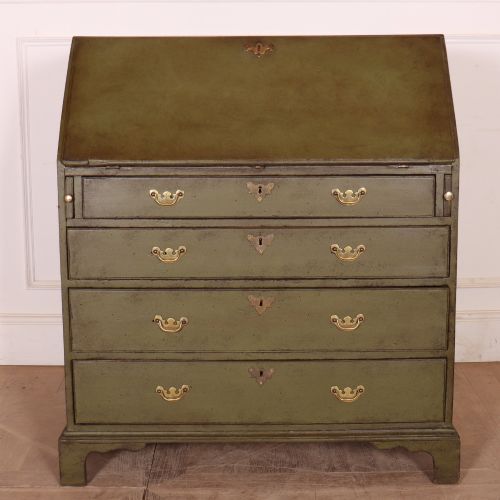
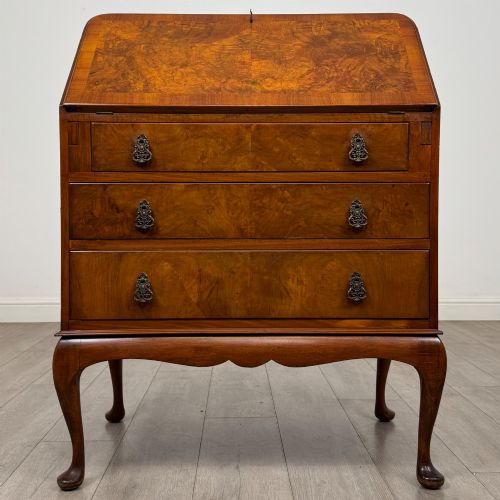
When you search for an antique cabinet with slant front, you encounter pieces designed primarily for writing and storage across several centuries. The form typically combines a hinged writing flap that drops forward with a set of drawers or fitted interior compartments.
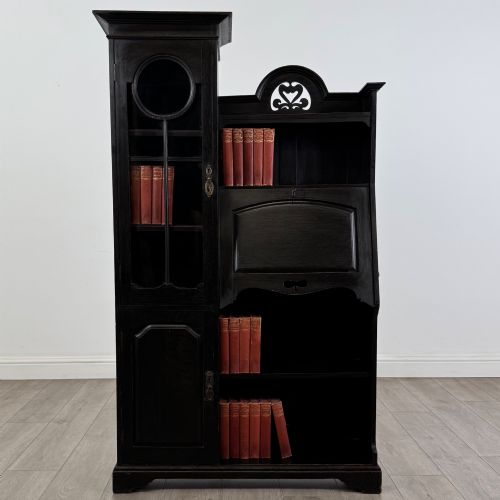
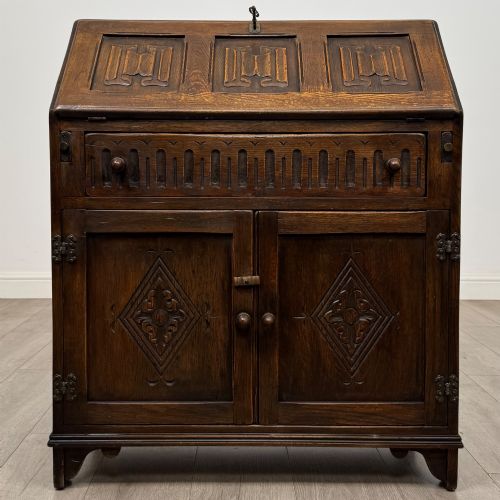
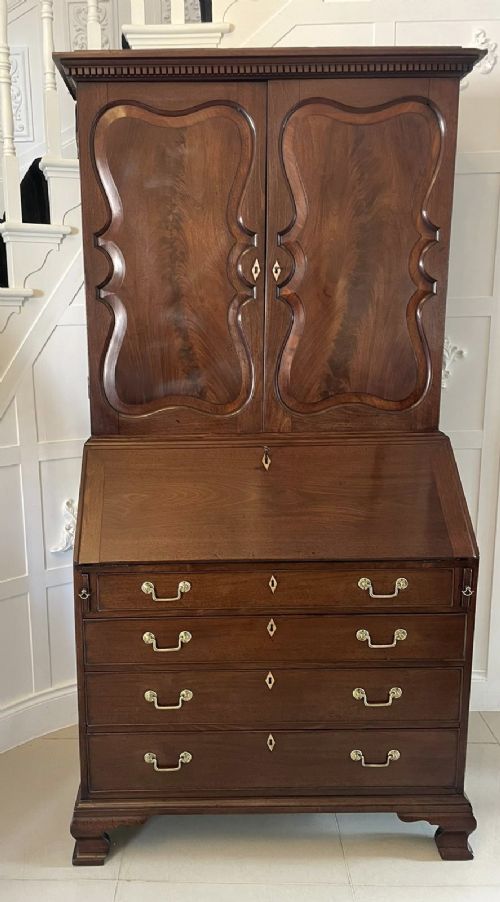
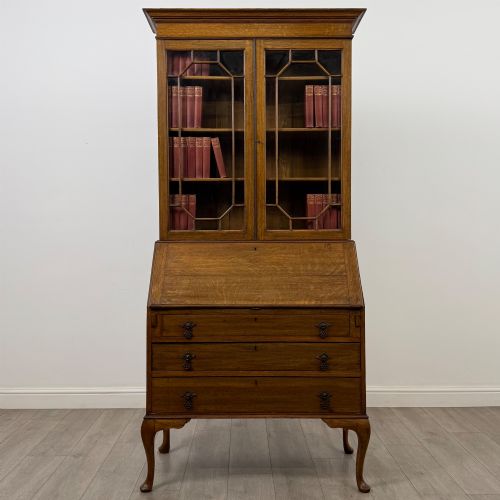
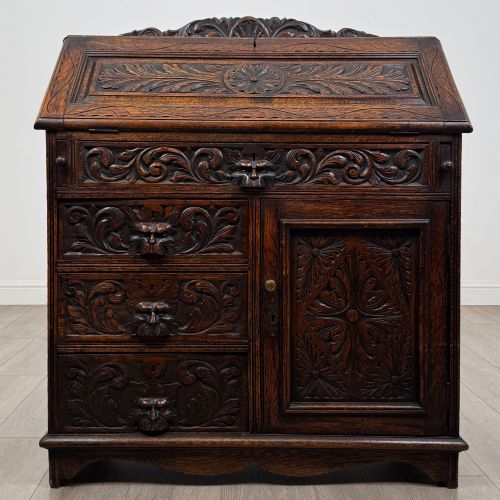
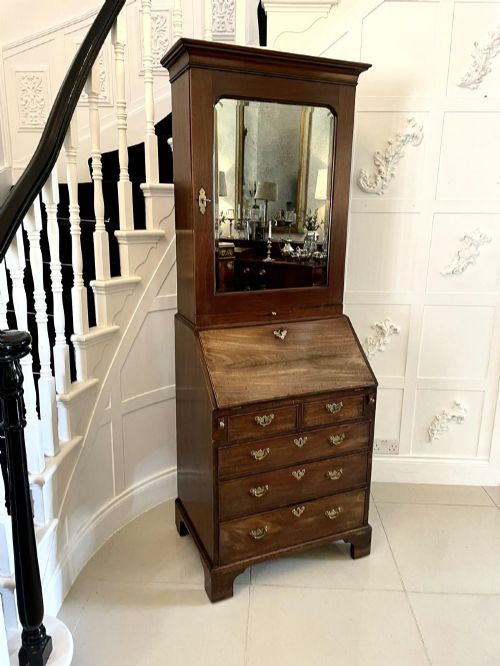
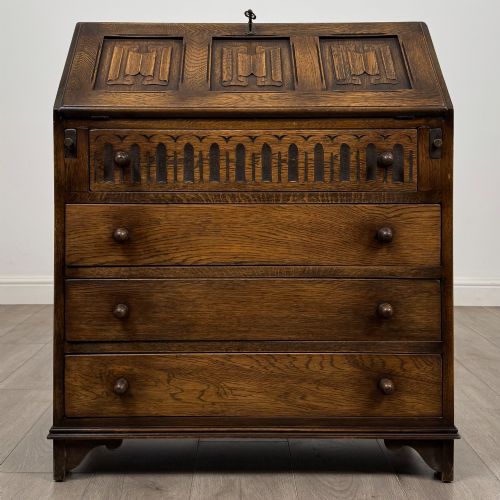
You meet these pieces most frequently in mahogany, oak, and walnut, spanning periods from the early eighteenth century through the Edwardian era. Forms range from compact desks to tall bureau bookcases featuring glazed upper sections.
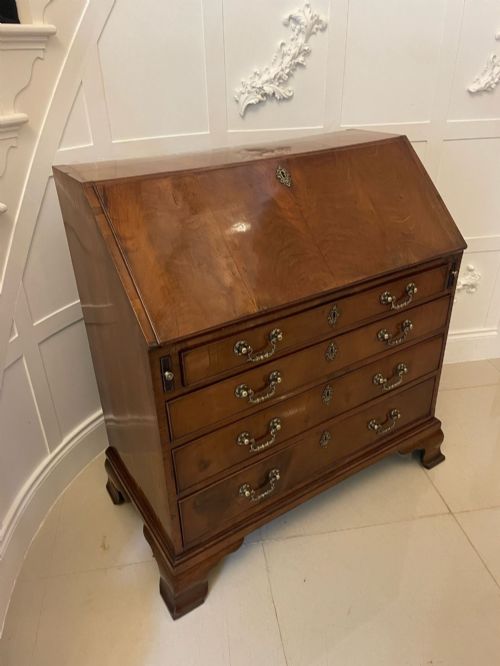
The evidence shows examples bearing stylistic traits from Queen Anne, George I, and George III reigns, alongside later Victorian and Edwardian interpretations. Many retain their original brass handles and fitted stepped interiors.
Judging Quality and Execution
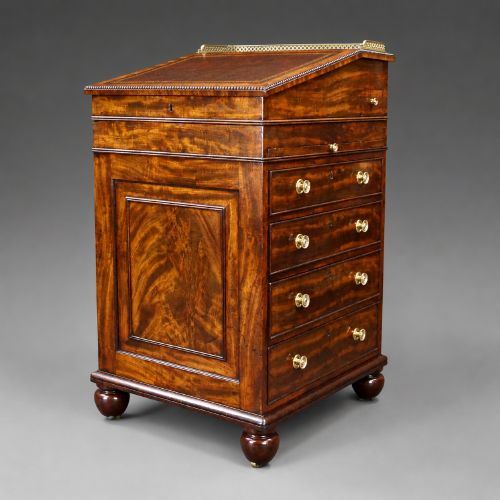
Quality rests in the selection of timber veneers and the preservation of original interior fittings. Pieces displaying highly figured burr walnut or flame mahogany sit at the upper end of the scale.
The integrity of the writing flap hinges and the precision of the small drawers inside reveal the standard of workshop execution. Original brasses and minimal alteration elevate a piece above later adaptations.
Some early oak examples arrived with adaptations for modern technology, quietly housing televisions behind traditional panelled doors.
Gillows
The Antique Cabinet with Slant Front Glossary
- Slant front
- The hinged writing flap that angles downward to form a desk surface. It conceals internal compartments when closed.
- Bureau bookcase
- A combination furniture form featuring a writing cabinet base with a glazed or panelled bookcase section above. These standing pieces maximise vertical storage.
- Fall front
- An alternative term for the sloping writing flap that drops down for use. It serves the same function as a slant front.
- Stepped interior
- An arrangement of small drawers and pigeonholes arranged in tiers inside the desk section. This feature provides organised storage for letters and documents.
- Secretaire
- A cabinet or desk designed specifically for writing, often incorporating a pull-out drawer with a drop-front desk mechanism.
Antique Cabinet with Slant Front: Frequently Asked Questions
What is an antique cabinet with slant front?
An antique cabinet with slant front is a desk featuring an angled writing flap that folds down to reveal drawers and pigeonholes. They were designed for correspondence and household administration.
Lower sections typically contain functional storage drawers while upper portions sometimes incorporate glazed bookcases. The form evolved through the Georgian and Victorian periods in various timbers.
How were these desks used historically?
These cabinets served as household desks where owners wrote letters, managed accounts, and stored important documents. The sloping lid provided a comfortable writing angle while keeping papers out of sight.
Closing and locking the fall front protected confidential correspondence from dust and casual view. Many examples included secret compartments for valuables.
How do I identify a Georgian slant front cabinet?
Georgian examples often feature solid mahogany or figured walnut construction with fine dovetail joinery on the drawers. Interiors typically display stepped arrangements of small drawers surrounding a central cupboard.
Proportions tend to be balanced and restrained, with bracket feet or ogee feet supporting the base. Hardware usually consists of brass drop handles on backplates.
How do I care for wood and leather surfaces?
Maintain timber surfaces by applying quality beeswax periodically and avoiding placement near direct heat sources. Keep leather writing inserts clean with dry cloths and minimal moisture.
Protect the wood from strong sunlight to prevent fading of walnut and mahogany veneers. Regular gentle dusting preserves the natural lustre of the polish.
What is the difference between a bureau and a bureau bookcase?
A bureau consists of a desk base with a slant front and lower drawers, standing alone as a compact item. A bureau bookcase adds a taller upper cabinet with shelves behind glazed or wooden doors.
Both forms utilise the drop-front writing mechanism but differ significantly in height and storage capacity. The combined bookcase version requires more vertical wall space.