


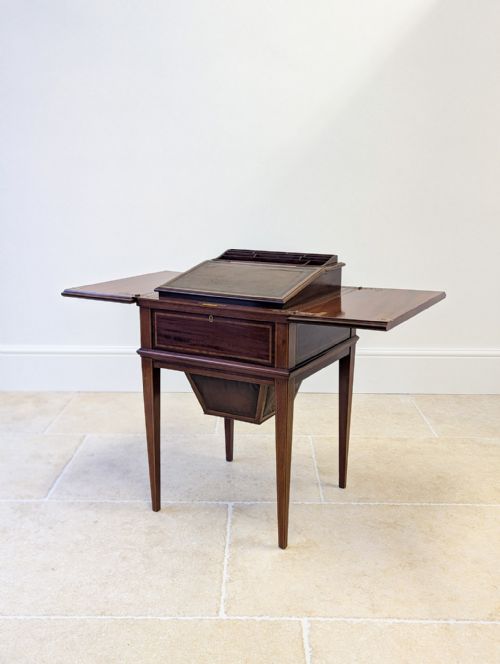
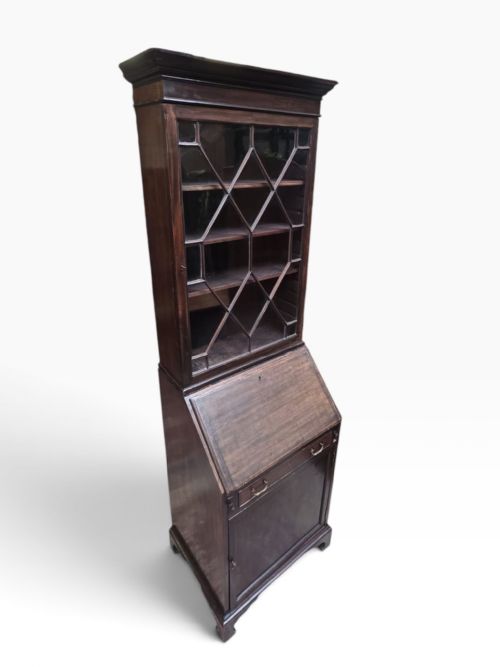
Writing Slope Cabinet
A writing slope cabinet brings together a sloping surface for correspondence and compartmented storage for papers, offering a practical writing place for any room.
Writing Slope Cabinet
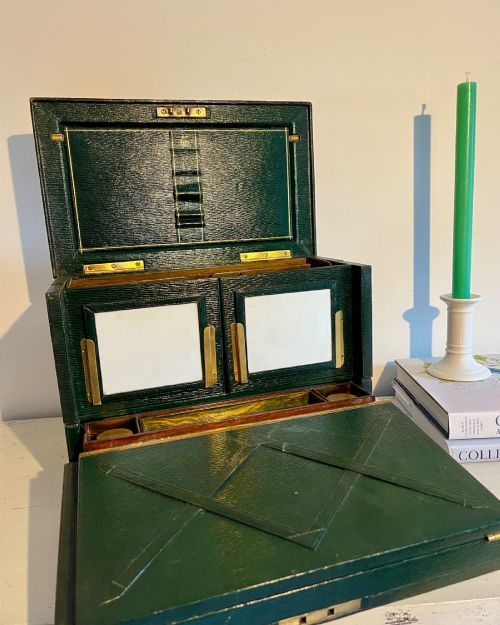
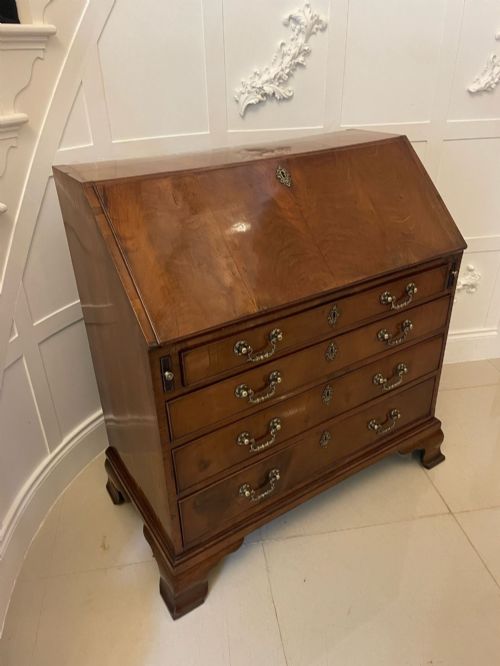
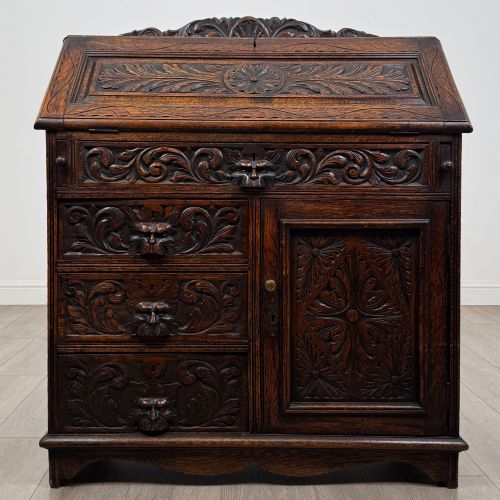
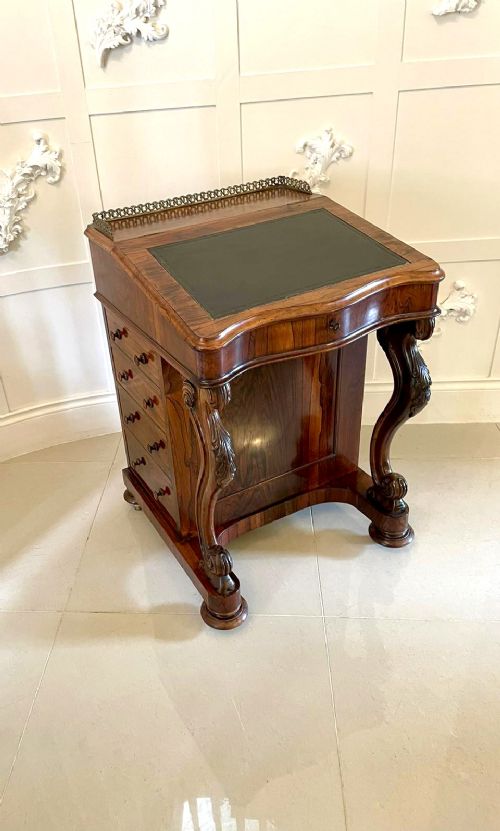
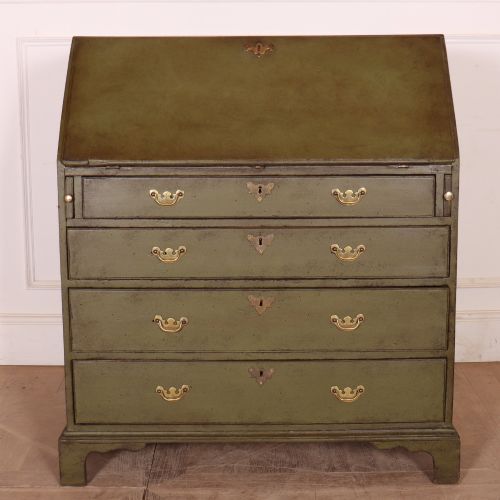
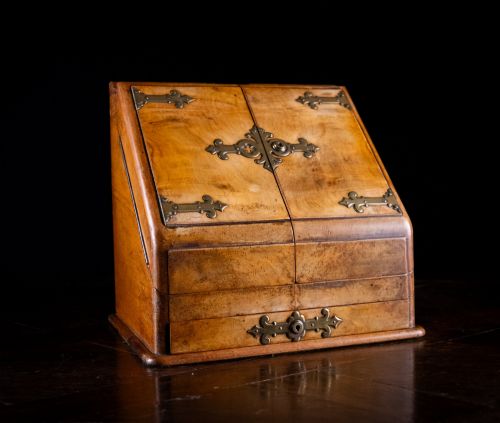
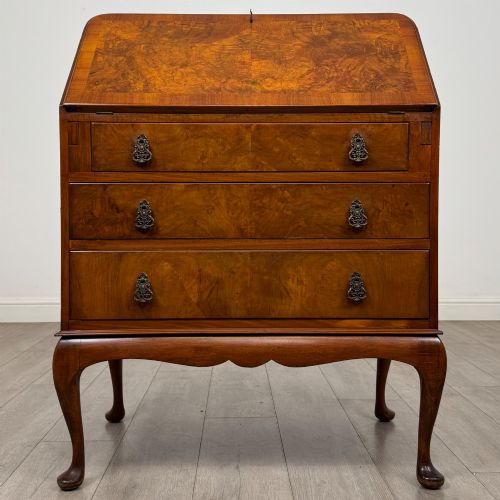
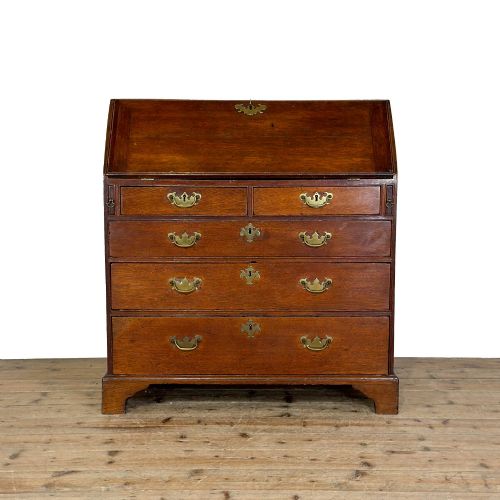
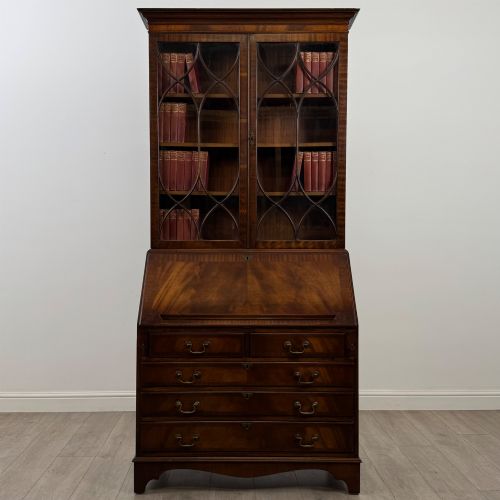
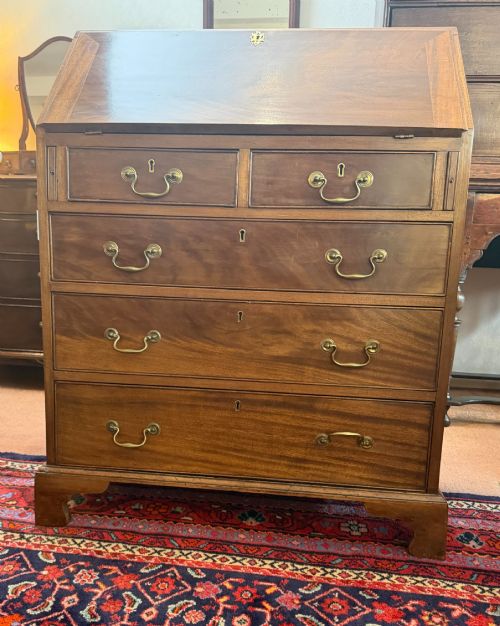
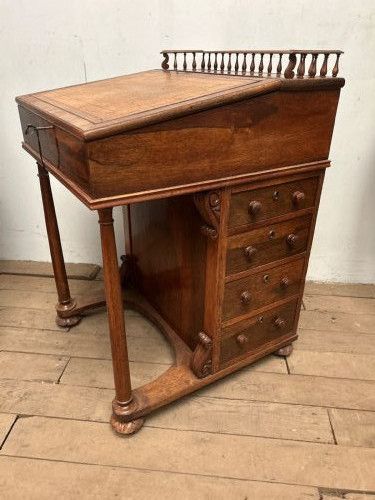
When you search for a writing slope cabinet, you encounter a range of forms designed for correspondence and storage, spanning centuries of British cabinetmaking. The pieces on this page include traditional bureaux, freestanding Davenports, and dedicated stationery boxes.
The selection reaches from Queen Anne and Georgian periods through Regency, Victorian, and Edwardian eras. Oak, mahogany, and walnut appear frequently, alongside specialised forms like bureau bookcases and desk accessories.
Materials and construction
Cabinetmakers utilised hardwoods such as mahogany, oak, and walnut, often selecting burr walnut or figured veneers for visual depth. Brass mounts, glass panels, and leather inserts provide functional and decorative contrast across the various desk types.
Joinery techniques ranged from straightforward panel construction in earlier oak pieces to intricate inlay work and carved details in Victorian and Edwardian examples. Specialised forms incorporated brass hardware for stationary cases and slope mechanisms.
Listings feature woods including mahogany, oak, walnut, burr walnut, rosewood, and amboyna, paired with brass, leather, and glass.
Distinctions in craftsmanship
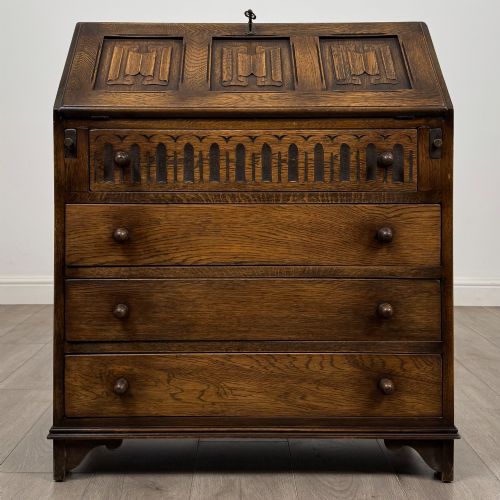
Quality rests upon the selection of timber figures, the precision of internal pigeonholes, and the integrity of the structural joinery. Finer pieces demonstrate careful matching of veneers and meticulous execution of carved details such as linenfold or green man motifs.
Hardware execution and the retention of original brass fittings distinguish superior examples. The refinement of secondary timbers inside drawers and the smooth operation of fall fronts indicate the level of care invested by the maker.
Gillows·Gillow and Co·Gillows of Lancaster·Stanley Webb Davies
The Writing Slope Cabinet Glossary
- Bureaux
- A sloping desk with a hinged flap that opens to reveal compartments and drawers for writing materials.
- Davenport
- A compact form of small desk featuring a sloping writing surface above a pedestal of drawers.
- Stationery box
- A tabletop cabinet designed specifically to hold writing paper, envelopes, and inkwells.
- Bureau bookcase
- A taller combination piece pairing a writing bureau base with upper shelving enclosed by doors.
- Fall front
- The hinged panel on a bureau or cabinet that lowers to serve as a writing surface.
Writing Slope Cabinet: Frequently Asked Questions
What is a writing slope cabinet?
A writing slope cabinet is a piece of furniture designed to facilitate letter writing by providing an angled surface and organised storage for stationery.
These pieces range from tabletop boxes to full-sized bureaux and Davenports incorporating drawers and compartments.
How do I date an antique bureau?
Dating relies upon observing the timber choices, construction methods, and stylistic details characteristic of specific periods like Georgian or Edwardian.
Secondary woods, handle types, and the complexity of internal drawer arrangements offer further clues to the decade of manufacture.
Where were these cabinets placed?
Writing slope cabinets found places in studies, libraries, and principal reception rooms where correspondence was conducted.
Freestanding models like Davenports allowed placement away from walls, while smaller stationery boxes sat upon tables or desks.
How do I maintain wood finishes?
Maintaining these surfaces involves gentle dusting and the occasional application of appropriate wax polish to nourish the timber.
Avoiding direct sunlight and excessive humidity preserves both the solid woods and delicate veneers found on period pieces.