
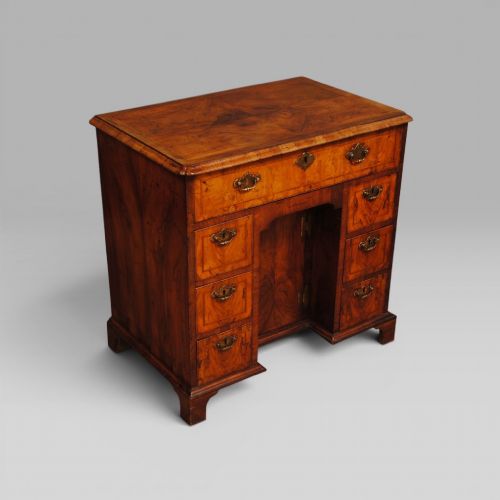


Warm Brown Writing Bureau
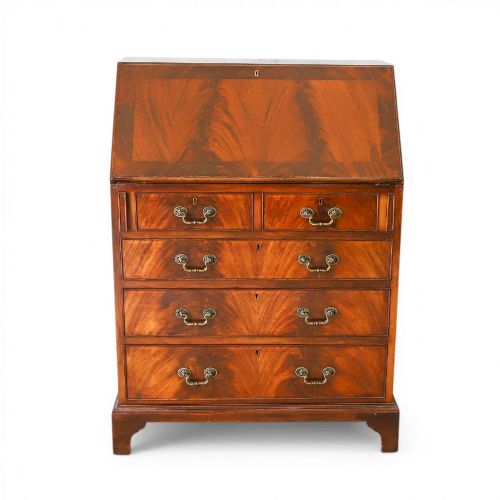
A warm brown writing bureau brings deep timber tones and a fitted interior to a room, offering a practical writing surface with hidden drawers.
Warm Brown Writing Bureau
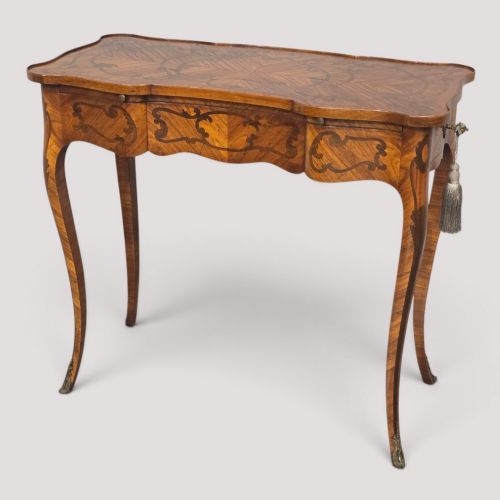
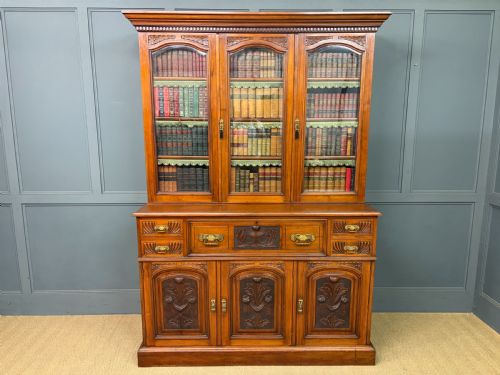
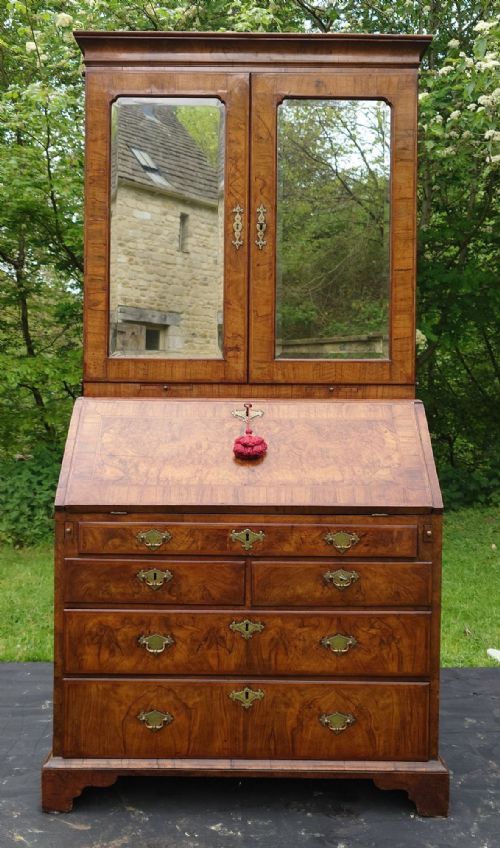
A warm brown writing bureau appears in several distinct timber forms across this page, ranging from compact fruitwood and elm examples to large walnut and mahogany bureau bookcases. These pieces originate across the eighteenth and nineteenth centuries, alongside later Edwardian and reproduction interpretations built in earlier styles.
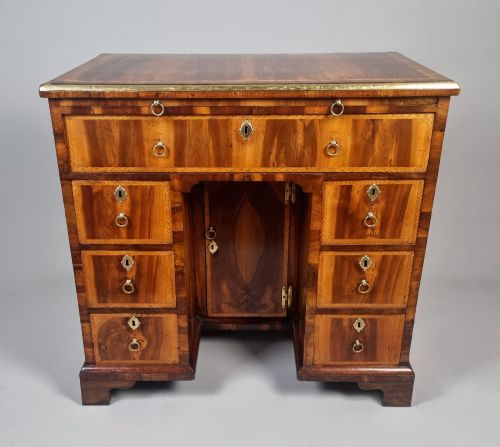
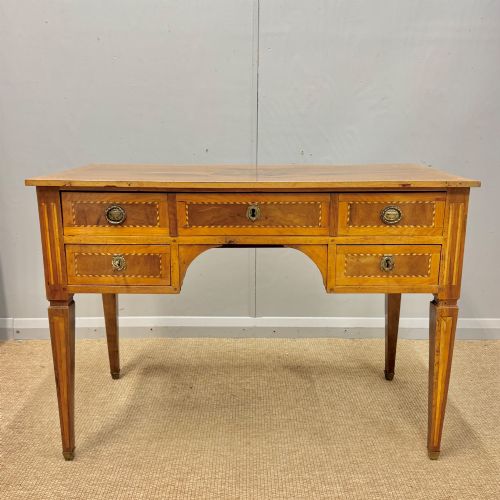
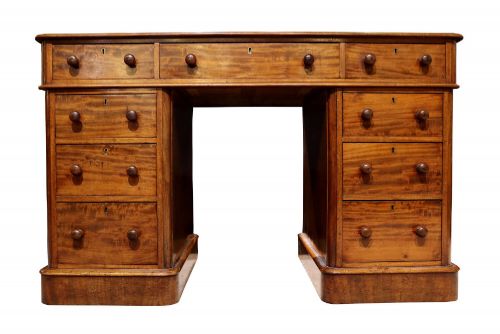
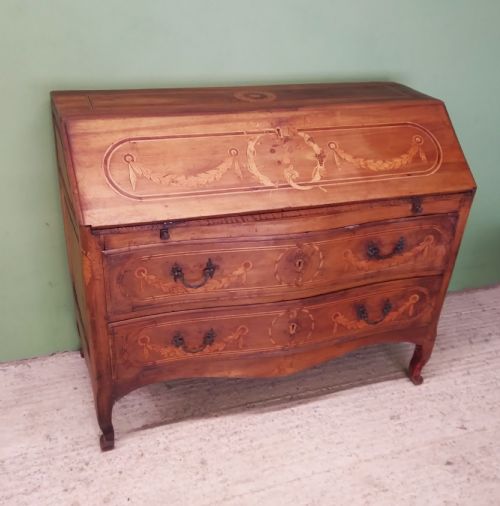
The selection encompasses fall-front desks that conceal internal compartments, alongside kneehole desks, cylinder bookcases, and freestanding marquetry writing tables. Walnut and mahogany dominate the offerings, matched with specialised regional variations in fruitwood, yew, and satinwood.
Materials and construction
Cabinet makers utilised dense hardwoods such as walnut, mahogany, oak, and fruitwood, often selecting burr veneers or flame grains to create rich surface patterns. Marquetry and parquetry inlay introduces contrasting timber tones, while featherbanding frames drawer fronts and writing flaps.
Internal elements combine secondary softwoods with precision dovetail joinery on drawer construction. Brass handles, escutcheons, and hinges provide functional hardware, frequently original to the piece.
Secret compartments hidden within pigeonholes allowed Georgian writers to safeguard private correspondence from wandering eyes.
Judging execution
Quality rests upon the selection of timber figures and the precision of the veneer work across large curved or flat surfaces. Superior examples display seamless grain matching, crisp carving, and intact internal compartment layouts.
The integrity of the original brasses, the tightness of the dovetail joints, and the balance of proportions distinguish standard production from exceptional cabinet work.
The Warm Brown Writing Bureau Glossary
- Bureau
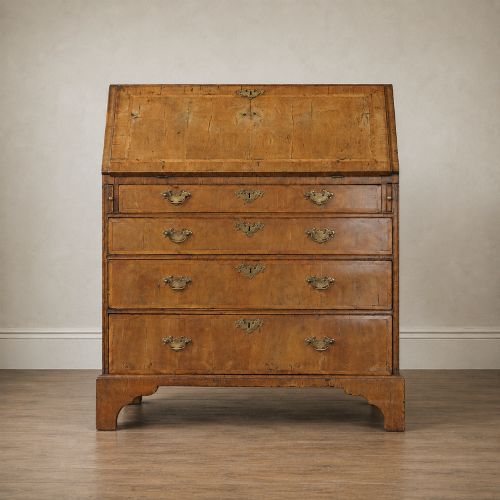
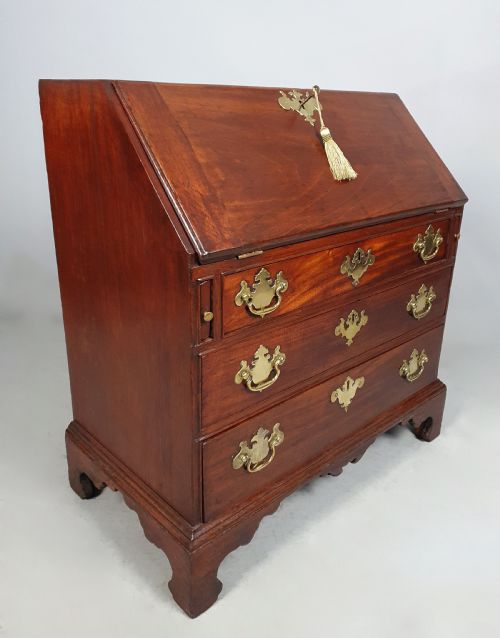
- A desk featuring a sloping hinged flap that drops down to reveal a writing surface and small pigeonholes or drawers. It forms the core shape of this category.
- Secretaire
- A piece of furniture containing a drawer or compartment that pulls down or folds out for writing. Often integrated into tall bookcases or cabinets.
- Marquetry
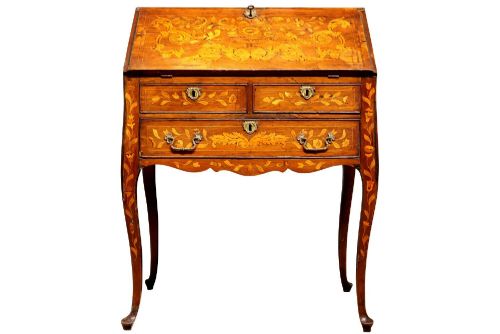
- Decorative patterns formed by small pieces of wood veneer fitted into a backing. It creates elaborate floral or geometric scenes on writing flaps and desk tops.
- Featherbanding
- Narrow strips of veneer laid in a herringbone pattern around the borders of drawer fronts. It acts as a subtle decorative border on walnut furniture.
- Kneehole desk
- A compact desk featuring a recessed central space for the legs, flanked by pedestals of small drawers. This form appears frequently in walnut and yew.
Warm Brown Writing Bureau: Frequently Asked Questions
What is a writing bureau?
A writing bureau is a traditional desk featuring a sloping hinged lid that lowers to create a writing surface. Inside, it contains small drawers and compartments for letters and stationery.
Beneath the writing flap, standard drawer tiers provide enclosed storage for household papers and personal items.
How do I style a bureau?
Place the bureau against a principal wall in a study, sitting room, or bedroom where the warm timber tones can complement surrounding furnishings. Leaving the fall-front open reveals fitted pigeonholes that display small books or stationery.
Position a suitable chair in front, ensuring the writing height matches comfortable seating postures for daily use.
How do I identify walnut furniture?
Walnut displays a rich chocolate or warm brown hue marked by complex grain swirls and dark irregular streaks. Eighteenth-century examples often utilise burr walnut veneers, which show tight circular cluster patterns across large surfaces.
Examining the secondary woods inside the drawers helps confirm the period timber and construction methods used by the cabinet maker.
What is parquetry?
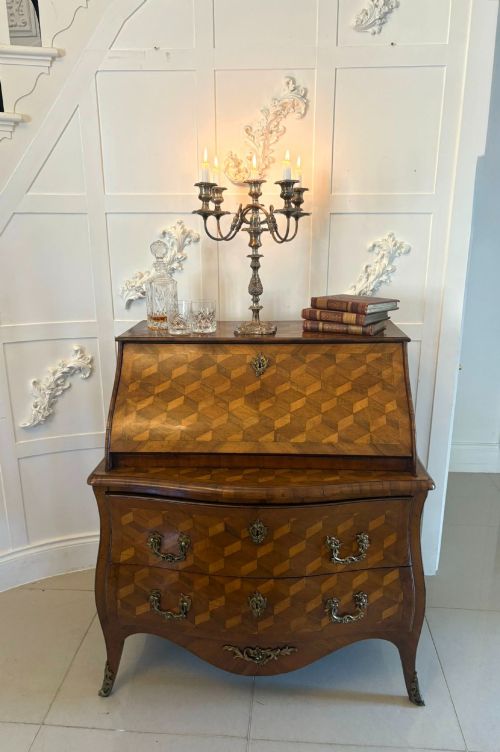
Parquetry is a geometric mosaic of wood pieces used to decorate furniture surfaces. Craftsmen arrange contrasting timber veneers into repeating patterns like cubes or chequers.
This technique appears on writing tables and bureau surfaces to add texture and visual depth without pictorial designs.
Are these desks practical for daily use?
The internal compartments and drop-down flap offer a dedicated workspace that closes away to hide clutter when not in use. Lower drawer tiers provide practical storage capacity for modern notebooks and accessories.
Solid construction and durable hardwood surfaces make these historic desks well suited to contemporary interior environments.