
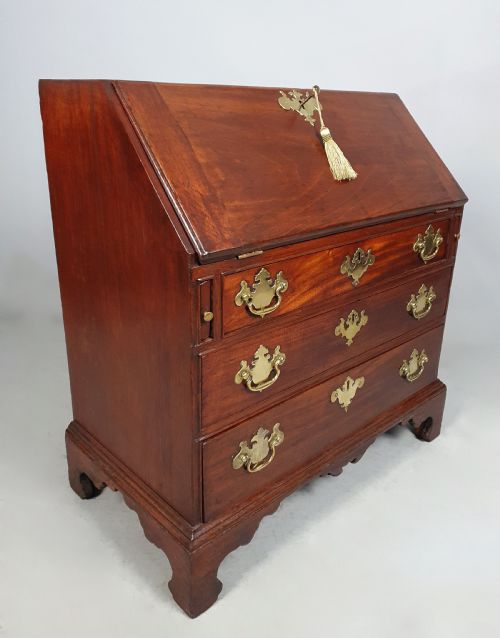
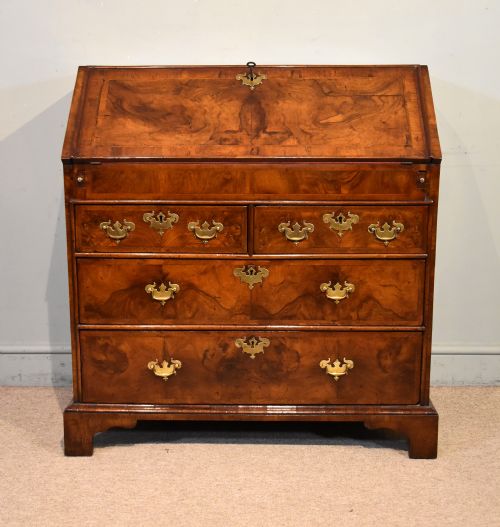


George II Slant Desk
A george ii slant desk brings mid-eighteenth-century craftsmanship into your study, offering fitted drawers and a drop-front writing surface crafted for daily correspondence.
George II Slant Desk
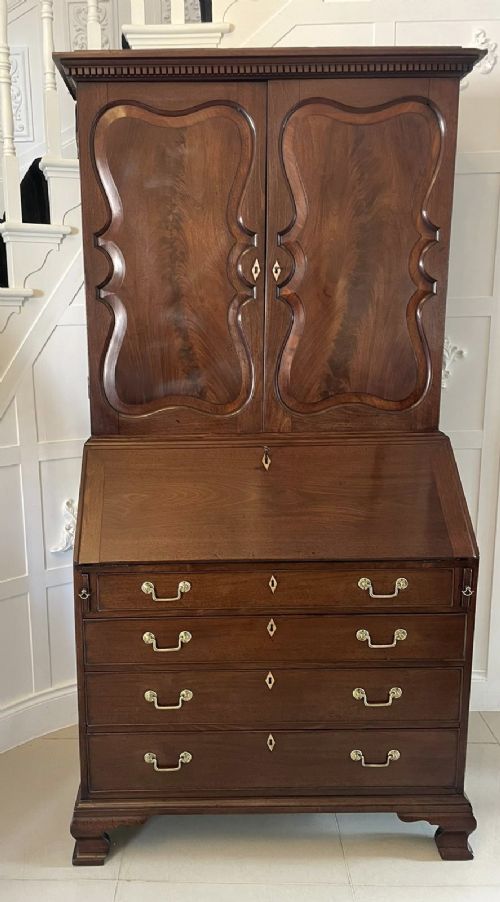
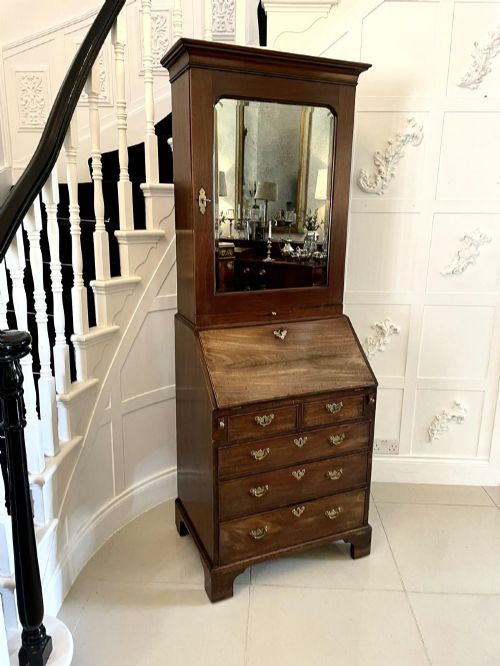
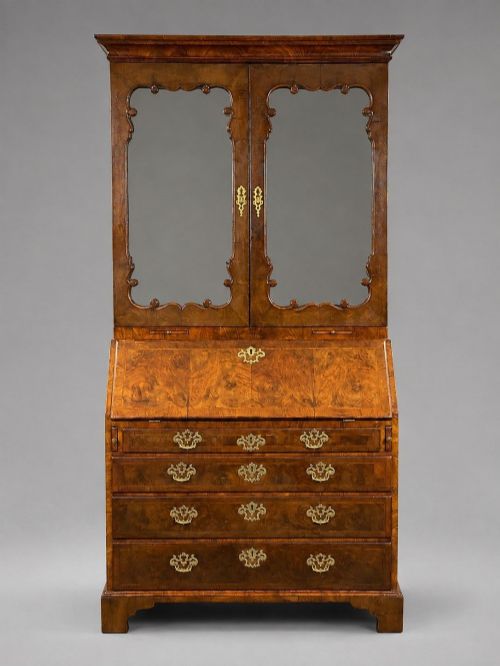
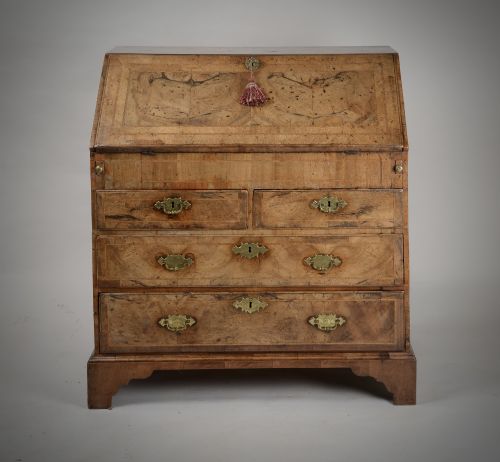
A george ii slant desk, commonly listed as a bureau or bureau bookcase, combines a sloping fall-front writing flap with internal pigeonholes and drawers. These pieces date predominantly from the eighteenth century and the Georgian period.
The selection here encompasses compact writing bureaus alongside taller bureau bookcases featuring glazed upper sections. Walnut, mahogany, burr walnut, fruitwood, and oak dominate the surviving forms.
You will encounter simpler freestanding slant desks as well as elaborate double-dome or glazed bookcase combinations. Each piece reflects the functional writing requirements of the mid-eighteenth century.
How they were made
Cabinetmakers constructed these desks using solid timbers like oak and mahogany, frequently applying figured walnut or burr walnut veneers to the primary exterior surfaces. Secondary woods such as cedarwood and fruitwood appear in interior drawer construction and lining.
Joinery relied on tight dovetail construction for the internal compartments and drawer carcasses, ensuring structural rigidity for the heavy writing flap. Brass handles, escutcheons, and hinges secured the functional moving parts.
Listings feature eighteenth-century walnut, mahogany, oak, and fruitwood pieces.
What varies in quality
The choice of timber grain defines the visual impact, ranging from plain utility boards to highly figured burr walnut and Cuban mahogany veneers. Figured surfaces require exceptional skill in veneer selection and book-matching across the fall-front flap and drawer fronts.
Interior architecture reveals the maker's hand through secret compartments, shaped pigeonholes, and finely dovetailed small drawers. The integration of upper bookcase sections, mirror glass panels, and original brass hardware further distinguishes standard examples from masterworks.
Giles Grendey
The George II Slant Desk Glossary
- Bureau
- A writing desk featuring a sloping hinged lid that opens to reveal a fitted interior of drawers and pigeonholes. It sits atop a chest of drawers or a frame.
- Bureau bookcase
- A tall two-part furniture form combining a slant-front writing desk base with an upper shelving or cabinet section enclosed by glazed doors.
- Veneer
- A thin layer of finely figured wood, such as burr walnut or mahogany, applied over a secondary timber carcass to create decorative patterned surfaces.
- Fall-front
- The sloping hinged writing flap of a desk that pulls down to provide a horizontal surface for correspondence.
- Escutcheon
- A decorative brass plate surrounding a keyhole that protects the surrounding wood from wear.
George II Slant Desk: Frequently Asked Questions
What is a george ii slant desk?
A george ii slant desk is an eighteenth-century writing cabinet featuring a sloping lid that drops down for correspondence.
Inside, you find a collection of small drawers and pigeonholes designed for stationery and documents.
How were these desks used?
These pieces served as private writing stations for household accounts, letter writing, and document storage.
The sloping lid provided a firm surface for writing while keeping confidential papers locked safely out of sight.
Where should I place one?
A slant desk fits well in a study, drawing room, or quiet hallway where the writing flap can be lowered without obstruction.
Keep the timber away from direct sunlight and heat sources to protect the delicate walnut and mahogany veneers.
How do I identify a walnut bureau?
Walnut bureaus display deep brown tones with intricate grain patterns, often utilising burr walnut veneers on the main fall-front.
They date primarily from the earlier part of the eighteenth century before mahogany became the dominant cabinet timber.