
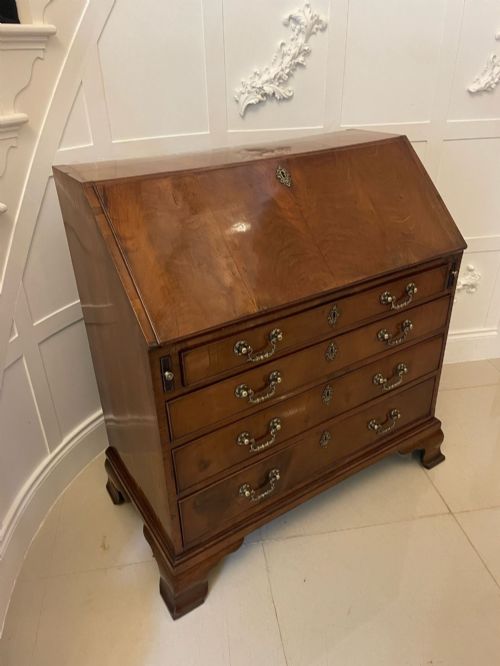
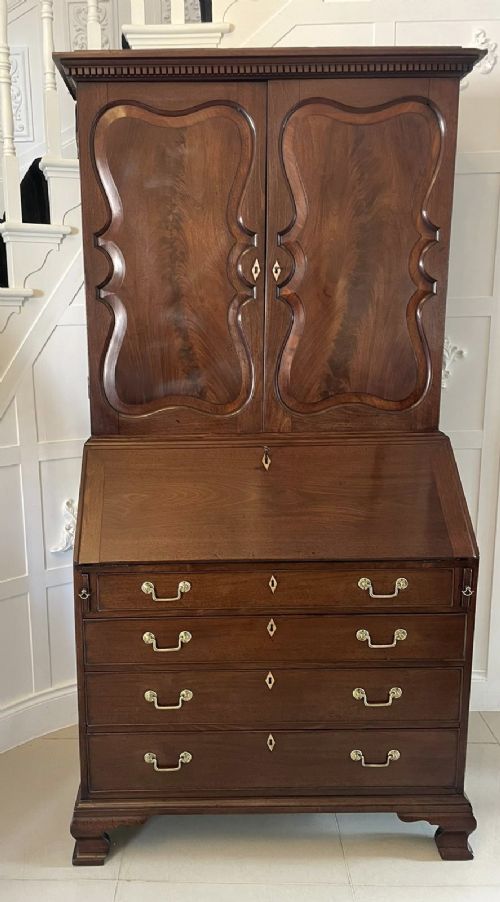
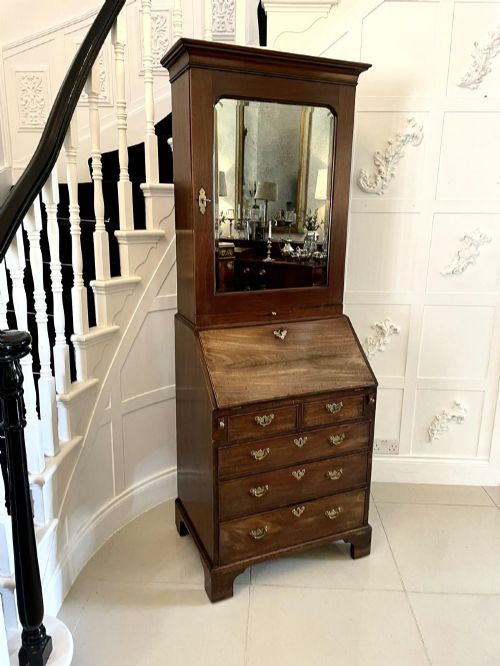
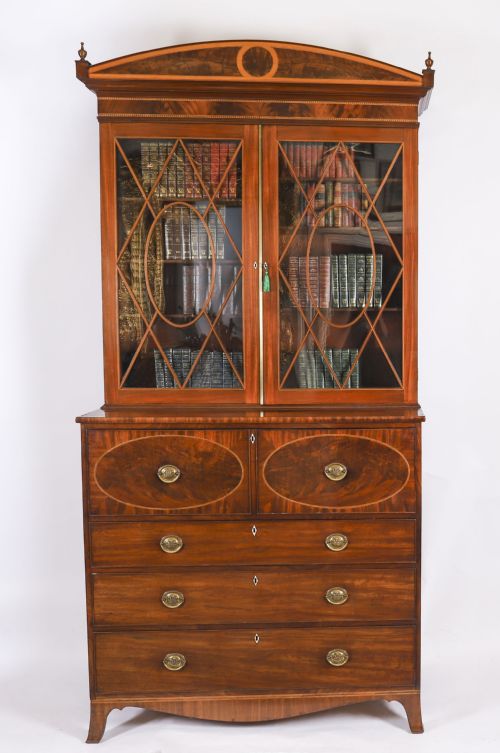

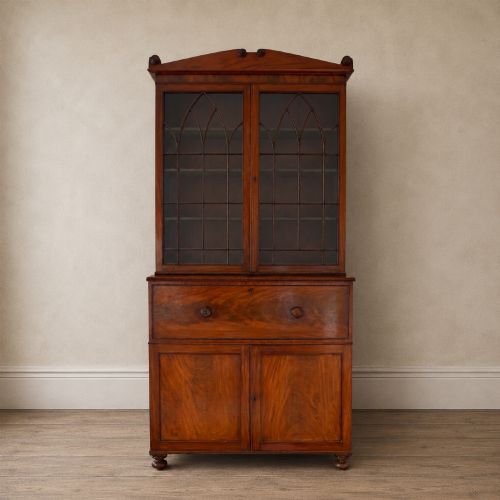
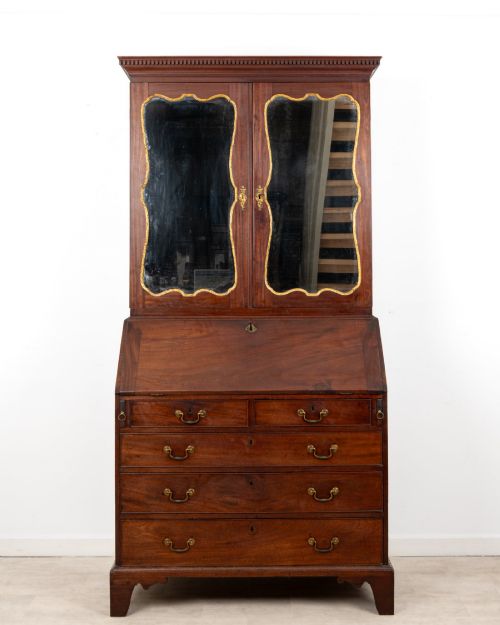
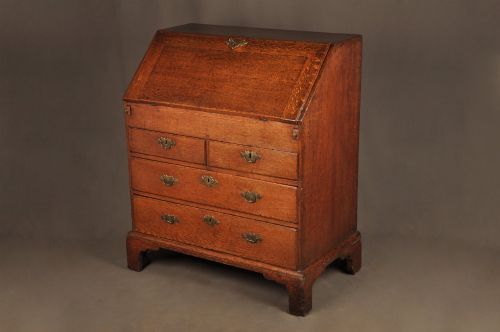
George I Secretary Desk
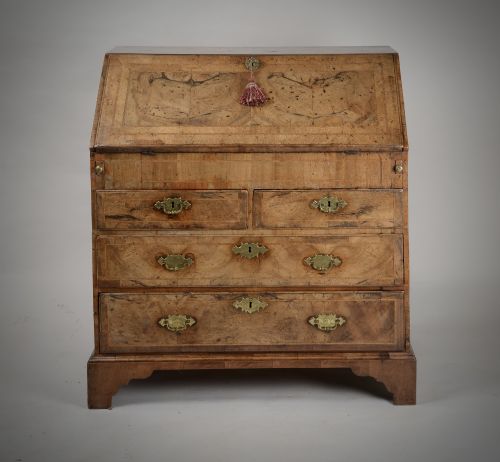
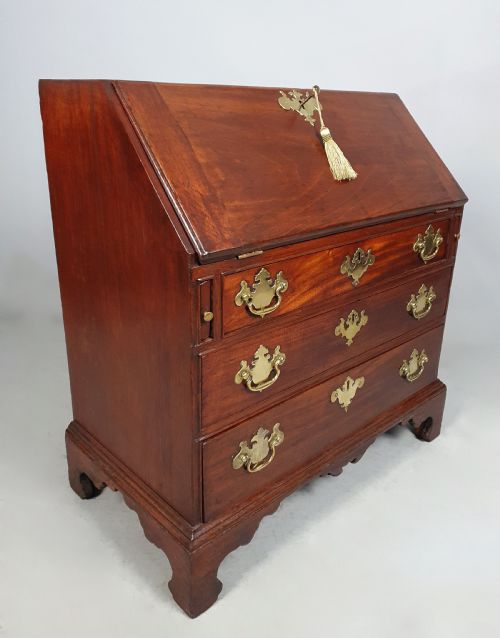
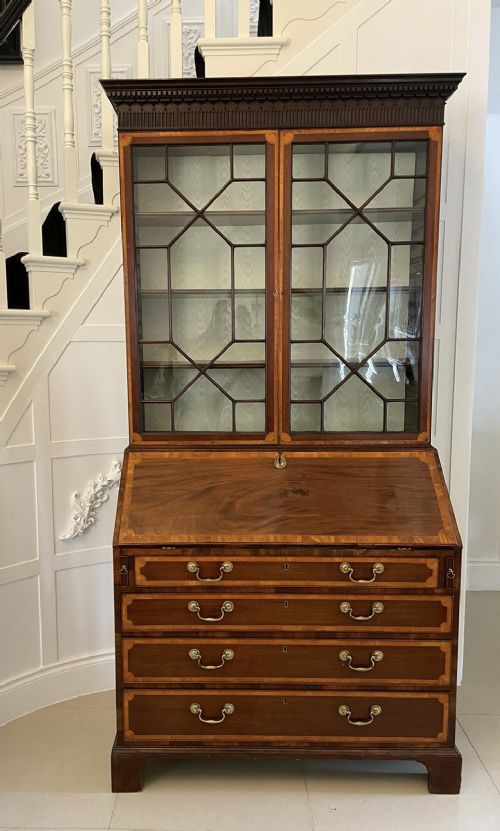
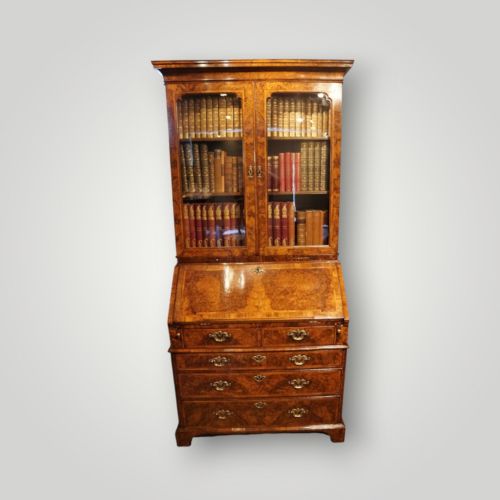
A george i secretary desk combines a drop-front writing surface with tall bookcase storage, offering a commanding presence and clever internal compartments for daily correspondence.
George I Secretary Desk
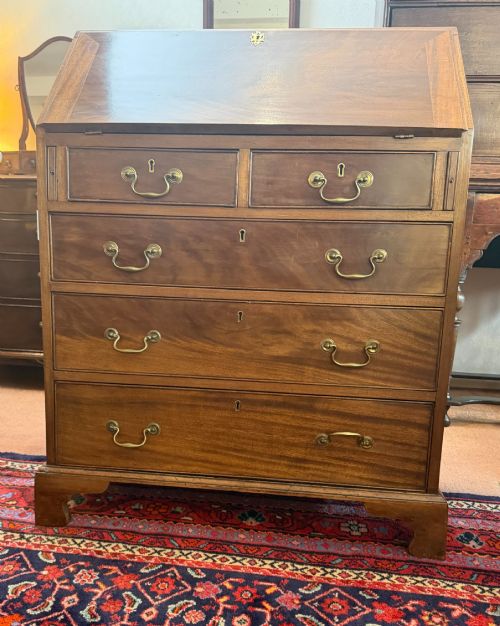
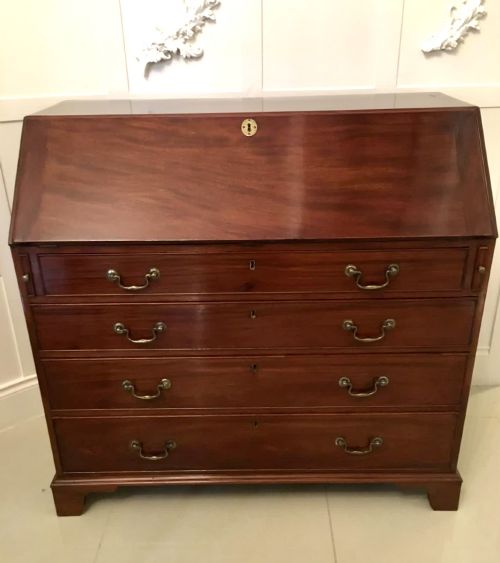
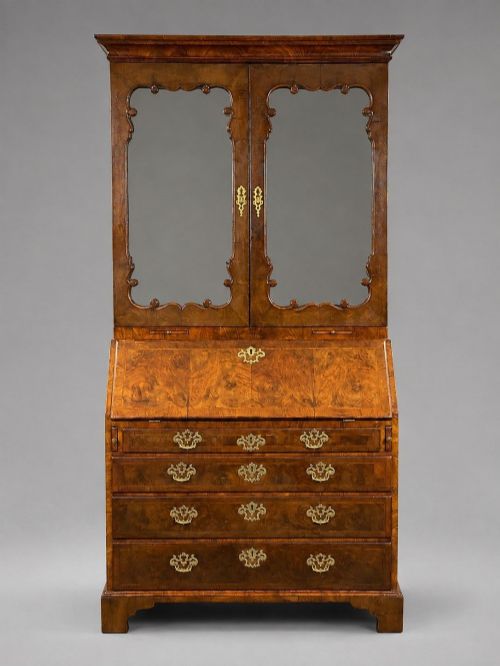
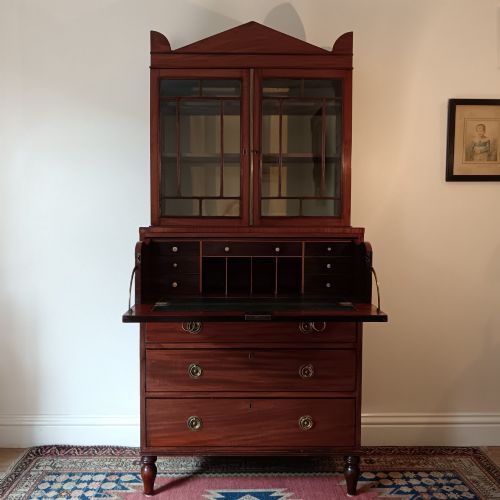
A george i secretary desk represents a sophisticated form of writing furniture, appearing here primarily as bureau bookcases, secretaire cabinets, and drop-front bureaux dating from the eighteenth century onwards.
The material selection spans figured walnut, burr walnut, and mahogany, reflecting the changing tastes across Georgian reigns from George I to George IV.
Makers utilised oak and cedarwood for internal carcases and drawer linings, ensuring structural stability beneath decorative veneers.
Materials and construction
Cabinet makers constructed primary surfaces using dense timbers such as mahogany and walnut, frequently selecting burr veneers and flame mahogany to create richly patterned grain across fall fronts and drawer facades.
Secondary woods like oak, cedarwood, and fruitwood formed the internal pigeonholes, drawer dividers, and carcase frames, providing sturdy support for heavy book collections stored above.
Listings span multiple Georgian reigns alongside nineteenth-century interpretations, featuring walnut, mahogany, satinwood, and oak.
Distinctions in craftsmanship
The standard of a piece depends heavily on the choice and matching of timber veneers, where symmetrical burr walnut or figured mahogany displays superior artisan selection.
Interior configuration dictates grade, with complex nests of pigeonholes, secret compartments, and candle slides separating standard utilitarian desks from exceptional cabinet work.
George Oakley·Gillows
The George I Secretary Desk Glossary
- Bureau bookcase
- A dual-purpose tall furniture piece featuring a shelved upper cabinet enclosed by doors above a lower writing desk section. It provides both library storage and a private workspace.
- Secretaire
- A piece of furniture containing a drawer or compartment that pulls out or folds down to form a writing surface. The term often interchanges with bureau in historical titles.
- Fall front
- A hinged writing flap that drops down to a horizontal position for writing and folds vertical to conceal interior drawers when not in use. It requires sturdy brass hinges or lopers to support the writing load.
- Burr walnut
- Wood taken from a walnut tree growth featuring swirling, irregular grain patterns. Cabinet makers prized this timber for high-status eighteenth-century cabinet fronts.
- Candle slide
- A pull-out wooden board mounted beneath the writing surface to hold lighting close to documents. These slides are characteristic of early eighteenth-century examples.
George I Secretary Desk: Frequently Asked Questions
What is a george i secretary desk?
A george i secretary desk is an early eighteenth-century writing cabinet featuring a fall-front writing flap and often a glazed bookcase top.
These pieces provide enclosed storage for books and correspondence while offering a dedicated writing surface with internal compartments.
How do you use a fall-front desk?
The hinged front panel lowers to create a horizontal writing table supported by wooden pull-out lopers.
Inside, small drawers and pigeonholes organise letters and writing implements before the flap closes to conceal the workspace.
How do walnut and mahogany pieces differ?
Walnut desks typically date from the earlier eighteenth century, often displaying warm brown tones and figured burr patterns across the facade.
Mahogany examples emerge more prominently from the mid-eighteenth century onward, offering a denser reddish-brown timber capable of holding sharp carved details.
What are candle slides used for?
Candle slides pull out from the desk front above the writing flap to hold lighting fixtures.
They illuminate documents during evening writing before tucking neatly back into the cabinet frame.
Are these desks made in sections?
Many larger bookcase variations separate into two or three vertical sections for transport and placement.
This modular construction allows tall upper glazed cabinets to sit securely upon the lower writing bureau base.