
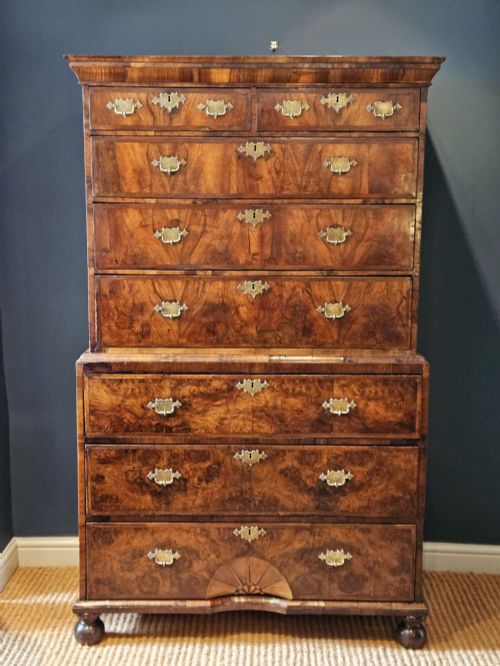
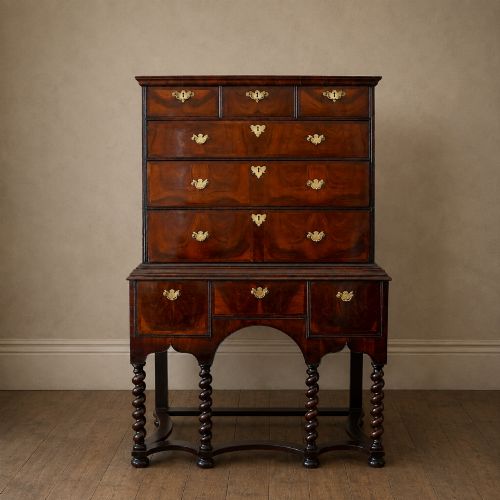
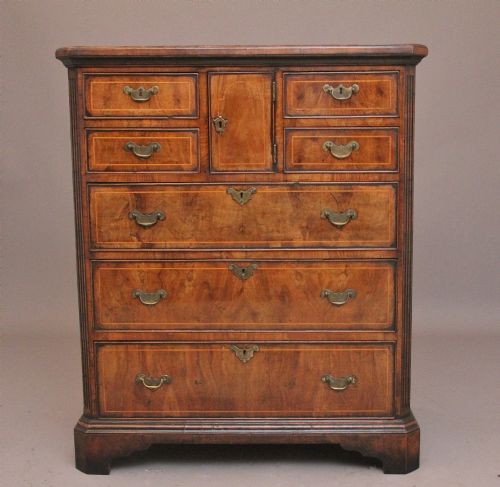
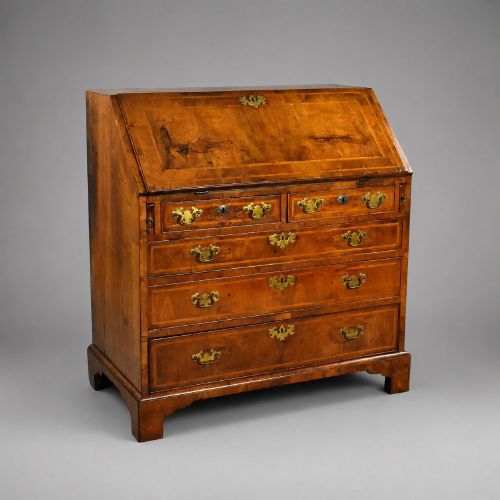
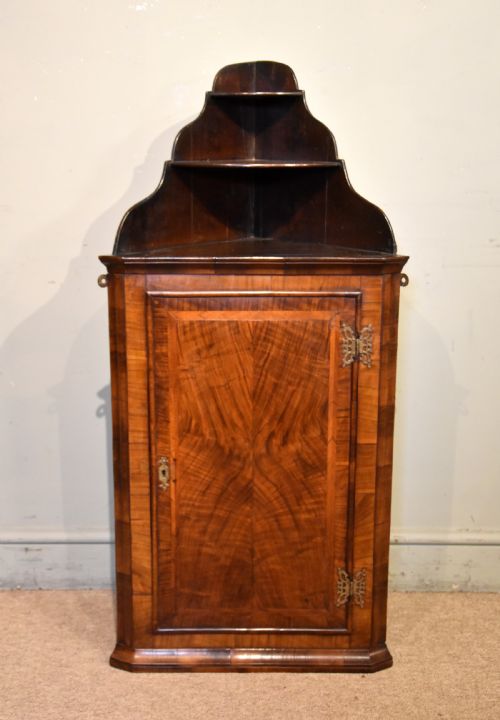
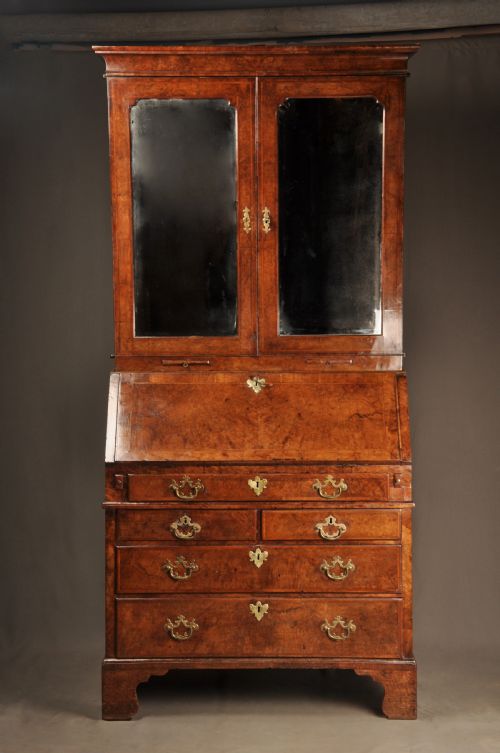
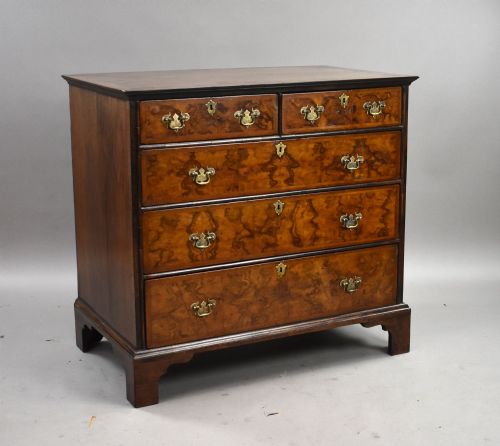
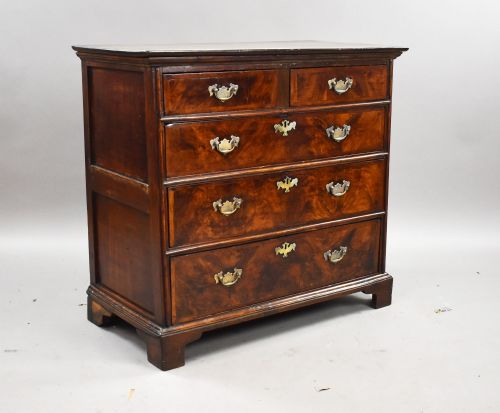


George I Walnut Cabinet
A george i walnut cabinet brings together rich timber, architectural presence and functional storage from the early eighteenth century.
George I Walnut Cabinet
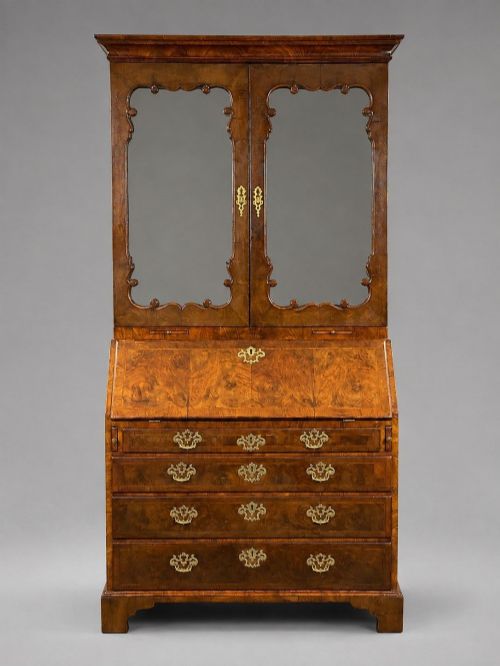
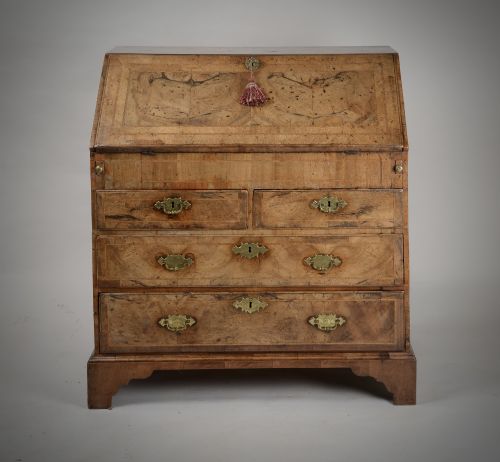
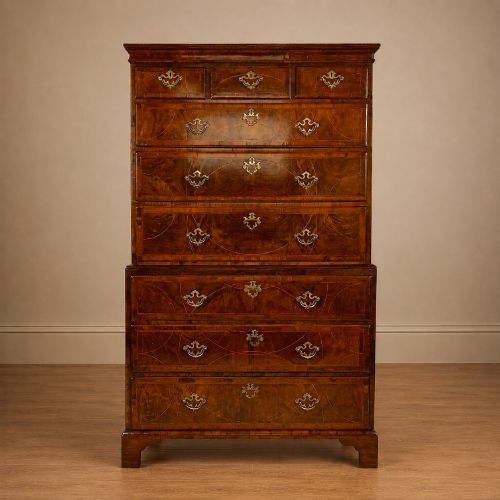
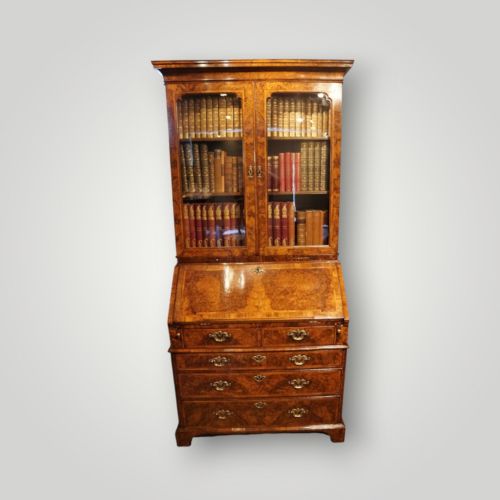
A george i walnut cabinet encompasses tall bureau bookcases, chests on chest, and smaller stands designed for domestic storage and display. The pieces on this page span the distinct design idioms of the eighteenth century alongside later revivals, maintaining a focus on figured timber and fitted interiors.
Bureau bookcases and bureau cabinets form the largest share of these offerings, featuring sloping writing flaps above drawers or shelved upper sections. Buyers will also encounter chests on stand, corner cupboards, and lowboys configured for both utility and formal reception rooms.
Materials and construction
Cabinetmakers constructed carcasses primarily using oak and pine, applying choice veneers of walnut, burr walnut, and figured walnut to external surfaces. Feather banding and line inlay frequently accent drawer fronts and door panels, creating geometric borders around the grain.
Brass hardware such as drop handles, escutcheons, and hinges secure the framework, while glass panels are fitted to the upper doors of bookcase variants. Secondary timbers like oak appear inside drawer linings and internal dividers.
Some bureau bookcases include hidden secret compartments behind internal pigeon holes for stashing particularly private notes.
Assessing quality
Quality rests in the selection of the walnut veneer and how effectively the grain patterns mirror each other across large expanses like fall-fronts and drawer faces. Figured wood and burr walnut demand exceptional skill in sawing and laying to maintain visual harmony.
The integrity of internal fittings, such as pigeon holes, secret compartments, and candle slides, distinguishes superior examples from standard utility pieces. Original brassware and undisturbed feather banding further elevate a piece's standing.
The George I Walnut Cabinet Glossary
- Burr walnut
- A prized veneer taken from the wart-like growth on a walnut tree, yielding complex, swirling grain patterns. It requires meticulous application by the cabinetmaker.
- Chest on chest
- A tall storage unit formed by stacking a wider chest of drawers beneath a slightly narrower upper chest, also known as a tallboy.
- Feather banding
- A delicate decorative inlay technique where thin strips of veneer are laid in a herringbone pattern around the borders of drawer fronts and panels.
- Bureau bookcase
- A dual-purpose piece combining a sloping writing flap desk at the bottom with a glazed or panelled shelving cabinet secured above.
- Chest on stand
- A compact case piece elevated on legs, offering storage drawers positioned above an open or drawer-fitted lower frame.
George I Walnut Cabinet: Frequently Asked Questions
What is a george i walnut cabinet?
A george i walnut cabinet is a piece of early eighteenth-century case furniture built from walnut timber, encompassing bureau bookcases, chests on stand, and display cabinets.
These pieces were designed for writing, storing valuables, and displaying books or porcelain in formal rooms.
How do I spot period authenticity?
Authentic period pieces show hand-cut dovetails in the drawer construction and use secondary woods like oak for internal framing and drawer linings.
Examining the grain alignment and the application of walnut veneer helps differentiate eighteenth-century originals from later revival pieces.
Where were these cabinets placed?
Original examples sat within the principal chambers and parlours of substantial houses, serving practical administrative and display functions.
Today, they suit studies, living rooms, and hallways where their compact or tall proportions add architectural weight.
What is burr walnut?
Burr walnut is a decorative veneer sliced from the knotty excrescences of the walnut tree, prized for its swirling, organic patterns.
Cabinetmakers utilised it on primary focal points like door panels and fall-front desks to catch the light and display wealth.