
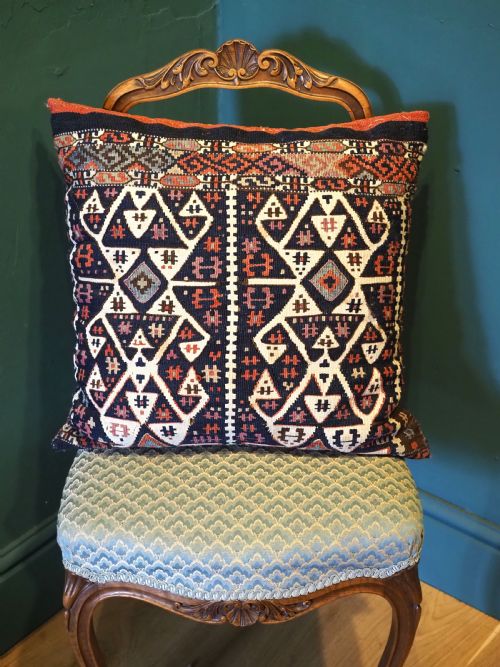
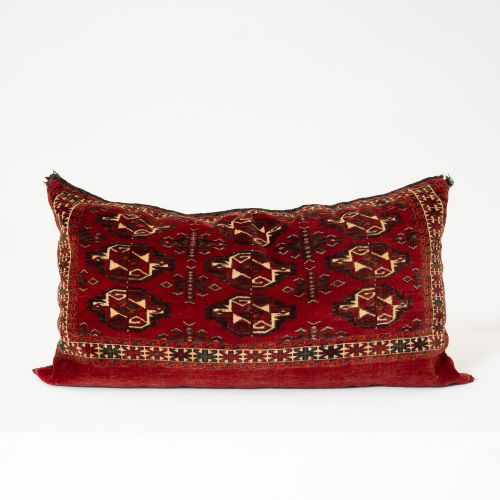


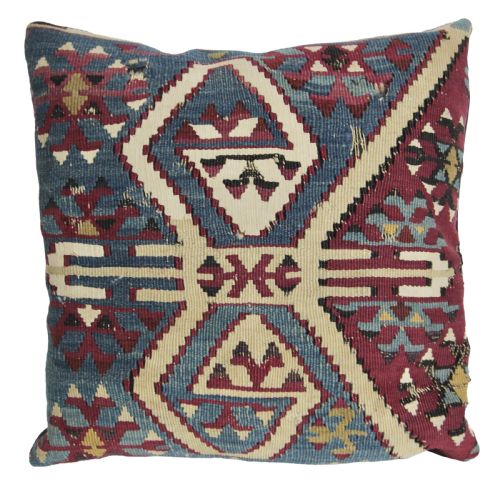

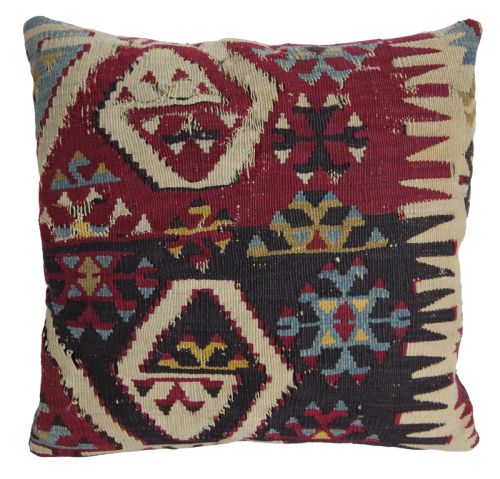


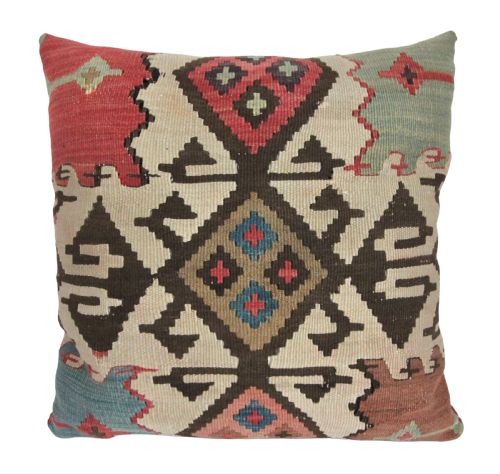


Geometric Kilim Cushion
A geometric kilim cushion brings nomadic artistry into a modern room through flat-woven wool and striking tribal patterns.

Geometric Kilim Cushion
When you search for a geometric kilim cushion, you are looking at flat-woven textiles derived from tribal bag faces, saddle bags, and storage pieces. These cushions translate centuries of nomadic craft from regions like Anatolia, Central Asia, and Persia into functional soft furnishings for contemporary interiors.
You are most likely to meet pieces originating from tribal traditions, including Anatolian, Turkmen, Baluch, Uzbek, Qashqa'i, and Kurdish workshops. The forms range from square throw cushions to rectangular formats fashioned from antique storage-bag faces and saddle bags.
Dating primarily from the nineteenth and early twentieth centuries, these textiles carry the distinct structural layouts of nomadic weavers. The patterns rely on repeat motifs, banded weft work, and bold tribal geometry rather than floral curves.
What varies in quality
Quality in a geometric kilim cushion rests upon the tightness of the weave and the clarity of the tribal motifs. Tighter hand-weaving yields a firmer structure and crisper lines within the geometric patterns.
The integrity of the original material also defines the tier of the piece, distinguishing items made from genuine antique bag faces and hand-spun wool from later adaptations. The depth and saturation of the natural dyes further separate standard examples from superior specimens.
Listings span from the 1850s to the 1920s, featuring wool, cotton, and natural dyes from Anatolian, Turkmen, and Persian tribal groups.
The Geometric Kilim Cushion Glossary
- Kilim
- A flat-woven carpet or rug made in countries of the former Ottoman Empire, Persia, and Central Asia. These textiles have no pile and are constructed by tightly interweaving warp and weft strands.
- Bag face
- The decorative front panel of a nomad storage sack or saddle bag. These panels form the primary source material for antique cushions.
- Warp
- The vertical threads held in tension on a loom before weaving begins. They form the underlying skeleton of the textile.
- Weft
- The horizontal threads passed back and forth through the warp to create the pattern and fabric. In kilims, the weft completely conceals the warp.
- Natural dye
- Colouring matter derived from plants, insects, and minerals rather than synthetic compounds. These substances produce subtle tonal variations across the wool.
Geometric Kilim Cushion: Frequently Asked Questions
What is a geometric kilim cushion?
A geometric kilim cushion is a soft furnishing fashioned from flat-woven tribal textiles, often utilising antique bag faces from nomadic groups.
These pieces repurpose historic weaving traditions into usable decor for modern seating.
How do I care for my cushion?
Protect antique wool textiles by avoiding direct sunlight and moisture.
Gentle surface cleaning or professional textile care preserves the natural fibres and dyes.
Where do the designs originate?
The patterns originate from nomadic and tribal groups across Anatolia, Persia, and Central Asia.
Specific regional traditions such as Turkmen, Baluch, and Qashqa'i dictate the distinct geometric layouts.