
Geometric Drawer Dresser
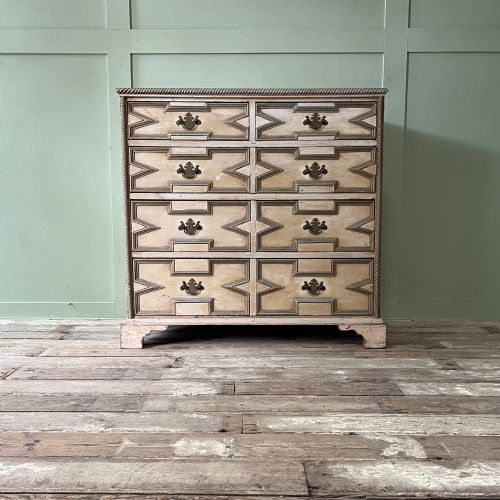
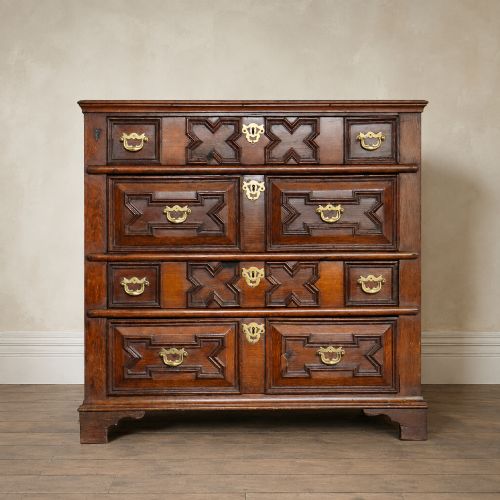
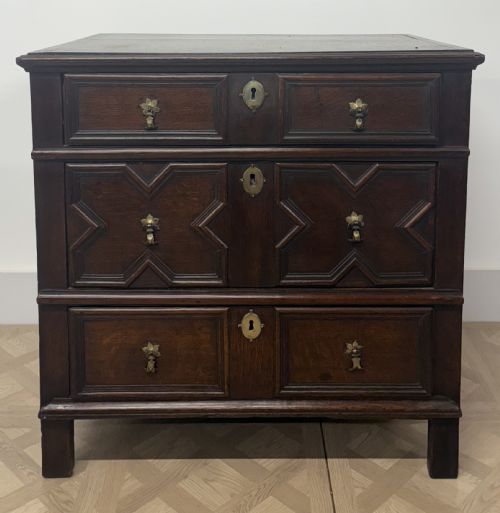
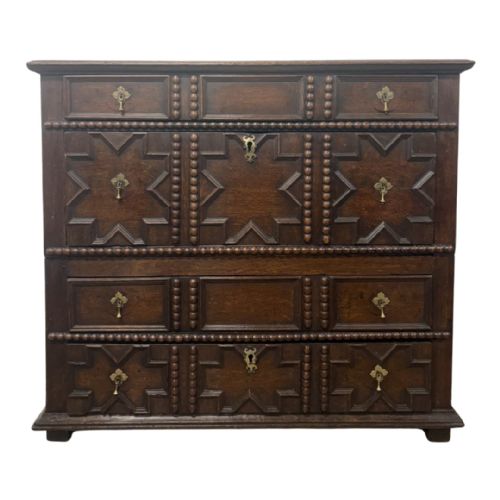
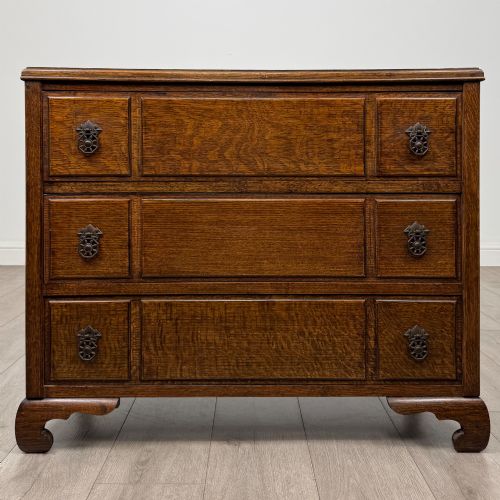
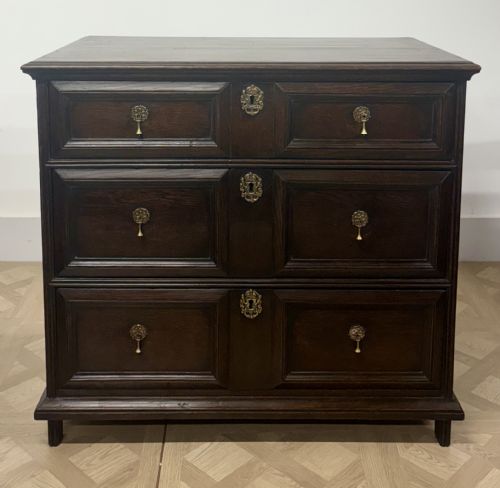
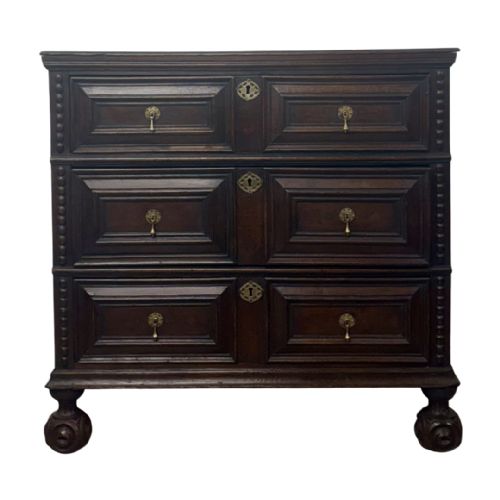
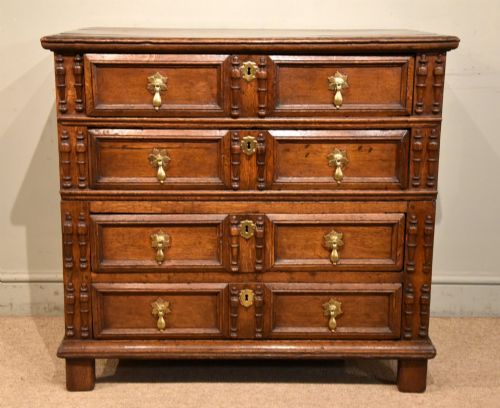
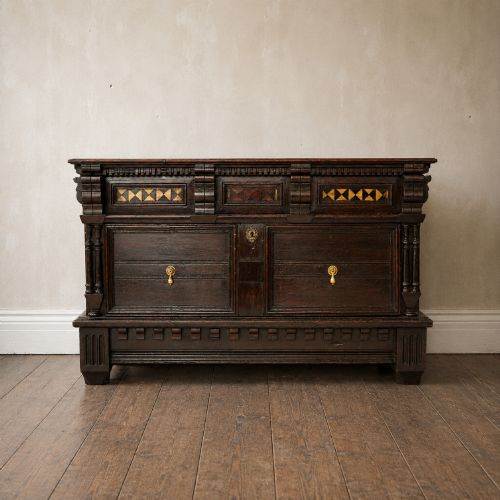
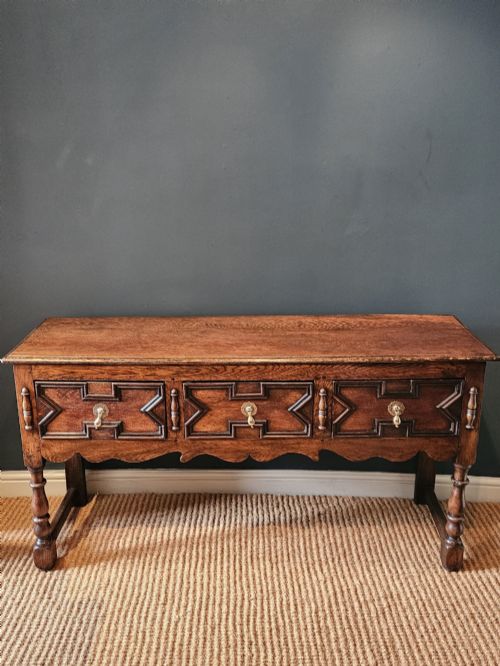
A geometric drawer dresser brings structured 17th-century craftsmanship into a room through deeply panelled fronts and rich timber surfaces.
Geometric Drawer Dresser
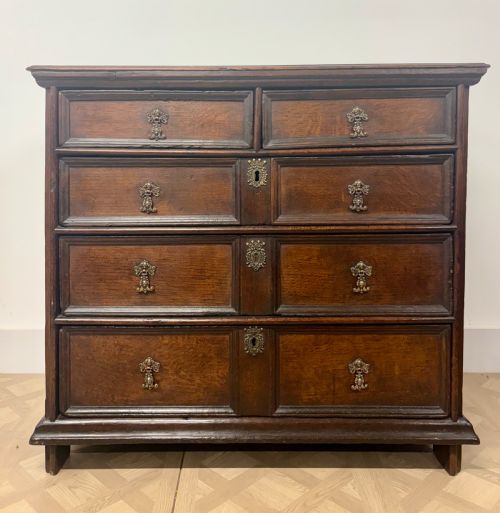
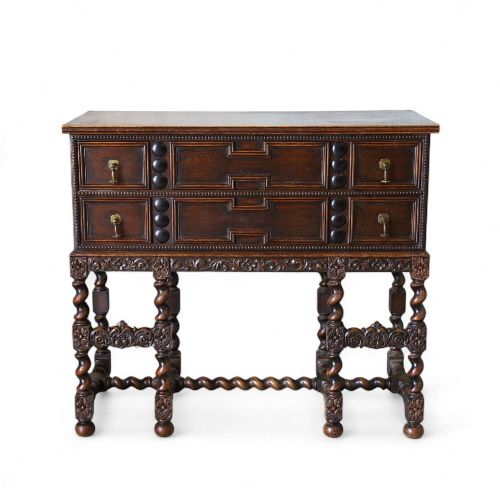
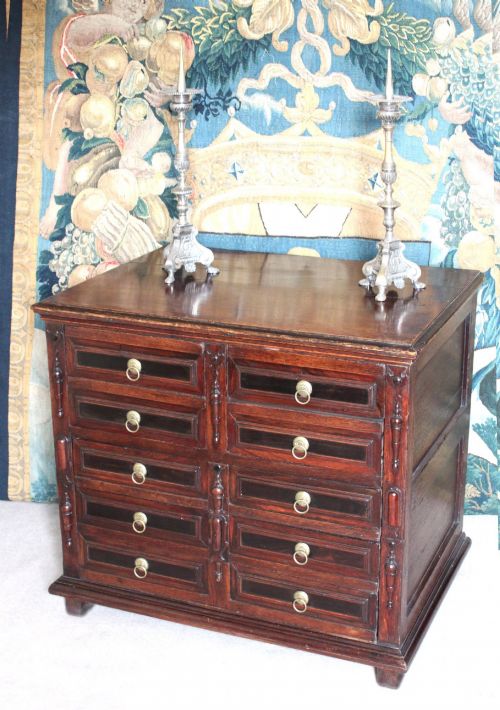
A geometric drawer dresser combines storage with architectural facade work, most frequently appearing as oak or walnut chests of drawers and dresser bases from the 17th century.
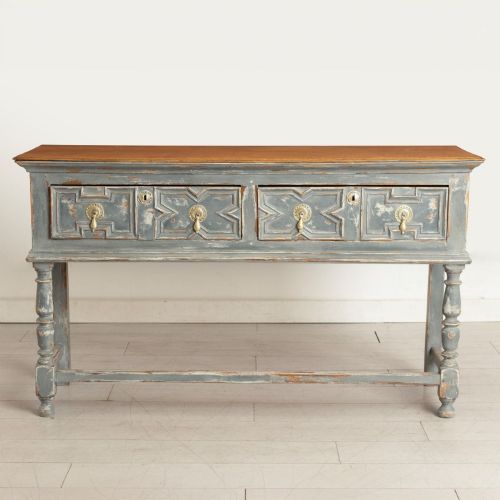
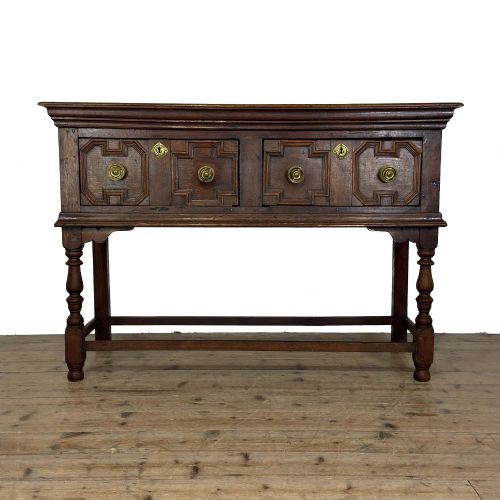
Buyers seeking a geometric drawer dresser encounter pieces defined by applied mouldings on the drawer fronts, often organised in geometric grids or mitred panels characteristic of the Charles II and Georgian periods.
The selection ranges from early oak serving dressers and chest-on-stand formats to later revivals from the Edwardian era and the early 20th century.
How they were made
Cabinet makers built these pieces primarily using solid oak, walnut, and fruitwood, sometimes incorporating pine for secondary structural elements and brass for drop handles and escutcheons.
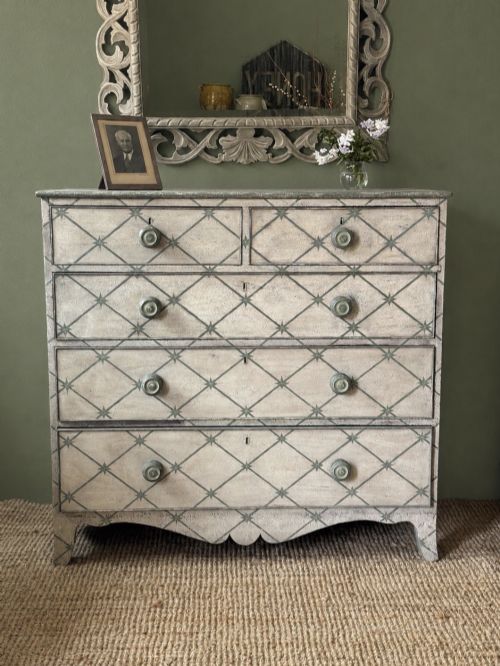
The distinct visual depth stems from applied geometric mouldings fixed to drawer faces, occasionally combined with oyster veneers or painted finishes applied to the timber substrate.
Some chests hide secret compartments behind their geometric facades, rewarding anyone patient enough to search the drawer linings.
What varies in quality
Quality rests on the crispness of the applied mouldings and the integrity of the timber construction, distinguishing original 17th-century joinery from later revival pieces.
The survival of original brass hardware, surface patination, and uncompromised drawer linings elevate an example above standard utility pieces.
Sir Clough Williams-Ellis
The Geometric Drawer Dresser Glossary
- Geometric moulding
- Applied strips of timber shaped in relief to form repeating patterns on drawer fronts. This technique defines the visual rhythm of late 17th-century case furniture.
- Dresser base
- A low sideboard or serving table equipped with drawers beneath the top surface. These pieces often lack the upper plate racks associated with full dressers.
- Oyster veneer
- Thin circular slices cut transversely from small branches or roots, arranged to display concentric growth rings. This decorative method appears on select walnut pieces.
- Charles II period
- The reign spanning from 1660 to 1685, associated with sturdy oak construction, geometric drawer fronts, and early use of walnut.
- Chest on stand
- A cabinet or chest raised on a distinct base with legs. This form lifts the storage compartment off the floor.
Geometric Drawer Dresser: Frequently Asked Questions
What is a geometric drawer dresser?
A geometric drawer dresser is a storage piece featuring applied wooden mouldings arranged in patterns across the drawer fronts. These designs create architectural depth and shadow.
Most examples date from the 17th century and use heavy timbers like oak or walnut.
How do I date a geometric drawer dresser?
Dating relies on timber choice, construction joints, and the style of the mouldings. Seventeenth-century pieces typically feature hand-riven oak, pegged joints, and heavy mouldings.
Revival pieces from the 19th and 20th centuries often show machine tooling or different secondary woods inside the drawers.
Where were these pieces used?
These items functioned as primary storage and serving furniture in domestic halls, parlours, and dining spaces. Dresser bases held tableware and linens while providing a surface for food preparation or display.
Chest formats stored clothing and valuable household goods in bedrooms or living quarters.
How do I care for antique oak furniture?
Antique oak benefits from stable indoor humidity and protection from direct sunlight, which can dry out the timber. Applying traditional beeswax helps nourish the grain and preserve the surface patination.
Avoid modern liquid polishes containing silicones that can penetrate the historic wood pores.