
Geometric Chest of Drawers
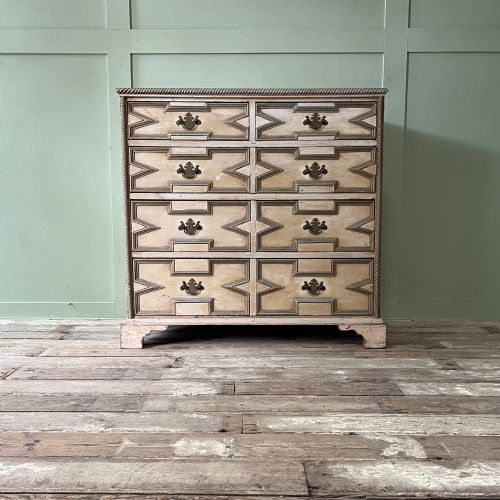
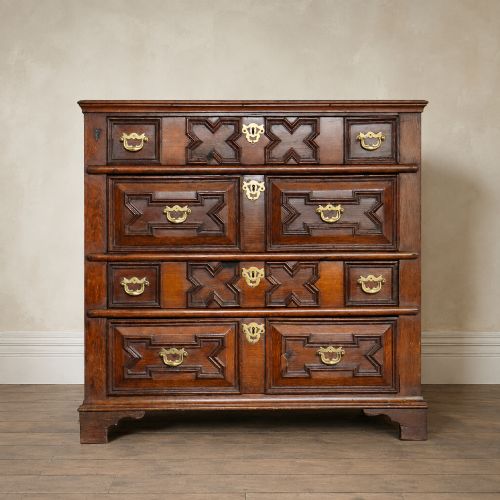
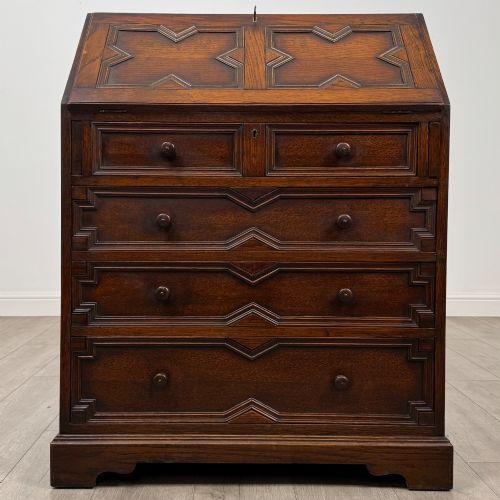
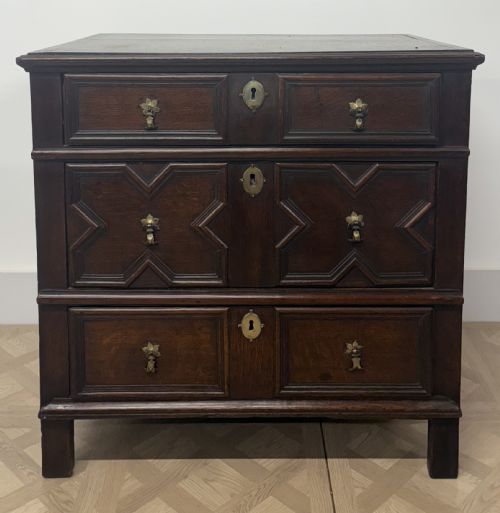
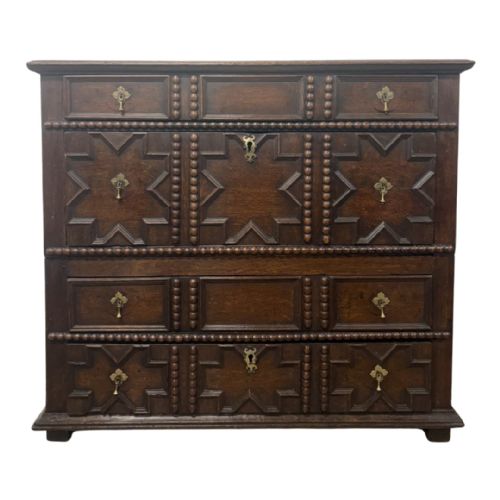
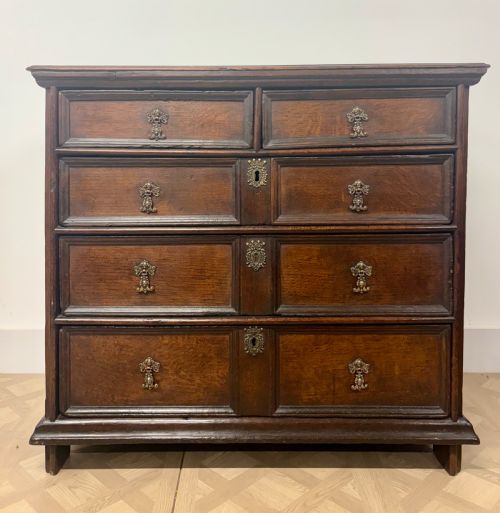
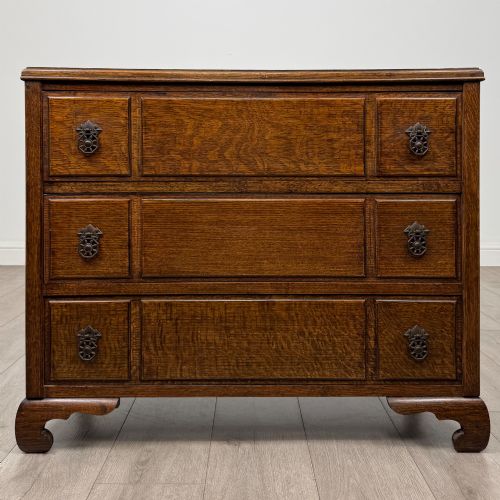
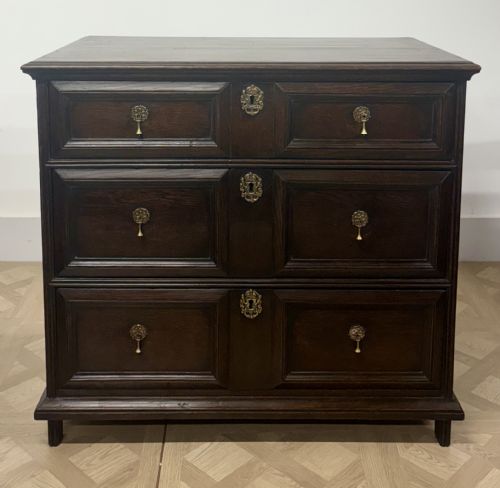
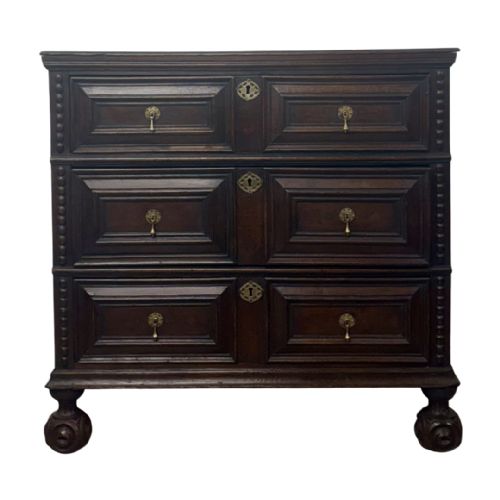
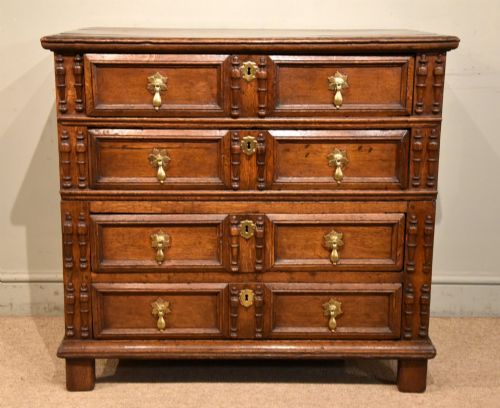
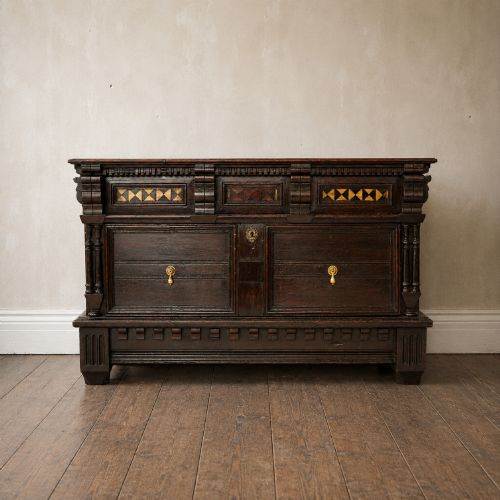
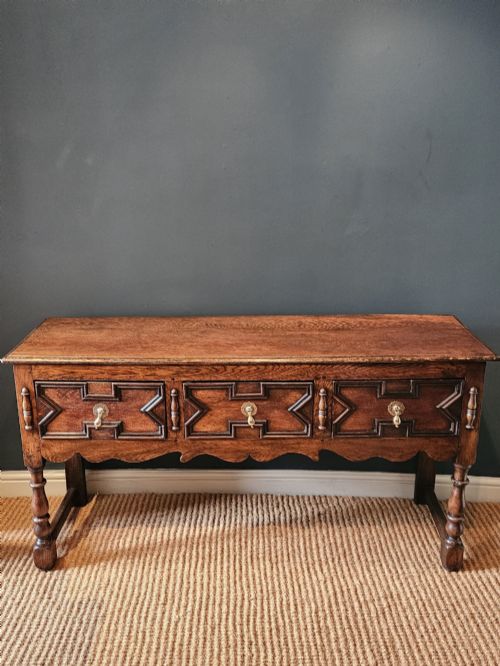
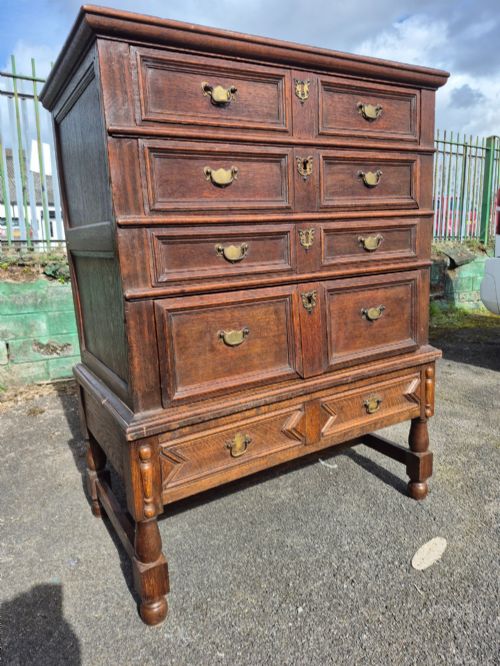
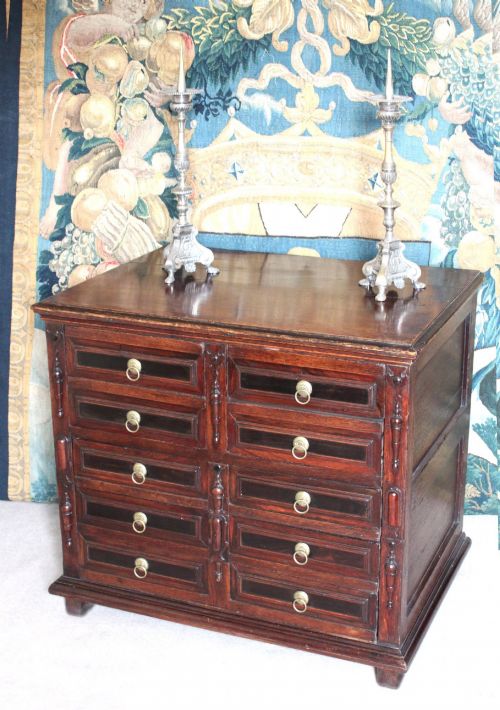
When you search for a geometric chest of drawers, you find striking 17th-century case pieces defined by applied mouldings.
Geometric Chest of Drawers
A geometric chest of drawers is primarily an early storage piece defined by structured, applied mouldings on the drawer fronts forming panels and geometric patterns. These items emerge predominantly from the seventeenth century and the William and Mary period, though later revivals also appear.
The format typically involves a sturdy oak carcass, sometimes incorporating walnut or fruitwood, divided into multiple drawers arranged horizontally. Buyers frequently encounter two-part chests or pieces set upon stands, reflecting the construction methods of the late sixteen-hundreds.
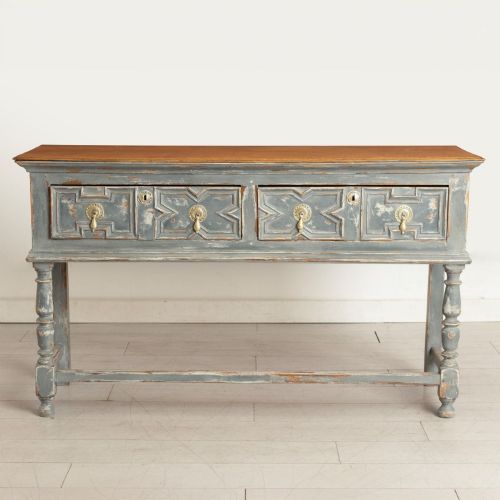
Beyond standard forms, related pieces such as bureaux, dresser bases, and mule chests occasionally share these characteristic applied geometric front designs. Oak remains the dominant timber across the selection, grounding the group in seventeenth-century English joinery traditions.
How They Were Made
Joiners constructed the carcasses largely from solid oak, utilising frame-and-panel techniques to accommodate seasonal wood movement. Drawer fronts received their decorative character through the careful application of small, shaped wooden mouldings glued and pinned to form mitred geometric shapes.
Surface detailing often included oyster veneers sliced from branch wood, particularly in walnut examples, creating intricate circular grain patterns. Cabinetmakers also incorporated brass drop handles on backplates and sometimes retained original iron locking mechanisms to secure the contents.
Secret drawers hidden behind the main framework offered seventeenth-century owners a private spot to stash their secret chocolate stashes.
What Varies in Quality
The refinement of the applied mouldings dictates much of the visual success, where crisp mitres and deeply cut profiles distinguish superior work from simpler joinery. The choice of primary timber also elevates a piece, with figured walnut and dense fruitwood achieving a more sophisticated surface than standard plain oak.
Proportion and scale heavily influence desirability, with smaller proportions and intact original stands commanding greater interest from collectors. The preservation of surface texture, such as a faded original patina or untouched brass hardware, separates pieces that retain their historical integrity from heavily restored examples.
Sir Clough Williams-Ellis
The Geometric Chest of Drawers Glossary
- Geometric moulding
- Applied wooden strips shaped and mitred onto drawer fronts to create decorative rectilinear or polygonal patterns. This technique defines the visual language of late seventeenth-century case furniture.
- Oyster veneering
- The practice of slicing thin cross-sections of small branches to create circular, oyster-like patterns across a surface. It appears frequently on walnut and decorative cabinet pieces from the late seventeenth century.
- Two-part chest
- A case piece built in upper and lower sections designed to be stacked. This method eased transport for large oak chests during the seventeenth century.
- Chest on stand
- A drawer chest elevated on an integrated or matching base with legs. These forms lift the primary storage compartment off the floor.
- Dresser base
- A lower sideboard or storage unit fitted with drawers, often sharing contemporary mouldings with standard chests. They serve as multi-purpose serving and storage furniture.
Geometric Chest of Drawers: Frequently Asked Questions
What is a geometric chest of drawers?
These are seventeenth-century and later storage pieces characterised by applied wooden mouldings arranged in decorative patterns across the drawer fronts. They showcase early English joinery and practical domestic design.
Most examples utilise solid oak or walnut, often built in two distinct sections for easier movement. The distinct fronts separate them from plain panelled furniture of the same era.
How do I date a geometric chest?
Dating relies on timber selection, construction joints, and the complexity of the applied mouldings. Seventeenth-century pieces typically show hand-split oak boards and pegged frames.
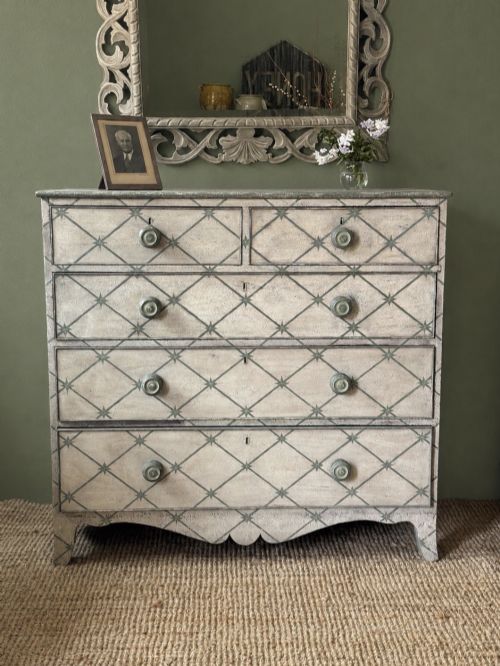
Later Edwardian revivals or pieces with later paint finishes usually betray their age through machine-cut elements and modern fixings inside the drawers.
How were these chests used originally?
Households used these chests to store textiles, linens, and personal valuables in bedchambers and living spaces. The multiple drawers allowed for organised storage of garments.
Certain examples incorporated secret compartments behind the primary drawers to safeguard particularly precious items or documents.
How do I live with an antique oak chest?
Position the piece away from direct sunlight and heat sources to prevent the timber from drying out or splitting. Maintaining stable room humidity preserves the historic joints and applied mouldings.
Allow sufficient clearance against walls and handle the original drawers with care to protect the historic runners and interior linings.