



Moulded Front Oak Chest
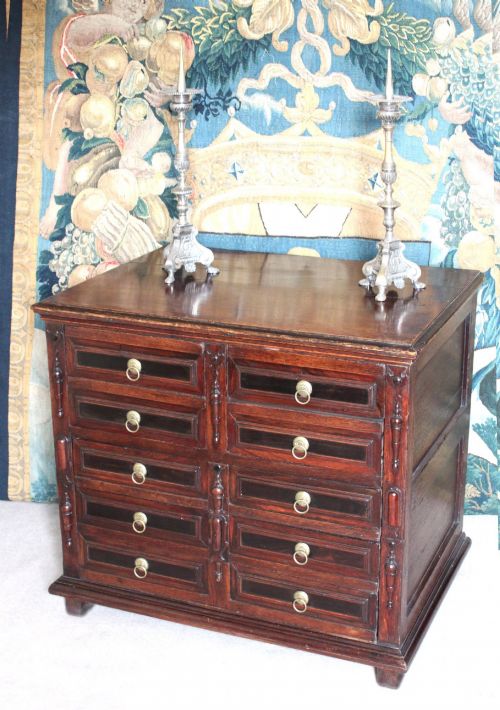
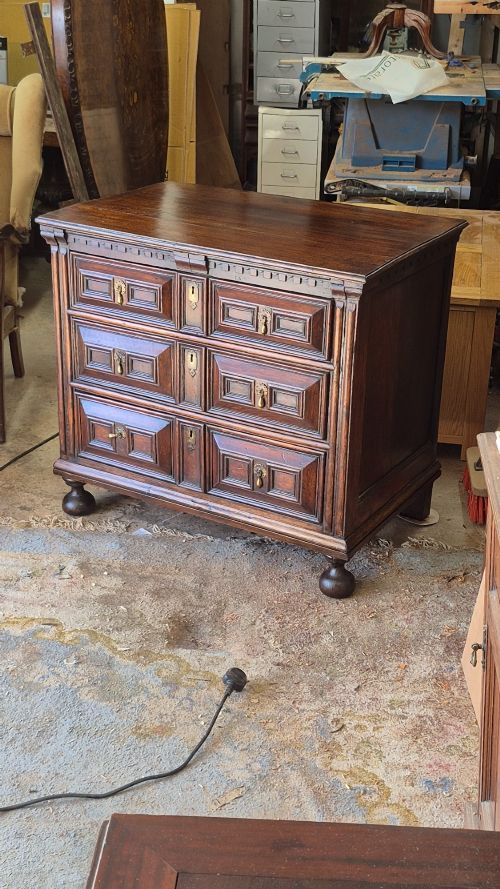
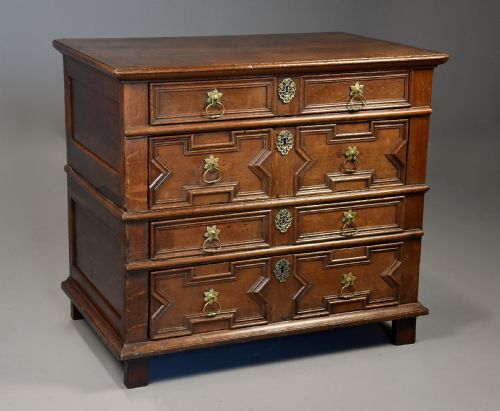
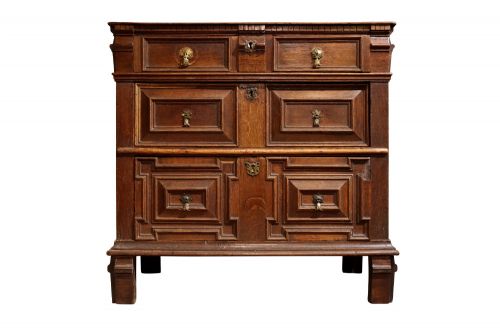
A moulded front oak chest brings the dark, rich grain of seventeenth-century timber straight into a room with striking geometric relief.
Moulded Front Oak Chest
A moulded front oak chest is a substantial storage piece defined by geometric panel work across the drawer fronts and heavy timber construction. Most examples encountered here date from the seventeenth century and the early eighteenth century, reflecting Jacobean, Charles II, Stuart, and William and Mary periods.
The dominant forms are chests of drawers featuring multiple graduated tiers, though variations include writing bureaux and serpentine profiles. While earlier periods rely on stark geometric mouldings, later iterations span into the nineteenth and twentieth centuries with Jacobean revival styles.
Makers utilised native timbers alongside decorative additions, producing pieces ranging from small proportions to wide chests on bun feet. Each survivor demonstrates the practical storage needs of historical households married to decorative woodworking skill.
How they were made
Cabinetmakers built these pieces primarily from solid oak, supplementing the structure with secondary woods like elm, fruitwood, and snakewood for contrast. Surfaces often feature detailed geometric mouldings applied to the drawer faces to create depth and texture.
Hardware consists of brass and iron drops, escutcheons, and hinges that secure the heavy doors and drawers. Artisans also incorporated wood inlay to accent the natural grain of the primary timber.
Listings feature pieces spanning the seventeenth century, eighteenth century, and nineteen-twenty, constructed primarily in oak with brass and iron hardware.
What varies in quality
The distinction between ordinary and exceptional pieces rests on the crispness of the geometric mouldings and the depth of the timber's patina. Rich, faded surfaces and well-preserved secondary wood decorations elevate a piece significantly.
Proportion and scale dictate desirability, with smaller chests and those retaining original bun feet commanding greater appreciation among collectors. The integration of contrasting timbers such as snakewood or fruitwood adds another layer of distinction.
The Moulded Front Oak Chest Glossary
- Geometric moulding
- Raised wooden strips applied in repeating angular patterns to drawer fronts. This technique defines the visual rhythm of seventeenth-century case furniture.
- Patina
- The deep surface sheen developed through decades of handling, polishing, and natural oxidation. A good patina shows subtle tonal variations across the oak grain.
- Bun feet
- Rounded, compressed wooden supports turned on a lathe and fitted beneath the base of the chest. They lift the heavy carcass slightly off the floor.
- Escutcheon
- A protective metal plate surrounding the keyhole of a drawer or cabinet door. These plates are typically fashioned from brass or iron.
Moulded Front Oak Chest: Frequently Asked Questions
How do I date an oak chest?
Dating relies on examining the construction methods, such as hand-cut dovetails, framing techniques, and the style of the geometric mouldings on the drawer fronts. Seventeenth-century examples typically display pegged joints and distinct timber seasoning.
Secondary woods and hardware styles also provide clear chronological markers. Comparing the piece to documented examples from the Jacobean or William and Mary periods helps narrow the decade of origin.
Are these chests suitable for daily use?
These robust pieces serve well for storing clothing, linens, or dry goods in modern homes. The deep drawers offer substantial practical capacity.
Positioning the chest away from direct heat sources and sudden humidity changes protects the historic oak and prevents the wood from warping.
How should I clean the wood surface?
Maintenance requires only a soft, dry cloth to remove dust from the carved mouldings and panels. Avoid modern silicone polishes that can build up and dull the historic finish.
Occasional application of traditional beeswax nourishes the dry oak and preserves the natural sheen of the aged surface.