

French Style Urns
French style urns bring classical elegance and decorative presence to a room, drawing on centuries of European design heritage.
French Style Urns
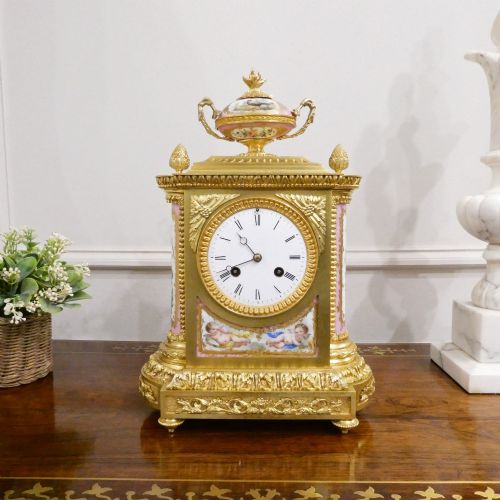
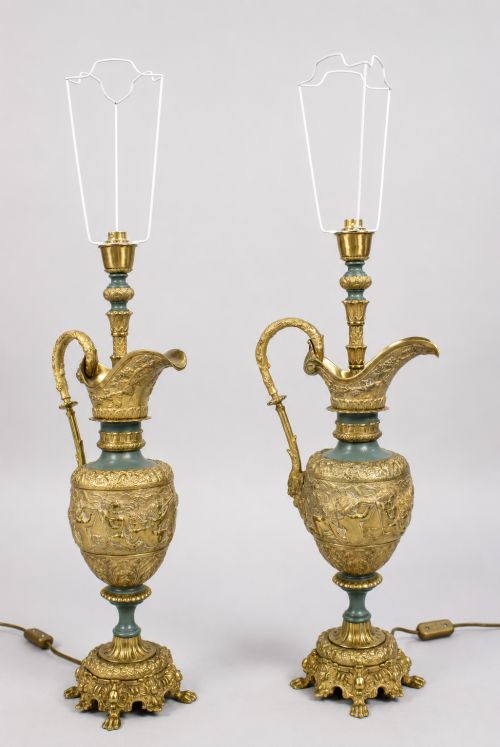
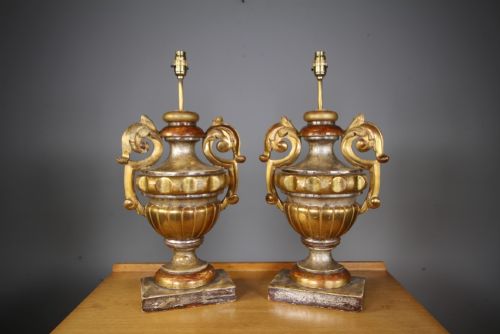
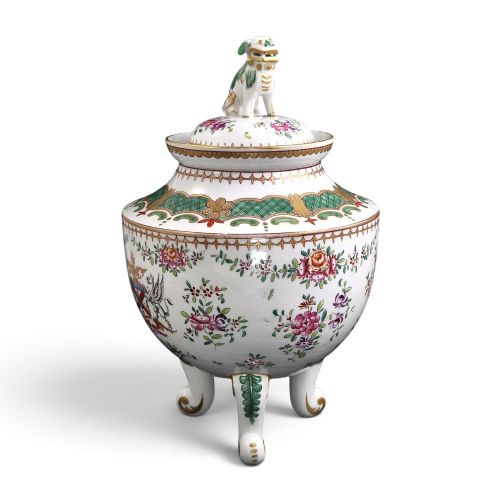
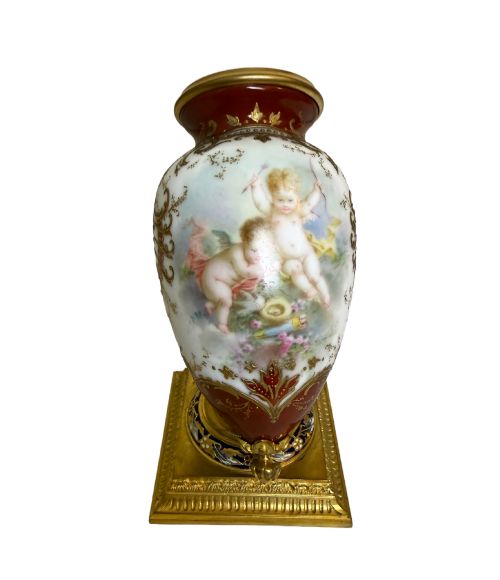
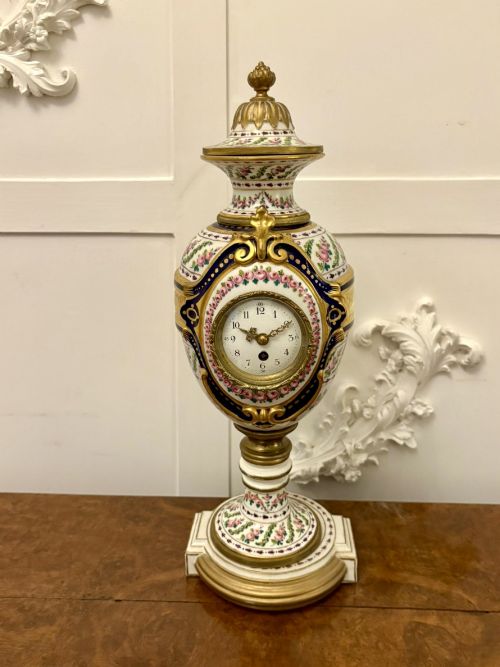
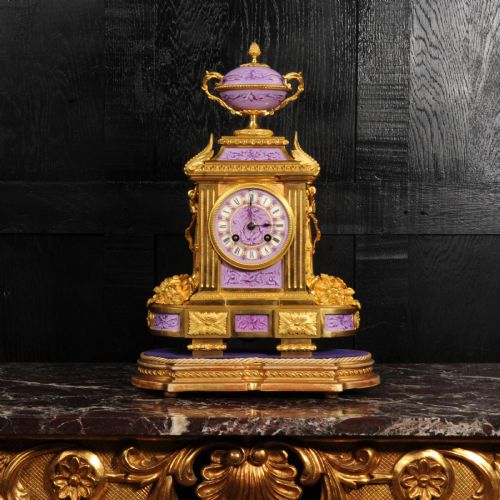
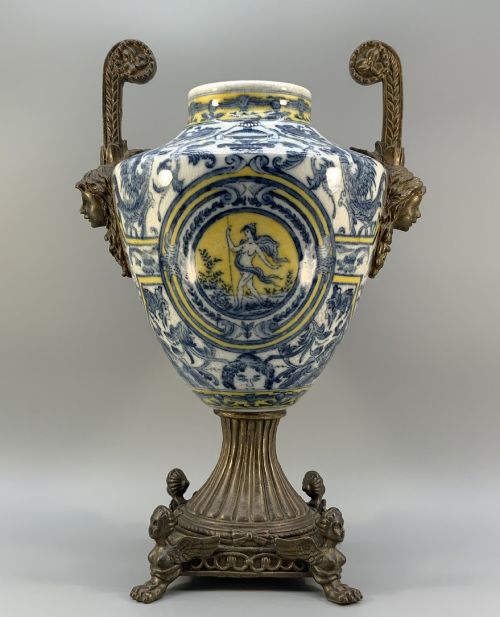
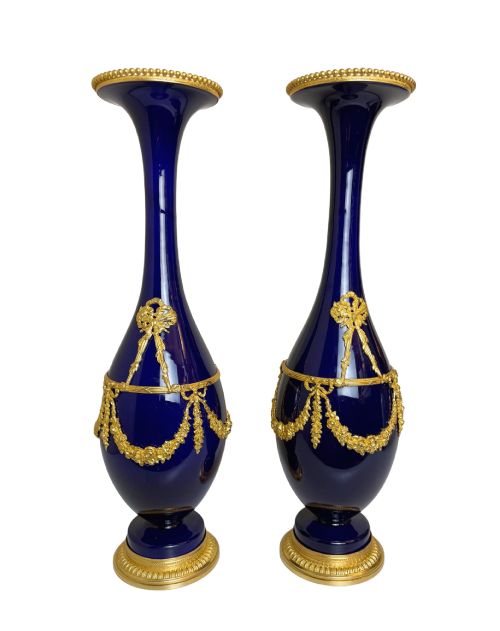
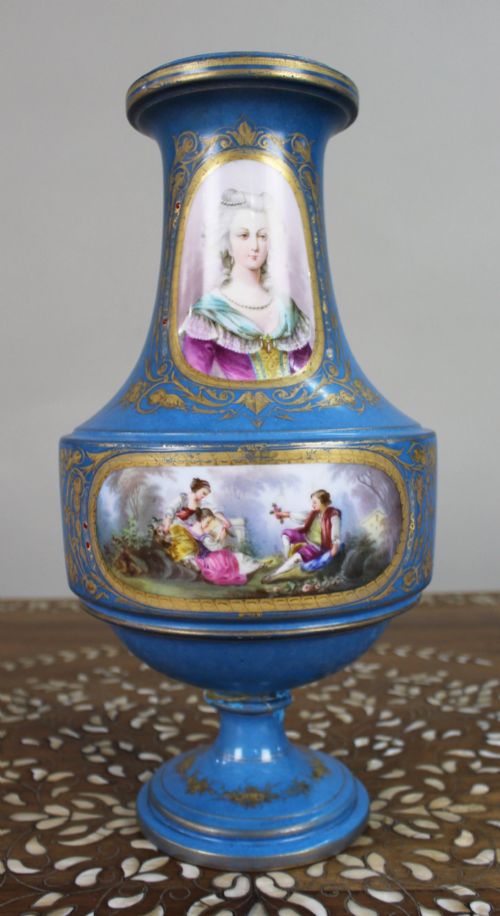
When you search for french style urns, you encounter decorative vessels and functional objects adapted from classical antiquity and later European revivals. The pieces on this page span the nineteenth century and early twentieth century, taking the form of mantel clocks, table lamps, cassolettes, and decorative vases.
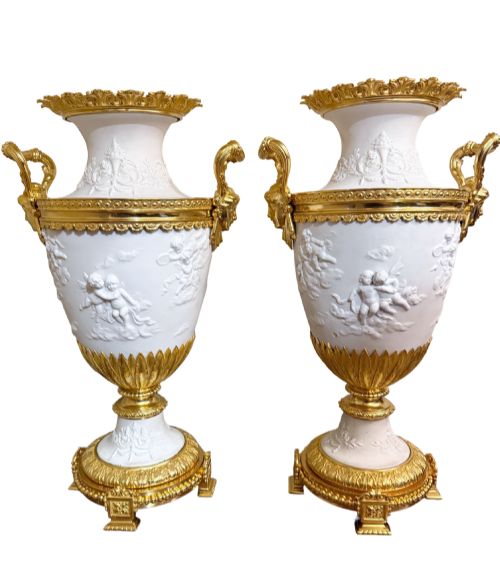
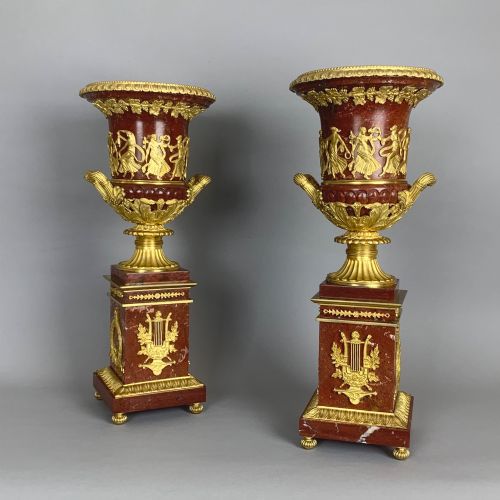
You are most likely to meet porcelain bodies paired with gilt bronze or ormolu mounts, reflecting Neoclassical, Louis XVI, and Empire design influences. These items often function as garniture sets or standalone centrepieces on mantelpieces and side tables.
Makers and workshops across France produced these ornamental objects using traditional artisan methods, drawing upon Sèvres and Parisian porcelain traditions. The forms range from classical covered urns to dual-design vessels that double as incense burners or lamps.
How they were made
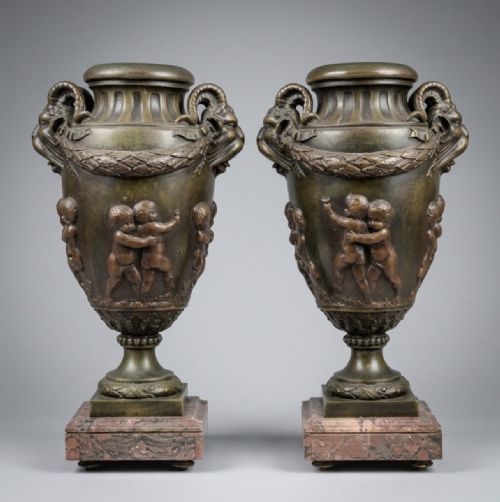
Artisans combined cast and chased metals such as ormolu, gilt bronze, and brass with hand-painted porcelain, earthenware, and carved marble. Metal components were cast from moulds, then hand-finished and gilded to highlight classical motifs like rams' heads and floral swags.
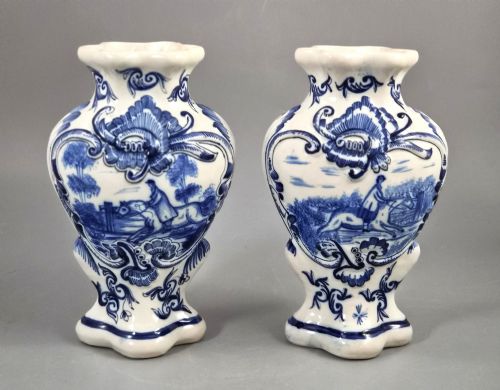
Ceramic bodies utilised hand-applied glazes, enamel work, and pate-sur-pate techniques, often incorporating blue, pink, or white porcelain grounds. Stonework bases in marble or onyx provided substantial weight and stability to the metal and ceramic mounts.
Materials documented across the inventory include gilt bronze, ormolu, porcelain, marble, bronze, brass, enamel, and fabric.
What varies in quality
The finesse of the metal chasing and the crispness of the gilt bronze or ormolu mounts distinguish finer examples from standard production. Artisans who spent more time chiselling surface details produced sharper acanthus leaves, crisper drapery, and tighter joins between metal and stone.
The artistic execution of hand-painted porcelain panels and the selection of high-grade marble or onyx bases dictate the upper tiers of the market. Superior items display meticulous brushwork on porcelain reserves and harmonious integration of disparate materials like enamel and fabric.
Samson Paris·Achille Brocot·Fourmaintraux-Courquin·Casier
The French Style Urns Glossary
- Ormolu
- Gilt bronze created by applying a mercury and gold amalgam to a bronze casting, then heating to drive off the mercury. This technique produced a durable, deep golden finish seen on many nineteenth-century mounts.
- Cassolette
- A decorative vessel that functions as both a vase and a burner. Reversing the lid or cover typically reveals an inner cavity for potpourri or incense.
- Garniture
- A set of three or more matching ornamental objects designed to be displayed together on a mantelpiece. These typically consist of a central clock or large urn flanked by smaller matching urns or candelabra.
- Pate-sur-pate
- A ceramic decoration technique where liquid clay is painted in successive layers onto a contrasting body. This builds up a low-relief cameo effect before glazing and firing.
- Bleu céleste
- A bright turquoise blue glaze colour developed at the Sèvres porcelain factory during the eighteenth century. Later nineteenth-century makers frequently imitated this distinctive shade on revival wares.
French Style Urns: Frequently Asked Questions
What are french style urns used for?
These pieces served primarily as decorative ornaments, mantelpiece garnitures, and focal points for grand interiors during the nineteenth century. Many surviving examples have been converted into table lamps or fitted to hold candles and flowers.
Their substantial architectural presence makes them well-suited for placement on sideboards, mantelpieces, and dedicated display stands within traditional room schemes.
How do I live with french style urns?
Integrate these objects into a room by placing them on stable surfaces where their weight and delicate gilt mounts remain secure. Pair porcelain and marble vessels away from direct heat sources and strong, continuous sunlight to protect hand-painted glazes.
Allow them space to breathe as standalone statements or group them symmetrically on mantels to echo the formal aesthetic of their original period settings.
How can I tell periods apart?
Examine the stylistic vocabulary and material combinations, as Neoclassical and Louis XVI designs favour strict symmetry, urn shapes, and restrained gilt bronze mounts. Later nineteenth-century interpretations often mix eclectic influences, incorporating richer polychrome enamels and heavier cast metal components.
Look closely at the fastening screws, bronze chasing techniques, and ceramic bodies, which generally show shifts from early hand-thrown earthenware toward more industrial nineteenth-century porcelain manufacturing methods.
Are original lids important?
Original matching lids significantly enhance the integrity and historical completeness of any decorative urn. Because covers were easily separated or broken over decades of handling, finding a pair with their matching original tops is notable.
Inspect the interior rims and proportions of the lid to ensure it sits flush and matches the exact glaze, paste, and gilding style of the lower body.