


Rustic Iron Garden Pots
These rustic iron garden pots bring enduring utility and weathered character to outdoor spaces through robust cast iron and copper vessels.
Rustic Iron Garden Pots
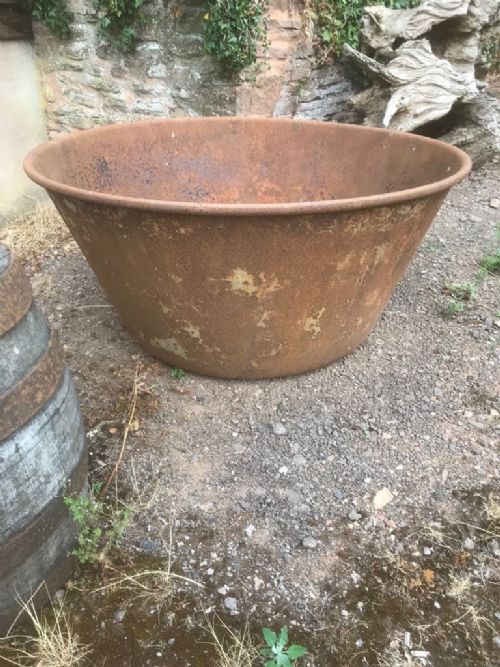
Rustic iron garden pots encompass sturdy vessels designed for outdoor planting, featuring cast iron urns, planters, and large metal cauldrons. The listings here present pieces primarily originating from the nineteenth century alongside Victorian examples.
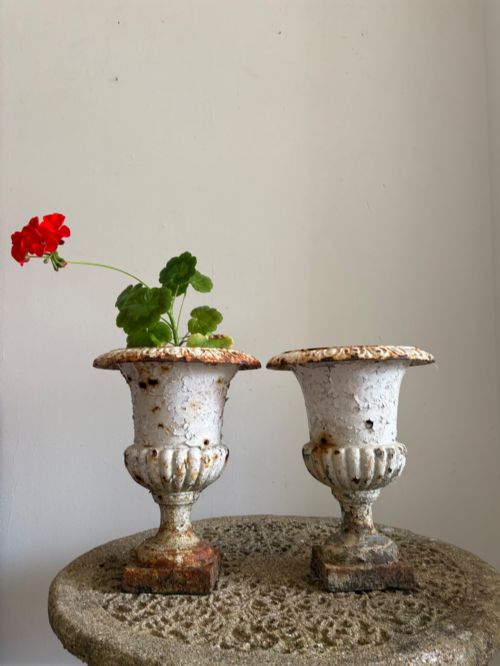
Buyers will frequently encounter cast iron urns and painted garden planters, often bearing the marks of age such as original distressed paint or natural verdigris finishes. These forms serve practical roles in gardens while introducing classical or industrial aesthetics.
Beyond standard iron planters, the selection includes related vessels like copper log bins and terracotta olive jars on stands. These varied forms share a robust construction suited to garden environments across different historic periods.
Materials and construction
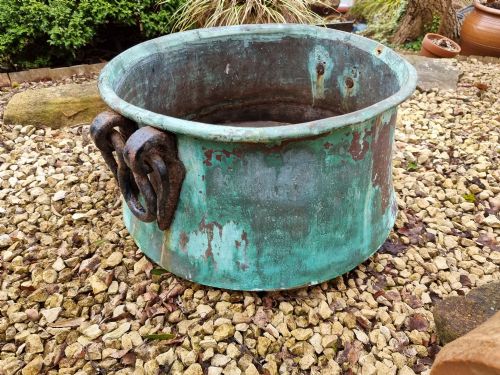
Makers utilised durable metals including cast iron, wrought iron, copper, and steel to form heavy garden vessels and urns. Cast iron pieces required moulds to achieve classical urn shapes, while copper vessels often featured hand-beaten bodies joined with wrought iron swing handles.
Surface treatments define many of these items, with original painted finishes, distressed patinas, and natural verdigris developing over decades of exposure. Terracotta and wood also appear in supporting roles, adding textural contrast to the dominant metalwork.
One copper cauldron comes equipped with a wrought iron swing handle for heavy lifting.
Assessing quality and character
Quality in these garden vessels rests upon the integrity of the metal casting and the authenticity of the surface patina. Original distressed paintwork and naturally formed verdigris contribute significantly to the visual weight of nineteenth-century pieces.
The Rustic Iron Garden Pots Glossary
- Verdigris
- A green patina that forms naturally on copper, brass, or bronze when exposed to the atmosphere over long periods. This chemical layer provides protection and visual character.
- Urn
- A vase-shaped vessel, often with a footed base, traditionally used in gardens for planting or as an architectural ornament. Many period examples employ cast iron.
- Cauldron
- A large metal pot with a wide mouth, historically used for boiling but adapted here as substantial garden planters or log bins. They frequently feature wrought iron swing handles.
- Terracotta
- Fired clay used to create pots and jars, valued for its porous nature which benefits plant roots. Glazed or unglazed versions appear alongside iron garden wares.
Rustic Iron Garden Pots: Frequently Asked Questions
What periods do these garden pots come from?
The listings span from the nineteenth century through to the mid twentieth century, including Victorian examples.
Specific dates mentioned in titles range across the eighteen hundreds and early nineteen hundreds, reflecting traditional manufacturing periods.
Can these metal pots stay outside all year?
Materials like cast iron, copper, and steel are inherently suited for outdoor garden environments.
Over time, exposure to the weather enhances surfaces with natural patinas and verdigris finishes.
What is the difference between an urn and a planter?
Urns typically feature a footed pedestal base and a classical vase shape designed for decorative prominence.
Planters encompass a broader range of vessels focused primarily on holding soil and growing plants.
How do I identify original painted finishes?
Original painted surfaces show natural wear, flaking, and tonal variations accumulated over decades of age.
Applied patinas integrate tightly with the underlying cast iron or steel without modern synthetic gloss.