





Decorative Cast Iron Urns
Decorative cast iron urns are heavy garden and architectural ornaments from the nineteenth century that bring classical presence and structure to outdoor spaces.
Decorative Cast Iron Urns
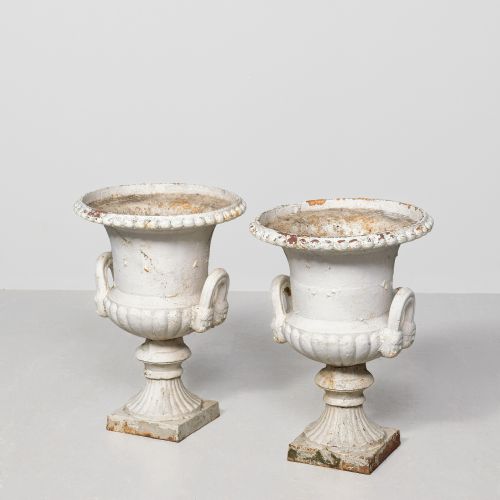
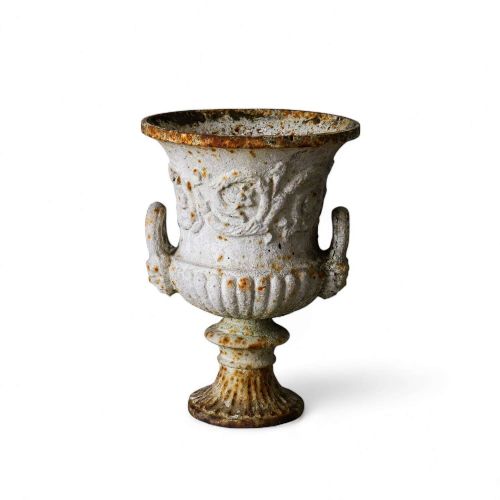
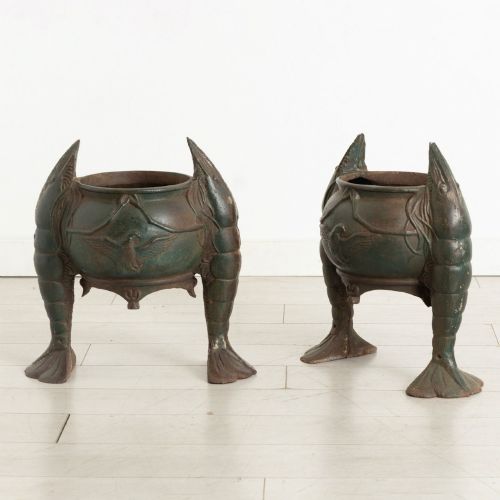
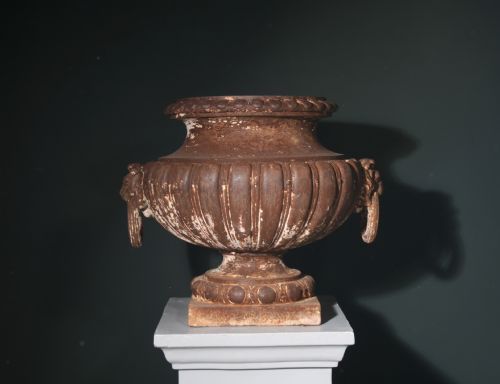
Decorative cast iron urns are substantial garden and architectural ornaments primarily originating from the nineteenth century, including the Victorian era and the years around 1860, 1870, and 1900. When searching for decorative cast iron urns, buyers encounter forms such as campana shapes, tazza urns, classical revival designs with acanthus leaf motifs, and novelty pieces formed as shrimp.
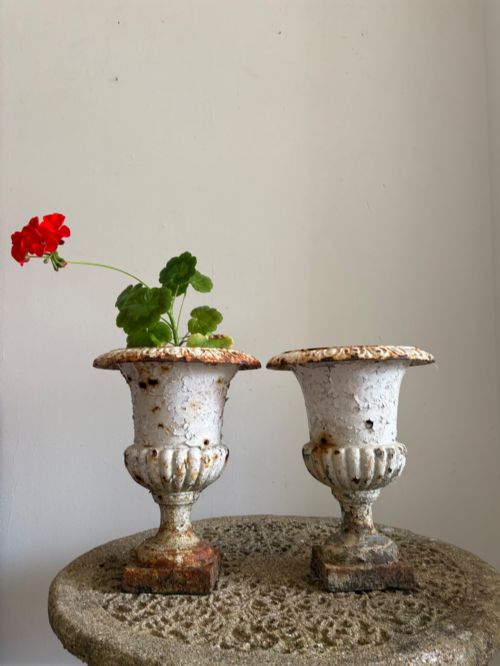
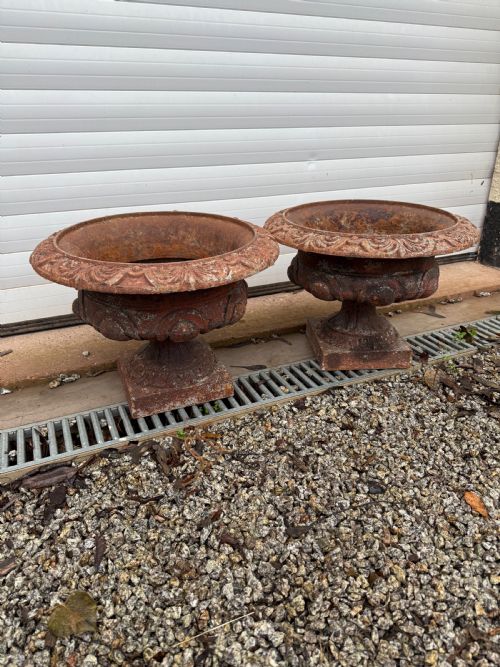
Most examples appear as pairs and often include matching pedestal stands or plinth bases, serving both as garden planters and as formal focal points for terraces and lawns. The aesthetic draws heavily from French neoclassical and Victorian classical revival styles, reflecting a period of intense industrial and artistic ambition in metal casting.
How they were made
These pieces were produced by pouring molten metal into sand moulds within prominent foundries, utilising durable cast iron and occasionally cast metal to achieve crisp relief and thick, heavy walls. Specialised firms like Andrew Handyside and the Val d'Osne Foundry executed intricate details such as acanthus leaves and classical handles with high technical precision.
Surfaces were frequently finished with paint, which often survives in an original distressed state, or left to weather naturally in the open air over generations. The construction method ensured that the vessels could withstand heavy soil loads and harsh outdoor conditions while retaining their sculptural form.
What varies in quality
The distinction between ordinary production and superior work lies in the crispness of the casting and the depth of the decorative relief, particularly on elements like acanthus leaves and classical handles. Finer examples display clean parting lines and sharp, legible foundry stamps, whereas lesser pieces show blurred ornamentation from worn moulds.
Integrity of form and the presence of original components, such as matching plinth bases, pedestals, or lids, elevate the standing of a piece. The character of the surface, whether retaining original distressed paint or showing honest, stable weathering on heavy cast iron, further defines the visual appeal of the object.
Andrew Handyside·Val d'Osne Foundry
The Decorative Cast Iron Urns Glossary
- Campana
- A bell-shaped garden urn with a flared rim, sweeping body, and footed base. This form is common in nineteenth-century neoclassical pieces.
- Tazza
- A shallow cup-shaped vessel or urn elevated on a stem and foot. Victorian examples often function as substantial garden planters.
- Plinth Base
- A heavy square or rectangular support block beneath an urn. Many classical revival pieces utilise these to elevate the main vessel.
Decorative Cast Iron Urns: Frequently Asked Questions
How heavy are these iron urns?
These pieces possess substantial weight due to their thick cast iron construction, designed to anchor them firmly in garden settings.
Because of this mass, positioning them requires careful planning and often more than one person to move them safely onto a plinth base.
Can I leave them outside all winter?
Cast iron is remarkably durable and withstands outdoor weather conditions for generations, especially when protected by traditional paint layers.
However, keeping soil drained prevents ice expansion within the bowl during freezing weather.
Are original lids common on urns?
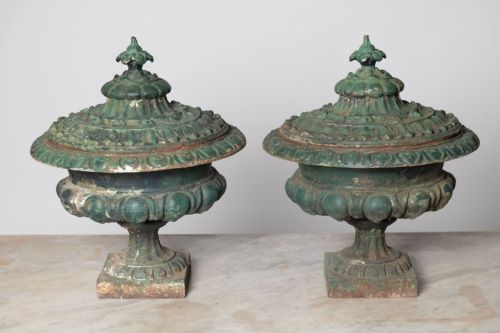
Matching lids are scarce because most garden urns were utilised strictly as planters for trailing flowers and foliage.
When a pair retains original lids, it indicates a more complete and formal decorative purpose from the nineteenth century.
How do I identify a Victorian piece?
Nineteenth-century examples often display classical revival motifs, such as acanthus leaves and campana profiles, cast with heavy iron walls.
Foundry marks or specific weathered paint surfaces also point toward nineteenth-century production periods like 1860 or 1870.