





Traditional Garden Urn Planters
Traditional garden urn planters bring classic form to outdoor spaces, offering enduring appeal for those seeking architectural planting solutions.
Traditional Garden Urn Planters
Traditional garden urn planters encompass a range of classic vessels designed for outdoor planting, dominated by cast iron and terracotta examples. These pieces frequently draw upon neoclassical, Victorian, and classical revival styles to create a formal presence in gardens.
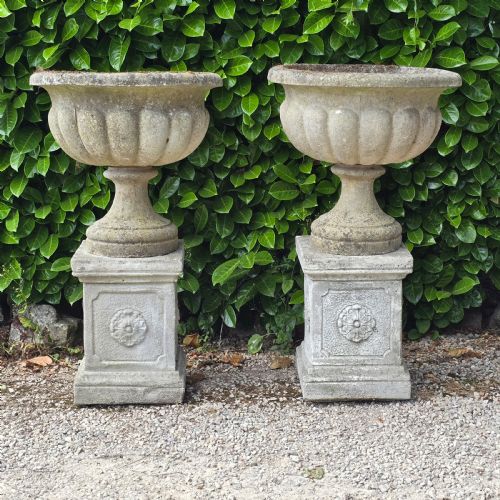
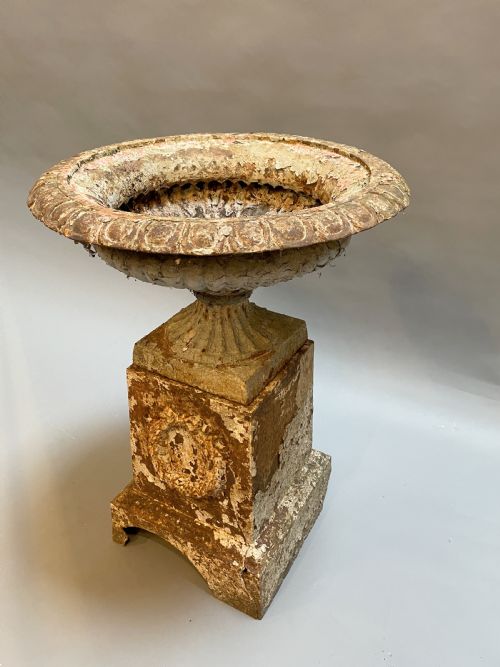
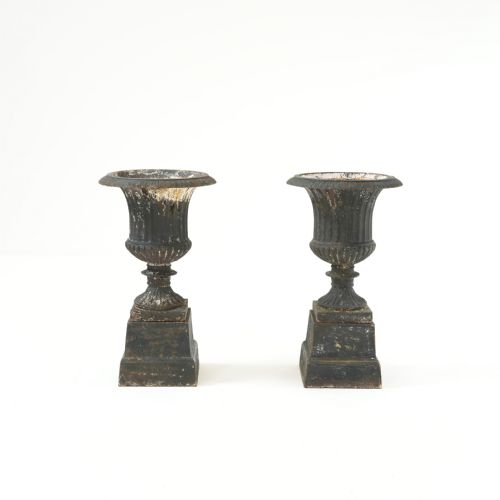
Buyers most commonly encounter campana shaped urns, often mounted on dedicated plinths or stands to elevate the planting. Proportions vary from small domestic pairs to large architectural statements intended for prominent garden placement.
Origins stretch across the nineteenth and twentieth centuries, including British, French, and Mediterranean pieces. Forms range from classical campana profiles to oil jars and amphorae.
Materials and Construction Methods
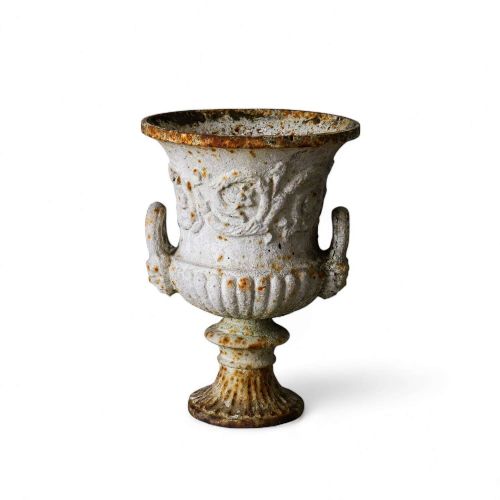
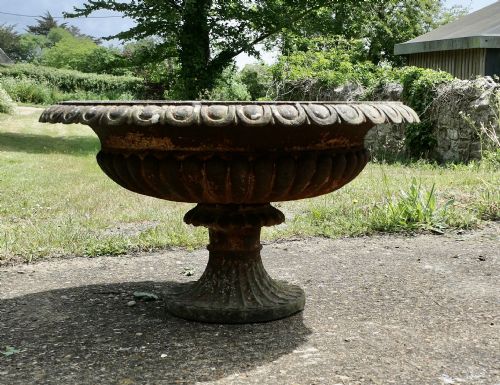
Cast iron production involves pouring molten metal into sand moulds, yielding heavy, durable vessels capable of sharp classical detailing and gadrooned rims. Many iron examples receive coats of paint or develop natural patination through weather exposure over decades.
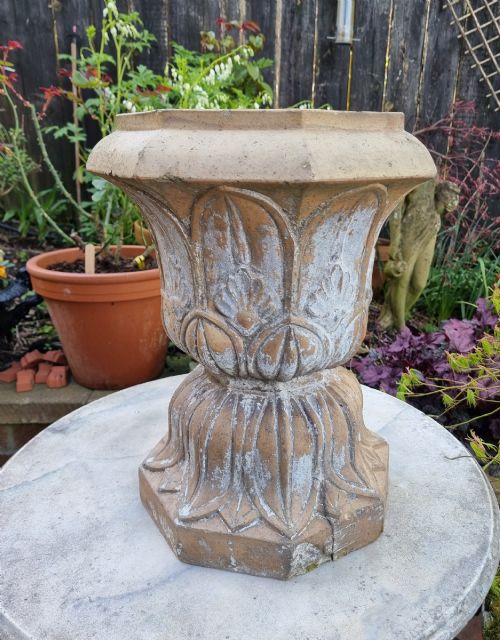
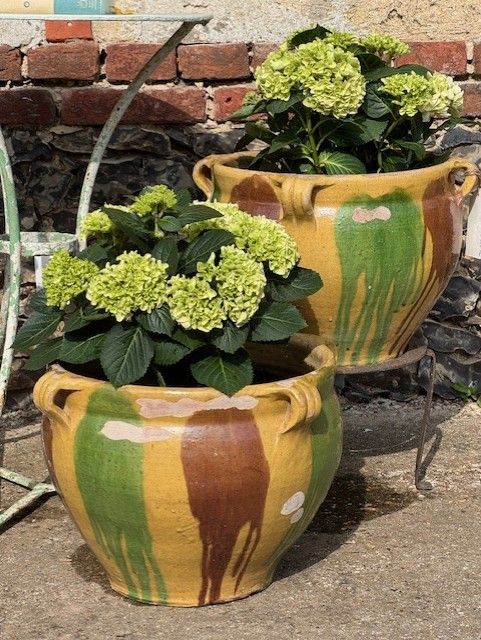
Terracotta and clay planters rely on traditional throwing or moulding techniques using earthenware materials. Certain French and Portuguese pieces feature specialised surface treatments, including dribble glazes and weathered patinas.
Reconstituted and cast stone offer alternative heavy-duty options for large garden urns. These composite materials replicate the texture and aesthetic of carved stone while providing frost-resistant qualities for outdoor use.
The inventory incorporates diverse regional forms, ranging from Scottish terracotta urns and French Castelnaudary planters to Japanese bronze usubata vessels.
Distinguishing Quality and Character
The refinement of the casting separates standard ironwork from superior examples, where crispness in classical motifs like egg-and-dart moulding or gadrooning remains sharp. Heavy metal gauge and the presence of original matching plinths elevate the standing of an iron urn.
Terracotta quality shows in the uniformity of the clay body and the natural warmth of the weathered surface. Age-related weathering, stable patination, and intact historical repairs contribute significantly to the visual depth of older earthenware jars.
Andrew Handyside
The Traditional Garden Urn Planters Glossary
- Campana Urn
- A bell-shaped garden vessel with an everted rim and a tapered body. This classical silhouette forms the majority of traditional metal and terracotta planters.
- Gadrooned
- Ornamented with a series of convex curves or flutes radiating outwards. This decorative carving frequently encircles the lower bowl of formal urns.
- Plinth
- A heavy base or pedestal supporting an urn. Many classical iron and stone planters sit raised on matching plinths for added architectural height.
- Amphora
- A two-handled jar with a narrow neck used historically for storage. Mediterranean examples in terracotta often serve as decorative garden focal points.
- Dribble Glaze
- A decorative surface treatment where liquid glaze runs unevenly down the ceramic body. This technique appears on specific regional planters from southern France.
Traditional Garden Urn Planters: Frequently Asked Questions
How do I secure heavy cast iron urns outdoors?
Heavy cast iron urns usually possess sufficient weight to stand securely on level ground without additional fixing. Placing them on dedicated stone plinths further stabilizes the base and prevents direct contact with damp soil.
For exposed windy sites, anchoring pins or discreet brackets can be utilised to secure the plinth to a paved surface. Ensuring the drainage hole remains clear prevents internal water accumulation during freezing conditions.
Can terracotta garden urns stay outside in winter?
Most nineteenth-century and traditional terracotta vessels withstand normal winter weather provided they are manufactured from well-fired clay. However, continuous frost expansion can occasionally threaten saturated earthenware.
Lifting planters onto pot feet prevents water from freezing at the base and blocking drainage holes. Emptying excess soil or wrapping vulnerable jars during severe freezes offers additional protection.
How do I date an iron garden urn?
Dating relies on examining casting seams, surface patination, and stylistic markers associated with Victorian, Edwardian, or later periods. Heavier metal gauges and crisp classical detailing often point towards nineteenth-century production.
Comparing the bolt fixings and overall construction to known period examples helps clarify the era. Weathering patterns also provide clues regarding the duration of outdoor exposure.
What plants suit a campana urn?
Trailing plants and cascading foliage complement the flared rim and elevated profile of campana urns. Ivy, trailing lobelia, and small flowering shrubs create a balanced silhouette against the classical bowl.
Box balls and formal topiary provide evergreen structure that contrasts effectively with weathered cast iron or terracotta surfaces. Ensuring adequate soil depth supports healthy root development for larger specimens.